Photo: Simon Burchell · CC BY-SA 4.0
St John's Co-Cathedral Guide: Caravaggio's Beheading, Marble Tombs & Tips
Inside Valletta's greatest monument: how to visit St John's Co-Cathedral, understand Caravaggio's masterpiece in the Oratory, and explore the side chapels.
The church was commissioned by Grand Master Jean de la Cassière for the Order of the Knights of St John and designed by Maltese military architect Girolamo Cassar. Today, St John's Co-Cathedral (Kon-Katidral ta' San Ġwann) is an artistic and spiritual treasure of Malta. Its austere Mannerist facade on St John's Square was built to withstand cannon fire after the Great Siege. Inside, the church was transformed by Calabrian artist and Knight Mattia Preti into a magnificent theatre of carved gilded limestone, crowned by Caravaggio's greatest painting. Pair this monument guide with our Valletta dress and shoe rules and our Grand Master's Palace guide.
| Visitor Information | Details | Important Visitor Rule / Tip |
|---|---|---|
| Ticket Prices & Audio Guide. | Check the official site for current admission details. | Includes handheld audio guide (not covered by Heritage Malta Pass). |
| Opening Hours (Sightseeing). | Check the official site for opening hours. | Closed Sundays and public feast days for tourist visits (open for Mass only). |
| Visitor Entrance vs Exit. | Enter on Republic Street side; exit onto St John's Square. | Book online on the official site to use the faster pre-paid queue. |
| Footwear & Dress Enforcement. | Zero stiletto / narrow heels; shoulders and knees covered. | Bring your own scarf or shawl; disposable wraps are no longer handed out at the door. |
A Floor of Marble Tombs and Mattia Preti's Carved Stone Vault
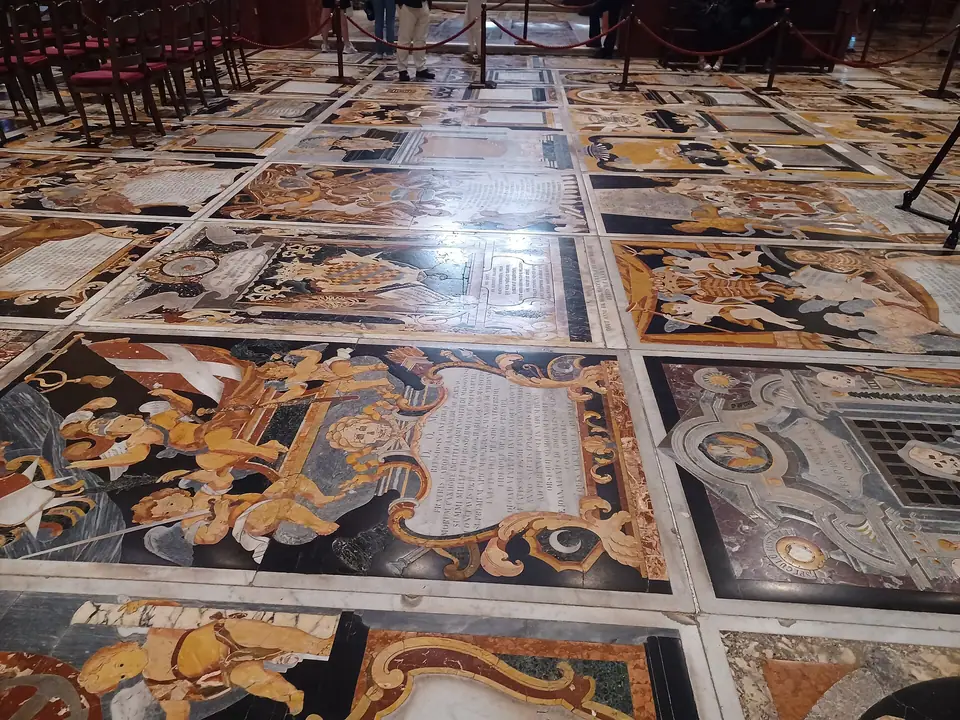
The moment you step into the nave, look down beneath your feet. The entire floor of the Co-Cathedral is a continuous carpet of polychrome inlaid marble tombstones (pietra dura). These slabs mark the burial vaults of the noble sons of aristocratic families who served as Knights of Malta. Every slab is a Latin visual poem of Baroque memento mori symbolism: winged skeletons wielding scythes, hourglasses, and extinguished torches. Battle cannons, Maltese crosses, and family heraldry inlaid in red Sicilian jasper, green serpentine, lapis lazuli, and white Carrara marble.
Now look up at the barrel vault. Unlike Italian churches painted in wet plaster fresco, Mattia Preti primed the porous Maltese globigerina limestone with linseed oil. He then painted episodes from the life of St John the Baptist in oil directly onto the stone vault. Every pillar, arch, and wall spandrel around the paintings was carved in situ straight into the soft yellow wall stone and covered in gold leaf.
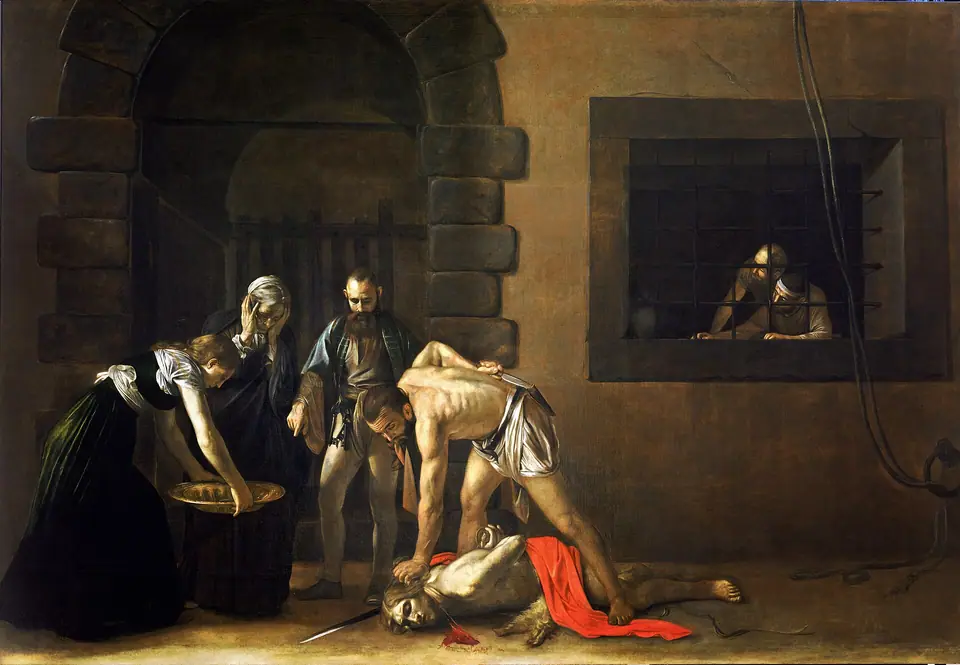
Inside the Oratory: Caravaggio's The Beheading of Saint John the Baptist
Follow your audio guide into the Oratory (built for the training of young novices), where two original paintings by Michelangelo Merisi da Caravaggio hang in striking low lighting. Caravaggio had fled Rome with a papal death sentence on his head after killing Ranuccio Tomassoni in a brawl. He arrived in Valletta hoping that Grand Master Alof de Wignacourt would induct him as a Knight of Obedience and secure a papal pardon.
As his reception piece for the Order, Caravaggio painted The Beheading of Saint John the Baptist, filling the entire altar wall of the Oratory. Stripped of heavenly angels or triumphant Baroque clouds, the scene takes place in the stark, shadowy courtyard of a Maltese prison. The executioner reaches for his short misericordia dagger to finish the cut while an elderly prison woman covers her ears in horror. Look closely at the dark red blood pooling from the saint's throat: in the blood itself, Caravaggio painted his signature, "f. Michelang.o" (Fra Michelangelo, Brother Michelangelo), shortly before he was imprisoned in Fort St Angelo following another violent brawl and escaped by boat to Sicily. Opposite hangs Caravaggio's second Malta masterpiece, the intensely lifelike Saint Jerome Writing.
The Chapels of the Langues and why it is called a "Co-Cathedral"
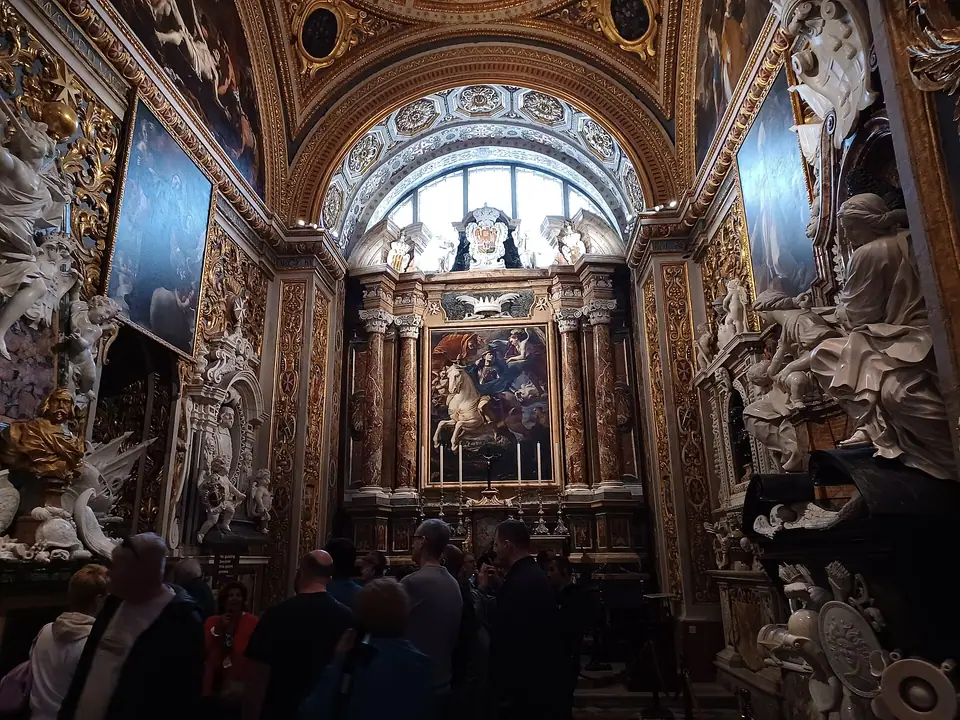
Flanking the central nave are richly decorated side chapels. Each assigned to one of the Langues (ethno-linguistic divisions) of the Order of St John, arranged in order of seniority:
- North Aisle (Left). The Chapel of Anglo-Bavaria (preserving relics and wooden statues), the Chapel of Provence, the Chapel of France. Next to it sits the Chapel of Italy (containing Mattia Preti's painting of St Catherine of Alexandria. The tomb of Preti himself at the entrance).
- South Aisle (Right): The Chapel of Auvergne, the Chapel of Aragon, Catalonia, and Navarre (housing Mattia Preti's dynamic painting of St George on horseback and the flamboyant Baroque marble mausoleum of Grand Master Nicolas Cotoner supported by chained bronze figures). Beyond it lie the Chapel of Castile, León, and Portugal, and the Chapel of Germany.
Finally, why is the church called a "Co-Cathedral"? For centuries, the seat (cathedra) of the Bishop of Malta stood solely inside St Paul's Cathedral in the ancient inland capital of Mdina, while St John's in Valletta belonged exclusively to the Knights Hospitaller. Later, Pope Pius VII issued a papal bull elevating St John's to share equal episcopal status together with Mdina. It gives the Archbishop of Malta two thrones ("co-cathedrals") in Mdina and Valletta. Before exiting, climb the stairs to the newly opened Caravaggio Wing and Viewing Balcony, which lets you look down across the entire nave from the upper organ gallery.
Stepping through the austere Mannerist doorway reveals a striking contrast between outer military sobriety and inner Baroque splendour. Every surface of the barrel vault, side piers, and chapel arches glows with carved stone gilding and narrative brushwork. Sunlight filtering through the upper windows illuminates the heraldic colours of the inlaid marble tombstones lining the nave floor. Moving slowly along the perimeter walkways allows visitors to study individual coats of arms, Latin epitaphs, and symbolic skeletons.
Each side chapel reflects the artistic patronage and regional identity of the knights who funded its altars and sculptures. Taking time to listen to the audio commentary explains how rival European noble houses competed to embellish their assigned bays. Inside the quiet Oratory, careful lighting draws the eye directly to the dramatic chiaroscuro brushwork of Caravaggio.
Arriving early in the morning or later in the afternoon helps you experience the nave and Oratory at a calmer pace. Remember to wear flat shoes that protect the fragile marble inlay and bring a cover for bare shoulders.
Understanding the layout of the nave and side chapels enriches every minute spent inside this monumental church. Each language group of the knightly order decorated its assigned chapel with distinct heraldic carvings, altar paintings, and marble memorials. Overhead, the curved stone vault displays intricate oil scenes painted directly onto the primed limestone surface. Walking the perimeter route in sequence with the audio handset reveals how architecture, painting, and sculpture work together across the interior.
Inside the Oratory, quiet viewing benches allow visitors to study the dramatic light and shadow of the altar canvas without rushing. Upstairs and adjoining sacristy spaces add context on liturgical vestments, silverwork, and choral manuscripts preserved by the foundation. Checking the official site before your visit helps you coordinate arrival around liturgical services and conservation hours.
Allowing unhurried time inside both the main nave and the adjoining Oratory lets the intricate detail of the stone carvings and gilded vaults sink in. Natural light shifts across the high clerestory windows throughout the day, bringing out warm gold and crimson tones in the ceiling frescoes. Stepping back onto the sunlit square outside afterwards offers a striking contrast between the quiet sacred interior and the lively café terraces of the capital.
Where it is
- 1St John's Co-Cathedral
- Malta International Airport (MLA) · about 6 km from here in a straight line
- Directions in Google Maps
Stations and taxi ranks: OpenStreetMap. Airports: OurAirports. Distances are in a straight line.
Traveller tips
Real advice from people who have been to Valletta. Every tip is read by our team before it goes live.
No tips yet. Been here? Yours could be the first.
Thank you! Your tip will appear here after a quick review.
More in Valletta
Continue exploring Valletta with related neighbourhood, food, and planning guides
Where to Stay in Valletta: Flat Ridge Palazzos vs Stepped Harbour Streets
Valletta, Malta
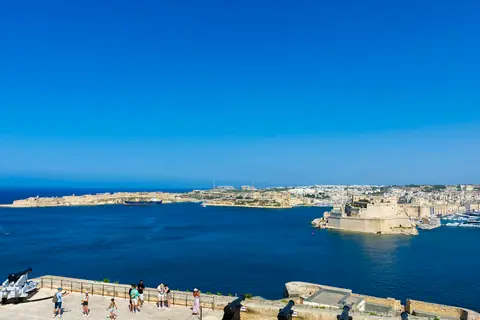
Valletta Itinerary: Baroque Palaces, Three Cities & Mdina
Valletta, Malta
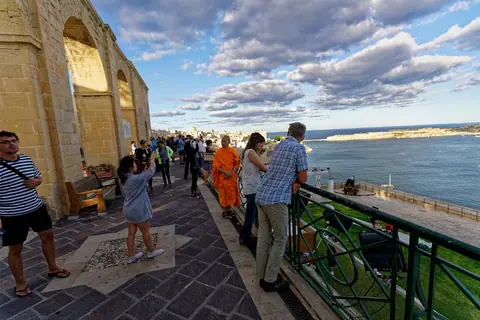
Upper & Lower Barrakka Gardens, Saluting Battery Noon Gun & Lift Guide
Valletta, Malta
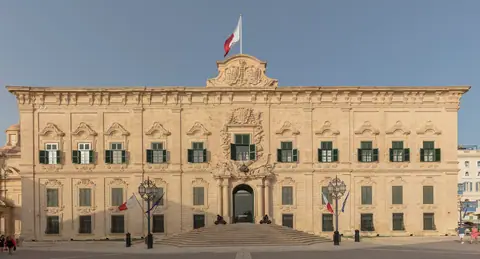
Grand Master's Palace, Armoury, Casa Rocca Piccola & Knights' Auberges Guide
Valletta, Malta
