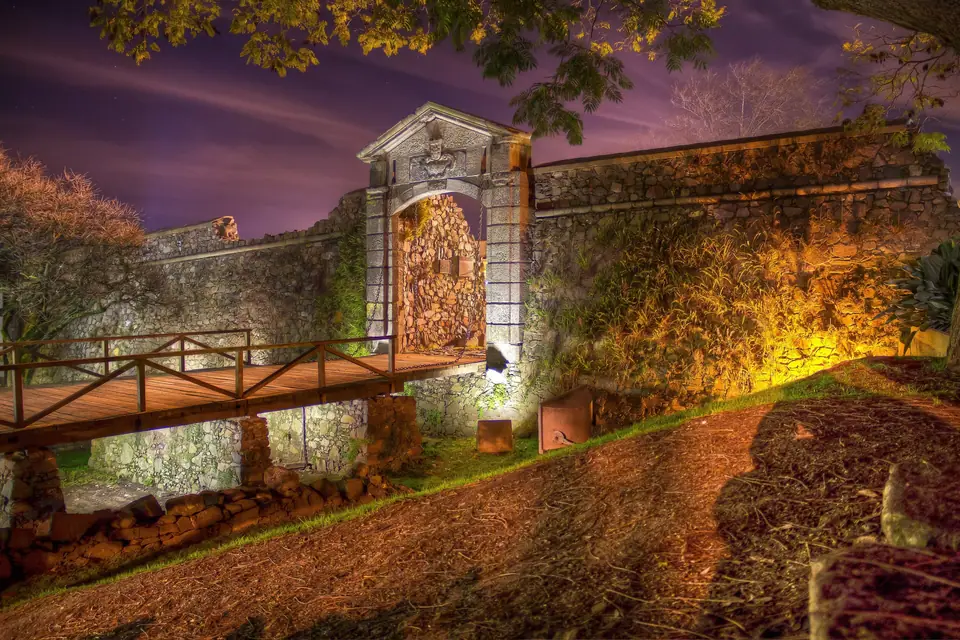
Barrio Histórico, Portón de Campo and Calle de los Suspiros
Navigate the UNESCO Barrio Histórico in Colonia del Sacramento. Discover the 1745 Portón de Campo drawbridge, the fortified Muralla, and the colonial Calle de los Suspiros.
Inscribed on the UNESCO World Heritage List in December 1995, the 16-hectare Barrio Histórico of Colonia del Sacramento represents an extraordinary open-air record of seventeenth- and eighteenth-century South American rivalries. Portuguese military commander Manuel Lobo founded the original settlement in 1680 directly opposite Buenos Aires on the northern bank of the Río de la Plata. Portuguese engineers laid out the citadel along the rocky San Gabriel peninsula, creating winding lanes that followed the land contours. After the Spanish crown assumed permanent control in 1777, administrators introduced wider orthogonal streets paved with stone. Walking across two short blocks here allows you to transition between two contrasting colonial urban philosophies.
The defensive core of this historic peninsula centres on the landward gateway and the surviving river lanes. The Portón de Campo, the fortified stone Muralla, and Calle de los Suspiros preserve intact Portuguese construction methods that vanished from most other parts of the Río de la Plata basin. Travellers arriving from the modern ferry terminal or planning a broader 3 Days in Colonia del Sacramento Itinerary will find that this sector provides the essential foundation for understanding the entire city.
The 1745 Portón de Campo and Drawbridge Defences
Entry to the protected historical zone begins at Plaza 1811, where visitors step onto the massive wooden timbers of the Portón de Campo. Commissioned in 1745 by Colonia's longest-serving Portuguese governor, António Pedro de Vasconcelos, this imposing gateway functioned as the fortified threshold sealing off the narrow peninsula neck. Vasconcelos served as governor between 1722 and 1749, directing extensive engineering works that transformed a vulnerable outpost into an enduring frontier fortress capable of withstanding prolonged Spanish artillery sieges.
The portal features thick granite ashlar masonry designed to absorb cannon fire and a functioning wooden drawbridge suspended over a deep defensive moat. The dry ditch originally prevented infantry charges and sappers from undermining the stone walls. As you step across the timber planks, you enter a barrel-vaulted stone passage that once held heavy iron-studded gates. High on the exterior wall sits the carved relief of the Portuguese royal coat of arms, locally known as El Pilori. This heraldic emblem reminded incoming merchants and foreign naval officers of Lisbon's sovereignty over the estuary shipping trade.
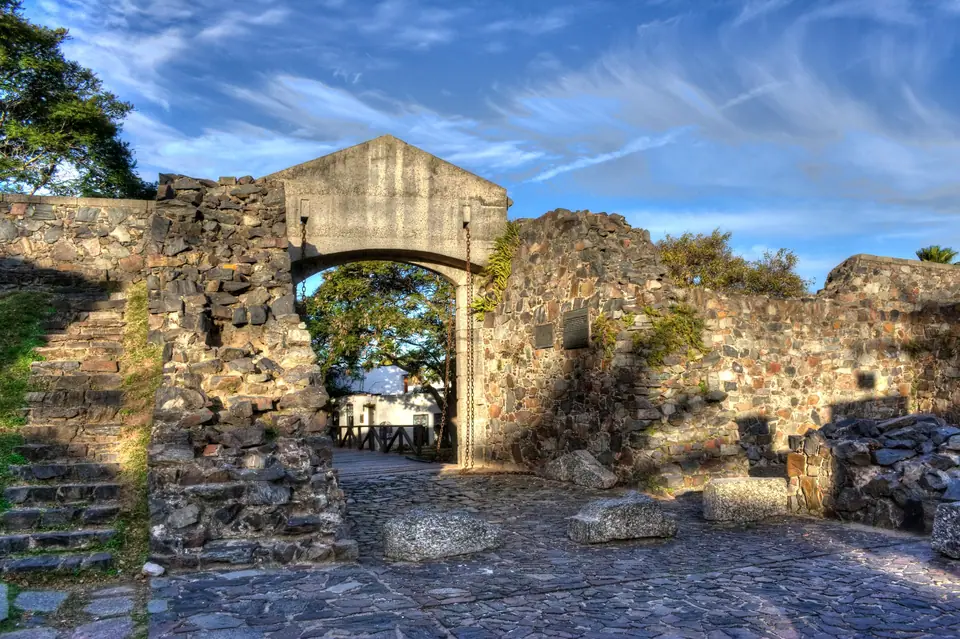
Climbing the Reconstructed Muralla and Bastión de San Miguel
Flanking the Portón de Campo, the defensive ramparts known as the Muralla extend south toward the open water. Historian Miguel Ángel Odriozola directed the meticulous reconstruction of these ramparts between 1968 and 1971, building directly upon exposed eighteenth-century stone foundations. Broad stone staircases ascend from the interior courtyard to the elevated firing line, giving visitors an elevated vantage point over the defensive moat and the modern town outside the walls.
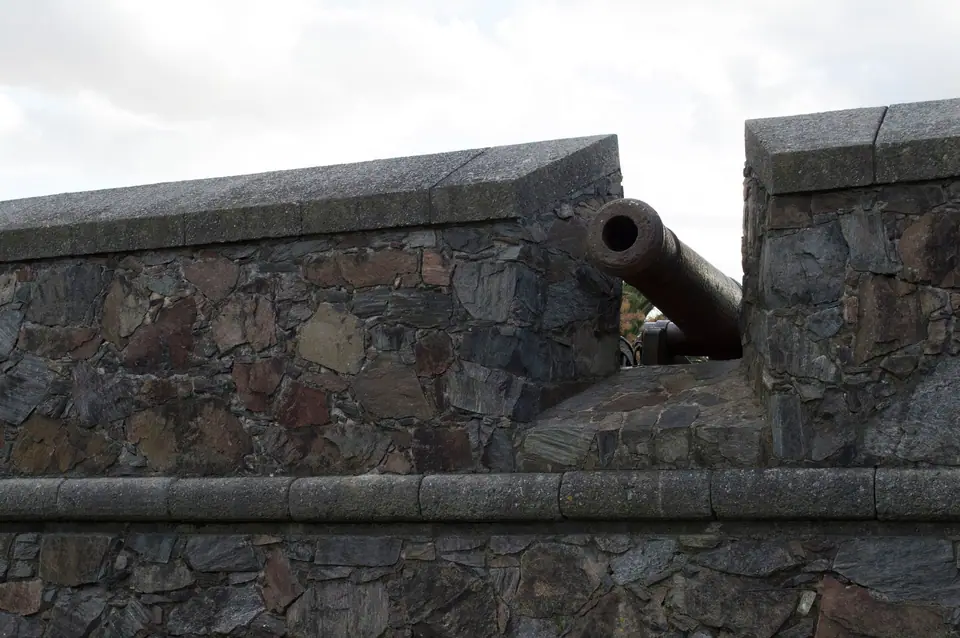
Walking south along the parapet brings you directly to the Bastión de San Miguel, an angular gun platform overlooking the rocky coastline. Heavy iron cannons from the eighteenth century remain positioned behind embrasures, aimed outward across the broad river waters. The strategic value of this bastion becomes immediately obvious from the rampart edge: artillery batteries placed here controlled the southern anchorage and protected the settlement against amphibious landings. From the bastion, pedestrian paths connect directly along the waterfront to other defensive positions detailed in our Basílica del Santísimo Sacramento and Waterfront Bastions Walk.
Calle de los Suspiros: Original Luso-Brazilian Domestic Heritage
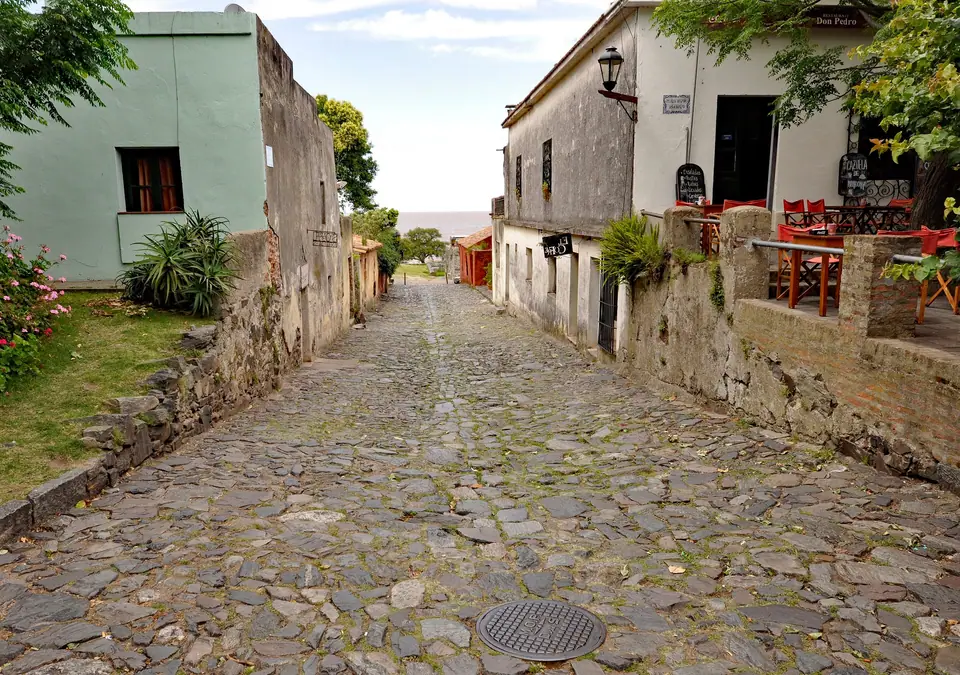
A short stroll west of the bastion leads to Calle de los Suspiros, the most celebrated colonial lane in Uruguay. Unlike the wider paved avenues laid out by Spanish authorities in the late eighteenth century, this narrow, unpaved passage preserves the original architectural texture of the Portuguese military era. The street slopes steeply downward toward the riverbank, terminated visually by the broad horizon of the Río de la Plata.
The domestic architecture along Calle de los Suspiros showcases classic Luso-Brazilian construction techniques from the seventeenth and eighteenth centuries. Single-storey cottages feature thick load-bearing walls made from unshaped fieldstone bonded with adobe and lime mortar. These structures retain their authentic four-sloped terracotta hip roofs, known in Portuguese vernacular tradition as telhado de quatro águas. The roof eaves project outward over the facades to throw seasonal rainwater clear of the lime-plastered walls. Ochre, deep terracotta, and brilliant white lime washes coat the exterior masonry, illuminated by vintage wrought-iron carriage lanterns mounted beside heavy timber window shutters.
Paving, Drainage, and Urban Geography of the Portuguese Citadel
The paving of Calle de los Suspiros differs fundamentally from modern urban streets. Portuguese builders laid rounded river stones, known locally as cuña, directly into the earth without mortar. A pronounced concave stone gutter runs directly down the centre of the lane rather than along the edges. This central drainage channel collected rainwater runoff from the opposing roof slopes and directed it away from house foundations toward the river estuary.
Navigating these irregular, polished stones requires sturdy, flat footwear with solid traction, a requirement emphasised in our guide on What to Wear in Colonia del Sacramento. The irregular stones become slippery during coastal storms and damp winter mornings. The physical design of the street reveals how Portuguese military engineers harmonised domestic quarters with natural surface gradients to manage stormwater before municipal piping existed.
| Historic Landmark | Construction Era | Key Architectural Feature | Historical Function |
|---|---|---|---|
| Portón de Campo | Completed 1745 | Granite ashlar archway with wooden drawbridge | Defensive mainland citadel entrance |
| El Pilori Relief | 18th Century | Carved Portuguese royal coat of arms | Crown sovereignty marker over gateway |
| Muralla Ramparts | 1745, restored 1968 | Elevated stone parapet over dry moat | Infantry defence and siege perimeter |
| Bastión de San Miguel | 18th Century | Granite gun platform with iron cannons | Riverfront artillery battery |
| Calle de los Suspiros | Late 17th to 18th Century | Concave central stone gutter and hip roofs | Residential lane oriented to river |
Practical Timing, Light Conditions, and Preservation Guidelines
The Barrio Histórico is fully open to pedestrians around the clock, with free public access to the gates, ramparts, and streets. The visual character of the stone masonry shifts dramatically throughout the day. Early morning delivers soft light across the drawbridge before day-tripper crowds arrive from Buenos Aires. In the late afternoon, the setting sun casts a warm golden glow across Calle de los Suspiros and illuminates the riverfront parapets.
Because the historic district remains an active residential neighbourhood and a fragile global heritage property, visitors must respect preservation protocols. Do not climb atop the fragile fieldstone walls of historic cottages or dislodge stones from the central street gutter. During wet weather, take extra caution on the polished cobbles. By exploring early in the day, travellers can experience the timeless atmosphere of Governor Vasconcelos's frontier fortress in quiet contemplation.
Where it is
- 1Barrio Histórico, Portón de Campo and Calle de los Suspiros
- Aeroparque Jorge Newbery (AEP) · about 52 km from here in a straight line
- Directions in Google Maps
Stations and taxi ranks: OpenStreetMap. Airports: OurAirports. Distances are in a straight line.
Traveller tips
Real advice from people who have been to Colonia del Sacramento. Every tip is read by our team before it goes live.
No tips yet. Been here? Yours could be the first.
Thank you! Your tip will appear here after a quick review.
More in Colonia del Sacramento
Continue exploring Colonia del Sacramento with related neighbourhood, food, and planning guides

How to Get to Colonia del Sacramento: Buenos Aires Fast Ferries and Montevideo Route 1 Coaches
Colonia del Sacramento, Uruguay
Best Time to Visit Colonia del Sacramento: Seasonal Weather, Wine Harvest and River Breezes
Colonia del Sacramento, Uruguay
What to Wear in Colonia del Sacramento: Footwear for 1680 Cobblestones and River Layers
Colonia del Sacramento, Uruguay
Where to Stay in Colonia del Sacramento: Historic Posadas, Port Hubs and Coastal Retreats
Colonia del Sacramento, Uruguay
