Real de San Carlos and Plaza de Toros Guide: Neo-Mudéjar Bullring and Rambla Walk
Discover the restored 1910 Neo-Mudéjar bullring, Frontón Euskaro, and scenic Rambla de las Américas coastal promenade in Real de San Carlos near Colonia del Sacramento.
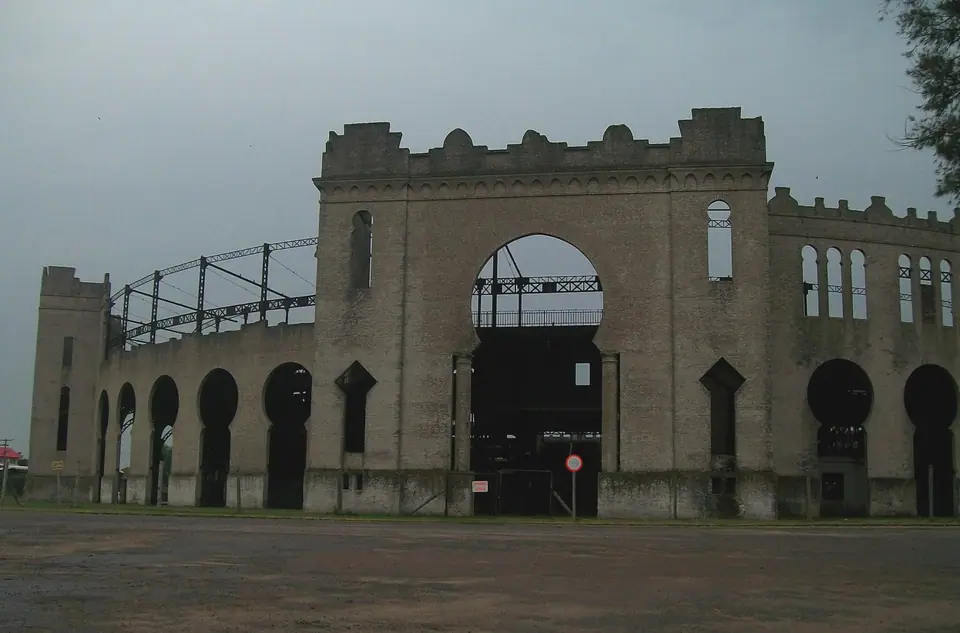
Five kilometres north-west of the fortified Barrio Histórico stands one of the most striking architectural complexes in Uruguay. Positioned at the western end of the palm-lined Rambla de las Américas, the monumental Plaza de Toros Real de San Carlos reveals an eccentric chapter of early twentieth-century leisure engineering. Built in 1910 and comprehensively restored in December 2021, this fifty-metre-wide Neo-Mudéjar arena combines red-brick horseshoe arches with British-style industrial cast iron.
Origins from 1761 Siege Camp to Nicolás Mihanovich Belle Époque Resort
The district draws its name from military conflicts of the eighteenth century. In 1761, Spanish Governor Pedro de Cevallos established his royal siege encampment, termed El Real, on this elevated ridge to bombard Portuguese positions. He dedicated an army chapel to King Charles III of Spain, creating the toponym Real de San Carlos. Cevallos also oversaw the construction of the nearby whitewashed Capilla de San Benito, which still stands a short distance inland.
By the beginning of the twentieth century, Argentine shipping magnate Nicolás Mihanovich reimagined this headland. Argentina had officially banned bullfighting, yet wealthy residents of Buenos Aires sought high-society sporting spectacles. In 1908, Mihanovich secured a government concession to erect an integrated resort complex. His steamship fleet transported thousands of spectators across the Río de la Plata directly to the dedicated steamship pier, Muelle del Real. A private narrow-gauge steam tramway shuttled visitors uphill past a grand hotel-casino, a thermal power station, and sporting pavilions.
Architectural Design and the 1912 Bullfighting Prohibition
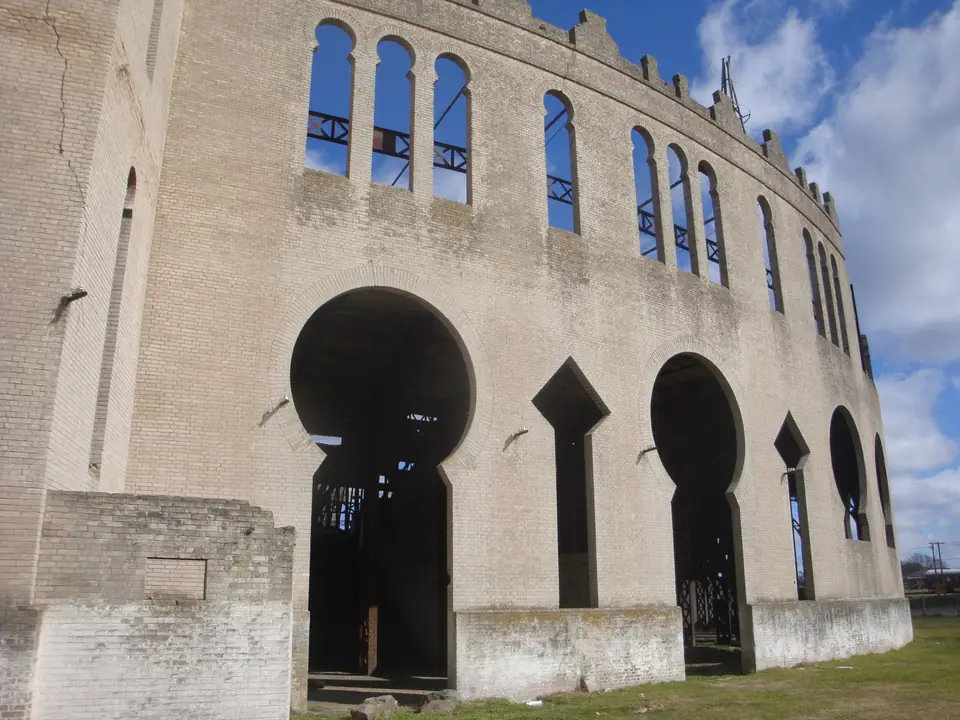
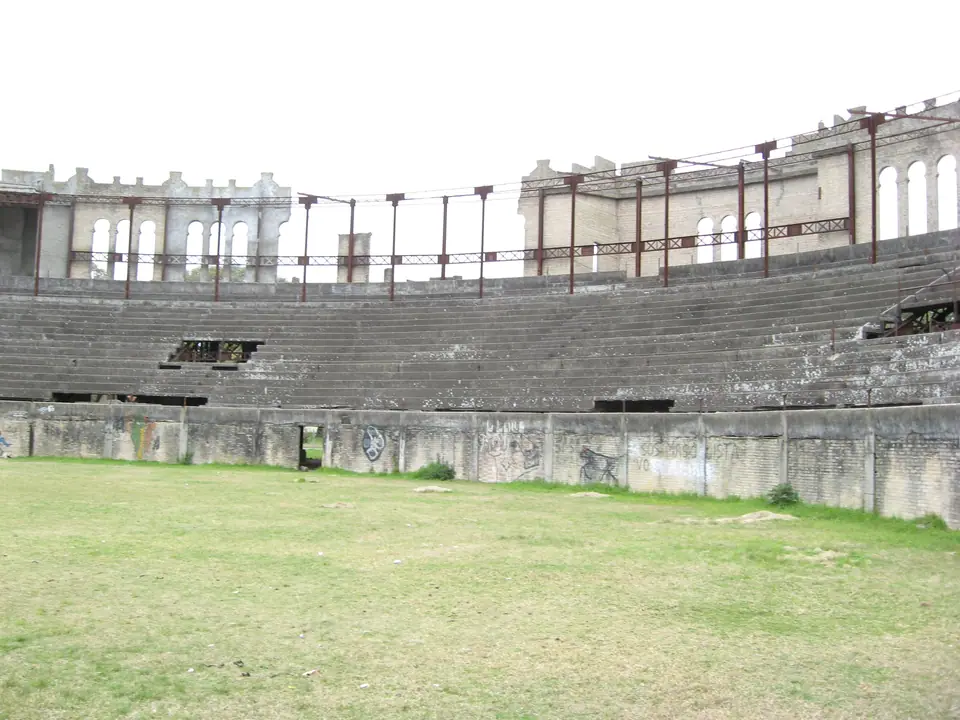
Architects José Marcovich and Dupuy designed the Plaza de Toros with seating for 8,000 spectators. The exterior showcases horseshoe arches, patterned red brickwork, and intricate corbelling reminiscent of Moorish Spain. The interior relies on a sophisticated framework of cast-iron pillars, metal staircases, and open-air galleries that permitted river breezes to cool the audience.
The arena inaugurated on 9 January 1910 with celebrated toreros brought directly from Spain. The venture proved short-lived. Following public outcry regarding animal welfare, Uruguayan President José Batlle y Ordóñez outlawed bullfighting nationwide in 1912. The grand arena hosted only eight official corridas before closing its gates. Decades of coastal winds and damp estuary air corroded the iron superstructure and degraded the masonry, leaving the amphitheatre as a romantic ruin fenced off behind warning perimeters.
The December 2021 Restoration and Modern Cultural Complex
A multi-year restoration project culminated in December 2021, stabilising the historic fabric and reopening the venue for guided architectural tours, musical performances, and exhibitions. Engineers carefully preserved the patina of the historic brickwork while reinforcing structural trusses. The central arena now accommodates open-air gatherings, while covered galleries house museum installations displaying vintage corrida tickets, archival engineering blueprints, and photographic chronicles of Mihanovich's steamships.
Visitors can also examine the adjacent Frontón Euskaro. Erected in 1910 for Basque pelota matches, this enormous concrete and masonry court represents one of the largest pelota walls in South America. Just across the avenue, the historic Usina Eléctrica power plant provided autonomous electrical generation for the resort lights and tram network. Travellers who enjoy regional heritage can easily pair this tour with a broader itinerary, as outlined in our 3-day Colonia del Sacramento itinerary.
Connecting the Barrio Histórico along Rambla de las Américas
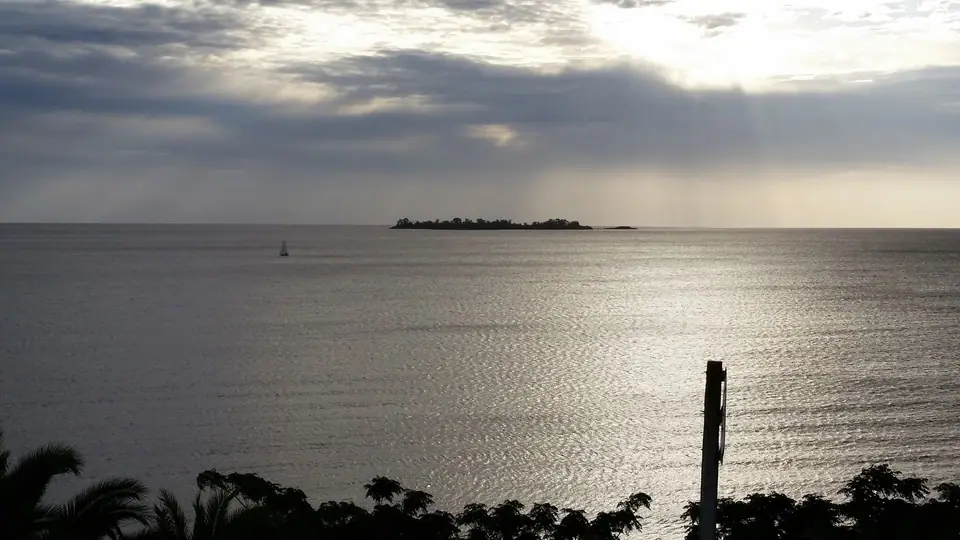
The journey between the colonial core and Real de San Carlos forms an essential part of the experience. The Rambla de las Américas follows the river shoreline northward, offering dedicated cycling paths, pedestrian lanes, and uninterrupted western views over the freshwater estuary. The route skirts sandy crescents including Playa Honda and Playa Ferrando, where calm river currents lap against pale river silt.
Cycling represents the most pleasant mode of transport along this five-kilometre avenue. Independent rental shops in the centre provide town bicycles with front baskets, allowing travellers to complete the ride in twenty leisurely minutes. Walking takes roughly one hour at a steady pace. Local suburban buses operate regular circuits between the central port terminal and the bullring gates, offering reliable shelter during midday heat or winter breezes.
Seasonal Weather Patterns and Touring Considerations
Open-Meteo climate records between 2015 and 2024 demonstrate marked seasonal shifts across Colonia del Sacramento. Summer afternoons in January and February reach average highs of 27°C to 28°C, with lows of 19°C and roughly six rain days per month. The unshaded brick arena and open rambla absorb radiant heat quickly during these months, making morning or late afternoon visits far more comfortable.
Autumn brings mild touring conditions. April records pleasant daytime highs of 22°C and lows of 14°C. Winter months between June and August see average daytime maximums of 14°C to 16°C and night lows dropping to 8°C or 9°C across five wet days each month. Strong south-westerly river winds, locally termed the pampero, can make cycling along the exposed embankment chilly. Travellers should pack windproof jackets and consult our recommendations on what to wear in Colonia del Sacramento for appropriate coastal layering.
| Site Component | Construction Period | Primary Architectural Feature | Visitor Focus |
|---|---|---|---|
| Plaza de Toros | 1908 to 1910 | Neo-Mudéjar brick arches and cast-iron frame | Architectural tours and museum exhibitions |
| Frontón Euskaro | Inaugurated 1910 | Monolithic open-air court wall | Basque sporting heritage and exterior photography |
| Usina Eléctrica | Inaugurated 1910 | Industrial brick power hall | Industrial archaeology of Mihanovich resort |
| Muelle del Real | Inaugurated 1910 | Timber and iron steamship pier pilings | Coastal shoreline ruins and river sunset viewing |
Because opening hours and admission tariffs for interior guided tours vary across summer and winter seasons, check the official municipal tourism portal or the official venue website before your arrival. Ticket offices at the western gate handle reservations, with bilingual docents leading small groups through the lower iron colonnades and elevated brick tiers.
Where it is
- 1Real de San Carlos and Plaza de Toros
- Aeroparque Jorge Newbery (AEP) · about 53 km from here in a straight line
- Directions in Google Maps
Stations and taxi ranks: OpenStreetMap. Airports: OurAirports. Distances are in a straight line.
Traveller tips
Real advice from people who have been to Colonia del Sacramento. Every tip is read by our team before it goes live.
No tips yet. Been here? Yours could be the first.
Thank you! Your tip will appear here after a quick review.
More in Colonia del Sacramento
Continue exploring Colonia del Sacramento with related neighbourhood, food, and planning guides
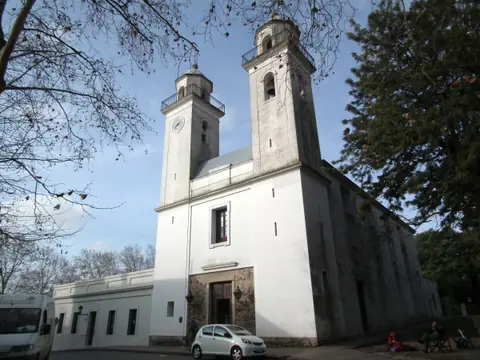
3 Days in Colonia del Sacramento Itinerary: UNESCO Citadel, Plaza de Toros and Country Vineyards
Colonia del Sacramento, Uruguay
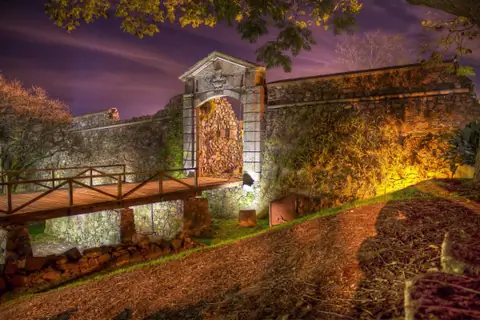
Barrio Histórico, Portón de Campo and Calle de los Suspiros
Colonia del Sacramento, Uruguay
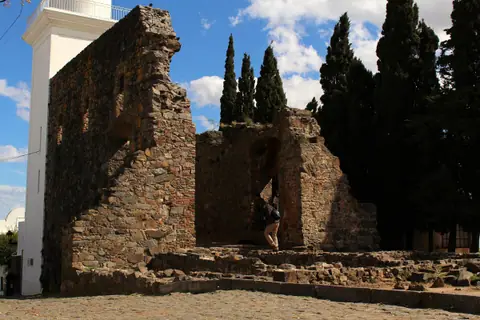
Colonia Lighthouse, Convento de San Francisco Ruins and Plaza Mayor Guide
Colonia del Sacramento, Uruguay
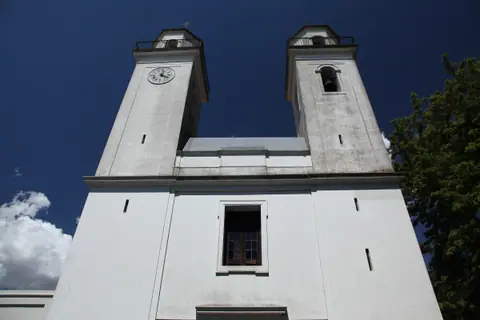
Basílica del Santísimo Sacramento and Waterfront Bastions Walk
Colonia del Sacramento, Uruguay
