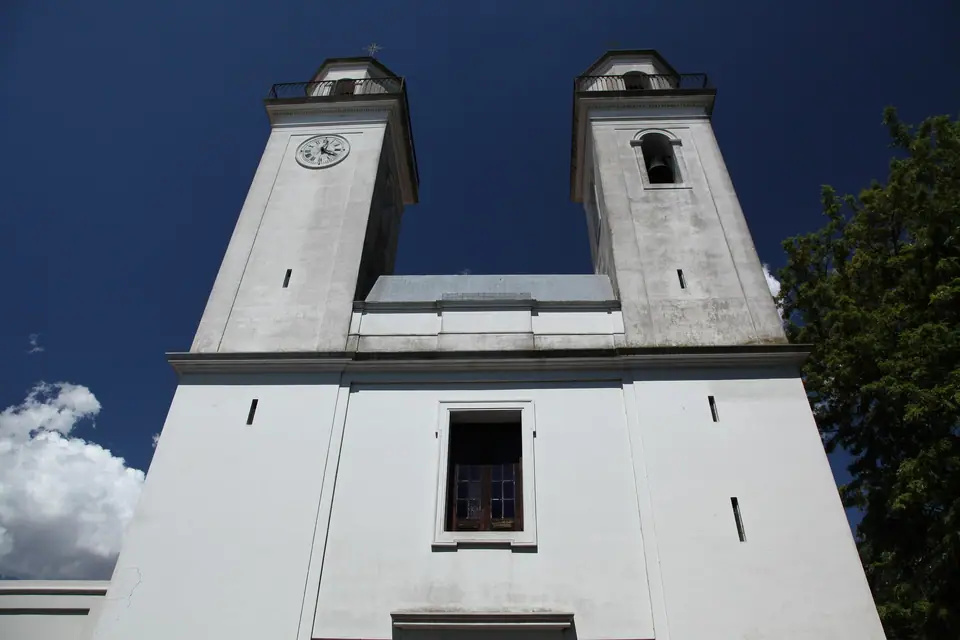
Basílica del Santísimo Sacramento and Waterfront Bastions Walk
Discover Uruguay's oldest church and trace the stone ramparts from Bastión del Carmen to Bastión de San Pedro on the historic riverfront of Colonia del Sacramento.
Just north of the open green of Plaza Mayor 25 de Mayo, the quiet sycamore-shaded square of Plaza de Armas Manuel de Lobo holds Uruguay's oldest parish church. The Basílica del Santísimo Sacramento anchors the religious core of the UNESCO World Heritage site, displaying centuries of Portuguese rubble masonry and Spanish neoclassical brickwork. Connecting this nave with the maritime defence works that fringe the peninsula offers an unvarnished lesson in colonial warfare. Walking the fortified riverfront from Bastión del Carmen around to Bastión de San Pedro and Bastión de San Miguel allows travellers to trace how Portuguese and Spanish engineers turned a rocky headland into an Atlantic frontier stronghold.
Architecture and History of the Basílica del Santísimo Sacramento
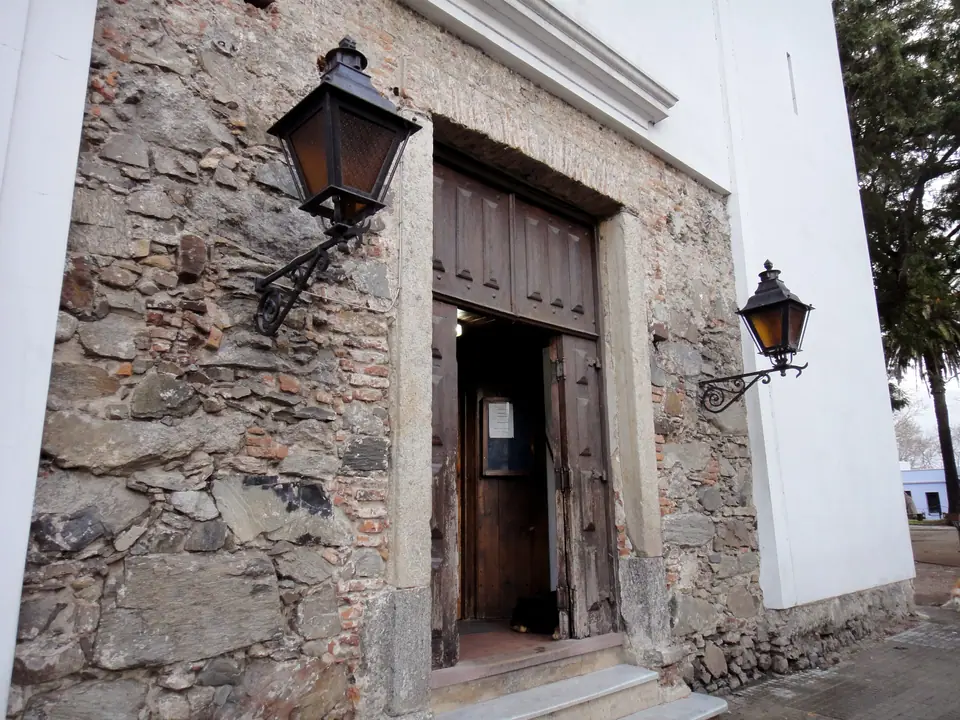
The parish church began in 1680 as a modest mud-and-straw chapel raised by Portuguese soldiers and clerics under Dom Manuel Lobo. Between 1722 and 1749, Portuguese Governor António Pedro de Vasconcelos reconstructed the sanctuary using thick blocks of local granite, shaping the layout into a classical Latin cross. Disaster struck the building repeatedly. In 1799 and 1806, lightning ignited nearby Spanish gunpowder reserves, badly shattering the roof and main chapel. Spanish master architect Tomás Toribio, famous for designing the Cabildo across the river in Montevideo, was commissioned to rebuild the church in 1808 in an austere neoclassical style. An additional lightning strike in 1823 triggered the collapse of the sacristy, necessitating another reconstruction campaign between 1836 and 1841.
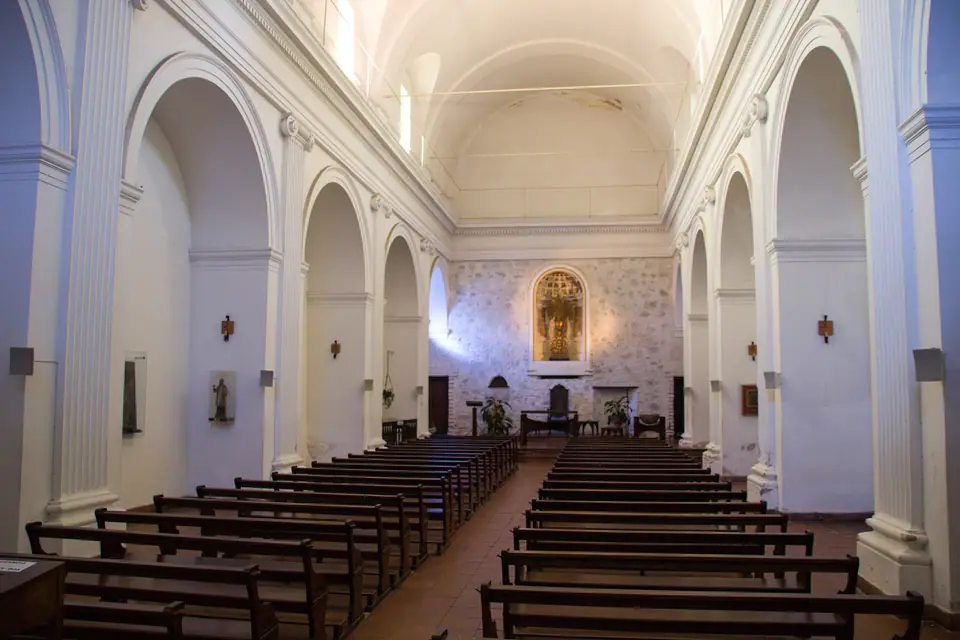
Inside the nave, the layered building history remains visible to the naked eye. Thick cutaway sections of plaster reveal two-metre-wide Portuguese granite walls that withstood bombardments, contrasting sharply with the early nineteenth-century Spanish brick vaulting overhead. The whitewashed interior stays cool during humid summer months, offering a peaceful sanctuary away from midday heat. Just outside the portal on Plaza de Armas, protective iron railings surround the stone foundation ruins of the seventeenth-century Portuguese Governor's House, known as the Comandancia. Visitors can combine this church visit with the nearby military gateway covered in our Barrio Histórico and Portón de Campo guide to trace the full perimeter of the early settlement.
Bastión del Carmen and the Northern Ramparts
Departing Plaza de Armas towards the northern riverbank leads directly to Bastión del Carmen. This military bulwark once guarded the sheltered northern cove against naval raids from Buenos Aires. In the late nineteenth and early twentieth centuries, the fortifications accommodated industrial works, including a naval warehouse and a glue factory, before municipal authorities restored the complex into a public cultural centre. Today, the complex incorporates a performance theatre, municipal exhibition galleries, and grassy riverside courtyards littered with maritime anchors and industrial relics.
The riverside terrace at Bastión del Carmen provides expansive vistas across the Yacht Harbour towards Isla San Gabriel. This granite outcrop served as an initial staging point for Dom Manuel Lobo in 1680 before Portuguese troops moved ashore. Below the outer bastion wall, the timber pilings of Muelle Viejo extend into the brown water of the Río de la Plata. Built in 1866, this historic pier served merchant sloops and timber traders during the post-colonial river commerce boom. The elevated ramparts offer an exceptional vantage point for observing river shipping traffic while walking along the northern defensive perimeter.
Bastión de San Pedro and Bastión de San Miguel
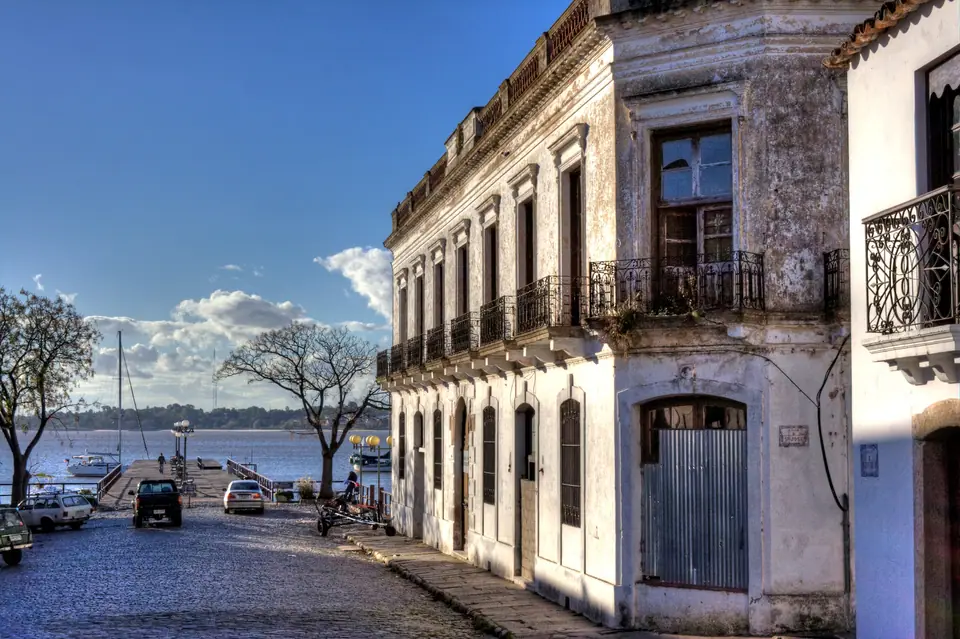
Following the shoreline southwest around the curving promontory brings walkers to Bastión de San Pedro, situated at the extreme tip of the peninsula. Armed with heavy bronze ordnance during colonial sieges, this bastion controlled the central navigation channel. A tall white flagstaff stands upon the raised battery platform, which also borders the crumbling stone foundations of the Casa de la Virreina. Local tradition links these domestic masonry ruins to the family of the Spanish viceroy Rafael de Sobremonte, who fled to the Banda Oriental following the British invasions of the Río de la Plata in 1806. You can inspect historic Portuguese glazed tiles from this era inside local collections outlined in our Colonia del Sacramento museums guide.
Turning east along the wind-scoured southern shore brings the walking route to Bastión de San Miguel. This sector of the defensive ring connected the coastal waters with the fortified town gate and moated curtain wall. Unlike the sheltered northern harbour, this southern rampart receives direct Atlantic currents and sharp southeasterly gales known as the sudestada. The heavy granite revetments here successfully prevented river surf from eroding the southern military barracks. Standing atop these southern gun positions offers uninterrupted views across the water and provides clear lines of sight toward the 1857 beacon detailed in our Faro and Convento de San Francisco guide.
Waterfront Rampart Walk Circuit
| Bastion or Site | Primary Architectural Era | Key Defensive Feature | Scenic Vantage Point |
|---|---|---|---|
| Basílica del Santísimo Sacramento | 1680 chapel, 1730s stone, 1808 neoclassical brick | Two-metre Portuguese granite walls and Comandancia ruins | Plaza de Armas Manuel de Lobo sycamores |
| Bastión del Carmen | Early 18th century ramparts, industrial adaptation | Artillery batteries guarding the northern cove | Yacht Harbour, Isla San Gabriel, and 1866 Muelle Viejo |
| Bastión de San Pedro | 18th century Portuguese and Spanish fortification | Flagstaff platform and Casa de la Virreina foundation walls | Río de la Plata shipping channel and western horizon |
| Bastión de San Miguel | 1745 stone curtain wall integration | Granite seawall absorbing southern coastal swells | Southern shoreline and Convento ruins lighthouse views |
Field Guidelines and Riverfront Climate Considerations
The ramparts and plazas consist of unpolished river boulders, historic cobbles, and sloping stone ramps. Footwear with thick rubber soles and good ankle support is essential for safely navigating these irregular surfaces, especially after light showers make wet granite slippery. Because the stone batteries are fully exposed to strong river gusts, packing a windproof shell is wise across all seasons.
Weather conditions on the peninsula reflect maritime variations across the Río de la Plata. Summer high temperatures peak around 28°C in January, dropping to overnight lows of 19°C with 42 millimetres of rainfall spread across six days. Winter days in July bring daytime highs of 14°C and crisp lows of 8°C with 35 millimetres of rain over five wet days. Spring and autumn bring moderate walking conditions, with October recording daytime highs of 21°C and 49 millimetres of rainfall across seven wet days. Checking official municipal cultural listings before your walk ensures access to seasonal art exhibitions staged within the interior halls of Bastión del Carmen.
Where it is
- 1Basílica del Santísimo Sacramento and Waterfront Bastions Walk
- Aeroparque Jorge Newbery (AEP) · about 53 km from here in a straight line
- Directions in Google Maps
Stations and taxi ranks: OpenStreetMap. Airports: OurAirports. Distances are in a straight line.
Traveller tips
Real advice from people who have been to Colonia del Sacramento. Every tip is read by our team before it goes live.
No tips yet. Been here? Yours could be the first.
Thank you! Your tip will appear here after a quick review.
More in Colonia del Sacramento
Continue exploring Colonia del Sacramento with related neighbourhood, food, and planning guides
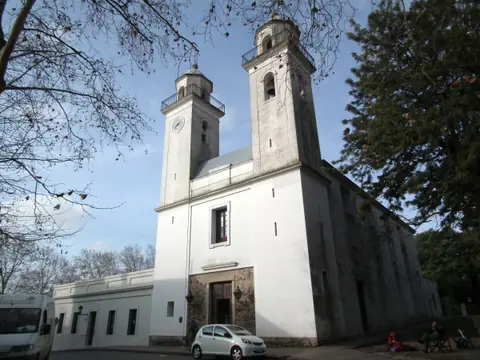
3 Days in Colonia del Sacramento Itinerary: UNESCO Citadel, Plaza de Toros and Country Vineyards
Colonia del Sacramento, Uruguay
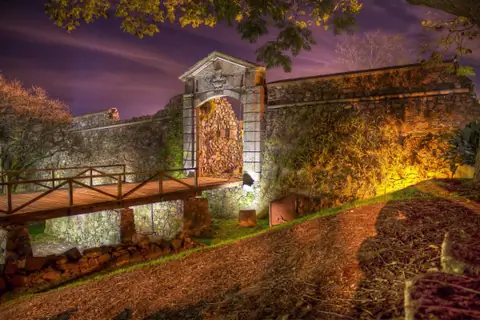
Barrio Histórico, Portón de Campo and Calle de los Suspiros
Colonia del Sacramento, Uruguay
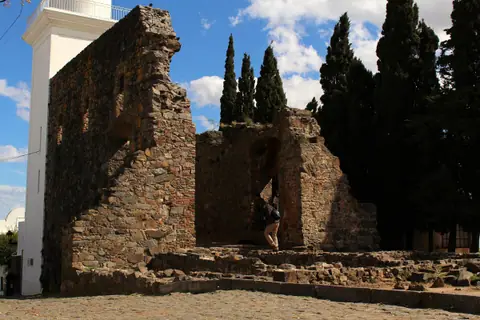
Colonia Lighthouse, Convento de San Francisco Ruins and Plaza Mayor Guide
Colonia del Sacramento, Uruguay
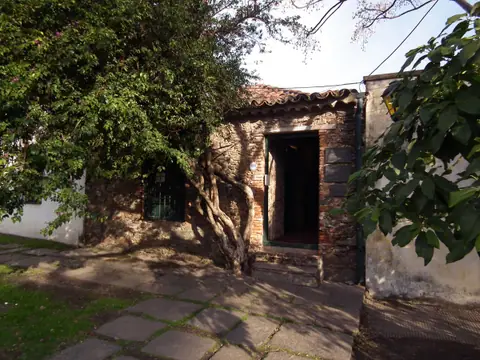
Colonia del Sacramento Museums Guide: Museo Portugués, Casa de Nacarello, Museo Español, and Museo del Azulejo
Colonia del Sacramento, Uruguay
