San Blas Artisan Quarter, Hatun Rumiyoc and Cristo Blanco Viewpoint
Navigate the steep pedestrian alleys of Cusco's artisan quarter, discover Andean woodcarving dynasties, and climb past colonial aqueducts to the Cristo Blanco summit.
Known in Inca times as T'oqokachi, or the Salt Cave, the hillside parish of San Blas rises northeast of Plaza de Armas. Steep stone pedestrian staircases cut past whitewashed adobe walls and indigo wooden balconies. During the colonial period and throughout the twentieth century, San Blas evolved into the historic home of Cusco's premier families of religious sculptors, ceramicists, and woodcarvers. Today, narrow vehicle-free alleys link sheltered courtyard cafés, active family studios, and ascending trails that connect to the colonial Sapantiana Aqueduct and the panoramic Cristo Blanco statue overlooking the valley floor.
Because the neighbourhood climbs steeply along the northern slopes of the historic core, navigating its corridors requires measured pacing. Visitors coming from lower valleys should treat the climb as an altitude test before heading outward across the region. Reviewing our Cusco Travel Guide helps orient newcomers to the city's general physical geography and elevation shifts.
Ascending Hatun Rumiyoc and the Cuesta de San Blas
The standard walking route departs the northeastern corner of Plaza de Armas through Calle Triunfo, leading directly into the narrow corridor of Calle Hatun Rumiyoc. Here, travellers walk beside the green diorite retaining base of the former palace of Inca Roca. This monumental masonry features tight polygonal joints built without mortar, highlighted by the celebrated Twelve-Angled Stone. Visitors interested in the engineering of these imperial foundations can explore our guide to Qorikancha, Santo Domingo and Inca Stonework.
Immediately past the palace wall, the pathway narrows and turns into the Cuesta de San Blas. This stepped flagstone slope climbs approximately sixty vertical metres over a distance of three city blocks. The gradient demands slow footing, particularly during wet afternoons when polished cobbles turn slick underfoot. Independent art workshops, textile outlets, and herbal tea stations border the ascent, offering convenient pauses where travellers can catch their breath while observing local craftsmen at work.
Plazoleta de San Blas and Andean Sculptural Dynasties
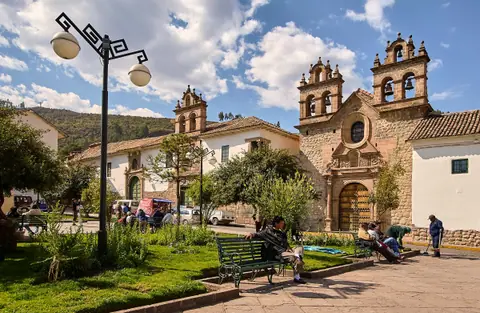
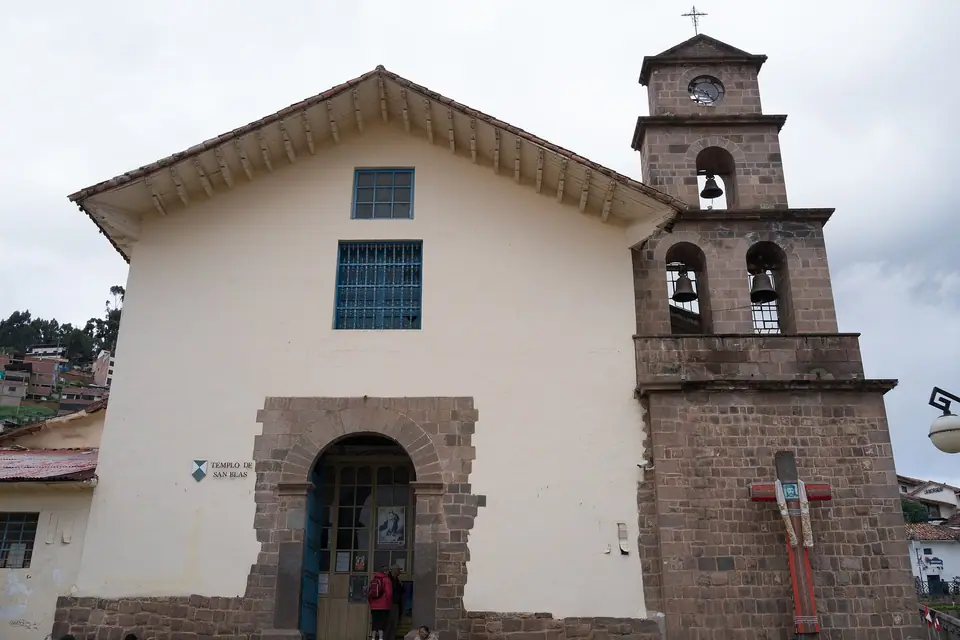
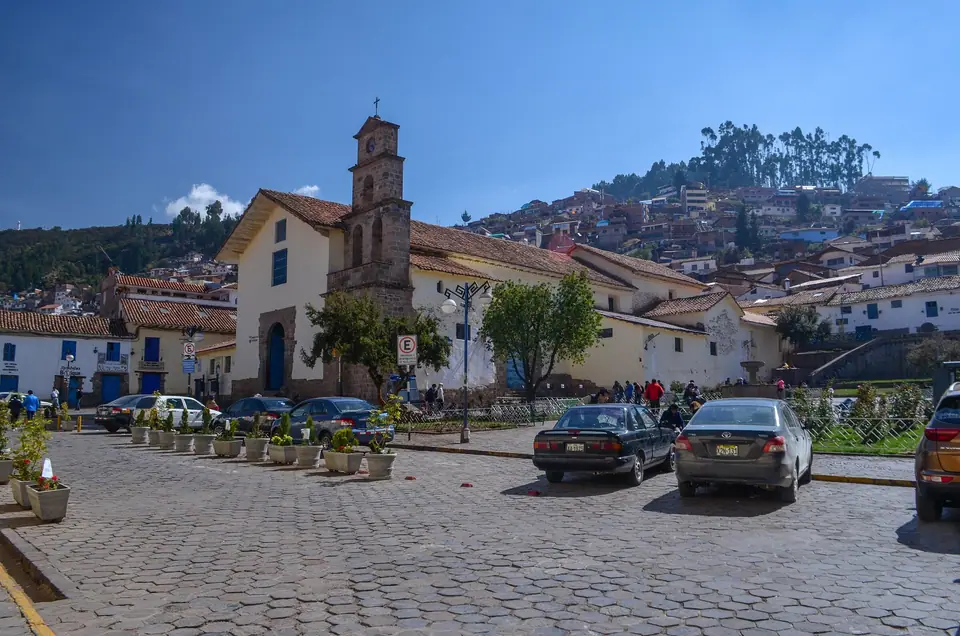
Reaching the top of the cuesta brings walkers into Plazoleta de San Blas, an open square defined by a central stone water fountain and the whitewashed Templo de San Blas, constructed in 1563. The modest adobe exterior conceals one of the defining woodcarving masterworks of Andean Baroque art. Inside stands an intricate cedar pulpit carved from a single massive trunk during the late seventeenth century, attributed to indigenous master sculptor Juan Tomás Tuyru Túpac. The pulpit features complex foliage, biblical figures, and a crowning likeness of Saint Paul positioned above a human skull.
Surrounding the plaza and neighbouring alleys are the studios of legendary artisan dynasties, including the Mendívil, Olave, and Mérida families. The Mendívil lineage gained international renown for developing religious statuary characterized by elongated, swan-like necks, inspired by the graceful anatomy of Andean llamas and alpacas. The Olave workshop specialized in porcelain-finished Christ figures with shimmering glass eyes, while the late Edilberto Mérida pioneered terracotta sculptures portraying indigenous farmers with exaggerated, sorrowful features and enlarged hands. Many working family galleries permit visitors to observe carving, gilding, and painting techniques passed down across successive generations.
The Sapantiana Aqueduct Walk and Forest Trails
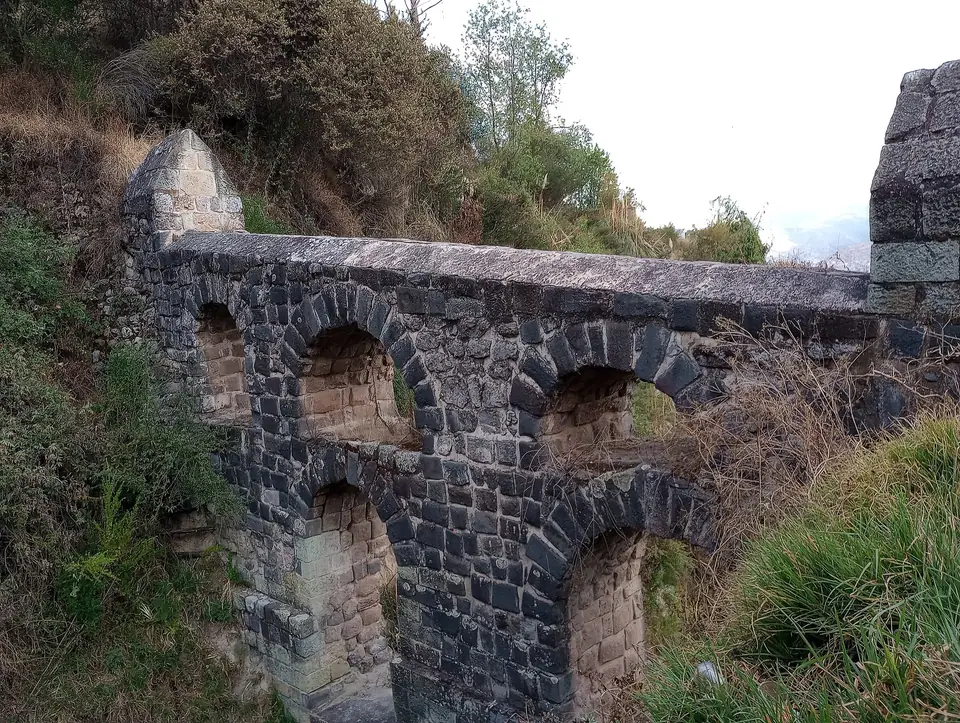
Leaving the plaza toward the north along Calle Choquechaca or Calle Tandapata leads to the ravine of the Tullumayo stream. Tucked inside this small canyon stands the Acueducto de Sapantiana, a colonial hydraulic structure featuring four stacked tiers of stone arches spanning the riverbed. Constructed to channel clean spring water from upper mountain sources into the colonial city, Sapantiana fell into obscurity for generations before municipal restoration exposed its impressive stonework and created an elevated pedestrian walkway.
Walking along the stone channels beside the rushing stream offers a quiet transition from urban streets to mountain slopes. The sheltered ravine retains cool air even during midday sun, framed by hanging ferns and indigenous trees. Footpaths crossing the upper level of the arches connect with stone stairs that rise directly into the forested hillsides guarding the Sacsayhuamán perimeter.
Hiking to the Cristo Blanco Viewpoint on Pukamoqo
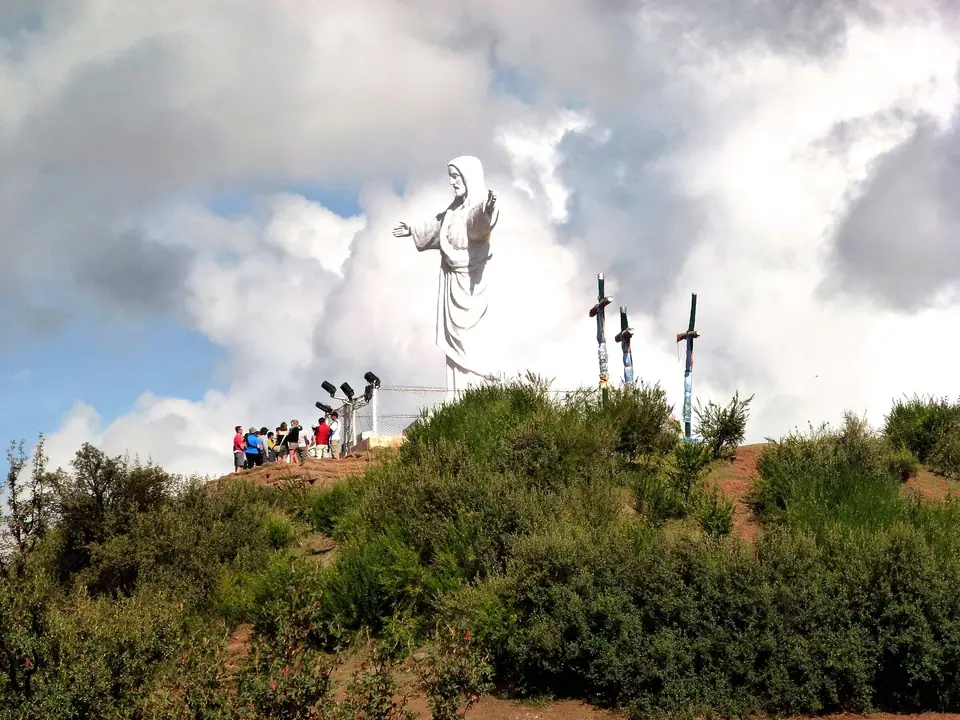
The climb continues uphill from Sapantiana or Calle Resbalosa toward the hill of Pukamoqo, an Inca ritual location situated immediately east of the megalithic walls detailed in our guide to Sacsayhuamán, Q’enqo, Puka Pukara and Tambomachay. Standing upon the summit is the Cristo Blanco, an eight-metre statue of Christ with outstretched arms. The sculpture was designed by local artist Francisco Olazo Allende and erected in 1945 as a gift from Cusco's Palestinian community.
The viewpoint terrace yields an unobstructed panoramic vista across Cusco's red-tile roofs, cathedral towers, and ancient layout shaped like an imperial puma. The vast green expanse of the Plaza de Armas appears directly below, framed by the peaks of Mount Ausangate in the far distance during crisp, cloudless mornings. Returning downhill can be done along the San Cristóbal church terrace or via the pedestrian switchbacks back into San Blas.
San Blas Walking Route Planning
| Route Segment | Terrain and Footing | Key Visual Landmarks | Navigational Advice |
|---|---|---|---|
| Plaza de Armas to Plazoleta | Steep stone steps and cobblestones | Inca Roca wall, Twelve-Angled Stone | Maintain a slow pace on Cuesta de San Blas to manage altitude strain |
| Plazoleta de San Blas | Flat stone paving and open courtyards | Templo de San Blas, artisan family studios | Respect photography policies posted inside individual family art galleries |
| Tandapata to Sapantiana | Narrow flagstone alleyways and stone ramps | Tullumayo ravine, multi-tier colonial arches | Footing turns slick near running water; use stable rubber-soled footwear |
| Sapantiana to Cristo Blanco | Unpaved dirt switchbacks and stone stairs | Pukamoqo hillside, eucalyptus groves | Ascend during daylight hours and carry warm windproof layers for the exposed ridge |
Seasonal Weather and Walking Conditions
Walking conditions across San Blas and its upper lookouts vary distinctly between the Andean dry and wet periods. Historical climate data from Open-Meteo across 2015 to 2024 reveals the sharp difference between seasons:
- Dry Winter Months (May to August): Exceptionally reliable conditions for walking, averaging only 1 to 2 wet days per month and total monthly precipitation between 7mm and 14mm. Afternoon high temperatures reach 20.6°C to 21.5°C under intense high-altitude sunlight. Night temperatures drop sharply to averages between 1.2°C and 3.6°C, so an evening descent from Cristo Blanco requires thermal outer layers.
- Shoulder Seasons (April, September, and October): Moderate moisture, with rain totals rising from 28mm across 4 wet days in September to 63mm over 9 wet days in October. Daytime highs range from 21°C to 21.9°C, providing pleasant temperatures for navigating steep pedestrian stairs.
- Rainy Season (November to March): Frequent afternoon cloudbursts peak in January with 140mm across 20 wet days, while February brings 119mm over 17 wet days. Maximum temperatures average 20.3°C to 20.5°C with nighttime lows around 8°C. The polished stones along Cuesta de San Blas require careful footwork during wet hours.
Where it is
- 1San Blas Artisan Quarter, Hatun Rumiyoc and Cristo Blanco Viewpoint
- Alejandro Velasco Astete International Airport (CUZ) · about 5 km from here in a straight line
- Directions in Google Maps
Stations and taxi ranks: OpenStreetMap. Airports: OurAirports. Distances are in a straight line.
Traveller tips
Real advice from people who have been to Cusco. Every tip is read by our team before it goes live.
No tips yet. Been here? Yours could be the first.
Thank you! Your tip will appear here after a quick review.
More in Cusco
Continue exploring Cusco with related neighbourhood, food, and planning guides