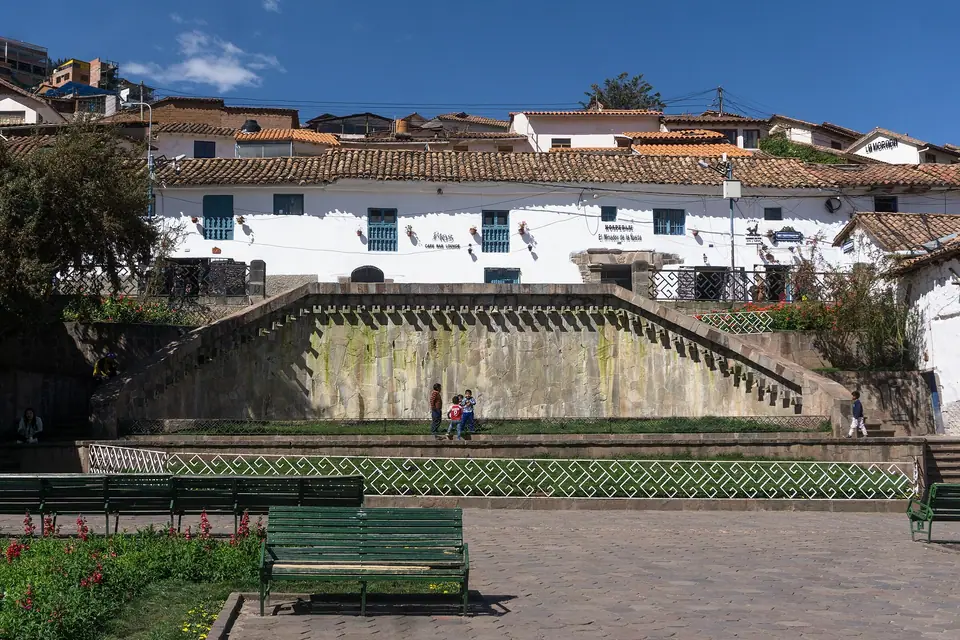
Where to Stay in Cusco: Historic Centre, San Blas and the Sacred Valley
Compare Cusco's distinct accommodation sectors, from flat historic colonial mansions near Plaza de Armas to hillside artisan quarters and low-elevation valley retreats.
Selecting accommodation in Cusco depends as much on physical topography as architectural character. At an elevation of 3,400 metres, even a brief ascent up steep stone steps places heavy demands on your lungs and legs during your initial forty-eight hours. The level valley basin surrounding Plaza de Armas, Plazoleta Regocijo, and Avenida El Sol offers flat pavements and direct vehicle access. In contrast, the elevated slopes of San Blas and San Cristóbal exchange vehicular convenience for quiet pedestrian lanes and expansive vistas across red clay roofs.
Historic Centre: Plaza de Armas, Regocijo and Nazarenas
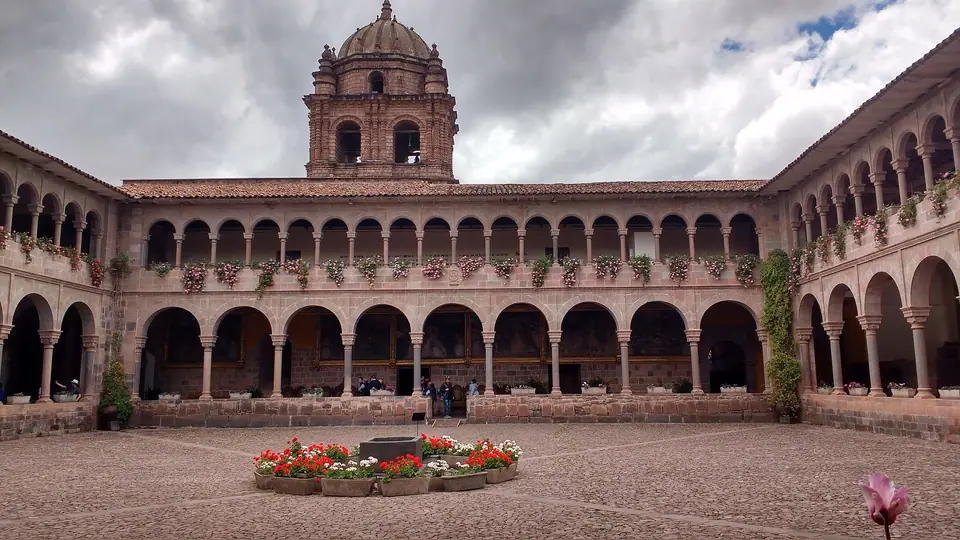
The flat urban basin encompassing Plaza de Armas, Plazoleta Regocijo, and Plazoleta Espinar serves as the most functional base for first-time visitors adjusting to high altitude. Many hotels across these central blocks occupy sixteenth- and seventeenth-century Spanish casonas constructed around arcaded stone courtyards. Several properties incorporate original Inca foundation walls directly into their dining rooms and lower corridors.
Establishing your base on the valley floor keeps you within a five-minute flat walk of the Cathedral, Museo Inka, and the Sun Temple at Qorikancha. One block uphill from the Cathedral, Plazoleta de las Nazarenas sits on a tranquil stone square anchored by the Museum of Pre-Columbian Art and converted convent palaces. Vehicles reach hotel entrances directly in this sector, preventing the exhaustion of carrying heavy luggage up steep Andean stairways.
San Blas Artisan Quarter: Narrow Steps and Hillside Vistas
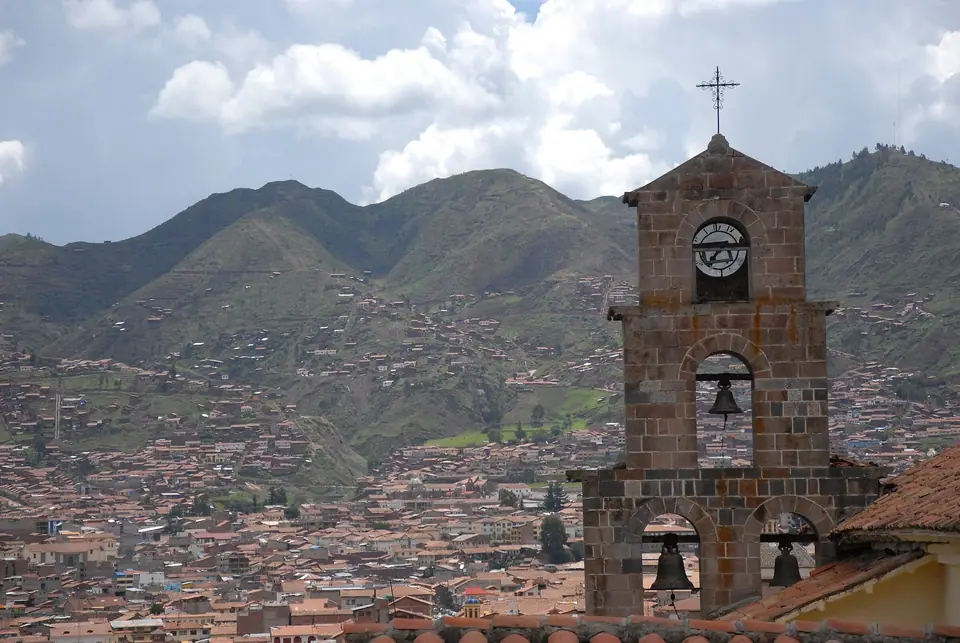
Rising northeast of Plaza de Armas above the historic green diorite walls of Hatun Rumiyoc, the artisan district of San Blas occupies the ancient Inca sector of T'oqokachi. The neighbourhood is famous for whitewashed adobe houses, blue wooden window frames, and independent stone-carving workshops. The pedestrian approach climbs via Cuesta de San Blas, an unrelenting stone stairway that challenges travellers on their arrival day.
Staying in San Blas rewards guests with quiet nights, independent bakeries, and clear views over the tiled roofs of the historic valley. However, narrow streets prevent standard taxis from reaching many front doorways. Guests booked at properties along upper alleys must carry luggage up flights of rough cobblestones. If you choose this artisan quarter, plan your arrival through Velasco Astete Airport with lightweight luggage or request hotel porter assistance at the lower plaza.
San Pedro and Santa Clara: Local Rhythm and Transit Convenience
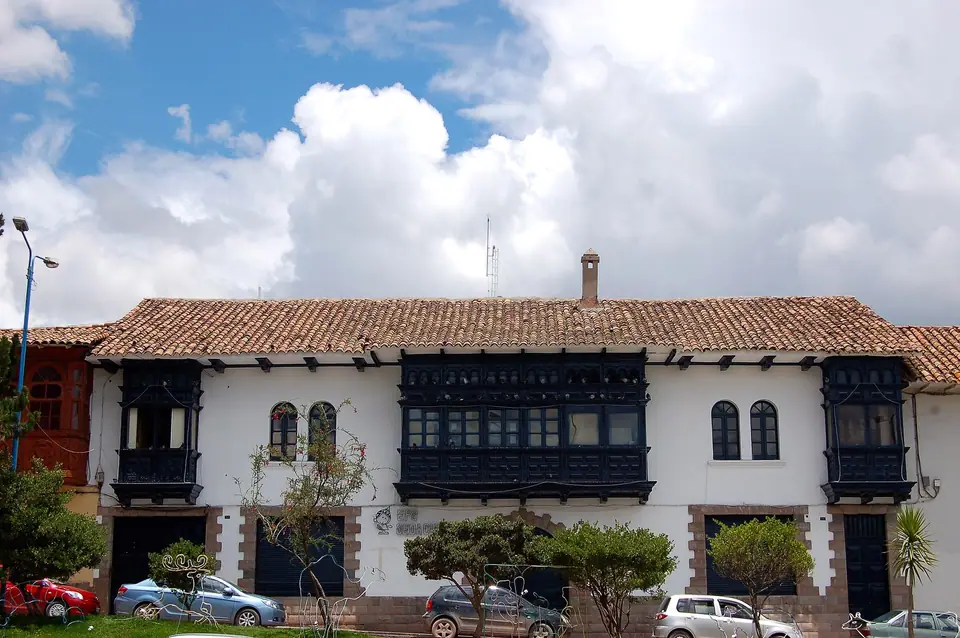
West of Plazoleta Regocijo, the streets around Plaza San Francisco and the Santa Clara Arch lead toward the market district. Properties here provide flat walking terrain and sit within easy reach of the railway station serving trains to the Sacred Valley. Staying near San Pedro Market immerses visitors in daily Andean commerce, surrounded by fruit stalls, herbalist counters, and wool merchants.
This district suits independent travellers seeking practical transport connections and affordable bakeries. The streets sustain steady trade through the day, although traffic noise increases around the railway lines and market unloading bays. Choose accommodations located on pedestrianised side alleys or inside enclosed colonial courtyards to ensure restful sleep away from street commerce.
Sacred Valley Strategy: Acclimatisation at Lower Elevations
A proven strategy for visitors vulnerable to acute mountain sickness involves bypassing central Cusco immediately upon landing. Travellers descend directly into the Sacred Valley of the Incas. Towns such as Urubamba and Ollantaytambo sit at roughly 2,792 metres, providing a drop of roughly 600 metres below the elevation of Cusco. Spending your first two or three nights in the valley allows your body to build red blood cells in milder conditions before climbing back to the regional capital.
Base yourself in Ollantaytambo to explore ancient stone terraces and board morning rail services toward Machu Picchu without early transit transfers. You can tour nearby agricultural ruins via the Moray Terraces and Chinchero route on your return journey to Cusco. Once acclimatised, returning to central Cusco at 3,400 metres feels far less taxing on your cardiovascular system.
Comparing Cusco Accommodation Sectors
| District | Elevation Profile | Primary Architectural Style | Transport Access | Best Suited For |
|---|---|---|---|---|
| Plaza de Armas and Nazarenas | Level basin at 3,400 m | Colonial stone mansions and convents | Direct taxi drop-off at entrance | First-time arrivals and initial acclimatisation |
| San Blas (T'oqokachi) | Steep hillside ascent above 3,420 m | Whitewashed adobe with carved balconies | Pedestrian stairways with restricted drop-offs | Artisan atmosphere and panoramic viewpoints |
| San Pedro and Santa Clara | Gentle slope at 3,390 m | Republican townhouses and commercial blocks | Direct road links and market rail proximity | Transit convenience and local food culture |
| Ollantaytambo (Sacred Valley) | Valley floor at 2,792 m | Original Inca stone foundations and rural estates | Direct highway links and train terminal access | Early acclimatisation and rail departures |
Seasonal Climate and Room Heating Essentials
Nighttime temperatures in the high Andes drop sharply throughout the year. Between May and August, daytime highs average between 20.6°C and 21.5°C, but dry winter night temperatures plummet to lows between 1.2°C and 3.6°C. June and July record the lowest overnight temperatures of the year, beside minimal rainfall of only 7 millimetres across a single monthly wet day. Unheated stone rooms become bitterly cold after sunset during these winter months.
Rainy summer months from December through March bring milder nights of 7.8°C to 8°C, but humidity and precipitation rise dramatically. January experiences roughly 140 millimetres of rainfall spread across 20 wet days, while February brings 119 millimetres over 17 wet days. Traditional colonial buildings absorb moisture during prolonged downpours. When booking your room, confirm that the property provides supplementary electric heaters or climate control, thermal blankets, and reliable hot water systems.
Practical Room Selection and Arrival Tactics
To ensure comfortable recovery from long flights and mountain air, apply these practical selection rules before finalising your booking:
- Verify vehicle access to your hotel door, especially if you carry bulky bags or travel with young family members.
- Request interior courtyard rooms rather than street-facing windows to avoid early delivery noise, barking dogs, and early morning church bells.
- Ask whether your room includes supplemental oxygen systems or portable oxygen concentrators if you have a history of altitude illness.
- Confirm that the hotel front desk maintains hot water carafes and fresh coca leaves for brewing tea throughout the day.
- Coordinate your airport transfer in advance so your driver knows the exact drop-off point if your hotel lies inside a pedestrian-only lane.
Where it is
- 1Cusco
- Alejandro Velasco Astete International Airport (CUZ) · about 5 km from Cusco in a straight line
- Directions in Google Maps
Stations and taxi ranks: OpenStreetMap. Airports: OurAirports. Distances are in a straight line.
Traveller tips
Real advice from people who have been to Cusco. Every tip is read by our team before it goes live.
No tips yet. Been here? Yours could be the first.
Thank you! Your tip will appear here after a quick review.
More in Cusco
Continue exploring Cusco with related neighbourhood, food, and planning guides
Best Time to Visit Cusco: Dry Andean Winters, Inti Raymi and Rainy Months
Cusco, Peru
Cusco 3-Day Itinerary: Historic Core, Sacsayhuamán and the Sacred Valley
Cusco, Peru
What to Eat in Cusco: Traditional Andean Dishes, Chiri Uchu and Market Specialities
Cusco, Peru
Plaza de Armas, Cusco Cathedral and Iglesia de la Compañía de Jesús
Cusco, Peru
