Florence Cultural Highlights and Historic Neighbourhoods
Historic squares, celebrated galleries, peaceful riverbanks, and distinct artisan neighbourhoods across both banks of the Arno shape central Florence.
Florence rewards travellers who take their time across compact paved alleys and monumental civic squares. We begin our journeys in the historic core, where centuries of architectural ambition remain visible on every corner. Broad pedestrian pathways connect grand palaces to medieval lanes without requiring local buses or taxis. Setting an easy rhythm helps visitors absorb intricate stone facades, quiet side chapels, and shadowed arcades. Spatial orientation from Florence neighbourhood districts and walking routes frames how these central piazzas sit within minutes of each other.
Navigating Piazza del Duomo and the Historic Centre
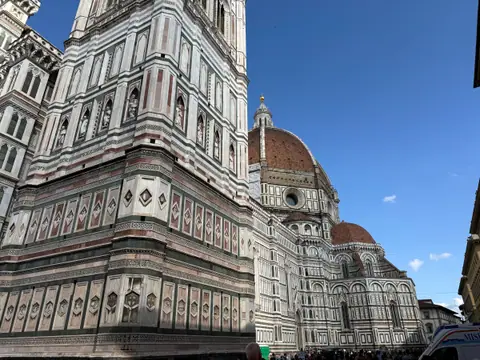
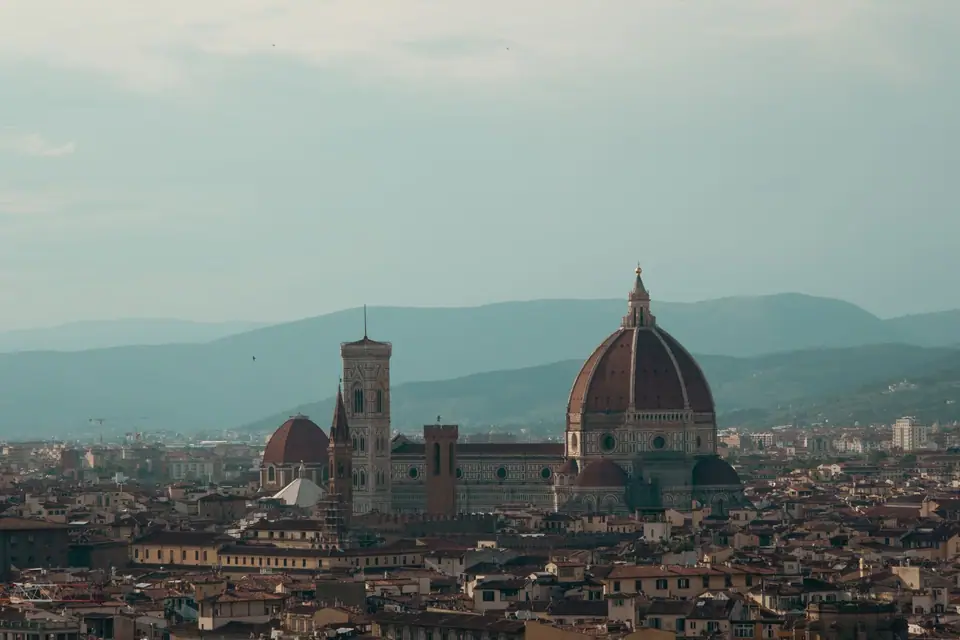
Piazza del Duomo forms the architectural and geographical compass point of central Florence. The cathedral complex features complex marble cladding in green, pink, and white tones, drawing crowds from early morning. Visitors admiring the exterior can trace the octagonal profile of the historic baptistery and Giotto's towering bell tower. Surrounding alleys remain strictly pedestrianised, allowing comfortable on-foot exploration between ancient religious sites and quiet neighbourhood cafes. The sheer scale of Filippo Brunelleschi's red-tile dome dominates the northern skyline from almost every opening.
We recommend circling the entire perimeter of the cathedral before heading southward toward the river. Paved flagstones can become slippery during morning drizzle, so sensible rubber-soled footwear proves invaluable on smooth stones. If you climb the stone steps of the bell tower, carry water and pace yourself steadily. Timed entry tickets apply across all interior monument spaces, so pre-booking helps bypass morning street queues.
Riverbanks, Historic Bridges, and Oltrarno Artisan Quarters
Crossing south over the Arno River leads directly into Oltrarno, a neighbourhood celebrated for independent craft workshops and quieter residential streets. The famous Ponte Vecchio supports traditional goldsmith boutiques above the flowing water, serving as a scenic crossing point between central palaces and southern gardens. Traversing the bridge during early morning gives unobstructed views over soft river reflections before midday pedestrian traffic gathers.
Oltrarno offers a distinctly local atmosphere where leather workers, picture framers, and antique restorers maintain traditional workshops. The broad stone facade of Palazzo Pitti anchors the district, while nearby Piazza Santo Spirito gives shaded benches beneath leafy trees. Residents and travellers pause here for morning espresso while watching stallholders sell fresh produce in the square. Arriving via regional rail and tram lines connects station platforms straight into footpaths leading south to the river.
- Ponte Vecchio offers scenic vantage points along both upstream and downstream embankments.
- Piazza Santo Spirito features outdoor cafes, morning market stalls, and quiet perimeter benches.
- San Frediano preserves working craft ateliers, quiet residential corners, and family-run bakeries.
- Oltrarno backstreets remain far less congested than the dense museum corridors across the river.
Major Art Galleries and Cultural Priorities
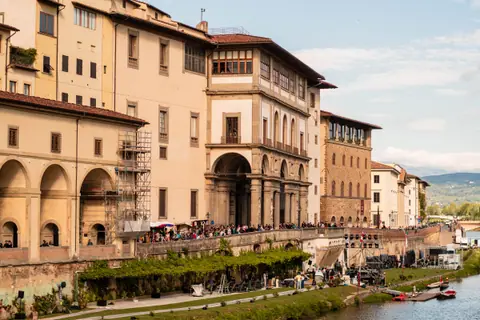
The city's extraordinary concentration of Renaissance art requires structured planning to avoid museum fatigue. Rather than attempting multiple grand galleries on the same afternoon, we suggest focusing on one primary collection each day. The Uffizi Gallery displays centuries of Florentine artistic achievement alongside classical Roman sculptures in grand second-floor corridors. Its riverside windows frame picturesque sightlines toward San Miniato al Monte and the southern hills.
To help balance your cultural itinerary across varied districts, consider this sequence of artistic and civic priorities:
| District Focus | Primary Highlights | Atmosphere |
|---|---|---|
| Piazza del Duomo | Cathedral facade, baptistery bronze doors | Monumental and active core |
| Signoria Quarter | Palazzo Vecchio, open-air sculpture loggia | Civic grandeur and historic politics |
| Oltrarno | Artisan workshops, Boboli garden paths | Residential ease and artisan crafts |
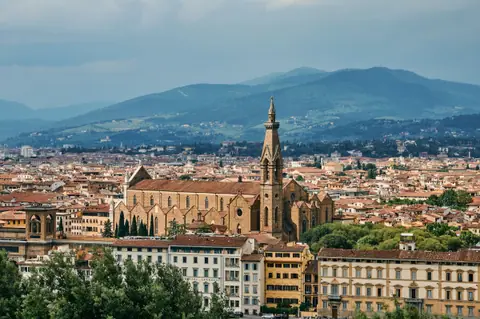
| Santa Croce | Franciscan basilica, leather school lanes | Spacious square and artisan trades |
Advance timed booking is essential for major state museums throughout peak travel months rather than relying on on-the-day counter queues.
Piazza della Signoria and Historic Thoroughfares
Piazza della Signoria has served as the political heart of Florence since the medieval republic. The rugged rusticated stone of Palazzo Vecchio anchors the eastern edge of the square, framed by monumental fountain sculptures and heroic bronze statues. The Loggia dei Lanzi functions as an open-air sculpture hall, where visitors can sit beneath stone vaults and study classical forms free of charge. Musicians frequently perform acoustic sets here as afternoon heat subsides.
Continuing east toward Santa Croce brings us into broad thoroughfares lined with historic stationers and bookbinders. The spacious piazza in front of Basilica di Santa Croce features stone benches where travellers can rest tired feet after hours of museum corridors. During quiet evening hours, amber lanterns illuminate the pale stone pavement, revealing subtle architectural details often missed in direct midday sun. Exploring at dusk captures the timeless dignity of these Renaissance streets.
Official prices and opening hours
- Galleria degli UffiziOfficial site ↗
- Opera del Duomo (Brunelleschi Dome, Baptistery, Bell Tower)Official site ↗
Where it is
- 1Florence
- Florence Airport, Peretola (FLR) · about 6 km from Florence in a straight line
- Directions in Google Maps
Stations and taxi ranks: OpenStreetMap. Airports: OurAirports. Distances are in a straight line.
Traveller tips
Real advice from people who have been to Florence. Every tip is read by our team before it goes live.
No tips yet. Been here? Yours could be the first.
Thank you! Your tip will appear here after a quick review.
More in Florence
Continue exploring Florence with related neighbourhood, food, and planning guides