Photo: Maximilianvegas · CC BY-SA 4.0
Tricity and Pomeranian Day Excursions from Gdańsk
Regional rail connections link northern urban quarters, Baltic coastal promenades, and vast brick fortifications across coastal Pomerania.
Northern Pomerania reveals a varied landscape of leafy residential retreats, Baltic seaside promenades, modernist maritime docks, and monumental medieval brick castles. Fast local commuter trains link these locations cleanly. This setup allows travellers to move between peaceful gardens and salty shoreline walks without complex arrangements. Understanding the separate transit corridors makes planning straightforward. Outings match relaxed coastal days with substantial historical excursions. Organising day trips by railway direction keeps transfers minimal and walking time plentiful.
Oliwa Cathedral Grounds and Historic Woodlands
Oliwa sits quietly between southern residential suburbs and the western forested hills. It forms one of the greenest quarters along the local railway line. The district originally grew around monastic foundations. It preserves quiet paths that feel distant from busier harbour waterways along the coast. Shaded gravel alleys wind through manicured French parterres and open English landscape lawns. Tranquil stream crossings feature weeping willow trees hanging over slow currents. Beginning a regional exploration here is rewarding because enclosed parklands invite unhurried morning walks under tall canopy trees.
At the centre of the park stands the historic cathedral, known across the region for its ornate baroque organ casework. The interior opens into a luminous nave lined with pale stone, delicate plaster detailing, and gilded woodwork that catches filtered daylight. Stepping inside reveals centuries of ecclesiastical craftsmanship. Monastic patrons cultivated peaceful sanctuary gardens alongside their chapels. Pair morning park walks with wider neighbourhood context in Gdańsk district orientation routes before continuing northwards.
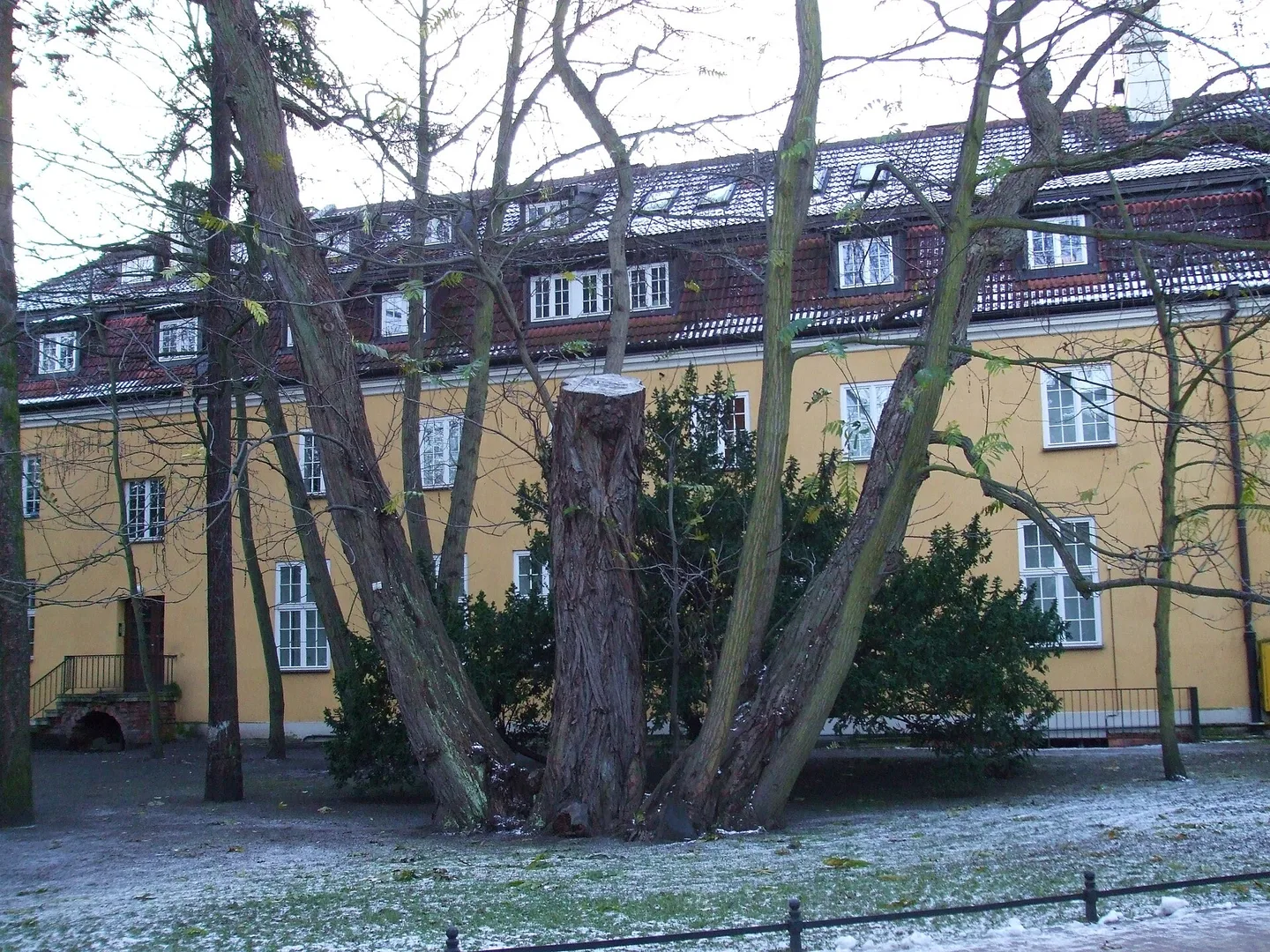
Leaving the cloister grounds brings walkers toward wooded hiking paths that ascend into the Tricity Landscape Park. Elevated trails climb through dense beech groves. They reward steady footwork with breezy vantage points over suburban rooftops toward the distant blue sea. These shaded slopes offer cool air during warm summer afternoons. They create a natural break from paved stone pavements. Continuing north toward the coast requires only a brief walk back to the rail platform, making the district an effortless staging point.
Sopot Seaside Promenade and Pier Sequences
Sopot introduces a breezy maritime atmosphere characterised by classic spa villas, wooded avenues, and broad sandy beaches along the Gulf. Turn-of-the-century hotels border the waterfront promenade. Visitors take restorative shoreline walks between morning coffee and afternoon refreshments. The open coastal horizon offers clean sea air, distant shipping traffic, and soft waves lapping against shallow shorebanks. The seaside town shifts smoothly from quiet winter boardwalk solitude into lively coastal summer activity.
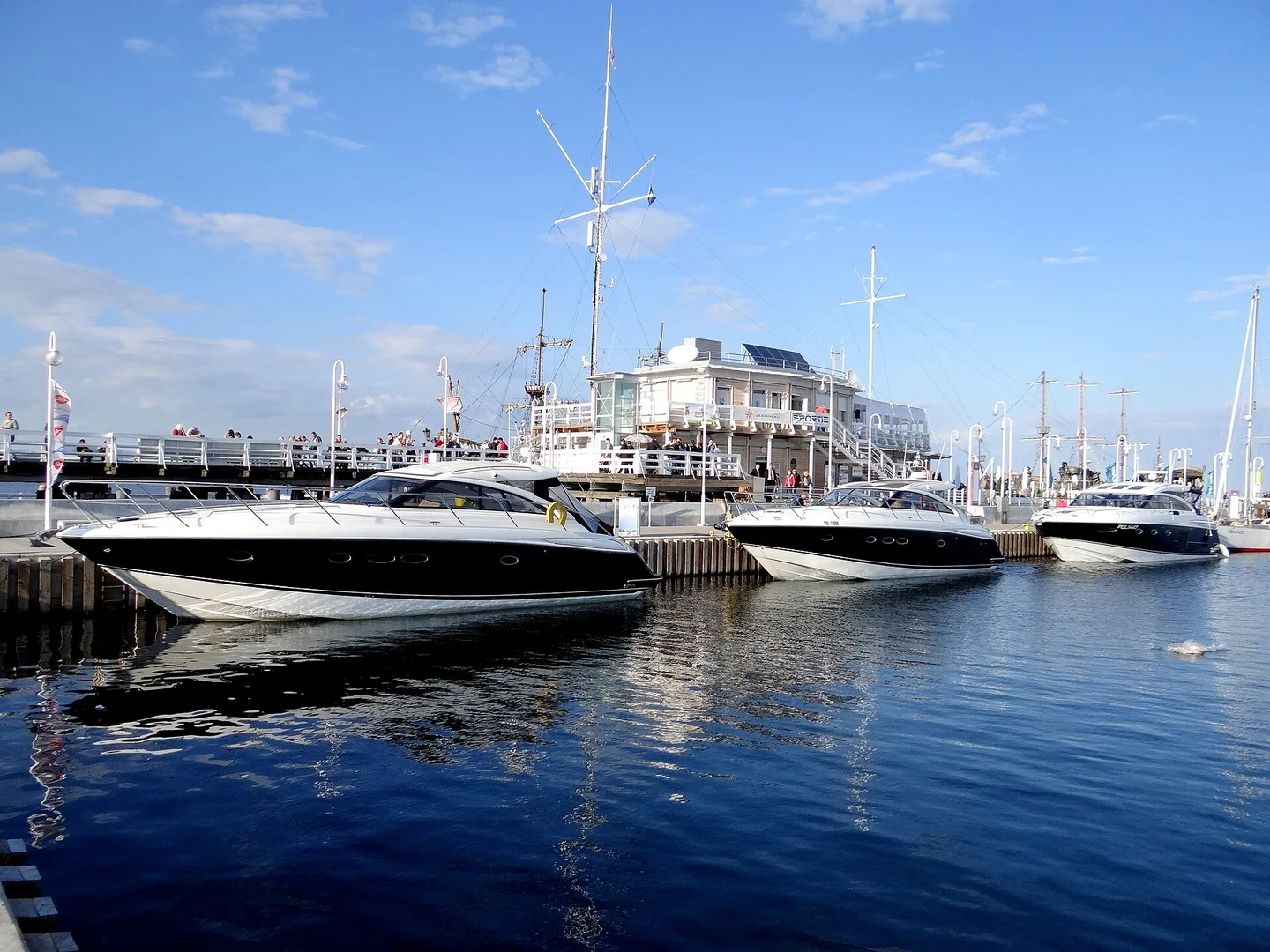
The town wooden pier stretches far out into the shallow coastal bay, giving walkers a seaward vantage point. Walking out to the marina head opens clear sightlines back toward the historic grand hotel, wooded bluffs, and long sandy shores. Salt spray and gentle maritime breezes accompany every step along the wide wooden planks. Pair coastal stops cleanly with suburban rail schedules in Gdańsk rail and tram connections to keep regional journeys swift.
Away from the shoreline, side streets reveal charming wooden verandas, intricate decorative gables, and quiet residential gardens under mature chestnut trees. Small independent bakeries and traditional milk bars serve hot soups, berry tarts, and freshly roasted coffee to passing pedestrians. Exploring these leafy secondary lanes lets visitors appreciate seaside domestic architecture away from the main pedestrian thoroughfare. Gentle slopes down to the water keep navigation intuitive throughout the afternoon.
Coastal cycling paths run parallel to the sandy beach, connecting beachfront cafes with quiet forested parks. Many visitors hire bicycles to ride along the flat promenade toward neighbouring fishing harbours. The salty maritime air and smooth surfaces make cycling a relaxing option for travellers of all fitness levels.
Modernist Gdynia and Waterfront Maritime Basins
Continuing north brings trains into Gdynia, an energetic port city celebrated for white interwar modernist architecture and expansive working basins. Built rapidly on open coastal meadows, the town centre displays functionalist curves, round maritime windows, and bright whitewashed plaster facades. Broad urban boulevards lead directly down toward harbour docks where historic vessels and modern naval ships share protected maritime moorings. This district stands out for confident twentieth-century design, contrasting sharply with medieval brick quarters further south.
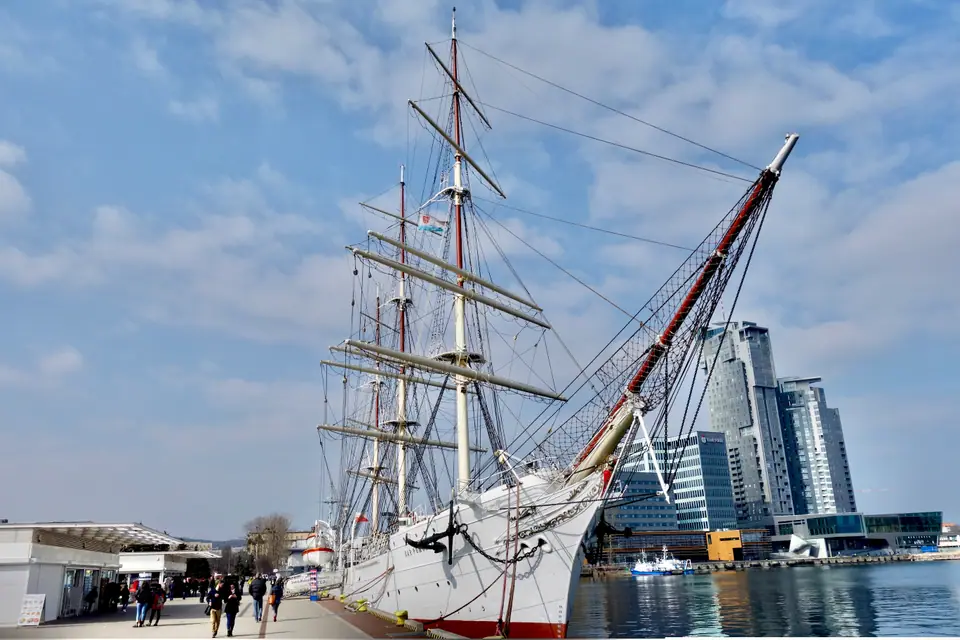
Walking along the southern pier allows travellers to see museum vessels moored along the waterfront quay. The white three-masted training ship Dar Pomorza stands as an enduring emblem of interwar Polish maritime training and ocean exploration. Nearby, naval destroyers and research ships open their decks to visitors seeking nautical history along the open harbour. Salt air and calling gulls accentuate the working marine rhythm of this Baltic gateway.
| Excursion Focus | Primary Transit Corridor | Atmospheric Character | Notable Feature |
|---|---|---|---|
| Oliwa District | Urban Commuter Rail | Shaded parkland and cloister lawns | Baroque monastic cathedral |
| Sopot Resort | Frequent Suburban Train | Breezy wooden boardwalks and sandy bays | Long Baltic wooden promenade |
| Gdynia Harbour | Northern Rail Mainline | Functionalist blocks and maritime quays | Historic ocean training vessel |
| Malbork Stronghold | Regional Southbound Rail | Towering red brick fortifications | Teutonic riverside redoubts |
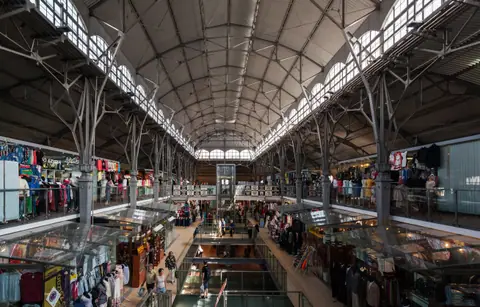
The municipal food hall and quiet market squares give an authentic look at daily coastal trade and local family life. Fishermen unload fresh seasonal catches while regional farmers display berries, wild forest mushrooms, and farm cheeses beneath glass roof canopies. Sampling smoked fish rolls along the stone breakwater introduces visitors to northern maritime foodways. The brisk coastal breeze keeps harbour walks refreshing across every changing season.
Malbork Castle Fortress Across the River Nogat
Travelling inland toward southern river plains leads directly to Malbork, home to the largest red-brick fortress ever constructed. Built beside the slow waters of the River Nogat, this vast monastic redoubt once served as the commanding seat of Teutonic Grand Masters. Its immense walls, defensive moats, and fortified gatehouses rise above flat green meadows, presenting a striking medieval silhouette. Allocating a full half day here allows ample time to walk through courtyards, vaulted refectories, and cavernous cellars.
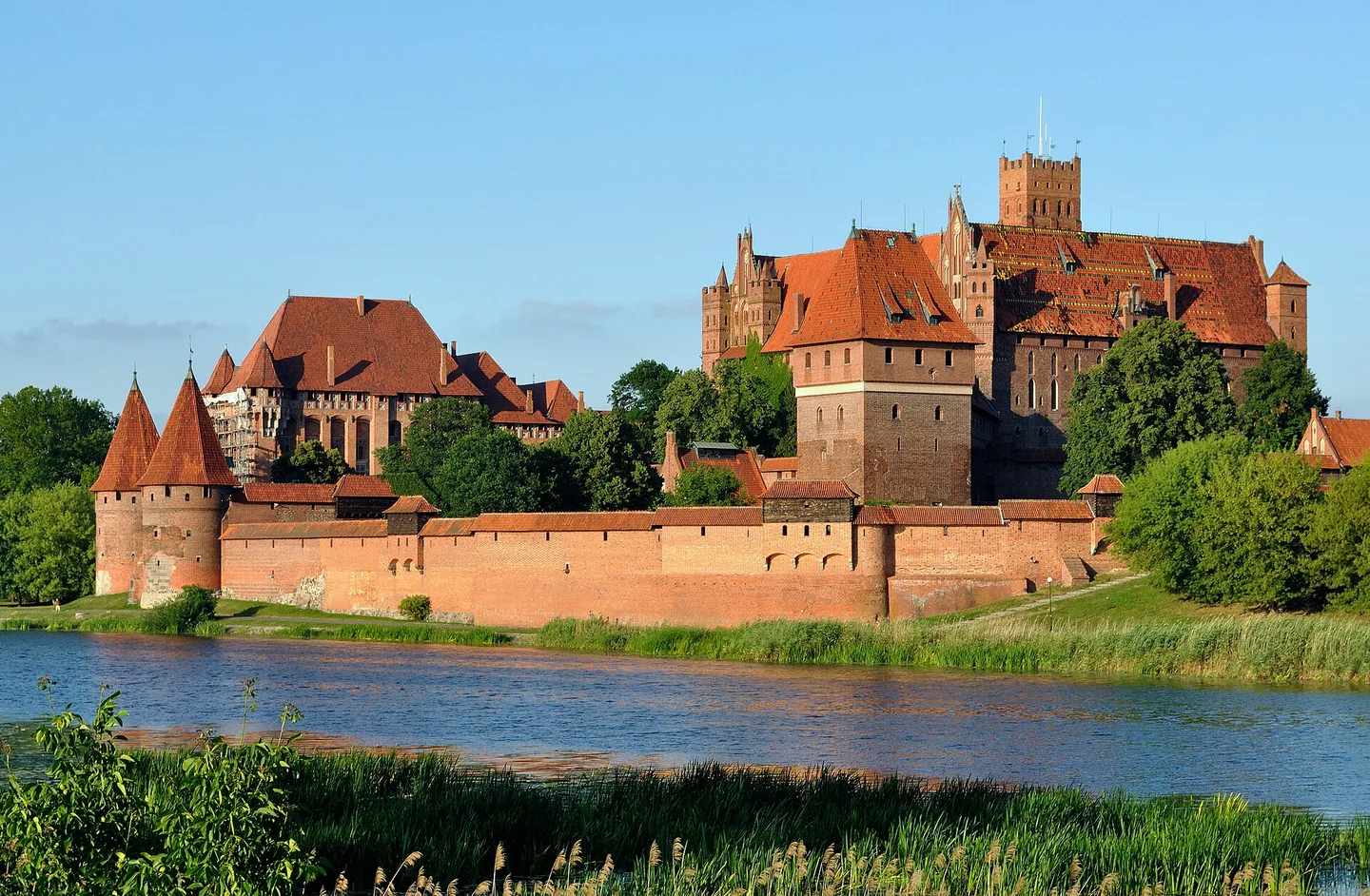
Inside the fortress complex, visitors explore three distinct defensive layers connected through narrow brick tunnels, portcullis passages, and heavy timber gates. Soaring ribbed vaults cover the High Castle refectory, where intricate stone carvings and hypocaust heating vents show advanced medieval engineering. Exhibits throughout the residential wings display amber trade artefacts, heraldic armour, and delicate liturgical objects recovered from historical excavations. Crossing over the footbridge to the far riverbank reveals panoramic reflections of weathered brick towers resting in tranquil water.
The defensive grounds also feature extensive gardens, granaries, and former armoury storehouses along the perimeter walls. Informational panels along the pathway describe how river traffic once supplied the complex with grain, timber, and building stone. Visitors can follow the perimeter moat trail to take in the full scale of the outer brick bastions.
Returning northward by train opens a quiet window to rest while watching rural fields turn back into urban suburbs. Reliable regional rail lines make combining peaceful river fortresses with fresh coastal walks a realistic goal for any northern itinerary. Packing a light windproof jacket and comfortable walking shoes is sensible, as stone ramparts and breezy piers demand sturdy footwear. Every rail stop along the corridor adds distinct historical texture to an extended Baltic journey.
Official prices and opening hours
- European Solidarity Centre (ECS)Official site ↗
- Museum of the Second World WarOfficial site ↗
Where it is
- 1Tricity and Pomeranian Day Excursions from Gdańsk
- Gdańsk Lech Wałęsa Airport (GDN) · about 9 km from here in a straight line
- Directions in Google Maps
Stations and taxi ranks: OpenStreetMap. Airports: OurAirports. Distances are in a straight line.
Traveller tips
Real advice from people who have been to Gdańsk. Every tip is read by our team before it goes live.
No tips yet. Been here? Yours could be the first.
Thank you! Your tip will appear here after a quick review.
More in Gdańsk
Continue exploring Gdańsk with related neighbourhood, food, and planning guides