Photo: Justyna Malinowska · CC BY-SA 4.0
Gdańsk Shipyard and the European Solidarity Centre Field Guide
We explore the rust-toned European Solidarity Centre and the historic shipyard pathways where modern European democracy took root.
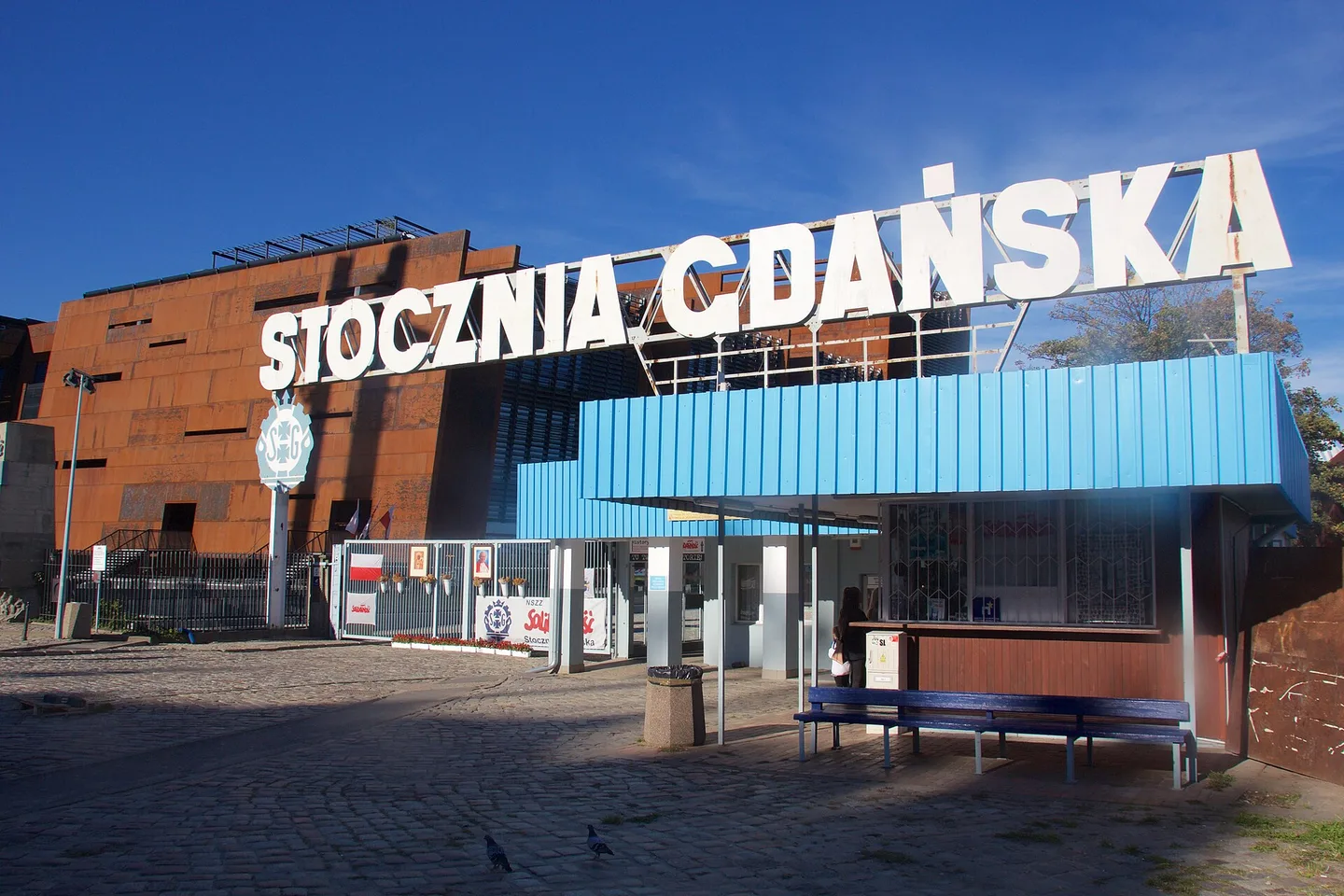
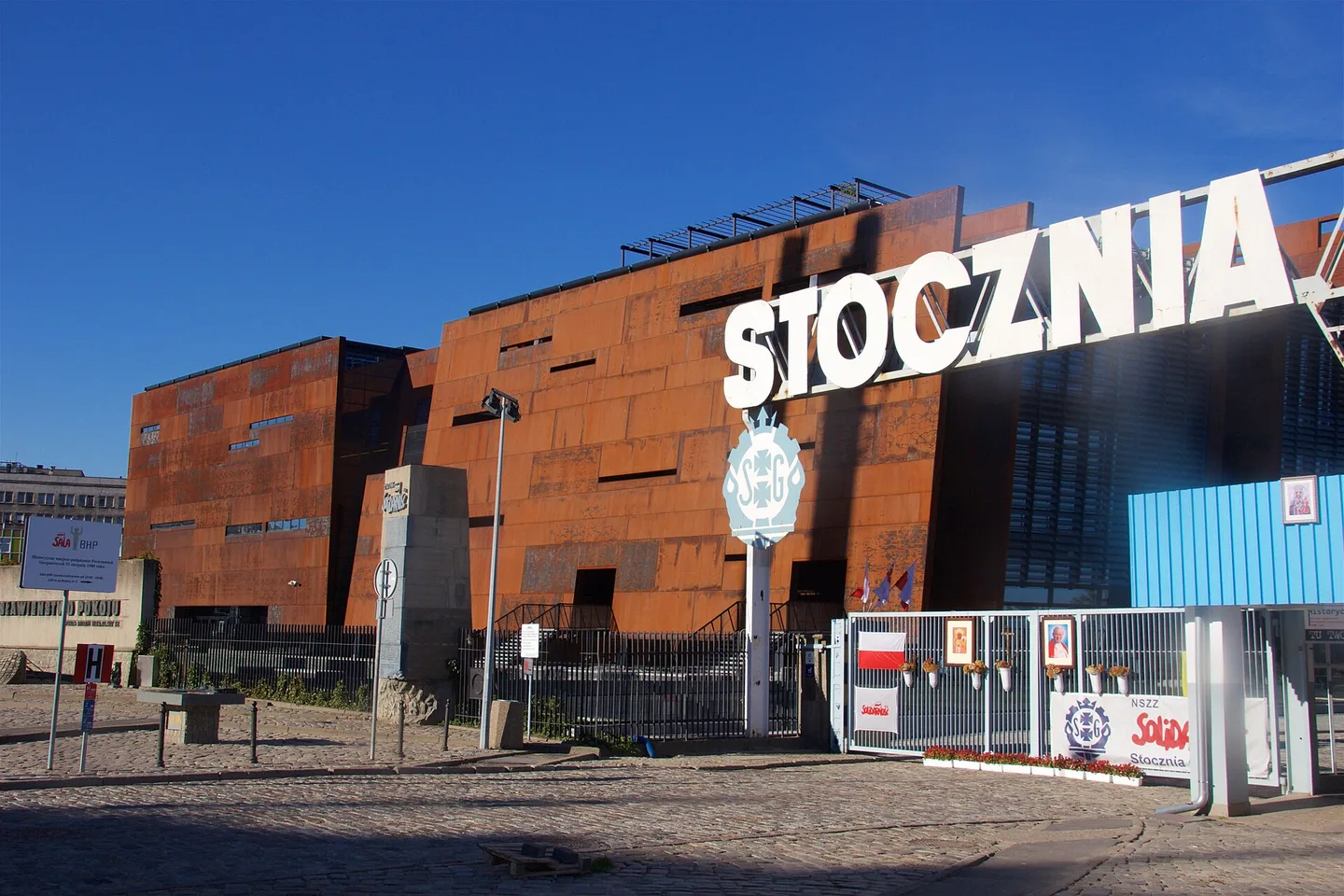
Standing before the entrance of the former Gdańsk Shipyard, we immediately notice the industrial scale that shaped modern Polish history. The approach leads through historical gates into a wide public square dominated by towering steel crosses. This dedicated monument commemorates the fallen shipyard workers. It honours the labour strikes that transformed the political landscape of Central Europe. Walking across the paved approach, visitors encounter commemorative plaques, archival photographs, and remnants of the original boundary walls. The surrounding brick gatehouses preserve the austere mood of the industrial complex. They present an unvarnished introduction to the social movement that began along these slipways.
The square serves as an open gathering ground, inviting quiet contemplation before one steps into the modern museum complex nearby. Preserved shipyard gate fixtures remind us of the August strikes that captured global attention decades ago. We appreciate how the open terrain allows the heavy coastal sky to frame the steel monuments, creating an atmosphere rooted in resilience. From here, paved walkways guide pedestrians naturally toward the rust-patinated facade of the primary exhibition pavilion. The contrast between weathered historic stone and modern industrial design anchors the entire commemorative precinct.
Navigating the European Solidarity Centre
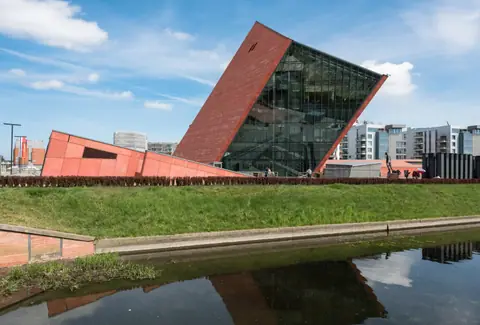
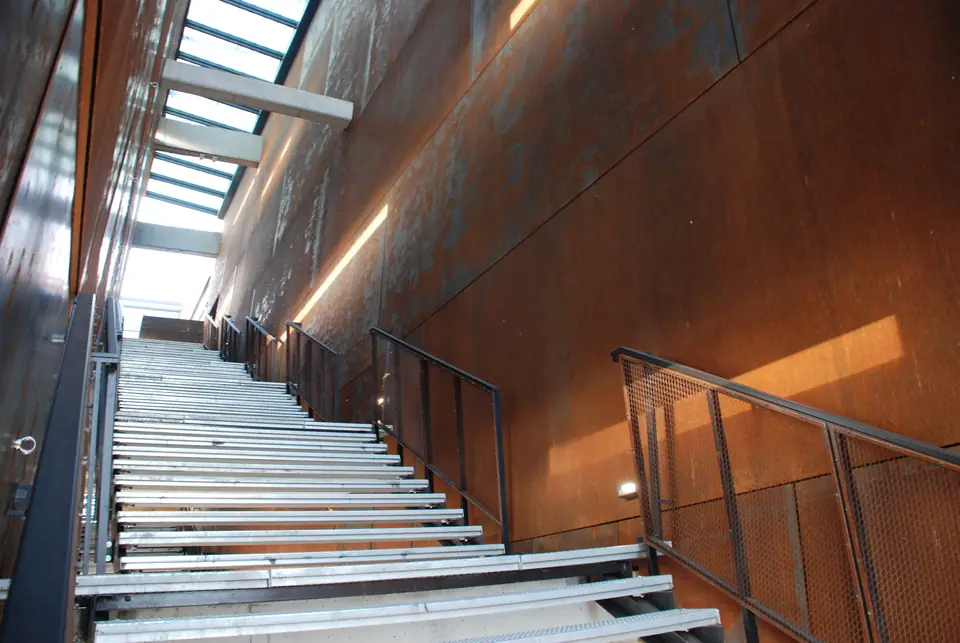
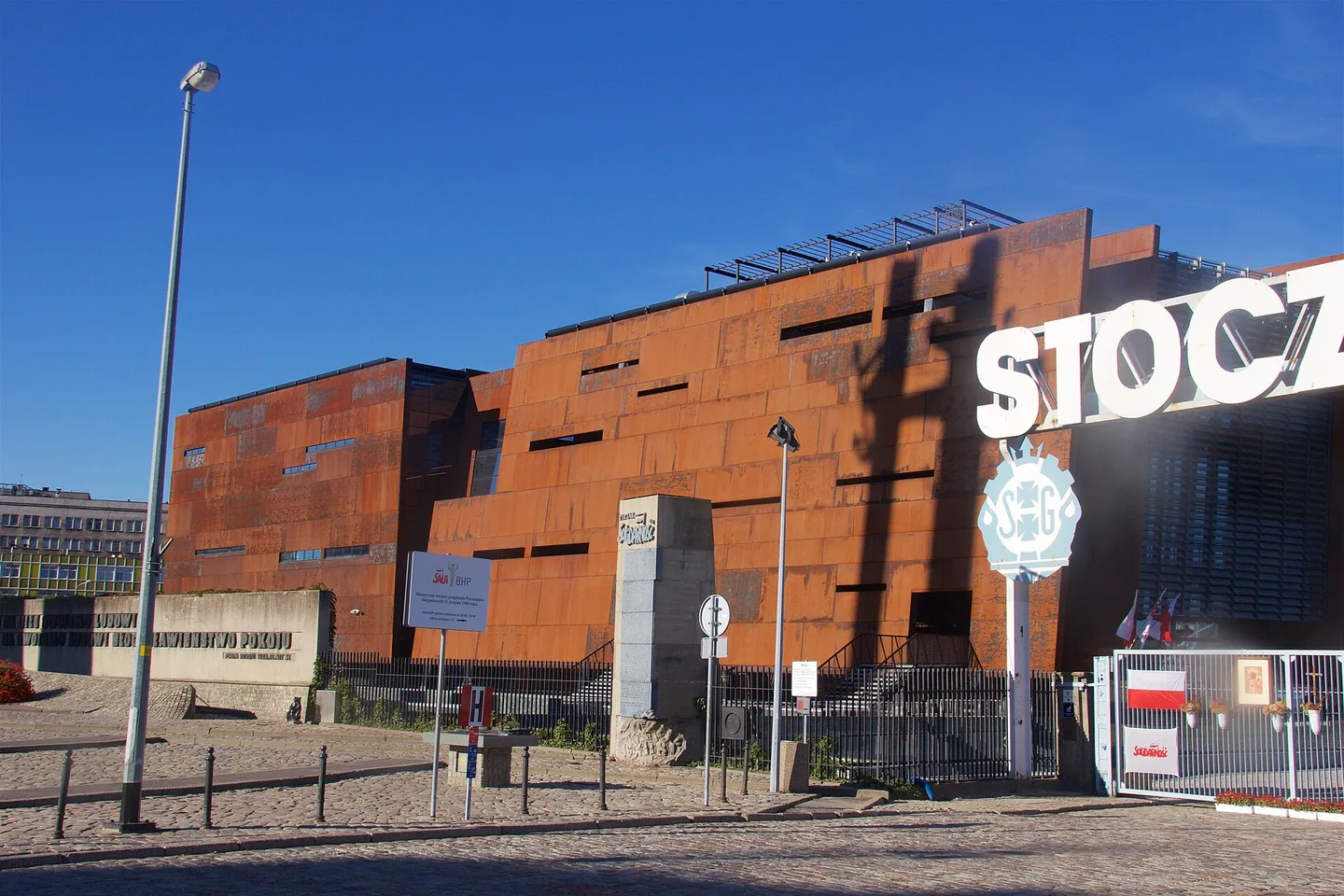
The European Solidarity Centre stands out with its striking Corten steel walls, consciously designed to resemble the hull of an unfinished ocean vessel. Inside, the architecture transitions into light-filled open halls, glass bridges, and communal winter gardens planted with living trees. The permanent exhibition occupies multiple thematic rooms, tracing the rise of independent trade unions, daily life under communist rule, and the eventual peaceful transition of power. Archival documents, clandestine printing presses, original strike banners, and multimedia booths populate the carefully sequenced galleries.
Audio guides help direct visitors through the chronological narrative, allowing everyone to absorb historical testimony at a measured pace. Scale models depict the vastness of the maritime dry docks. They show how thousands of workers organised collective action despite severe state opposition. Resting areas situated near the indoor garden give space to digest complex political narratives before continuing upward. The upper levels open onto a public terrace that grants sweeping views across active dockyards and maritime channels. It remains an inspiring cultural institution that balances sober documentation with an uplifting civic message.
Industrial Landscapes and Shipyard Routes
Beyond the museum walls, the wider shipyard grounds offer an engaging walking territory where heavy industry meets creative urban regeneration. Preserved slipways, disused assembly halls, and towering green cranes punctuate the horizon, forming an open-air gallery of maritime engineering. We follow signposted heritage trails that thread between historic brick workshops, artist studios, and seasonal cultural spaces. The rugged terrain retains its original cobbles, railway tracks, and iron bollards, requiring sturdy walking shoes for comfortable exploration. These paths demonstrate how working industrial districts can honour their heritage while adapting to contemporary urban life.
- Historic Gate Number Two, marking the symbolic focal point of the civic protests.
- The Monument to the Fallen Shipyard Workers, rising majestically over the central plaza.
- The European Solidarity Centre interior atrium, featuring light-filled communal gardens.
- Imperial Shipyard trail, offering elevated viewing points along former assembly halls.
- Surviving dockside cranes, framing classic industrial panoramas across the water.
Walking through these historic quarters adds immense depth to any wider look at Gdańsk attractions and historic quarters. Each warehouse carries visible traces of the maritime trade, from weathered loading bay lettering to heavy overhead gantry cranes. Occasional interpretation panels outline the specific functions of each workshop, explaining how massive cargo hulls were assembled piece by piece. We enjoy observing how modern cafés and craft workshops now occupy select former storage sheds, bringing fresh community energy to the docklands. The setting feels deeply grounded, avoiding excessive polish in favour of genuine maritime grit.
Transit Access and Exhibition Pairing
Reaching the shipyard district proves straightforward from the central railway hub, lying just a short journey north on foot or by local tram. Broad pedestrian paths connect the station directly with the monument square, passing under railway bridges and along wide boulevards. You can easily pair this visit with waterfront walks along Gdańsk transport and city connections to align routes cleanly. Bicycles also offer a practical way to cover the wider port roads and waterfront trails leading out toward the river bends.
Many travellers choose to pair the European Solidarity Centre with the Museum of the Second World War on the same day. Both institutions offer profound historical perspectives on wartime trauma and post-war freedom movements in Northern Poland. Because both collections demand significant emotional focus and footwork, separating them with a relaxing dockside lunch along the canal helps keep energy levels steady. Ending your route along the shipyard slipways as evening light hits the rusted steel plates leaves an enduring impression of this historic coastal port.
Official prices and opening hours
- European Solidarity Centre (ECS)Official site ↗
- Museum of the Second World WarOfficial site ↗
Where it is
- 1Gdańsk Shipyard and the European Solidarity Centre Field
- Gdańsk Lech Wałęsa Airport (GDN) · about 12 km from here in a straight line
- Directions in Google Maps
Stations and taxi ranks: OpenStreetMap. Airports: OurAirports. Distances are in a straight line.
Traveller tips
Real advice from people who have been to Gdańsk. Every tip is read by our team before it goes live.
No tips yet. Been here? Yours could be the first.
Thank you! Your tip will appear here after a quick review.
More in Gdańsk
Continue exploring Gdańsk with related neighbourhood, food, and planning guides