Alhambra & Nasrid Palaces Guide: Booking Tickets, Gates, Palaces & Timing
Master the Alhambra's timed entry rules, official Patronato ticket types, Puerta de la Justicia shortcut, and the architecture of the Mexuar, Comares, and Lions palaces.
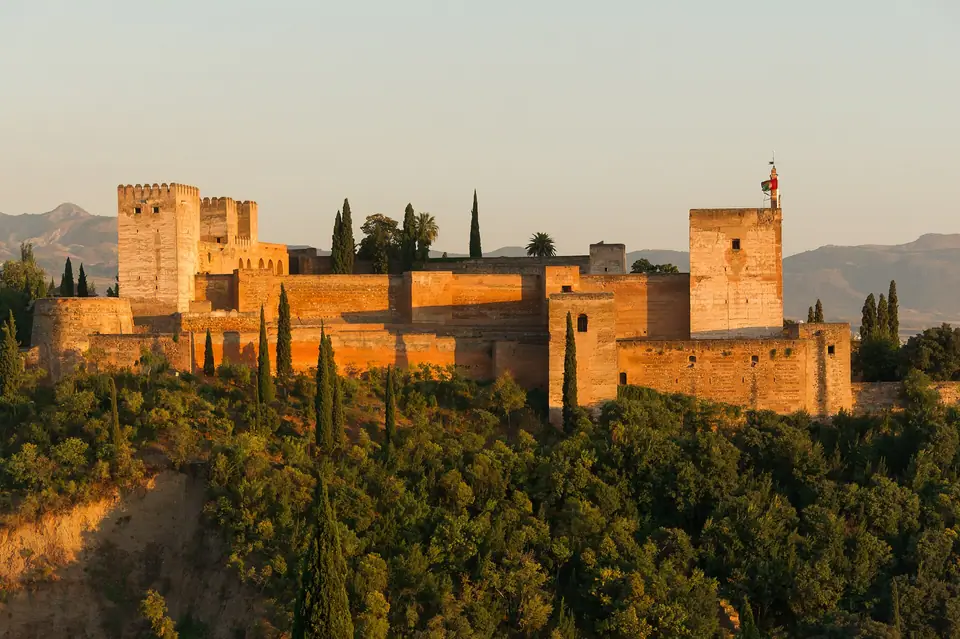
Standing above the Darro River on the rocky Sabika hill, the Alhambra takes its name from the Arabic Qal'at al-Hamra ("The Red Fortress"). It represents a medieval Islamic palatine city preserved in the Western world. The Patronato de la Alhambra y Generalife is responsible for protecting, managing, and conserving the Alhambra and Generalife. Because conservation rules govern entry to the royal quarters, visiting the Alhambra smoothly requires understanding how ticket types, access gates, and timed slots interact. Pair this guide with our Generalife gardens and Silla del Moro guide and our Granada dress code and packing guide. When planning an extended journey through the region, you can also consult our comprehensive Granada travel guide.
| Official Ticket Type | Official Price | Zones Included | Booking Rules & Key Details |
|---|---|---|---|
| Alhambra General (Daytime) | Check official site | Nasrid Palaces (timed slot), Alcazaba, Partal, Medina, and Generalife | Book ahead on official Patronato site. Bring physical passport or ID |
| Dobla de Oro General | Check official site | Full Alhambra General ticket plus Moorish monuments in the Albaicín and centre | Monuments include El Bañuelo, Corral del Carbón, and Palacio de Dar al-Horra |
| Gardens, Generalife & Alcazaba | Check official site | Alcazaba fortress, Partal gardens, Medina, and Generalife palace and gardens | Excludes interior access to the Nasrid Palaces |
| Night Visit: Nasrid Palaces | Check official site | Evening visit to the Nasrid Palaces and Palace of Charles V | Check the official site for seasonal schedules |
Official Patronato booking portal and ticket alternatives
The official ticket portal operated by the regional authority is tickets.alhambra-patronato.es. You can reach the administration at their official address on Calle Real de la Alhambra. For visitor enquiries, call 958 027 971. Always verify that you are on the official Patronato domain before purchasing. Double-check that every visitor's full name and identification match their physical document, as staff require photo identification for verification.
If standard General tickets are sold out for your dates, investigate official alternatives before paying unofficial sellers. You can check the Dobla de Oro General and Alhambra Experiences options on the official site. Check the municipal tourist portal for city pass options or look for cancellations released by the monument authorities on the morning of your visit. Travellers visiting local monuments can discover related Andalusian sites managed by the same authority, such as El Bañuelo and Casa Horno de Oro. The administrative body also looks after Corral del Carbón and Palacio de Dar al-Horra in the city centre.
When moving between city sights, ensure that you carry an approved form of identification at all times. Spanish law requires travellers to show photographic identification when requested by police officers. Maintaining official documents securely helps avoid unnecessary delays throughout your cultural tour.
Which gate to use: Access Pavilion vs Puerta de la Justicia
Visitors occasionally miss their Nasrid Palaces slot after arriving at the Alhambra by underestimating the walking distance inside the grounds. The main Access Pavilion (Pabellón de Acceso), where the ticket desks and car parks sit, lies at the eastern edge of the complex near the Generalife. Walking from the Access Pavilion through the grounds to the Nasrid Palaces entrance requires sufficient time. Taking a relaxed pace allows you to enjoy the surrounding cypress trees and restored stone pathways.
If you already hold your valid ticket and your Nasrid Palaces slot approaches quickly, consider entering via the Puerta de la Justicia (Gate of Justice) instead. Puerta de la Justicia features a prominent horseshoe arch carved with symbolic motifs. It opens directly onto the esplanade beside the Palace of Charles V and the Nasrid Palaces queue. This entrance proves particularly convenient if you walk up the historic hill paths from the city centre.
Choosing your arrival point depends on whether you hold pre-booked tickets or require services at the Access Pavilion. Entering through the Puerta de la Justicia saves considerable walking when your appointment at the royal apartments is imminent. However, visitors who must retrieve physical documentation or collect pre-arranged devices should head directly to the Access Pavilion.
Inside the Nasrid Palaces: Mexuar, Comares, and Palace of the Lions
Once your identification and ticket barcode are verified during your designated entry slot, you follow a route through three interconnected royal complexes. Across the palace walls runs the carved stucco Nasrid motto in Arabic calligraphy: Wa la ghaliba illa Allah ("There is no victor but God"). It repeats above decorative ceramic tile dadoes and intricate plasterwork. The harmony of running water, open courtyards, and delicate filigree creates an exceptional architectural environment throughout the royal residential quarters.
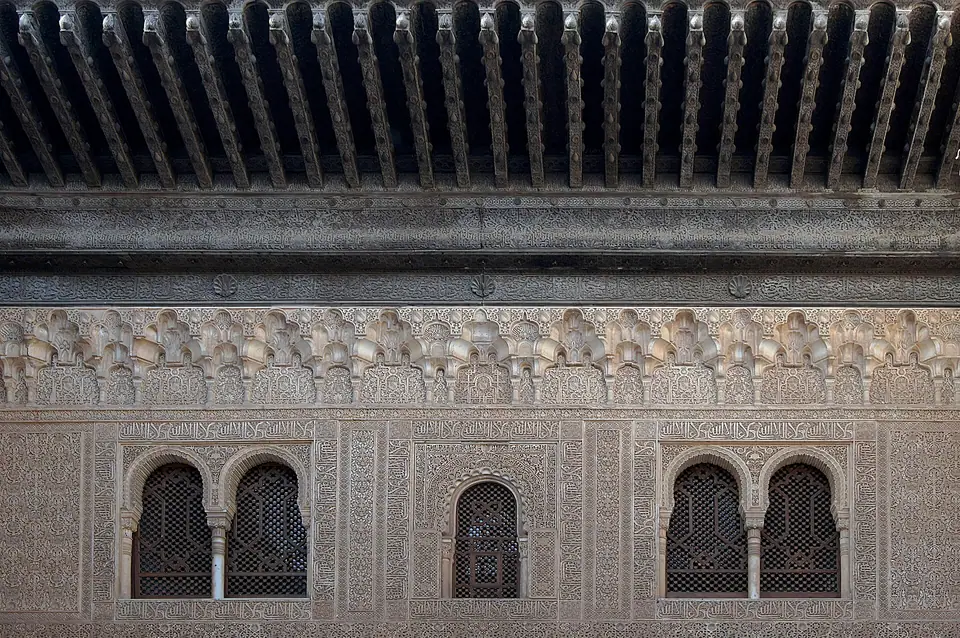
- The Mexuar and Cuarto Dorado. A historic section where council meetings and state business took place. Converted into a chapel in later centuries, it leads into the Patio del Cuarto Dorado, whose facade showcases detailed decorative stucco and carved carpentry. The intricate wooden eaves display exceptional craftsmanship characteristic of traditional Islamic joinery.
- Palace of Comares (Patio de los Arrayanes). Passing through the corridor brings you into the Court of the Myrtles, where a mirror pool cools the porticoes. Inside the massive Comares Tower lies the Salón de los Embajadores, crowned by an inlaid wooden dome. This monumental reception hall once hosted foreign envoys presenting credentials before the reigning sultan.
- Palace of the Lions (Patio de los Leones). Slender marble columns frame this courtyard around its central lion fountain. Adjacent halls feature carved vaulted ceilings, star patterns, and the notable Mirador de Daraxa. The interplay between sculpted plaster and natural daylight defines this celebrated private residential court.
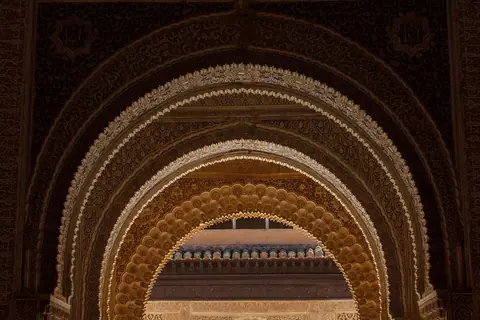
Moving through these chambers offers an intimate look into medieval courtly life and refined palace architecture. Take time to examine the carved muqarnas vaulting, where plaster stalactites capture subtle variations in daylight. Water channels link interior fountains with outdoor pools, ensuring that cool breezes circulate across the marble floors.
The Partal Gardens, Alcazaba Fortress, and Medina
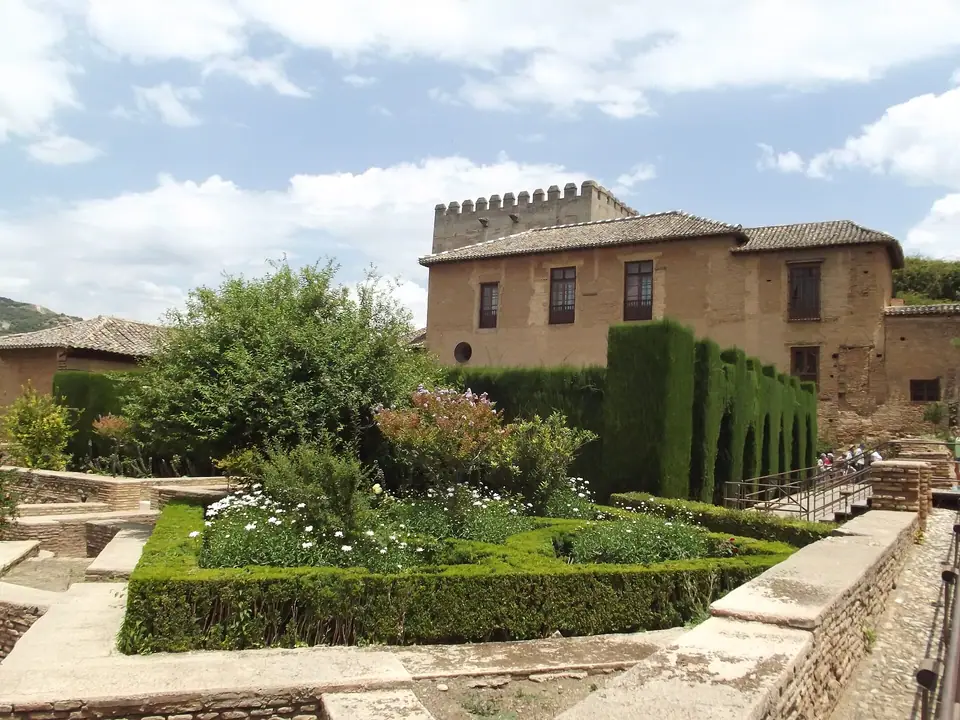
Exit through the historic chambers into the terraced Partal gardens. Here stands the Palacio del Partal, whose portico and Torre de las Damas reflect in an open pond facing the Albaicín. From here, walk east toward the ruins of the Medina, or continue toward the Alcazaba. The Medina sector preserves the residential foundations of artisans, soldiers, and civil servants who supported the royal court.
The Alcazaba forms the military fortress of the Alhambra, enclosed by stone ramparts around the open Plaza de Armas. Defensive towers guard its perimeter, including the Torre del Homenaje, the Torre Quebrada, and the prominent Torre de la Vela. The upper platform of the Torre de la Vela provides wide views across the city toward the Granada Cathedral. Located on Calle Gran Vía de Colón, 5, the cathedral is the seat of the Archdiocese of Granada. It represents a major work of the Spanish Renaissance, with construction having begun in 1506.
Standing upon the military parapets reveals the strategic geography that made the Sabika hill an impregnable defensive position for centuries. Beyond the red ramparts, the city extends across the valley floor toward the surrounding fertile plain. To the west, the historic skyline features church towers and convent belfries erected over centuries following the Reconquista.
Traveller tips
- Allow ample time for the complex. Give yourself several hours to tour the Nasrid Palaces, Alcazaba, Palace of Charles V, and Generalife without rushing. Wear sturdy walking shoes to navigate stone steps and gravel paths comfortably.
- Carry refreshments if needed. Services inside the monument grounds are limited to specific areas near the main entrances and outer plazas, so plan stops accordingly. Visitors can carry bottled water to stay hydrated throughout the extensive walking tour.
- Look out for seasonal space openings. Check the Patronato's official announcements, as specific defensive towers and historic rooms open to visitors during select conservation cycles. These special rotations provide fresh perspectives for returning visitors to Granada.
- Official audio guides and guided visits. Multilingual audio guides and mobile options are available through official channels. When booking independent guides, verify ticket inclusion directly with your provider to ensure entry into the restricted palace sectors.
- Restrooms and visitor amenities. Toilets are located near the Access Pavilion, outside the Palace of Charles V, and within the gardens, though not inside the interior palace route itself. Be sure to use these amenities before entering the timed queue for the Nasrid Palaces.
- Accessibility routes across the monument. The Patronato provides designated itineraries for visitors with limited mobility, connecting major courtyards and viewing areas across the historic grounds. Inquire at visitor services for tailored maps that avoid steep steps and rough cobbles.
Where it is
- 1Alhambra & Nasrid Palaces
- Málaga-Costa del Sol Airport (AGP) · about 98 km from here in a straight line
- Directions in Google Maps
Stations and taxi ranks: OpenStreetMap. Airports: OurAirports. Distances are in a straight line.
Traveller tips
Real advice from people who have been to Granada. Every tip is read by our team before it goes live.
No tips yet. Been here? Yours could be the first.
Thank you! Your tip will appear here after a quick review.
More in Granada
Continue exploring Granada with related neighbourhood, food, and planning guides

How to Get to Granada: AVE Trains, Málaga & Granada Airports & ALSA Buses
Granada, Spain
Best Time to Visit Granada: Seasonal Weather, Festivals & Crowd Calendar
Granada, Spain
What to Wear in Granada: Cobblestone Footwear, Dress Codes & Seasons
Granada, Spain

Where to Stay in Granada: Best Neighbourhoods, Carmenes & Parking Tips
Granada, Spain
