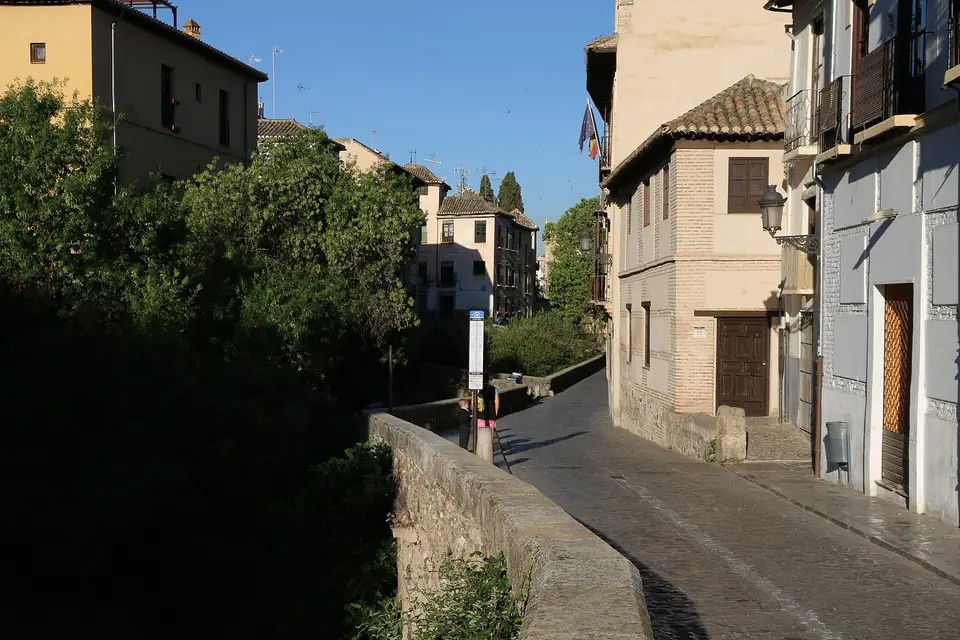
Photo: Øyvind Holmstad · CC BY-SA 4.0
El Bañuelo Arab Baths, Casa de Zafra & Dobla de Oro Pass Guide in Granada
Explore preserved Andalusian monuments across Granada including El Bañuelo, Casa Horno de Oro, and Palacio de Dar al-Horra.
Historic Andalusian monuments lie tucked behind wooden doors along Carrera del Darro and the winding lanes of the Albaicín. The Patronato de la Alhambra y Generalife oversees several key Andalusian monuments across Granada. These properties include El Bañuelo, Casa Horno de Oro, Palacio de Dar al-Horra, and Corral del Carbón. Travellers can explore a medieval steam bathhouse, noble palaces, and classic courtyard residences. Pair this architectural route with our Albaicín walking guide and our comprehensive Granada travel guide.
Exploring these properties gives travellers an exceptional look into medieval domestic architecture. Each site preserves distinct brick vaults, carved stone capitals, or quiet interior courtyards. Because these properties sit across different neighbourhoods, walking between them takes you past historical waterways and scenic hillsides. You will discover remarkable details of Islamic and post-conquest residential building traditions across urban Granada.
Many visitors focus purely on hilltop fortresses, yet these inner-city structures showcase local community life. The bathhouses provided vital civic spaces, while private homes shielded families from busy streets. Visiting them in sequence offers a calm, reflective counterpoint to busier city sights. You can easily stroll between these stops over a relaxed morning or afternoon.
| Monument | Category | Management | Access Details |
|---|---|---|---|
| El Bañuelo | Andalusian Monument | Patronato de la Alhambra y Generalife | Check the official site |
| Casa Horno de Oro | Andalusian Monument | Patronato de la Alhambra y Generalife | Check the official site |
| Palacio de Dar al-Horra | Andalusian Monument | Patronato de la Alhambra y Generalife | Check the official site |
| Corral del Carbón | Andalusian Monument | Patronato de la Alhambra y Generalife | Check the official site |
Visiting the Andalusian monuments
The Patronato de la Alhambra y Generalife manages these treasured Andalusian monuments across Granada. Travellers can contact their official visitor telephone service on 958 027 971 for ticketing and access questions. Always check the official site for current booking procedures, entry conditions, and opening hours before planning your journey.
You can reach central Granada conveniently using the city light rail network. Metro de Granada operates helpful urban stops including Albolote, Maracena, Caleta, Estación Ferrocarril, Recogidas, Alcázar Genil, and Armilla. From the central rail stops, pleasant pedestrian avenues lead directly toward the historic quarter and the riverfront.
Taking public transport avoids driving through restricted historic areas. Many central districts prohibit private cars, making walking and light rail the best transport combination. Wear comfortable footwear suitable for stone cobbles and inclined alleyways when moving between sites. Planning your route systematically will save time and energy as you climb the hillside streets.
The urban network links key transport hubs to the historical core. If arriving by train, Estación Ferrocarril offers smooth rail interchange. You can quickly connect to central walking avenues and start touring without delay. Keep transport cards handy for seamless journeys across town.
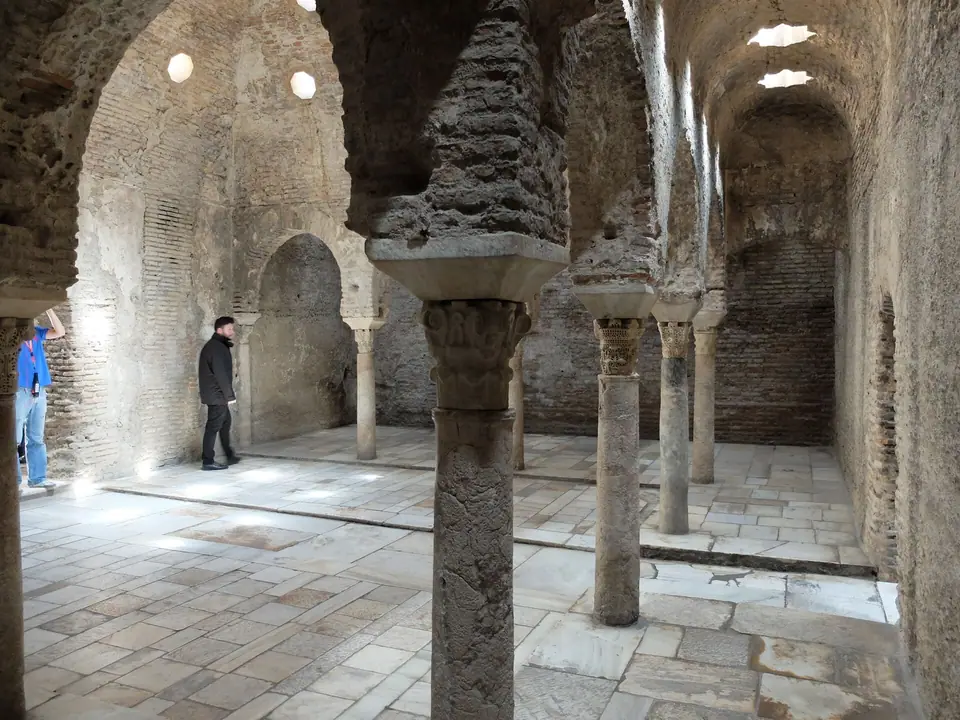
El Bañuelo Arab baths
El Bañuelo is classified as an Andalusian monument under the direct care of the Patronato. It stands near the Darro river in the historic lower district. The building features vaulted chambers with octagonal and star-shaped ceiling vents cut into solid masonry.
These distinctive roof openings allowed steam to escape while admitting soft natural daylight. A central warm chamber features supportive arches and historic carved capitals. Substantial brick walls helped keep heat inside the baths, protecting bathers from external temperature swings. These sturdy brick vaults shielded the interior, preserving the bathhouse chambers down through the centuries.
Inside the cooler rooms, masonry benches offered places for visitors to rest before entering warmer areas. The sequence of chambers mirrored traditional bathing customs adapted from earlier classical designs. The underground water conduits and furnace spaces highlight sophisticated medieval engineering principles. Walking through these rooms evokes the daily rhythms of residents who gathered here centuries ago.
Preserving these delicate brick vaults requires careful environmental management. Visitors should respect all barriers and avoid touching historic plasterwork or column surfaces. The interplay of overhead skylights and stone columns creates striking visual perspectives throughout the day. It remains one of the most evocative historic interiors in the Darro valley.
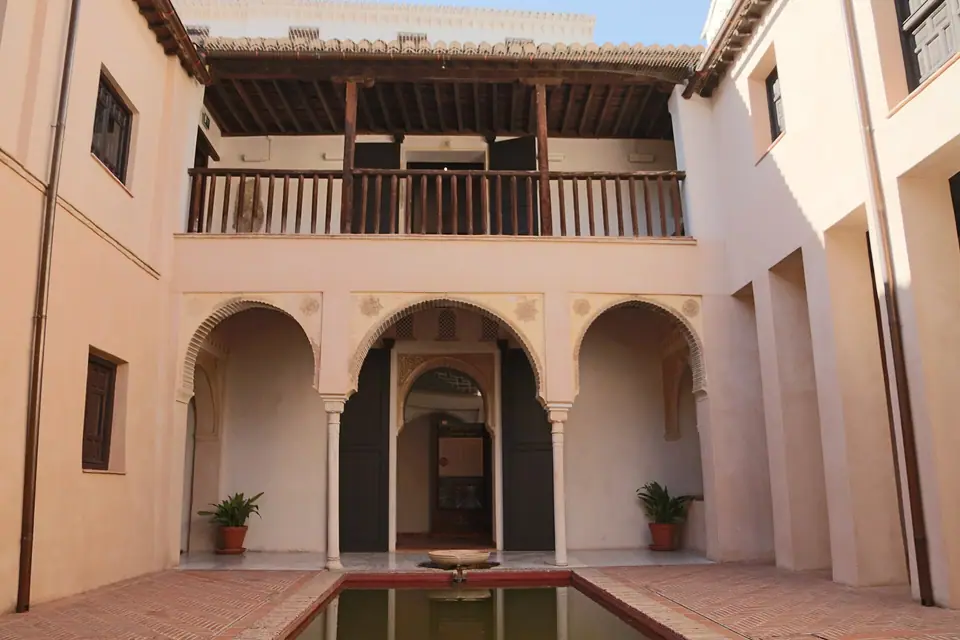
Casa Horno de Oro and noble residences
The Patronato de la Alhambra y Generalife includes Casa Horno de Oro within its portfolio of protected Andalusian monuments. The residence features a traditional courtyard layout with classic residential details. It shows how historic houses in the Albaicín quarter developed over centuries of continuous domestic use.
The ground floor rooms open directly onto a central patio pool. This courtyard design provided privacy, daylight, and cooling air circulation for family residents. Visitors can observe decorative woodwork and delicate plaster details framing doorways and exterior corridors. The building illustrates how architectural tastes evolved while retaining fundamental domestic courtyards.
Upper galleries reflect subsequent alterations made to increase living space. Despite these later additions, the structural harmony of the central courtyard remains prominent. Small doorways and thick external walls offered insulation against summer heat and winter mountain chills. Standing by the central pool reveals the calm atmosphere created by introverted domestic planning.
Such residential monuments provide essential context for understanding everyday urban life. While grand palaces served governance and ceremony, homes like Casa Horno de Oro sheltered ordinary households. Inspecting the joinery and carved lintels reveals the fine craftsmanship applied to private residential projects. It is an unhurried, delightful stop on any walking tour through the quarter.
Palacio de Dar al-Horra
Palacio de Dar al-Horra sits higher up the hillside in the upper Albaicín quarter. It is carefully preserved among the Andalusian monuments by the Alhambra authorities. The complex includes traditional porticoes, inner chambers, and elevated viewpoints looking out over the city rooftops.
The building features a classic inner courtyard surrounded by decorative arches and living quarters. Its elevated position granted fresh breezes and sweeping vistas across the surrounding urban landscape. Beautiful carved inscriptions and geometric tilework adorn key doorways and perimeter arches. The layout demonstrates how royal and noble residences balanced defensive security with domestic refinement.
Walking through its high chambers reveals delicate stucco carvings on window frames and central arches. The quiet upper rooms once looked down over secluded gardens and private household spaces. Today, visitors can appreciate the sophisticated symmetry that governed late medieval residential architecture. The tranquil ambience makes it a memorable highlight of the upper district.
Corral del Carbón is also included among the Andalusian monuments managed under the Patronato. Located in the flat city centre, it offers an additional architectural stop within the urban network. Exploring both hilltop palaces and lowland trading structures gives travellers a well-rounded picture of regional history.
Practical traveller advice
- Call ahead for visitor questions. For monument inquiries, travellers can reach the Patronato de la Alhambra y Generalife visitor line at 958 027 971.
- Combine with historic city centre sights. Work on Granada Cathedral started in 1506, and builders placed its foundation stone on March 25, 1523. Set at Gran Vía de Colón nº 5 beside Plaza de las Pasiegas, the church is the seat of the Archdiocese of Granada.
- Visit royal burial sites nearby. Inside the adjoining Royal Chapel rest the remains of Isabella I of Castile and Ferdinand V of Aragon, brought here in 1521. The Royal Chapel has an entrance located on Calle Oficios.
- Use urban light rail connections. Light rail trams on the Metro de Granada serve Albolote, Maracena, Caleta, Estación Ferrocarril, Recogidas, Alcázar Genil, and Armilla.
- Verify opening schedules online. Access rules, schedules, and entry requirements change, so check the official site before setting out.
- Wear supportive footwear for walking. Steep cobbled alleys require sturdy shoes with reliable grip to prevent slipping on worn stone pathways.
- Carry water during warmer weather. Climbing between the river valley and upper Albaicín involves steady exertion under sunny Andalusian skies.
Where it is
- 1El Bañuelo Arab Baths, Casa de Zafra & Dobla de Oro Pass Guide in Granada
- Málaga-Costa del Sol Airport (AGP) · about 98 km from here in a straight line
- Directions in Google Maps
Stations and taxi ranks: OpenStreetMap. Airports: OurAirports. Distances are in a straight line.
Traveller tips
Real advice from people who have been to Granada. Every tip is read by our team before it goes live.
No tips yet. Been here? Yours could be the first.
Thank you! Your tip will appear here after a quick review.
More in Granada
Continue exploring Granada with related neighbourhood, food, and planning guides

Where to Stay in Granada: Best Neighbourhoods, Carmenes & Parking Tips
Granada, Spain
Granada 3-Day Itinerary: Alhambra, Albaicín, Sacromonte & Tapas Route
Granada, Spain
Alhambra & Nasrid Palaces Guide: Booking Tickets, Gates, Palaces & Timing
Granada, Spain
Generalife Gardens & Palace Guide: Patio de la Acequia & Silla del Moro
Granada, Spain
