Photo: Palickap · CC BY-SA 4.0
Sacromonte Cave Quarter Guide: Zambra Flamenco, Cave Museum & Abbey
Explore Granada's troglodyte valley of Sacromonte, from the hillside cave dwellings and the historic Abbey to authentic Gitano flamenco traditions.
Stretching east from Cuesta del Chapiz along the northern slopes of the Valparaíso valley, Sacromonte is one of the most distinctive neighbourhoods in Granada. Roma families (Gitanos), displaced Moriscos, and artisans settled along this valley. They excavated whitewashed troglodyte dwellings (cuevas) directly into the clay conglomerate cliffs facing the Generalife and the Alhambra. Today, Sacromonte combines living cave homes, an open-air ethnographic museum, a hilltop abbey housing historic texts, and the enduring zambra flamenco tradition. Connect this walk with our Albaicín and Mirador de San Nicolás guide and our Granada 3-day itinerary.
| Sacromonte Site / Venue | Location | Access & Tickets | Visit Focus |
|---|---|---|---|
| Cuesta del Chapiz | Reached via Paseo de los Tristes | Free public thoroughfare and viewpoint | Gateway junction between the Albaicín and Camino del Sacromonte served by local minibuses |
| Museo Cuevas del Sacromonte (Barranco de los Negros) | Uphill from Camino del Sacromonte | Check the official site for admission | Restored cave dwellings showcasing traditional kitchens, crafts, and flamenco history |
| Traditional Zambra Flamenco Caves | Along Camino del Sacromonte | Advance booking required; check official venue sites | Evening performances inside historic family caves |
| Abadía del Sacromonte (Sacromonte Abbey & Holy Caves) | Top of the valley along the minibus line | Check the official site for tour details | Historic catacombs, quiet cloister, art, and the historic Plomos del Sacromonte |
How Sacromonte's troglodyte cave houses were dug and lived in
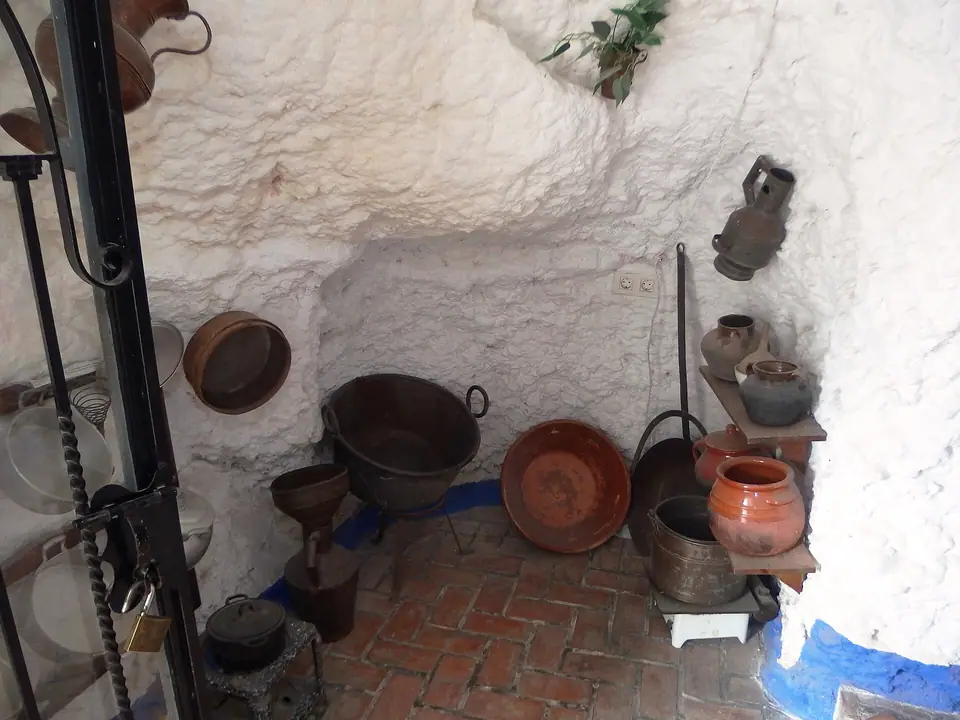
Unlike natural karst caverns, Sacromonte's caves were dug by hand by excavators (picores). They cut vertical facades (frentes) into the hillside and hollowed out vaulted rooms perpendicular to the cliff. Compacted earth and lime mortar provide natural underground thermal insulation, keeping dwellings temperate throughout changing seasons. This building method protected generations of residents from fierce seasonal weather fluctuations across southern Spain.
Every cave interior is coated in breathable white slaked lime (cal). This reflects daylight deep into the living room (sala) and bedrooms while sealing the earthen vault against dust. Outside each door sits a paved terrace (placeta) planted with prickly-pear cacti (chumberas) whose roots help prevent soil erosion. Hung with red geraniums and hammered copper cauldrons, these terraces look straight across at the Alhambra. Residents took great pride in tending these whitewashed frontages and welcoming neighbours across the hillside.
Visiting the Museo Cuevas del Sacromonte by day
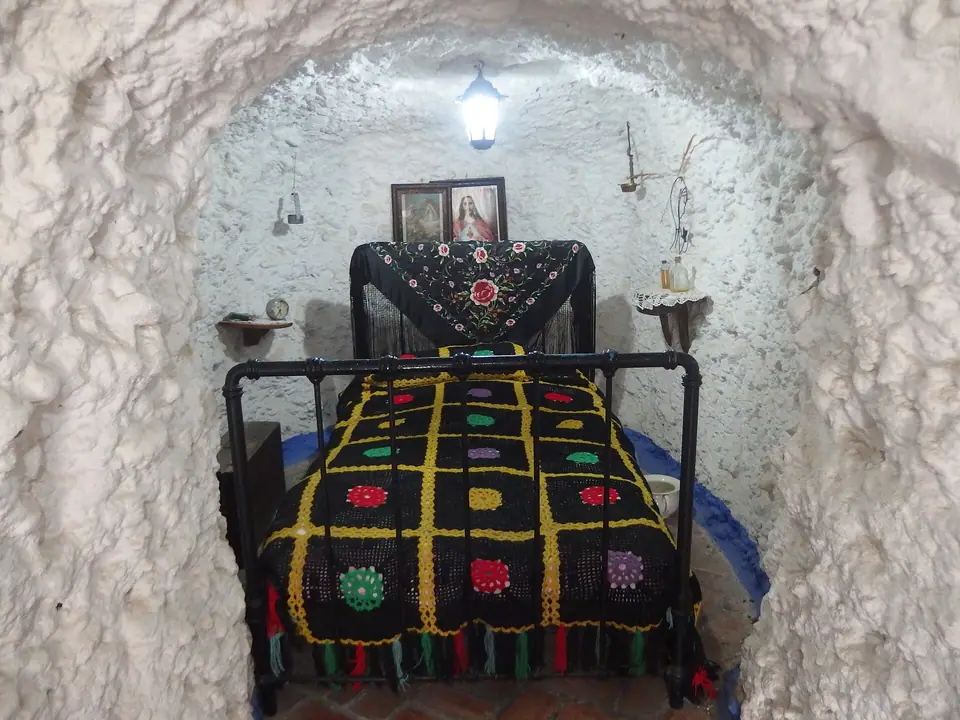
Flamenco caves along lower Camino del Sacromonte host evening gatherings. To inspect traditional cave architecture by day, visit the Museo Cuevas del Sacromonte at Barranco de los Negros, checking the official site for current opening arrangements. Walking up the slope reveals how early builders shaped domestic habitats out of bare clay stone.
Spread across a terraced hillside with sweeping views of the Generalife and the red walls of the Alhambra, the museum restores multiple cave interiors. You can walk through a traditional living cave with earthen alcove beds, an esparto-grass weaving room, a blacksmith's forge, and a pottery display. Dedicated exhibition spaces document the history of local Gitano flamenco dynasties and explain the environmental history of the Valparaíso ravine over recent generations.
The Zambra Gitana: Choosing an evening cave flamenco show
Sacromonte is celebrated for the zambra, an expressive communal flamenco tradition. The Gitano community has played an essential role in developing flamenco, fusing song (cante), dance (baile), and musicianship (toque). UNESCO inscribed flamenco on the Representative List of the Intangible Cultural Heritage of Humanity in 2010. Andalusia in southern Spain is the heartland of flamenco, although it has roots in regions such as Murcia and Extremadura. Instead of using a distant stage, a Sacromonte cave show unfolds along the central floor. Audiences sit in chairs right beside the dancers and guitarists.
- Distinctive Zambra Dances. A traditional Sacromonte presentation preserves ritual dances and rhythms passed down across generations. Flamenco singing is traditionally performed seated by men or women without backing vocalists. Male flamenco dance typically features heavier footwork, whereas female dance emphasizes gentler movements. Performances frequently incorporate castanets, hand-clapping, and foot-stamping in addition to traditional guitar accompaniment. Flamenco takes place at religious festivals, rituals, church ceremonies, and private events.
- Historic Family Caves on Camino del Sacromonte. Transmission occurs through dynasties, families, social groups, and flamenco clubs, all of which preserve and disseminate the craft. Families maintain celebrated venues along Camino del Sacromonte, including Cueva de la Rocío, María la Canastera, Venta El Gallo, and Cuevas Los Tarantos. For recitals elsewhere, visitors seek out local flamenco clubs in the adjoining quarters.
Abadía del Sacromonte and the historic Lead Books
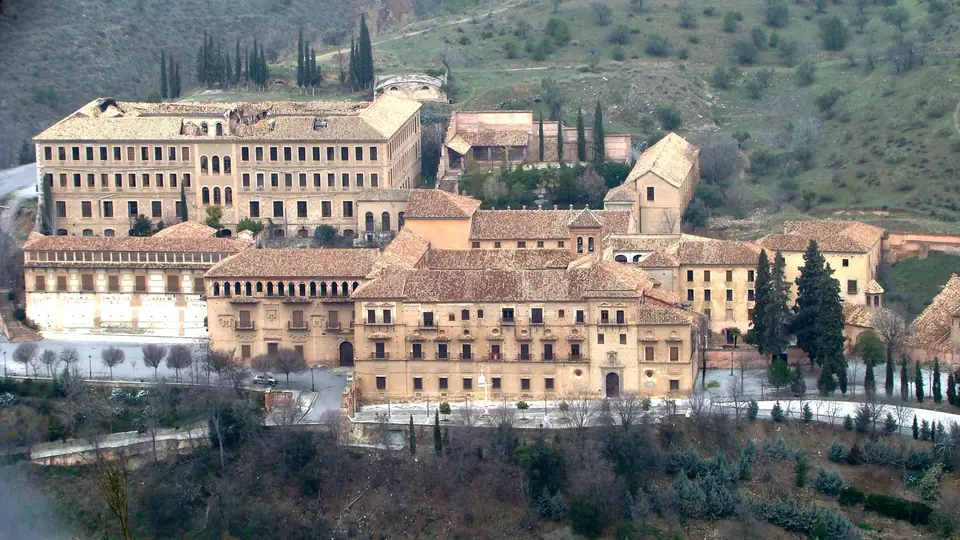
Following the road up the valley brings you to the Abadía del Sacromonte (Sacromonte Abbey), crowning the Monte de Valparaíso. Excavations in the hillside galleries uncovered relics and inscribed circular lead plaques known as the Libros Plúmbeos (Lead Books of Sacromonte). These discoveries generated tremendous local interest and transformed the remote hilltop into a celebrated spiritual centre for the wider region.
These discoveries led to the founding of the abbey complex above the valley. Guided tours visit the underground catacombs of the Santas Cuevas and the peaceful cloister. Inside the abbey museum, exhibits display the historic plaques, regional art, and religious artefacts connected to Granada's ecclesiastical heritage. Granada Cathedral serves as the seat of the Archdiocese of Granada, reflecting the deep religious traditions that shaped this hillside abbey.
Traveller tips
- Plan your evening show reservations carefully. Enjoy dinner in the historic centre beforehand and reserve performance tickets in advance, confirming details on official venue websites. Knowing your transport plan ahead of time ensures a smooth evening excursion into the ravine.
- Stay on paved Camino del Sacromonte after dark. The main road is paved and lit at night, whereas upper dirt tracks suit daytime walks. Carrying a small torch can be helpful if you need to negotiate uneven stone steps near higher viewpoints.
- Statue of Chorrojumo and upper scenic paths. Where Cuesta del Chapiz meets Camino del Sacromonte stands a bronze statue honouring Mariano Fernández Santiago, remembered as Chorrojumo. From behind the hillside caves, daytime walkers can follow upper paths such as Verea de Enmedio toward the Albaicín with views of the valley. These hillside trails reward unhurried exploration on clear mornings.
- Annual pilgrimage of San Cecilio. Each February, Sacromonte Abbey hosts the traditional Romería de San Cecilio. Crowds walk up the valley to visit the site and share regional specialities like broad beans and local flatbreads. It represents one of the most colourful community gatherings on the local calendar.
- Using the local Sacromonte minibus service. A public minibus links central Granada with Camino del Sacromonte and the Abbey. Because sections of the hillside road narrow significantly, traffic lights control alternating vehicle flow along the route. Riding the bus offers an easy way to avoid steep climbing in hot weather.
- Respecting residential caves in the upper ravines. While designated museums and performance caves welcome the public, many whitewashed caves are private homes. Always respect local privacy and avoid entering gated domestic terraces. Modest awareness helps maintain harmonious community relations across this historic valley.
- Combining Sacromonte with Cuesta del Chapiz viewpoints. Pause by the stone parapet on Cuesta del Chapiz for clear views across the Darro valley. It provides an ideal photography stop before turning onto Camino del Sacromonte.
- Photography etiquette during flamenco recitals. Cave venues ask guests to avoid flash photography or bright phone screens during guitar and vocal numbers. Paying undivided attention lets you experience the intensity of the performance fully.
- Visiting the Abbey complex. Check the official site for current abbey tour schedules before ascending the valley. The visit concludes on an open terrace with views over the entire valley. The broad perspective from the high ridge makes the journey worthwhile.
- Evening return transport from Camino del Sacromonte. Once late performances end, local taxis often wait near the main caves, offering convenient transport back toward central Granada. Walking downhill into town is another pleasant option during warm spring and autumn nights.
Where it is
- 1Sacromonte Cave Quarter
- Málaga-Costa del Sol Airport (AGP) · about 99 km from here in a straight line
- Directions in Google Maps
Stations and taxi ranks: OpenStreetMap. Airports: OurAirports. Distances are in a straight line.
Traveller tips
Real advice from people who have been to Granada. Every tip is read by our team before it goes live.
No tips yet. Been here? Yours could be the first.
Thank you! Your tip will appear here after a quick review.
More in Granada
Continue exploring Granada with related neighbourhood, food, and planning guides
Best Time to Visit Granada: Seasonal Weather, Festivals & Crowd Calendar
Granada, Spain
What to Wear in Granada: Cobblestone Footwear, Dress Codes & Seasons
Granada, Spain
Where to Stay in Granada: Best Neighbourhoods, Carmenes & Parking Tips
Granada, Spain
Granada 3-Day Itinerary: Alhambra, Albaicín, Sacromonte & Tapas Route
Granada, Spain
