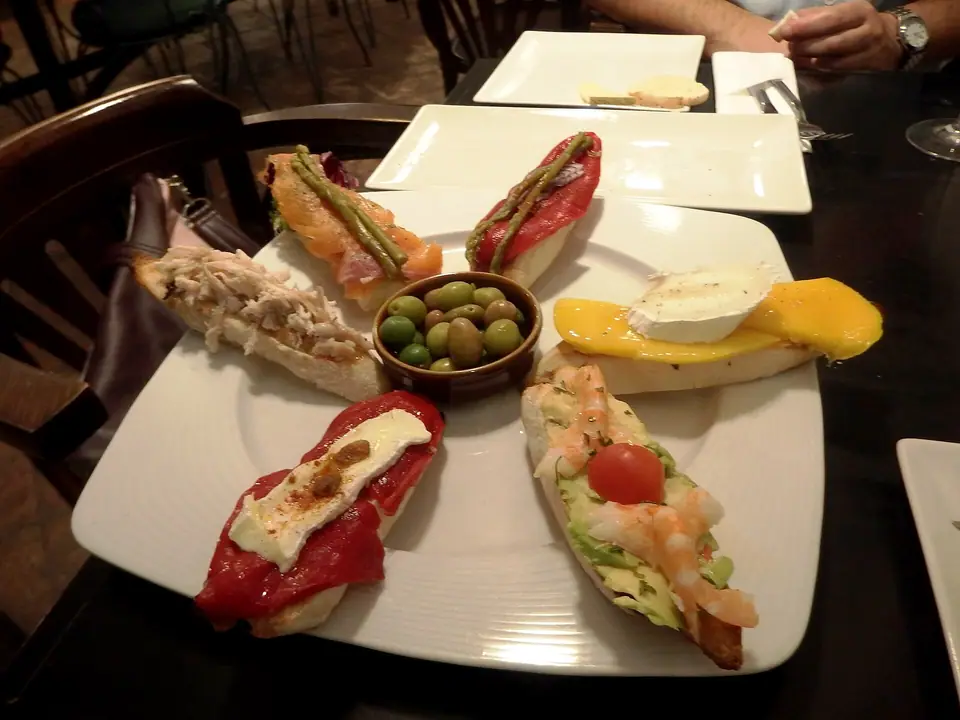
Photo: Palickap · CC BY-SA 4.0
Realejo Quarter & Free Tapas Guide: Sephardic History, Murals & Best Bars
Explore Granada's Realejo quarter, from its medieval Sephardic heritage and El Niño de las Pinturas street art to traditional free-tapas bars.
The Realejo-San Matías district spreads across the southern foothills of the Alhambra toward the Genil River. Its leafy plazas contrast with the busy lower Albaicín. Known in Islamic times as Garnata al-Yahud, the quarter later took the name Realejo from the royal camp of the Catholic Monarchs. Today this sunny residential quarter blends historic palaces, contemporary street art, and Granada's most relaxed tapas plazas. Pair this district walk and food guide with our Granada 3-day itinerary and our where to stay in Granada guide.
| Tapas Zone / Street | Atmosphere & Crowd | Drink and Tapa Style | Signature Specialties & Style |
|---|---|---|---|
| Realejo (Campo del Príncipe, Calle Molinos & Varela) | Relaxed neighborhood plazas, sunny outdoor tables, and local families | Standard drink with complimentary dish | Grilled meats, habas con jamón, fried aubergines with cane molasses, and generous hot dishes |
| Calle Navas & Calle Rosario (Centro / Town Hall) | Classic historic tavern strip. Lively standing bars and high beams | Standard drink with complimentary dish | Fried seafood (pescaíto frito), cured Trevelez ham, and montaditos (Bar Los Diamantes) |
| Calle Elvira & Plaza Nueva Fringe | Energetic student and traveller scene. Open late into the night | Standard drink with complimentary dish | Moorish spiced skewers (pinchos morunos), falafel/fusion tapas, and traditional tavern stews (Bodegas Castañeda) |
| Zona Plaza de Toros & Gonzalo Gallas | Local university and bullring tavern hub (short walk north) | Standard drink with complimentary dish | Extra-large portions where you can often choose your tapa from a blackboard menu |
Walking the Realejo: Garnata al-Yahud, Casa de los Tiros, and Campo del Príncipe
Enter the Realejo down Calle Pavaneras past the bronze statue of Yehuda ibn Tibbon. Born in Granada, this Jewish physician and scholar is honoured as the "Father of Translators" for rendering Arabic medical and philosophical works into Hebrew. Under medieval viziers Samuel ibn Naghrillah and his son Joseph, this hillside flourished as a centre of Sephardic poetry and scholarship.
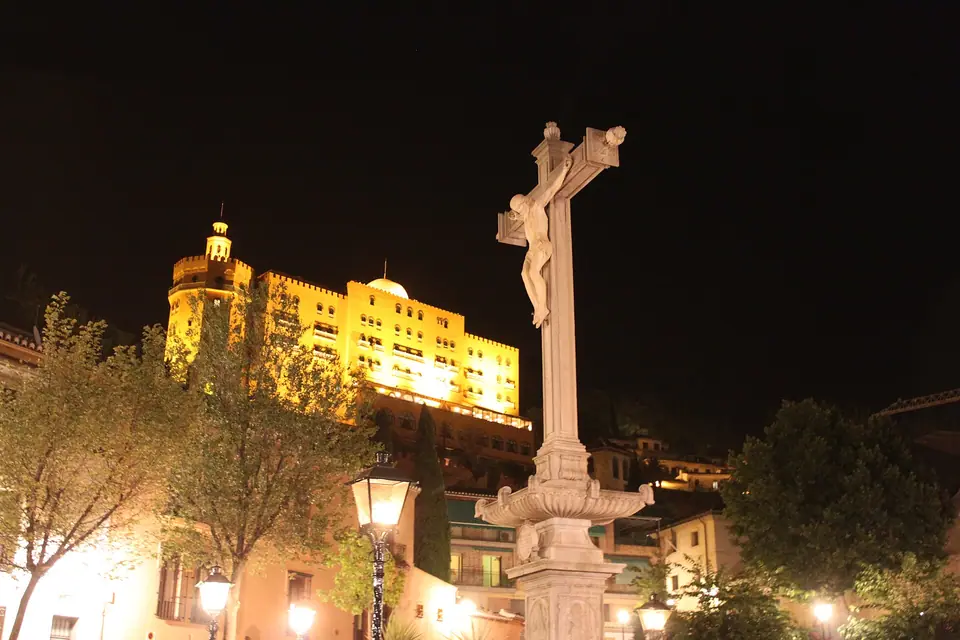
Along Calle Pavaneras stands the historic Casa de los Tiros (free entry, closed Mondays), built by the noble Granada Venegas family of royal Nasrid lineage. Five mythological heroes and bronze muskets (tiros) adorn its battlements, while the upstairs Cuadra Dorada displays gilded ceiling portraits. Continue south through Plaza de Santo Domingo into the tree-lined expanse of Campo del Príncipe, laid out for royal celebrations. At its centre stands the stone crucifix of the Cristo de los Favores, where residents gather in silence every Good Friday afternoon.
Street art of El Niño de las Pinturas and Corrala de Santiago
Walking along Calle Molinos, Plaza de los Girones, and Cuesta del Realejo reveals outdoor murals painted by Raúl Ruiz (El Niño de las Pinturas). A longtime Realejo resident, Ruiz paints poetic large-scale murals of musicians, children, and calligraphies that harmonise with the historic ochre walls.
While exploring Calle Santiago, step inside number 5 to see the Corrala de Santiago (free daytime patio access, owned by the University of Granada). This preserved historic casa de vecinos features tiered wooden balustraded galleries rising around a central stone fountain.
How Granada's free-tapas ritual works and local customs to know
Granada's free-tapas tradition (el tapeo granadino) is a point of civic pride. Following a few local customs makes an evening out sociable and relaxed:
- Every cold beer, wine, or soft drink brings a free plate. Order a draught beer, a glass of wine, or a soft drink. The waiter brings one complimentary hot tapa per drink. Coffee, hot tea, and plain bottled water do not include a free tapa.
- The kitchen chooses the tapa, and each round escalates. In classic historic taverns, you do not pick the tapa from a menu. Notable spots include Bar Los Diamantes, Bodegas Castañeda, La Tana, and Bar Avila. Round 1 brings a starter like cured ham or pork stew in bread (carne en salsa). Round 2 steps up to fried fish or migas with chorizo, and Round 3 brings another hot kitchen specialty.
- Move from bar to bar (ir de tapas). Locals rarely sit in one tavern for three hours. Locals stand at the counter or barrel tables for one or two rounds, settle the small bill, and walk to the next tavern.
- Outdoor terraces versus standing at the bar: Most Realejo bars serve the complimentary tapa at outdoor tables too, sometimes with a small terrace supplement. In prime tourist squares like Plaza Bib-Rambla, outdoor tables may be reserved for full raciones, so stand at the inside counter for free tapas.
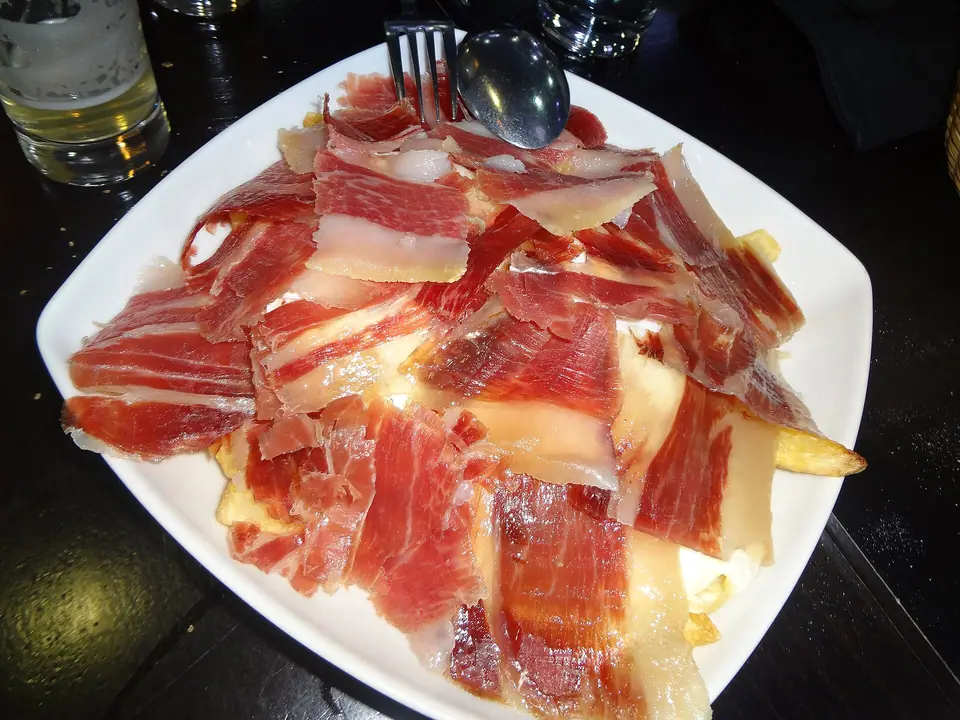
Signature Granadino dishes and the Pionono pastry
Beyond free tapas, order a shared media ración to taste classic Granadino dishes. Start with berenjenas con miel de caña, crisp fried aubergine drizzled with sugarcane molasses. Follow with habas con jamón, baby broad beans sautéed with cured ham. Pair them with remojón granadino, a Moorish-rooted salad of roasted salt cod, blood oranges, black olives, and egg, or a slice of tortilla del Sacromonte. For dessert, visit Pastelería López-Mezquita or Casa Ysla for a Pionono de Santa Fe. This syrup-soaked sponge cylinder crowned with toasted cream was named in honour of Pope Pius IX (Pio Nono).
Traveller tips
- Arrive early for lunch or evening tapas. Popular standing bars like Los Diamantes, La Tana, and Bar Poe fill to capacity during peak service. Arriving shortly after the doors open gets you a prime spot at the bar or a corner barrel table without waiting.
- Request vegetarian tapas when ordering your drink. Where the kitchen selects the tapa, ask for vegetariana, por favor when ordering your drink to receive meat-free plates.
- Visit the Sephardic Museum and Puerta del Sol. On Placeta Berrocal stands the compact Museo Sefardí de Granada. Nearby on Placeta de la Puerta del Sol sits a stone-columned historic laundry pavilion.
- Climb to Torres Bermejas and Carmen de los Mártires. From Campo del Príncipe, a cobbled lane climbs past San Cecilio Church and the Torres Bermejas towers. A short uphill walk reaches the Alhambra woods and Carmen de los Mártires.
- Alcohol-free drinks that include a free tapa. For non-alcoholic rounds, order an alcohol-free beer, a chilled white-grape mosto, or a lemon soda. Every one of these includes the exact same complimentary hot tapa as beer or wine.
- Convent sweets on Calle Zafra. In the Realejo, the Dominican nuns of Santa Catalina de Siena sell handmade almond sweets through a wooden turnstile.
- Photographing street art on Calle Molinos. Photograph the murals of El Niño de las Pinturas around Plaza de los Girones during mid-morning or mid-afternoon. At those hours, delivery vans have cleared the narrow lanes and soft light illuminates the ochre walls.
- Connecting the Realejo with the Cathedral and Royal Chapel. Walking west from Plaza Isabel la Católica brings you to Granada Cathedral at Gran Vía de Colón, 5. Construction began in 1506, and builders placed the foundation stone on March 25, 1523. Next door on Calle Oficios stands the Royal Chapel of Granada. It houses the marble tombs of Queen Isabella I and King Ferdinand V, brought here in 1521.
- Light rail and mountain links from the southern edge. Along the southern perimeter of the Realejo, you can board the Metro de Granada light rail line at Recogidas or Alcázar Genil. Trams connect Albolote, Maracena, Caleta, Estación Ferrocarril, Estación Autobuses, and Armilla. From the bus station, morning coaches also climb to the Sierra Nevada ski resort, which features more than 112 kilometres of alpine pistes.
Where it is
- 1Granada
- Málaga-Costa del Sol Airport (AGP) · about 98 km from Granada in a straight line
- Directions in Google Maps
Stations and taxi ranks: OpenStreetMap. Airports: OurAirports. Distances are in a straight line.
Traveller tips
Real advice from people who have been to Granada. Every tip is read by our team before it goes live.
No tips yet. Been here? Yours could be the first.
Thank you! Your tip will appear here after a quick review.
More in Granada
Continue exploring Granada with related neighbourhood, food, and planning guides
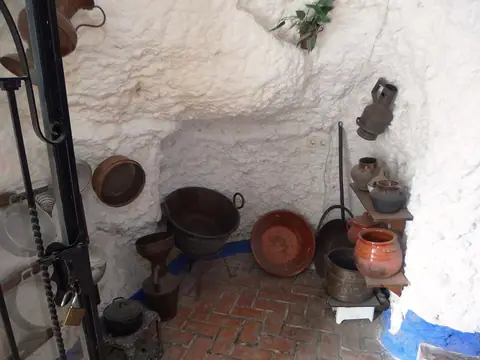
Sacromonte Cave Quarter Guide: Zambra Flamenco, Cave Museum & Abbey
Granada, Spain
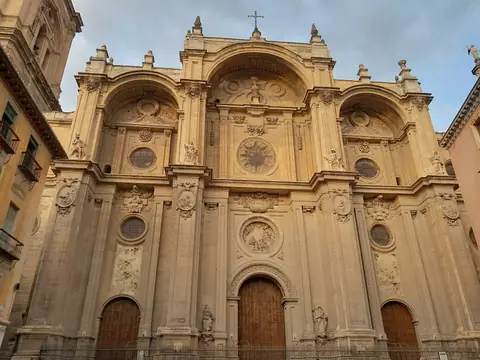
Granada Cathedral & Royal Chapel Guide: Alcaicería & Corral del Carbón
Granada, Spain
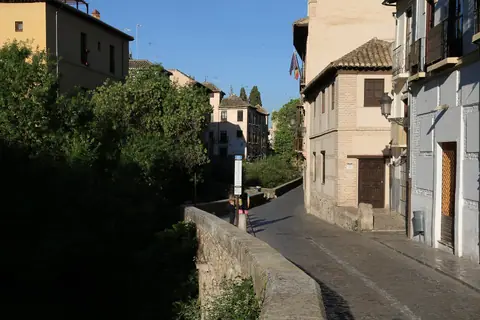
El Bañuelo Arab Baths, Casa de Zafra & Dobla de Oro Pass Guide in Granada
Granada, Spain
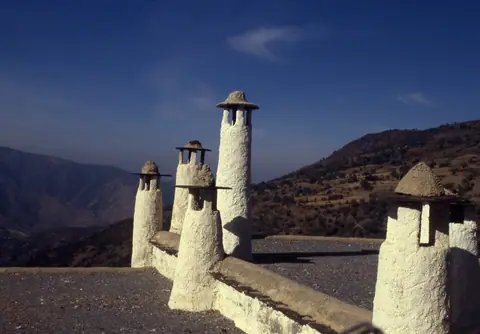
Day Trips from Granada: Las Alpujarras, Sierra Nevada & Guadix Caves
Granada, Spain
