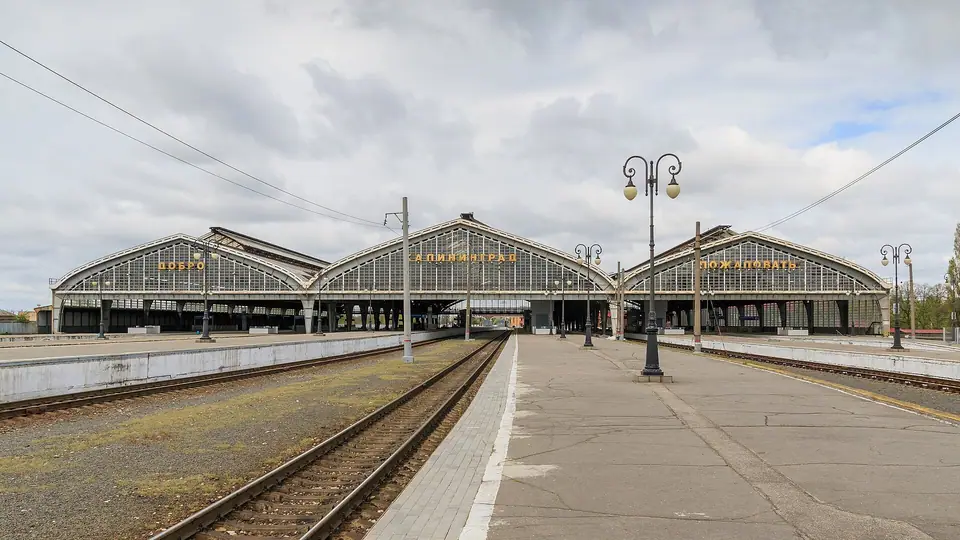
Photo: A.Savin · CC BY-SA 4.0
How to Get to Kaliningrad and Travel Around: Khrabrovo Airport, Railway Hubs and Trams
Plan your journey to Kaliningrad with verified transfer options from Khrabrovo Airport, suburban rail connections at North and South stations, and historic trams.
Reaching the Russian exclave on the Baltic Sea requires deliberate transit planning because the region shares land borders solely with Poland and Lithuania. Most visitors touch down at Khrabrovo Airport or arrive on long-distance passenger services rolling into the main railway terminal. Moving inside the regional capital is remarkably efficient, supported by two interlinked railway stations and the oldest operating metre-gauge tram network in Russia. Travellers setting out to build a comprehensive route can consult our broad Kaliningrad Travel Guide: Seasons, Districts and Planning before mapping their local journeys.
Arriving Through Khrabrovo Airport (KGD)
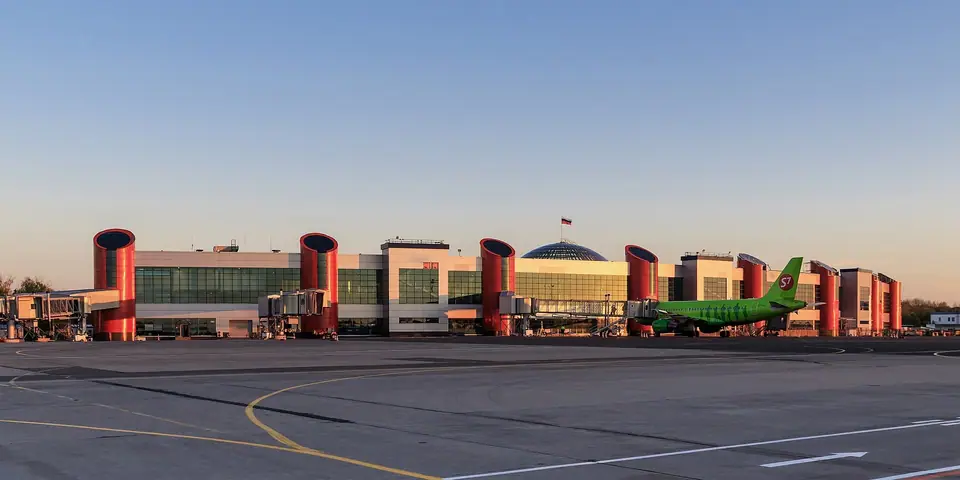
Khrabrovo Airport sits 24 kilometres northeast of central Kaliningrad, near the settlement of Khrabrovo. The airfield occupies the historical site of Powunden Airfield, established in 1935. On 31 May 2019, the facility received the official name of Empress Elizabeth Petrovna. Major infrastructure works completed in July 2017 brought an expanded passenger terminal into service, while runway reconstruction concluded on 27 April 2018 with a length of 3,350 metres. Operating as a dual-purpose airfield, it serves civil flights as well as aviation units of the Baltic Fleet. The facility handles up to 1,250 passengers per hour across its domestic and international sectors.
Express bus line No. 244э provides the primary public transit link between the airport terminal and the city centre. The express route connects the passenger terminal directly with Victory Square, Christ the Saviour Cathedral and the Stock Exchange, the Central Bus Station, and the South Railway Station. Travellers should check the official airport website for the latest daily timetable updates. Regional taxis and pre-booked private transfers operate from the marked pickup ranks directly outside the terminal concourse.
Choosing Between South Station and North Station
Kaliningrad relies on two distinct central railway stations constructed during the late 1920s. Kaliningrad-Passazhirsky, widely known as South Station, opened on 19 September 1929 as the Königsberg Hauptbahnhof following nine years of construction. The complex showcases Brick Expressionist architecture and houses a majestic three-span steel-and-glass train shed measuring 178 metres long and 120 metres wide. South Station manages all long-distance passenger trains from mainland Russia, and its platforms 1 and 2 dispatch suburban electric trains heading towards the northern coast. The Main Bus Station operates immediately adjacent to South Station on Kalinina Square, making this precinct the central hub for regional coaches.
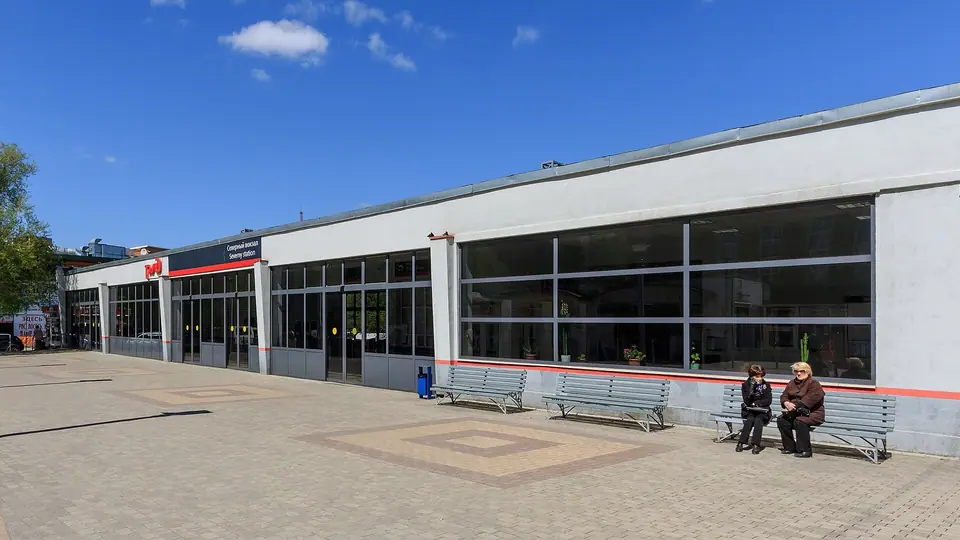
Kaliningrad-Severny, or North Station, stands beside Victory Square in the northern commercial district. Inaugurated in 1929 as the Nordbahnhof, the facility reopened for suburban electric rail operations in May 1964 and gained electrification in 1976. For travellers based near the city centre, North Station represents the fastest departure point for coastal day trips. Boarding a train here avoids the initial loop through South Station. Fast regional rail links connect passengers smoothly onward to the Baltic coastline, which you can explore further in our itinerary covering Zelenogradsk, Svetlogorsk and Yantarny: Baltic Resorts, Water Towers and Amber Coast.
Key Rail and Express Transit Hubs Compared
| Hub Name | Primary Function | Transit Connections | Strategic Location |
|---|---|---|---|
| Khrabrovo Airport (KGD) | Civilian flights and naval air transport | Bus No. 244э and licensed terminal taxis | 24 km northeast of the city centre |
| South Station (Passazhirsky) | Long-distance rail and coastal services | Trams, city buses, and Main Bus Station | Kalinina Square, southern urban district |
| North Station (Severny) | Suburban electric trains to Baltic resorts | Victory Square tram lines and urban buses | Directly adjacent to Victory Square |
| Main Bus Station | Regional coaches across Kaliningrad Oblast | City buses, trolleybuses, and South Station trains | Adjacent to South Railway Station concourse |
Metre-Gauge Tramways and Urban Street Transit
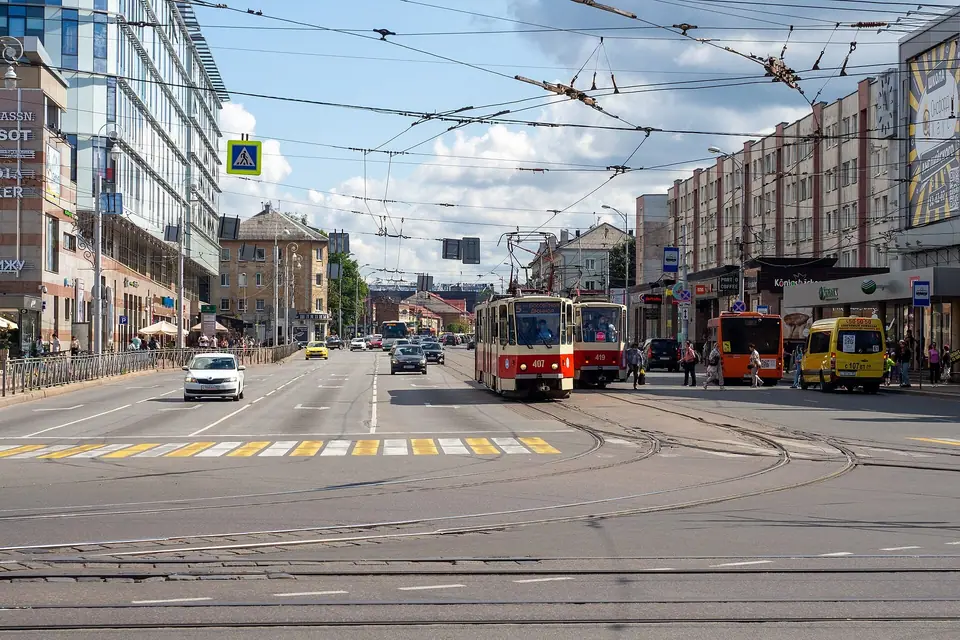
Kaliningrad preserves the oldest electric tramway network in present-day Russia, dating back to its foundation in 1895. The system uses a distinct 1,000-millimetre metre-gauge track profile. After heavy wartime disruptions, the network reopened on 7 November 1946. Today, modern low-floor 71-921 Korsar trams share the tracks with vintage rolling stock across Line 3 and Line 5. These lines connect residential quarters with landmark cultural institutions and central shopping streets. A single ride on Line 5 offers a scenic, leisurely journey past red-brick fortifications and leafier peripheral avenues.
Supplementing the rail network, municipal buses and trolleybuses run along major arterial roads, connecting central transfer points like Victory Square, Leninsky Prospekt, and Chernyakhovskogo Street. Passengers pay the driver or conductor upon boarding, or tap contactless payment cards on automated validators where fitted. Fares remain fixed per journey rather than distance-based, though exact amounts change periodically; check local transit notices for current tariffs.
Baltic Weather Considerations for Exclave Transit
Weather conditions across the Sambian Peninsula can directly influence transfer choices. Winters are damp and chilly, with January averaging high temperatures of 0.9°C and lows of -3.5°C across 14 wet days. February remains cold with average highs of 2.1°C, lows of -3°C, and 54 millimetres of precipitation. During these frosty months, sheltered platforms at South Station offer far better protection from freezing gusts than open suburban halts.
Spring brings rapid improvements, warming from a brisk March high of 6.4°C and low of -0.8°C up to a mild April high of 13.3°C and low of 3.2°C across 38 millimetres of rain. May delivers pleasant travel weather with average highs of 18.3°C and lows of 7.5°C. Summer marks peak transit volumes across the regional network. June records average highs of 21.2°C and lows of 11.3°C across 16 wet days. July reaches typical highs of 23.5°C and lows of 13.9°C with 91 millimetres of rainfall, matching August highs of 23.3°C and lows of 13.3°C. Coastal trains fill quickly during these warm holiday weeks, so travellers should secure station tickets early. Autumn cools steadily through September highs of 18°C and October highs of 11.8°C, moving towards November averages of 6°C and December highs of 2.6°C. Carrying a windproof coat ensures smooth transfers between exposed bus stops and tram islands throughout the year.
Where it is
- 1Kaliningrad
- Khrabrovo Airport (KGD) · about 21 km from Kaliningrad in a straight line
- Directions in Google Maps
Stations and taxi ranks: OpenStreetMap. Airports: OurAirports. Distances are in a straight line.
Traveller tips
Real advice from people who have been to Kaliningrad. Every tip is read by our team before it goes live.
No tips yet. Been here? Yours could be the first.
Thank you! Your tip will appear here after a quick review.
More in Kaliningrad
Continue exploring Kaliningrad with related neighbourhood, food, and planning guides
Where to Stay in Kaliningrad: District Guide and Baltic Coastal Bases
Kaliningrad, Russia
Kaliningrad 3-Day Itinerary: Historic Islands, Prussian Forts and Baltic Dunes
Kaliningrad, Russia
Kaliningrad: Exclave Geography, Historic Districts and Seasonal Planning
Kaliningrad, Russia
Things to Do in Kaliningrad: Prussian Monuments, Historic Fleet and Baltic Coast
Kaliningrad, Russia
