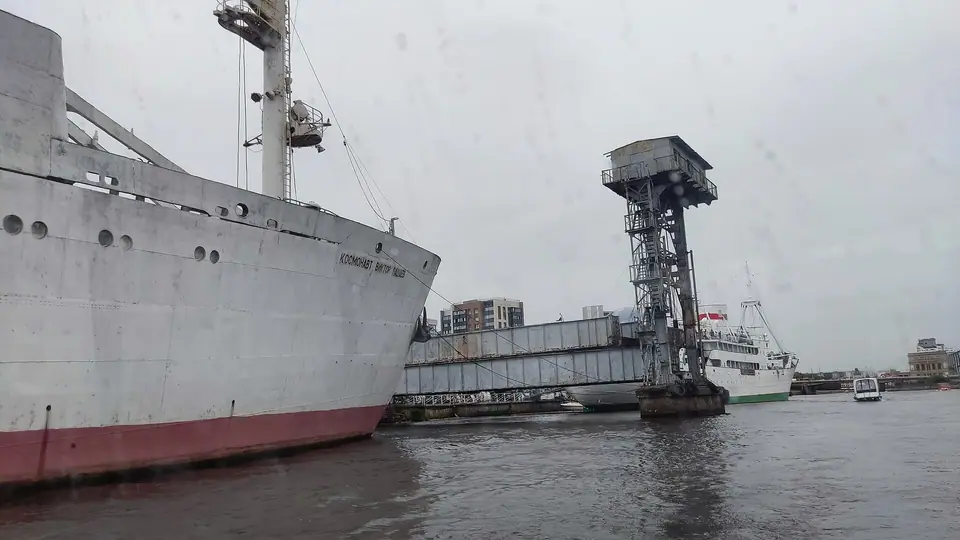
Photo: Alexander Grebenkov · CC BY-SA 4.0
Museum of the World Ocean: Research Ships, Submarine B-413 and Historic Fleet Quay
Plan your visit to the Museum of the World Ocean in Kaliningrad. Discover historic vessels like RV Vityaz, submarine B-413, and deep-sea exploration galleries.
Stretching along the northern bank of the Pregolya River west of Kant Island and Königsberg Cathedral, the Museum of the World Ocean stands as Russia's premier comprehensive maritime reserve. Established on 12 April 1990 by government decree, the institution opened its doors to the public in 1994 when its flagship vessel welcomed visitors. Today, the complex forms an expansive open-air harbour promenade known as the Embankment of the Historical Fleet, preserving authentic deep-sea exploration craft, naval combat units, and specialised oceanographic stations.
The museum safeguards over 100,000 collection items across seventeen thematic divisions, ranging from hydrographic instruments and maritime scale models to naval weaponry. Travellers arriving along the riverside discover an integrated cultural campus that bridges regional Baltic maritime heritage with global oceanic discovery, situated within walking distance of downtown cultural hubs described in our Things to Do in Kaliningrad guide.
The Embankment Fleet: Historic Research and Naval Vessels
The core attraction of the museum complex remains its flotilla of permanently moored historic craft. Each ship represents a specific era of maritime engineering and scientific exploration, allowing visitors to walk through crew quarters, navigation bridges, and machine spaces.
| Vessel Name | Vessel Class and Type | Year Built | Year Moored at Quay | Primary Historical Role |
|---|---|---|---|---|
| RV Vityaz | Oceanographic research ship | 1939 | 1994 | Flagship of Soviet oceanography; completed 65 expeditions and sounded the Mariana Trench |
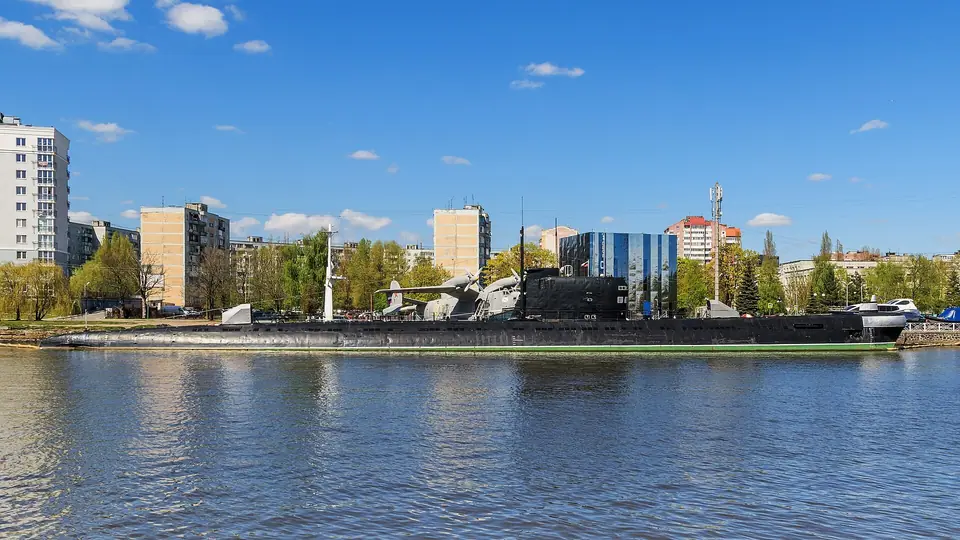
| Submarine B-413 | Project 641 (Foxtrot) diesel-electric | 1968 | 2000 | Subsurface patrol in Northern and Baltic Fleets; preserved in pristine operational state |
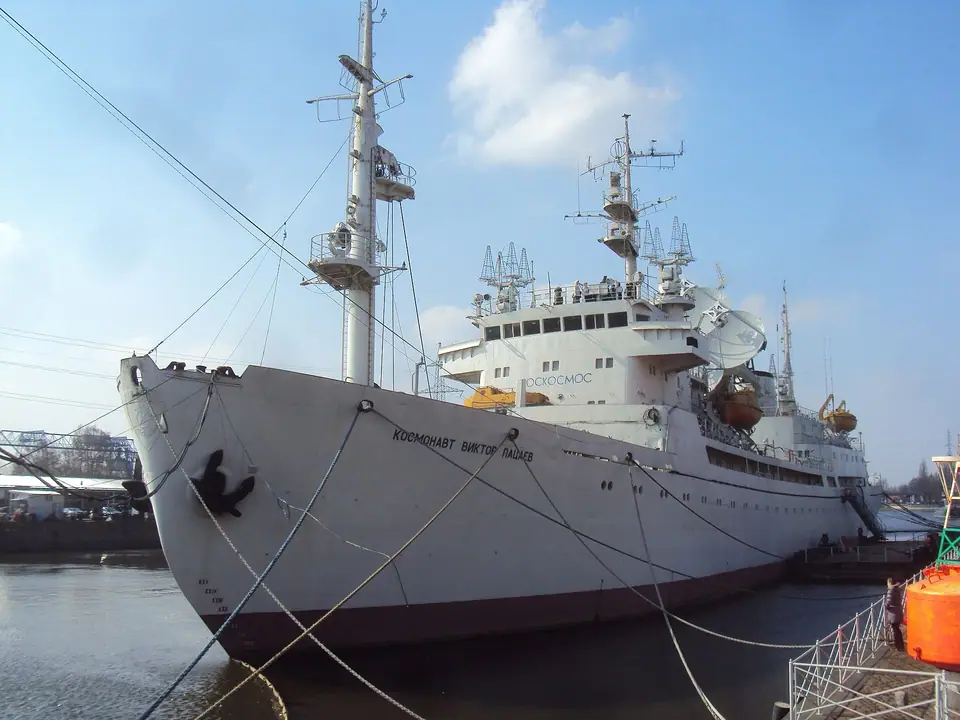
| Cosmonaut Viktor Patsayev | Space telemetry and communications ship | 1968 | 2001 | Orbital satellite tracking and communications with Salyut and Mir space stations |
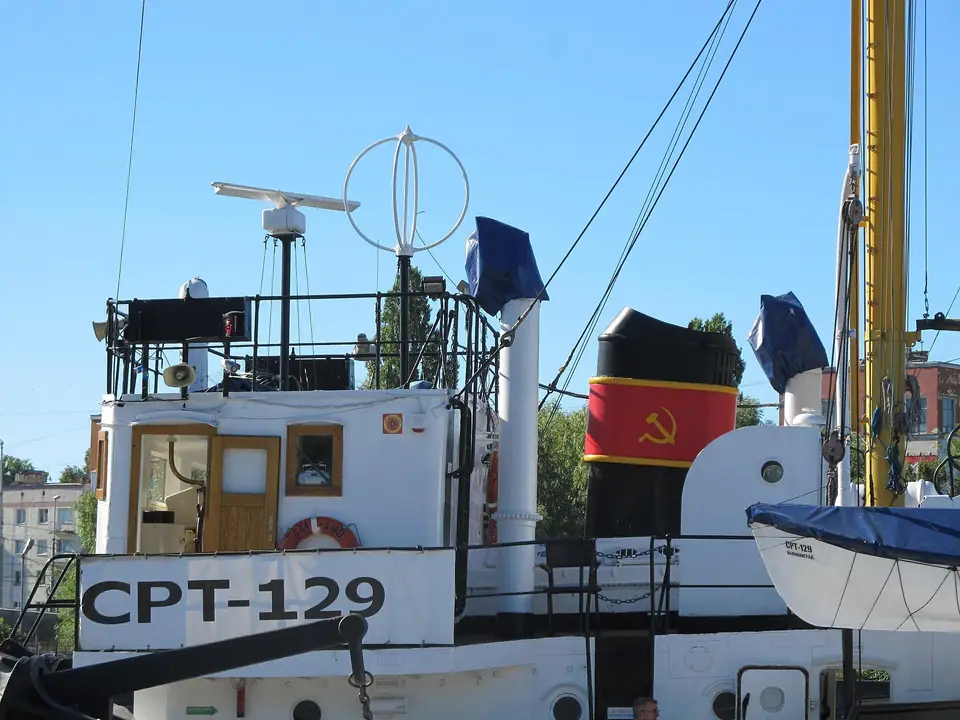
| SRT-129 | Medium fishing trawler | 1950s | 2009 | Baltic and North Atlantic herring drift fisheries exhibition |
| Irbensky | Manned lightship | 1962 | 2017 | Navigational warning vessel guarding Irbe Strait in the Baltic Sea |
Boarding these vessels requires steady footing, as historic companionways and watertight hatches retain their original dimensions. The open-air berths connect seamlessly to paved pedestrian riverside paths that lead eastward toward the former stock exchange described in our guide to Victory Square, Christ the Saviour and the Stock Exchange.
Exploring Research Vessel Vityaz and Submarine B-413
Research Vessel Vityaz remains the centrepiece of the floating fleet. Launched in 1939 in Bremerhaven under the original name Mars, the 109.44-metre cargo ship was transferred to the Soviet Union following the Second World War. Refitted between 1947 and 1949 as an oceanographic vessel for the USSR Academy of Sciences, it embarked on 65 major scientific voyages covering 800,000 nautical miles. In August 1957, scientists aboard Vityaz recorded the planet's deepest ocean measurement of 11,022 metres within the Mariana Trench. Aboard the ship, visitors examine original laboratory equipment, charting tables, and scientist cabins preserved as they operated during the International Geophysical Year.
Moored downriver from Vityaz is Submarine B-413, an attack submarine built in Leningrad and commissioned in 1968. Serving in active naval duty until 1999, it joined the museum on 2 July 2000. Unlike many museum submarines worldwide, B-413 preserves its complete combat layout without cut-away walls or stripped bulkheads. Visitors step through round hatch doors between seven watertight compartments, viewing the forward torpedo room, diesel propulsion bays, sonar control consoles, and cramped crew berths.
Cosmic Tracking, Polar Navigation and Aviation Pavilions
The vessel Cosmonaut Viktor Patsayev honours the Kaliningrad-born cosmonaut and served within the Soviet Academy of Sciences Space Research Fleet. Outfitted with massive parabolic dish antennas, it tracked telemetry and transmitted orbital instructions to cosmonauts aboard the Salyut and Mir space stations. Touring its bridge and radio communication halls reveals cold-war aerospace electronics operating in maritime conditions.
Nearby sits the trawler SRT-129, highlighting the post-war industrial development of the Baltic fishing trade, joined by the floating lightship Irbensky. Aviation enthusiasts can inspect an authentic Beriev Be-12 amphibious patrol aircraft mounted on the quay terrace. Indoor exhibits include the Pakgauz historic port warehouse and the Depth pavilion, which displays the Mir-1 deep-sea crewed submersible beside rare sperm whale skeletal specimens.
Planning Your Route Along the Pregolya Embankment
A thorough inspection of the Museum of the World Ocean requires between three and five hours, especially if exploring multiple ship interiors. Because each vessel controls admission through its own turnstiles, travellers can purchase unified grounds passes or individual compartment tickets depending on personal interest. Check the official museum website prior to arrival to confirm current exhibition schedules and ticketing regulations.
The riverside complex operates year-round, but seasonal weather affects the experience on open decks. Open-Meteo climate data spanning 2015 to 2024 shows pleasant summer conditions, with average highs of 21.2°C in June, 23.5°C in July, and 23.3°C in August. However, summer brings the highest monthly rainfall, averaging 91 millimetres in July and August across fifteen to sixteen wet days. Winter daytime temperatures drop near freezing, with January averaging highs of 0.9°C and lows of -3.5°C beside fourteen wet days. Spring warms steadily from 6.4°C in March to 18.3°C in May. Sturdy footwear with non-slip soles is essential when climbing external ship ladders in wet weather.
Public transport connects the quayside to central hotels and railway depots. Tram and bus lines stop within a short walk of the waterfront along Moskovsky Prospekt, making access straightforward from districts detailed in our Where to Stay in Kaliningrad accommodation review. Combining this maritime complex with the surrounding historic fortifications creates a balanced full-day historical survey of this Baltic port.
Where it is
- 1Museum of the World Ocean
- Khrabrovo Airport (KGD) · about 22 km from here in a straight line
- Directions in Google Maps
Stations and taxi ranks: OpenStreetMap. Airports: OurAirports. Distances are in a straight line.
Traveller tips
Real advice from people who have been to Kaliningrad. Every tip is read by our team before it goes live.
No tips yet. Been here? Yours could be the first.
Thank you! Your tip will appear here after a quick review.
More in Kaliningrad
Continue exploring Kaliningrad with related neighbourhood, food, and planning guides
Kant Island and Königsberg Cathedral: Brick Gothic Architecture and Kant's Tomb
Kaliningrad, Russia
Fishing Village and Oktyabrsky Island: Quays, Synagogue and Bridges
Kaliningrad, Russia
Amber Museum, Dohna Tower and Upper Pond: Fortress Casemates and Lakeside Promenades
Kaliningrad, Russia

Kaliningrad City Gates and Fort No. 5: Prussian Defensive Architecture
Kaliningrad, Russia
