Photo: Zairon · CC BY-SA 4.0
Victory Square, Christ the Saviour Cathedral and the Stock Exchange in Kaliningrad
Navigate the civic axis of Kaliningrad from Victory Square and the Cathedral of Christ the Saviour to Hanns Hopp's City Hall and the historic 1875 Stock Exchange.
Kaliningrad's commercial core and civic administration converge along the north-to-south artery linking Victory Square with the Pregolya River embankment down Leninsky Prospekt. Walking this route demonstrates how Weimar-era modernism, Russian Orthodox sanctuary design, and nineteenth-century merchant halls define the post-war urban landscape.
Victory Square and Hanns Hopp's Architectural Legacy
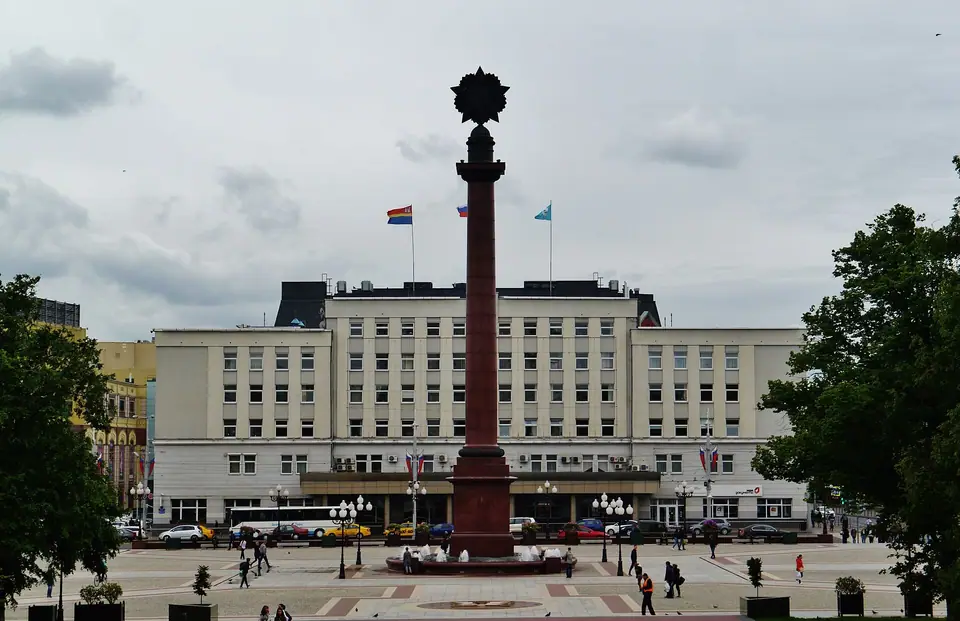
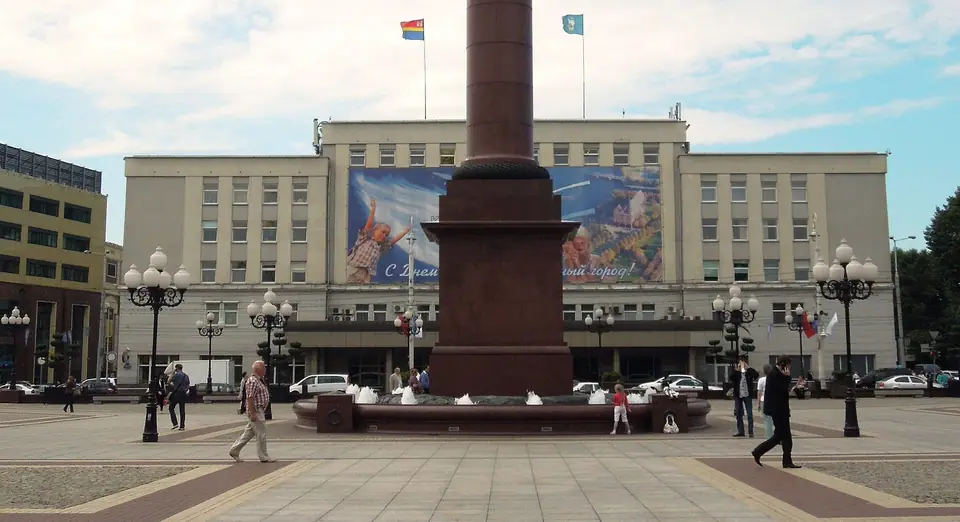
Known as Hansaplatz until 1934, Victory Square took form during the 1920s after the demolition of the Baroque inner ramparts, specifically the Steindamm Gate dismantled in 1912 and the Tragheim Gate taken down in 1910. The opening allowed the old Prussian core to link directly with the expanding Hufen suburbs. At Victory Square 1 stands Kaliningrad City Hall, functioning as the primary seat of municipal government. The structure was completed in 1923 by pioneering architect Hanns Hopp as the Handelshof, an exhibition and administrative complex built to serve trading firms attending the Ostmesse trade fair. Although heavily rebuilt following wartime damage, Hopp's robust proportions remain legible across the main facade.
To the west of the central plaza stands the former Königsberg Nordbahnhof, erected in 1930. The station building now functions as a commercial business centre, while rail passengers access regional commuter platforms through North Railway Station to reach coastal resorts like Zelenogradsk. The central plaza underwent major reconstruction ahead of the city's 750th anniversary in 2005. Municipal planners removed the long-standing monument of Vladimir Lenin, which stood on the site from 1958 until its relocation to the square facing the House of Arts. Workers erected a central Triumphal Column encircled by sunken civic fountains, establishing an expansive pedestrian zone.
Cathedral of Christ the Saviour and Religious Architecture
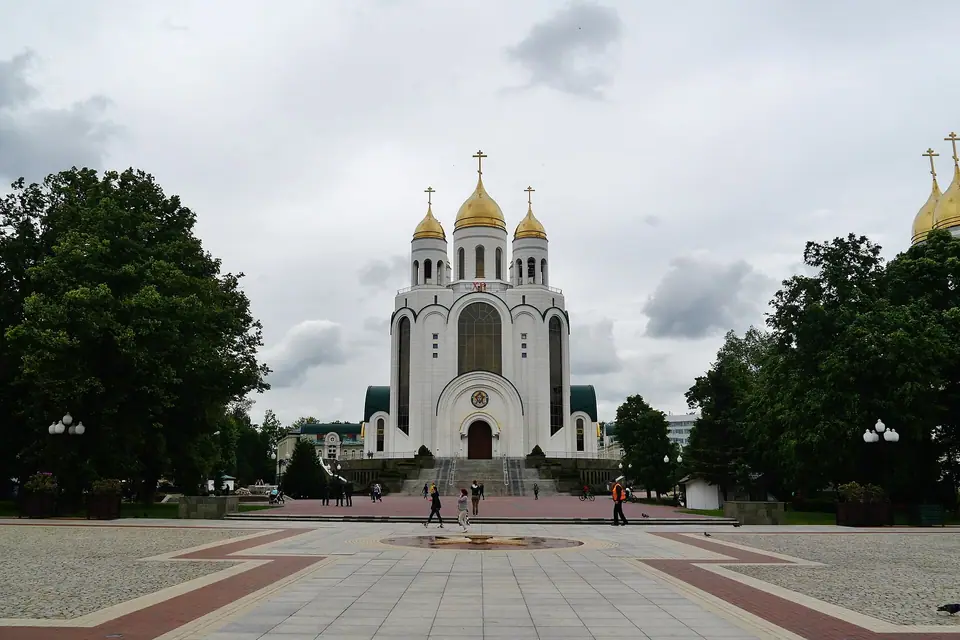
Dominating the eastern perimeter of Victory Square is the Cathedral of Christ the Saviour, the primary and largest Russian Orthodox place of worship in Kaliningrad Oblast. Designed by architect Oleg Kopylov, the sanctuary reflects the traditional white-stone Vladimir-Suzdal style topped with gilded onion domes. The building reaches a summit height of 70 metres, accommodates up to 3,000 worshippers during solemn services, and holds 13 cast bells, with the heaviest weighing 14 tonnes. Work commenced with a cornerstone laying ceremony in 1995, followed by the insertion of a commemorative capsule in June 1996 containing consecrated soil from Moscow's eponymous cathedral. Patriarch Alexy II consecrated the upper church on 10 September 2006. The lower church, consecrated on 27 September 2007, seats 200 people and safeguards an eighteenth-century carved iconostasis originating from Memel. Adjacent to the main cathedral stands the smaller, double-domed Church of Saints Peter and Fevronia.
| Landmark | Primary Architect or Designer | Construction Period | Historic Function |
|---|---|---|---|
| Kaliningrad City Hall | Hanns Hopp | 1920 to 1923 | Handelshof trade exhibition offices |
| Cathedral of Christ the Saviour | Oleg Kopylov | 1996 to 2006 | Diocesan Orthodox cathedral |
| Former Nordbahnhof | Deutsche Reichsbahn architects | 1930 | Northern passenger railway terminal |
| Königsberg Stock Exchange | Heinrich Müller | 1870 to 1875 | Merchant trading hall and civic assembly |
From Castle Hill to the Königsberg Stock Exchange
Following Leninsky Prospekt south leads toward the historic centre of medieval Königsberg. On Castle Hill stood the historic Königsberg Castle, initially founded by Teutonic knights in 1255. Damaged severely during Allied air raids in August 1944 and the Soviet assault in April 1945, the remaining castle walls were demolished between 1967 and 1969. Authorities subsequently initiated the construction of the 21-storey House of Soviets on the adjacent terrace between 1970 and 1985. The brutalist concrete tower stood unfinished for four decades before demolition crews fully dismantled the superstructure between May 2023 and August 2024. Travellers exploring this sector can pair their walk with visits to Kant Island and Königsberg Cathedral, situated just south across the river.
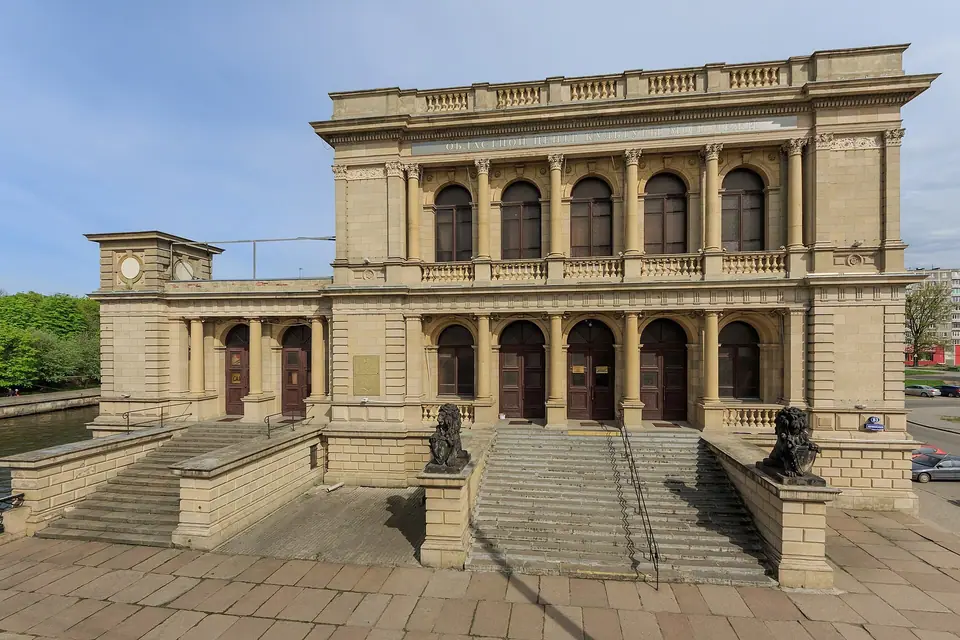
Overlooking the southern branch of the Pregolya River at Leninsky Prospekt 83 stands the former Königsberg Stock Exchange, one of the most prominent surviving German-era secular structures in the city. Designed by Bremen architect Heinrich Müller and constructed between 1870 and 1875, this Neo-Renaissance edifice measures 73 metres in length by 23 metres in width. Due to the unstable marshy ground near the water, engineers drove 2,202 timber piles measuring between 12 and 18 metres long deep into the riverbed to secure the foundation. The exterior boasts ornate classical pediments, decorative stone balustrades, and a grand entrance stairway flanked by two stone lions. The exchange historically hosted merchant commodity bidding, grain auctions, and cultural concerts, surviving the war with substantial internal damage before post-war reconstruction adapted it for civic exhibition and cultural events.
Navigating the Central Civic Axis
Victory Square serves as one of the primary transport nodes across Kaliningrad. Five major thoroughfares intersect around the perimeter: Leninsky Prospekt, Chernyakhovskogo Street, Sovetsky Prospekt, Prospekt Mira, and Gvardeysky Prospekt. The plaza connects directly to tram routes 3 and 5, trolleybus lines 1, 2, and 7, beside city buses and minibuses. Travellers planning a broader survey of the city will find this junction ideal for connecting between the historic residential enclaves covered in the Amalienau villas guide and the southern museum quarter.
Seasonal weather requires sensible planning along this wide, open corridor. Autumn and winter bring maritime precipitation, with October recording 86 millimetres of rain over 18 wet days and January seeing sub-zero lows averaging -3.5°C across 14 wet days. Summer offers comfortable walking conditions, with July and August reaching average daytime highs of 23.5 and 23.3°C, though heavy Baltic showers bring around 91 millimetres of rain each month. Travellers should pack windproof layers when crossing the open expanse of Victory Square or walking the breezy embankments beside the Stock Exchange. Modest attire covering shoulders and knees is expected when entering the upper or lower sanctuaries of Christ the Saviour Cathedral.
Where it is
- 1Victory Square, Christ the Saviour Cathedral and the Stock Exchange in Kaliningrad
- Khrabrovo Airport (KGD) · about 20 km from here in a straight line
- Directions in Google Maps
Stations and taxi ranks: OpenStreetMap. Airports: OurAirports. Distances are in a straight line.
Traveller tips
Real advice from people who have been to Kaliningrad. Every tip is read by our team before it goes live.
No tips yet. Been here? Yours could be the first.
Thank you! Your tip will appear here after a quick review.
More in Kaliningrad
Continue exploring Kaliningrad with related neighbourhood, food, and planning guides
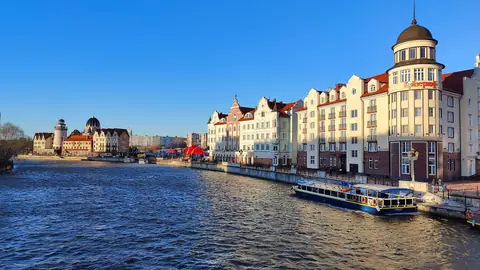
Fishing Village and Oktyabrsky Island: Quays, Synagogue and Bridges
Kaliningrad, Russia

Museum of the World Ocean: Research Ships, Submarine B-413 and Historic Fleet Quay
Kaliningrad, Russia
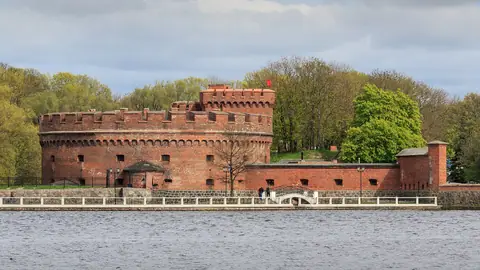
Amber Museum, Dohna Tower and Upper Pond: Fortress Casemates and Lakeside Promenades
Kaliningrad, Russia
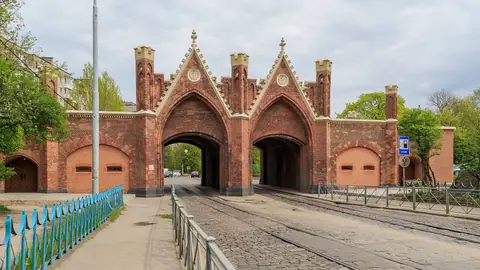
Kaliningrad City Gates and Fort No. 5: Prussian Defensive Architecture
Kaliningrad, Russia
