Rustaveli Avenue and Tbilisi's Museum Quarter Walking Guide
Rustaveli Avenue forms the ceremonial spine of central Tbilisi, connecting grand neoclassical theatres, national museums, and historic civic landmarks.
A Grand Ceremonial Thoroughfare
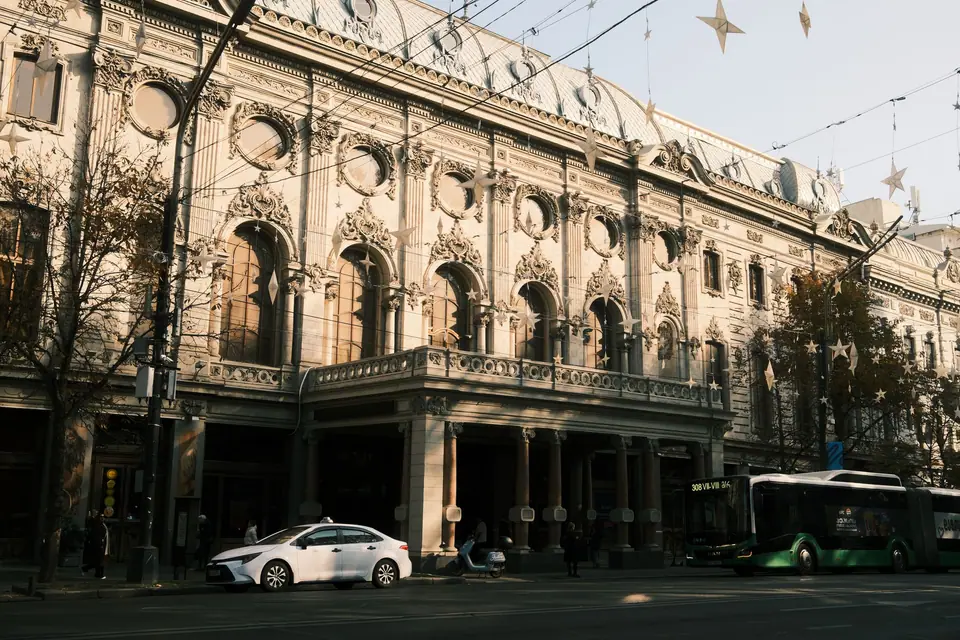
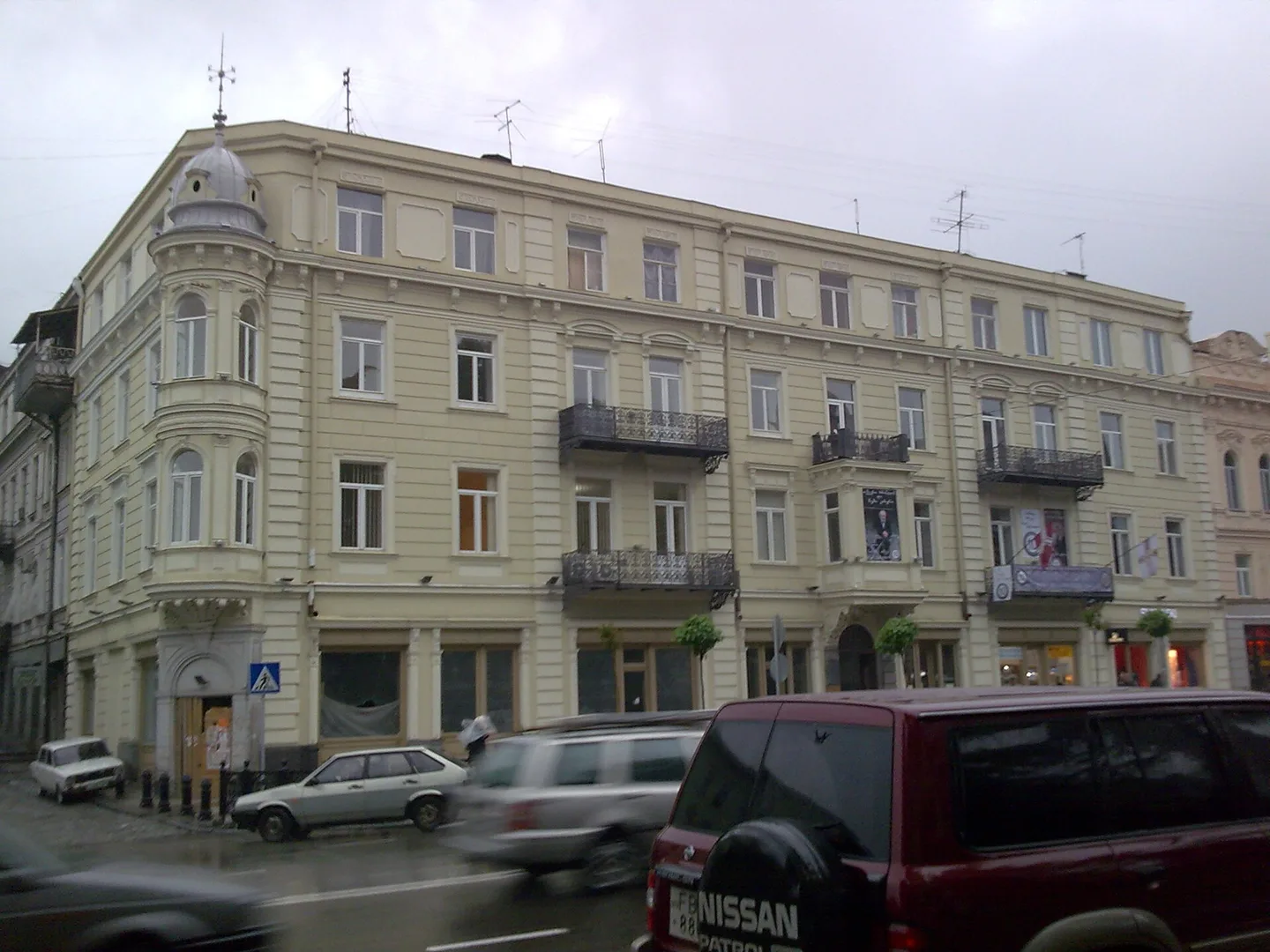
Shota Rustaveli Avenue stretches through the heart of the capital, serving as the central stage for civic life, political gatherings, and cultural celebrations. Lined with mature plane trees, the boulevard blends nineteenth-century imperial facades with ornate Art Nouveau details and monumental Soviet stonework. Broad pavements offer generous space for wandering between cafes, bookshops, and government institutions. While motor traffic remains steady along the multi-lane carriageway, pedestrian underpasses and signalised crossings allow easy movement between opposite pavements. Early morning walks reveal architectural details at their quietest, before commuter buses and shoppers fill the street.
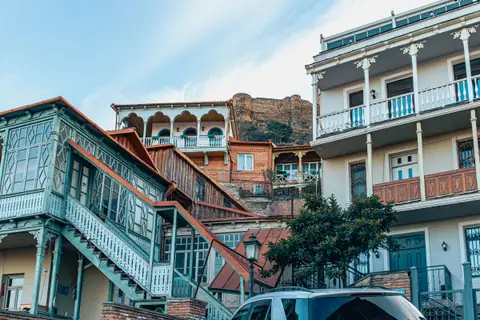
The avenue takes its name from Shota Rustaveli, the revered medieval poet whose epic work helped shape Georgian literary identity. Walking along the pavement, visitors encounter bronze sculptures, historic plaques, and shaded benches tucked beneath tall canopies. Side alleys climb steeply towards the lower slopes of Mount Mtatsminda, revealing quiet residential courtyards with carved wooden balconies just metres away from the traffic. This contrast between grand public scale and intimate neighbourhood domesticity defines the character of the surrounding district.
Treasures of the Georgian National Museum
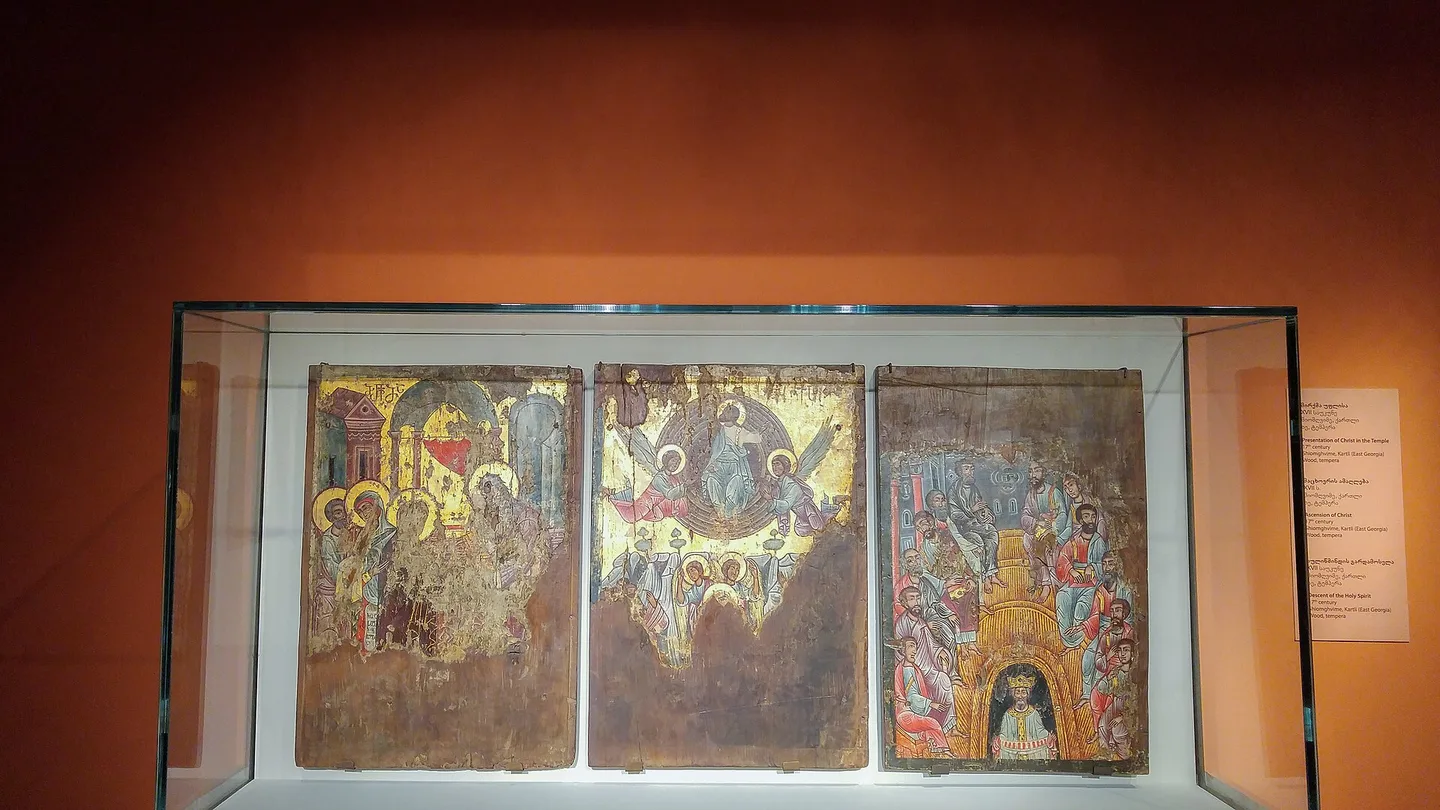
The Georgian National Museum stands as the central cultural anchor along the avenue, housing collections that trace Caucasian archaeology and national heritage. Inside the Simon Janashia Museum building, subterranean vaults preserve the famed Archaeological Treasury. Here, visitors view exquisite pre-Christian gold jewellery, ritual cups, and intricate filigree ornaments recovered from ancient burial mounds across Colchis and Iberia. The craftsmanship demonstrates remarkable skill, reflecting thousands of years of metalworking traditions along trade corridors linking Europe and Western Asia.
Upper floors present comprehensive archaeological displays covering early hominin settlements, medieval Christian stone carving, and ethnographic costumes. The Museum of the Soviet Occupation occupies the top level, chronicling political repression, resistance movements, and independence struggles through archival photographs, documents, and personal artefacts. Travellers can find practical visiting information by consulting the ticket desk upon arrival.
Civic Landmarks and Cultural Institutions
Beyond the primary museum galleries, Rustaveli Avenue gathers several of Georgia's foremost public and performing arts halls. The Parliament building stands out with its heavy stone colonnade, long a rallying square for civic independence demonstrations and modern public gatherings. A short walk further up the avenue leads to the Georgian National Opera and Ballet Theatre, distinguished by Neo-Moorish stripes, arched loggias, and crimson interiors. Nearby, the Rustaveli Drama Theatre displays carved stone masks above arched windows.
- Simon Janashia Museum: Home to the ancient archaeological gold treasury, early bronze weapons, and prehistoric fossils.
- Museum of Soviet Occupation: A dedicated upper-floor exhibition memorialising twentieth-century political history and civic resistance.
- National Gallery: Informally called the Blue Gallery, displaying classical and modernist works by prominent Georgian painters.
- Opera and Ballet Theatre: A distinguished nineteenth-century venue presenting classical ballet, opera, and international musical performances.
Planning your visits around theatre schedules and gallery closures allows you to coordinate daytime sightseeing with evening stage performances across the central quarter. You can discover additional cultural highlights and historic districts across Tbilisi's top attractions and sights across the river.
Navigating the Boulevard and Freedom Square
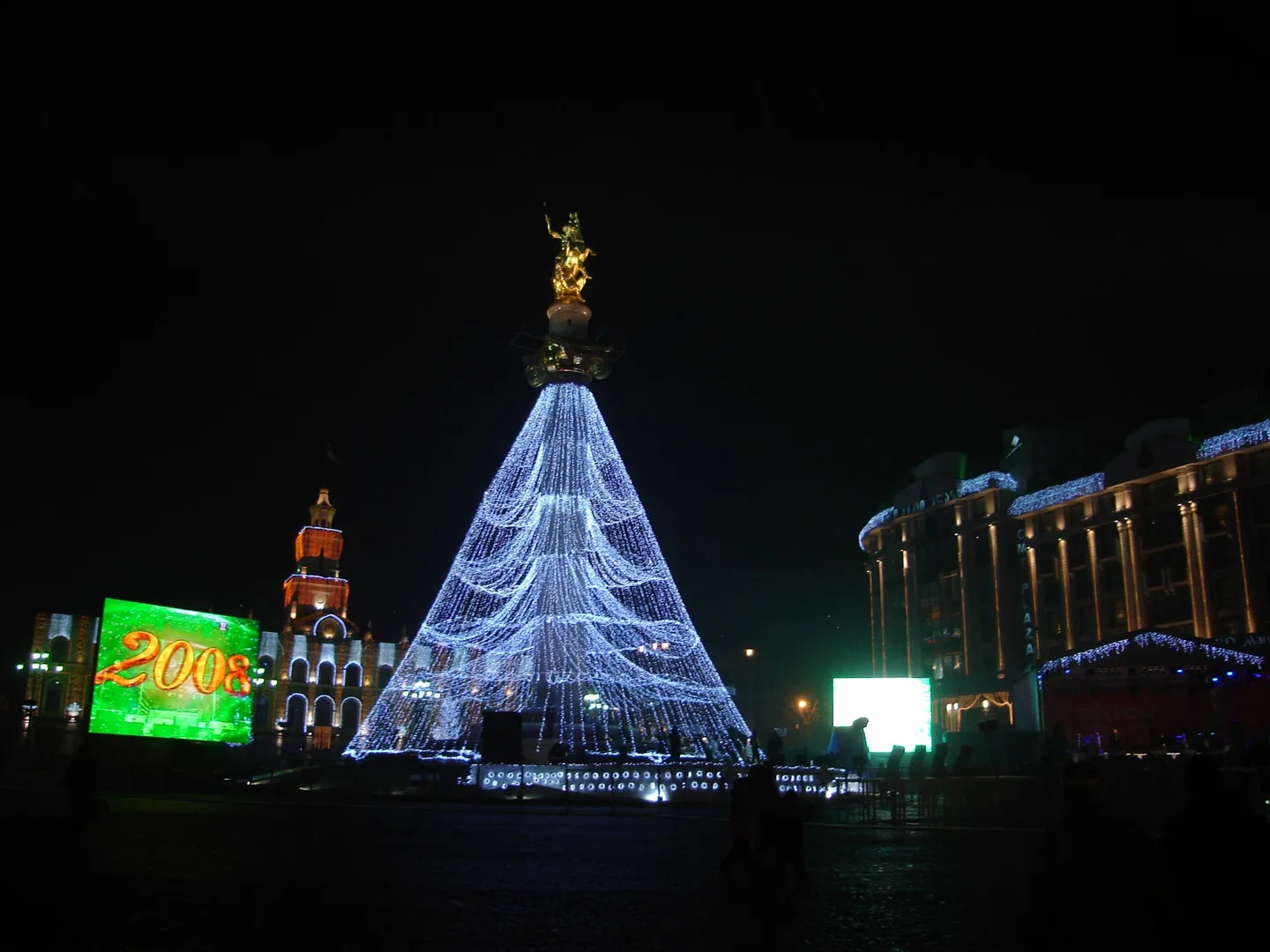
At its southern terminus, the avenue opens onto Freedom Square, where a tall monument topped with Saint George overlooks busy traffic circles and civic buildings. This expansive plaza marks the natural transition between the grand nineteenth-century boulevard and the winding, cobblestone alleyways of the Old Town. Modern commercial complexes sit beside municipal offices, while side lanes lead directly into traditional residential quarters. Descending into underground passages connects pedestrians smoothly to the metro station without negotiating surface vehicle lanes.
Public transport along the corridor operates reliably, with frequent municipal buses linking Freedom Square to western districts, riverfront embankments, and peripheral metro stops. Route networks and transit cards in Tbilisi district orientation help line up boulevard stops across the capital city. Shaded stone park benches outside the Blue Gallery offer welcome resting spots during warm summer afternoons, where local street artists display oil landscapes and watercolours beneath mature plane trees. Alternating between classical museum halls, grand parliament colonnades, bookshop basements, and quiet courtyard tea stops captures the steady daily civic rhythm along central Tbilisi's main ceremonial promenade avenue every season.
Official prices and opening hours
- Tbilisi Metro, City Buses & Rike–Narikala Cable CarOfficial site ↗
- Georgian National Museum (Rustaveli Avenue)Official site ↗
Where it is
- 1Rustaveli Avenue and Tbilisi's Museum Quarter Walking
- Tbilisi International Airport (TBS) · about 14 km from here in a straight line
- Directions in Google Maps
Stations and taxi ranks: OpenStreetMap. Airports: OurAirports. Distances are in a straight line.
Traveller tips
Real advice from people who have been to Tbilisi. Every tip is read by our team before it goes live.
No tips yet. Been here? Yours could be the first.
Thank you! Your tip will appear here after a quick review.
More in Tbilisi
Continue exploring Tbilisi with related neighbourhood, food, and planning guides