Things to Do in Tbilisi: Neighbourhood Walks, Bathhouses, and Modernist Relics
Distinct riverside districts, architectural layers, and historic squares guide navigation through Tbilisi rather than arbitrary citywide tourist checklists.
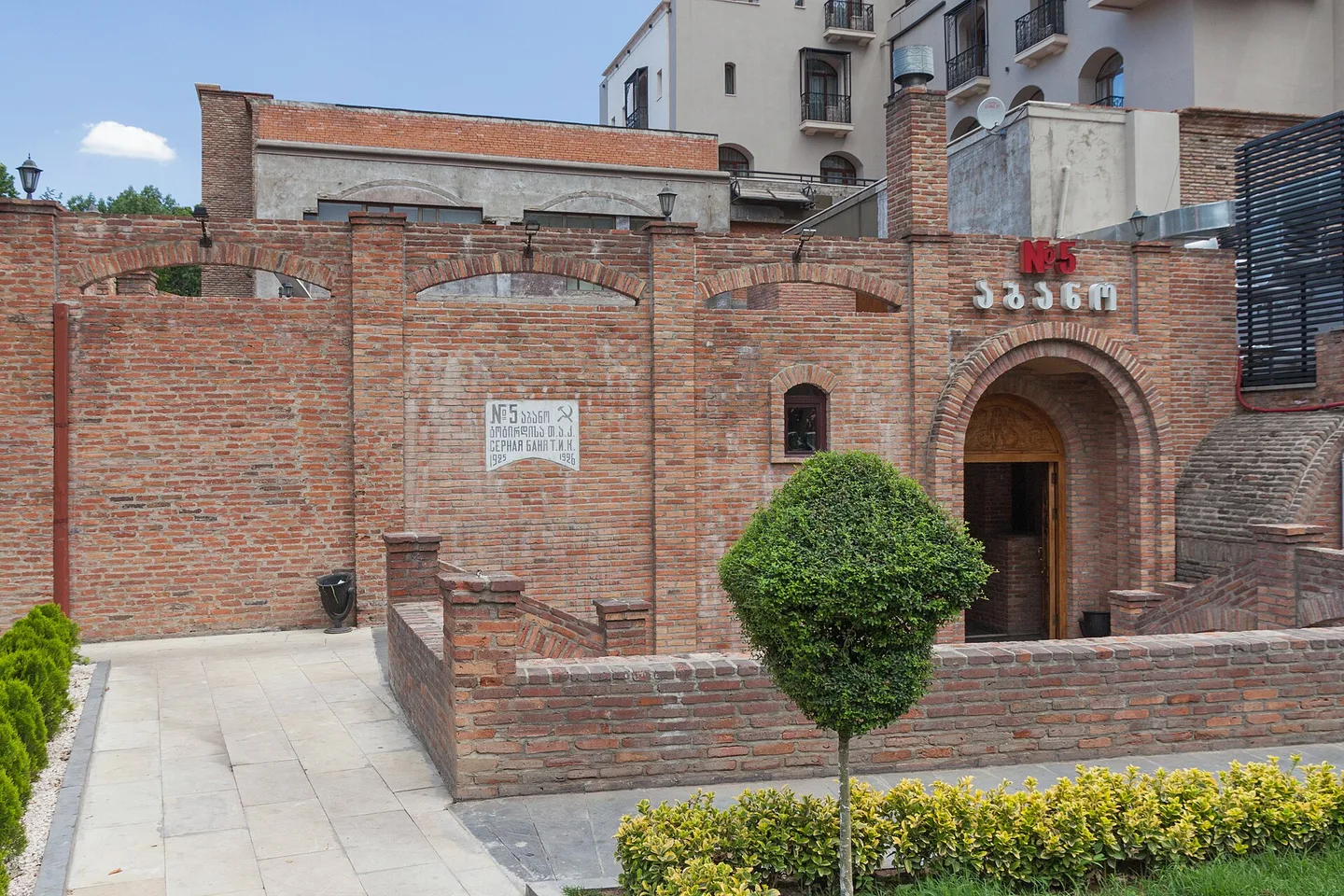
Tbilisi rewards travellers who abandon hurried cross-city dashes and absorb one neighbourhood at a time. The oldest quarter hugs the thermal springs of Abanotubani, where warm mineral water feeds domed brick bathhouses. Narrow cobblestone lanes reveal carved wooden balconies clinging to steep cliffs above the canyon floor. Locals gather outside quiet courtyards while water trickles through the gorge below. Bathing rituals here have welcomed travellers for centuries, pairing hot mineral soaking with brisk exfoliating rubs. Bridge approaches and bathhouse etiquette fit alongside Tbilisi district orientation and transit rules. The scent of sulfur drifts across the brick cupolas, giving an unmistakable introduction to the capital.
Stepping out of the bathhouse district leads directly into intimate residential alleys framed by vine-draped verandas. Intricate carved woodwork reflects Persian, Ottoman, and Russian architectural currents layered over domestic Georgian foundations. A short walk reveals small bakeries pulling fresh bread from clay tone ovens tucked beneath street level. Slow down along these hillside lanes before climbing toward upper ridges. Timber staircases link family flats with communal balconies overlooking stone yards. Fresh laundry dries in the mountain breeze between stone archways while cats sleep on sunny doorsteps.
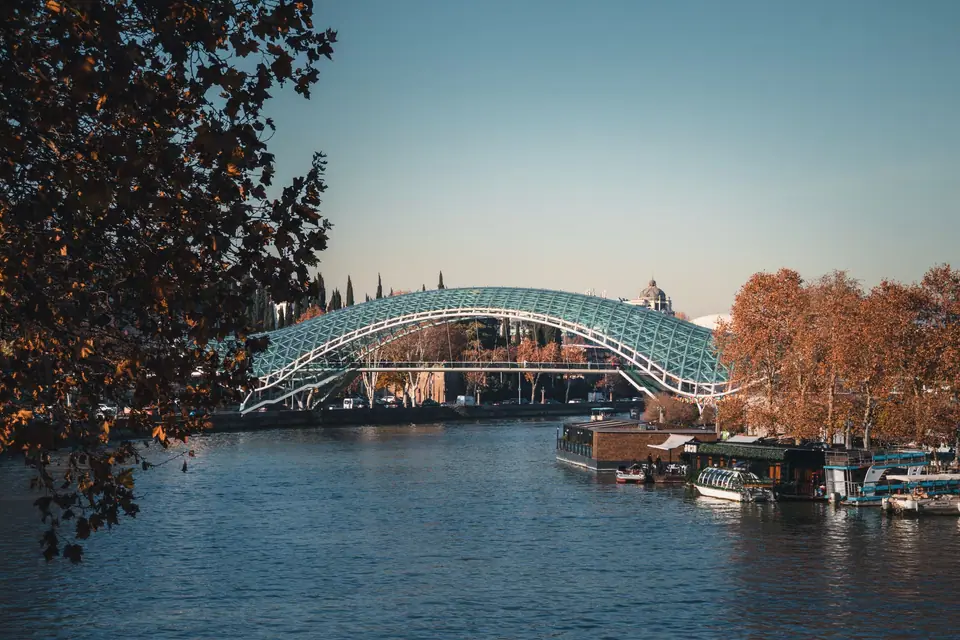
Across the river, modern footbridges link old quarters to open public gardens. The Peace Bridge spans the Mtkvari River with curved glass and steel, leading visitors straight into Rike Park. From this riverside green, aerial cable cars carry passengers across the water and up to Narikala Fortress. Riding above rooftops gives an instant geography lesson, showing how tightly Tbilisi sits inside its steep river gorge. Ancient stone bastions crown the rocky crest overhead. Walking the upper parapet gives unbroken views across church spires, brick domes, and residential hillsides. Airport rail buses and station links connect cleanly through Tbilisi flight and road arrival routes.
Descending from the ridge on foot brings travellers past shaded shrine gardens and quiet cliffside lookouts. Paths weave past ancient stone steps and rock faces, leading naturally back towards the riverside promenades. The surrounding districts reveal contrasting atmospheres depending on which bank you explore:
- Abanotubani offers subterranean thermal baths, river gorge walks, and carved wooden balconies.
- Rike Park provides open lawns, public art, and easy cable connections to the hilltop fortress.
- Sololaki features quiet nineteenth-century residential facades, shaded internal courtyards, and neighbourhood cafes.
- Rustaveli Avenue presents grand neoclassical facades, central squares, and national cultural institutions.
- Avlabari sits atop the rocky left bank, displaying cliff-edge houses and historic community churches.
- Chugureti highlights restored neoclassical terraces, quiet side lanes, and dynamic local creative spaces.
Each quarter requires comfortable walking shoes, as the city transitions rapidly from smooth paving to uneven flagstones and steep stairways.
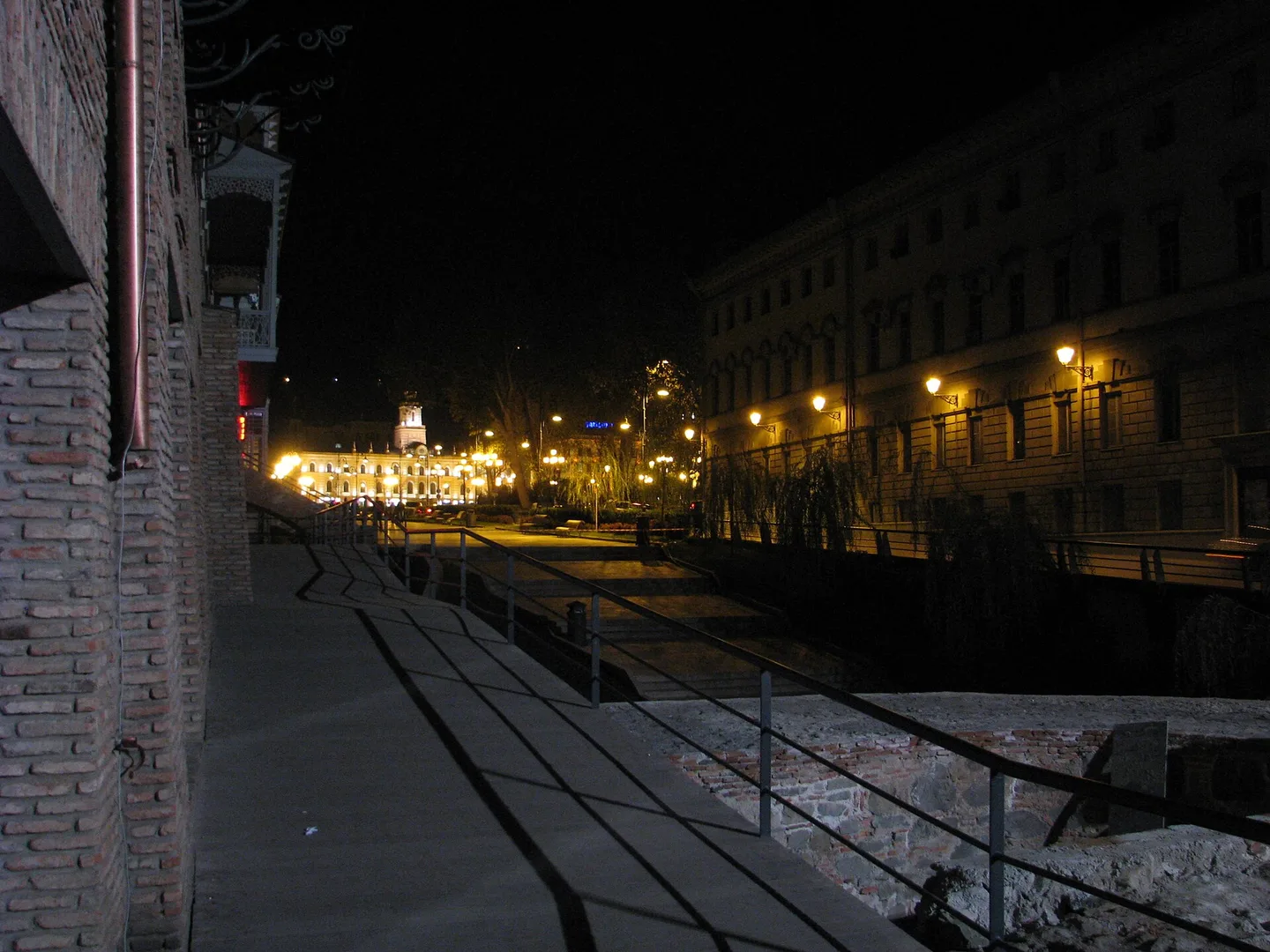
Heading uphill from the riverside brings travellers into the civic heart of Pushkin Street and Freedom Square. Street excavations along Pushkin Street exposed medieval defensive walls preserved behind iron railings. Elevated walkways now let pedestrians look down directly onto old stone gates and tower foundations. Freedom Square opens beyond, framed by grand municipal facades and busy bus interchanges. From this plaza, Rustaveli Avenue runs northwest as the capital's grand promenade, passing the Georgian National Museum, classical theatres, and parliament arches.
The avenue offers a sharp contrast to the twisting alleys of the Old Town. Shaded by mature plane trees, broad pavements lead past nineteenth-century mansions built during imperial rule. Side lanes drop steeply down toward the river, inviting unscripted detours into leafy residential squares. Match hotel terrain and street noise cleanly across Sololaki, Vera, and Chugureti quarters. Bookshops, coffee counters, and quiet yards sit immediately behind main road avenues.
Twentieth-Century Modernism Along the River Embankment
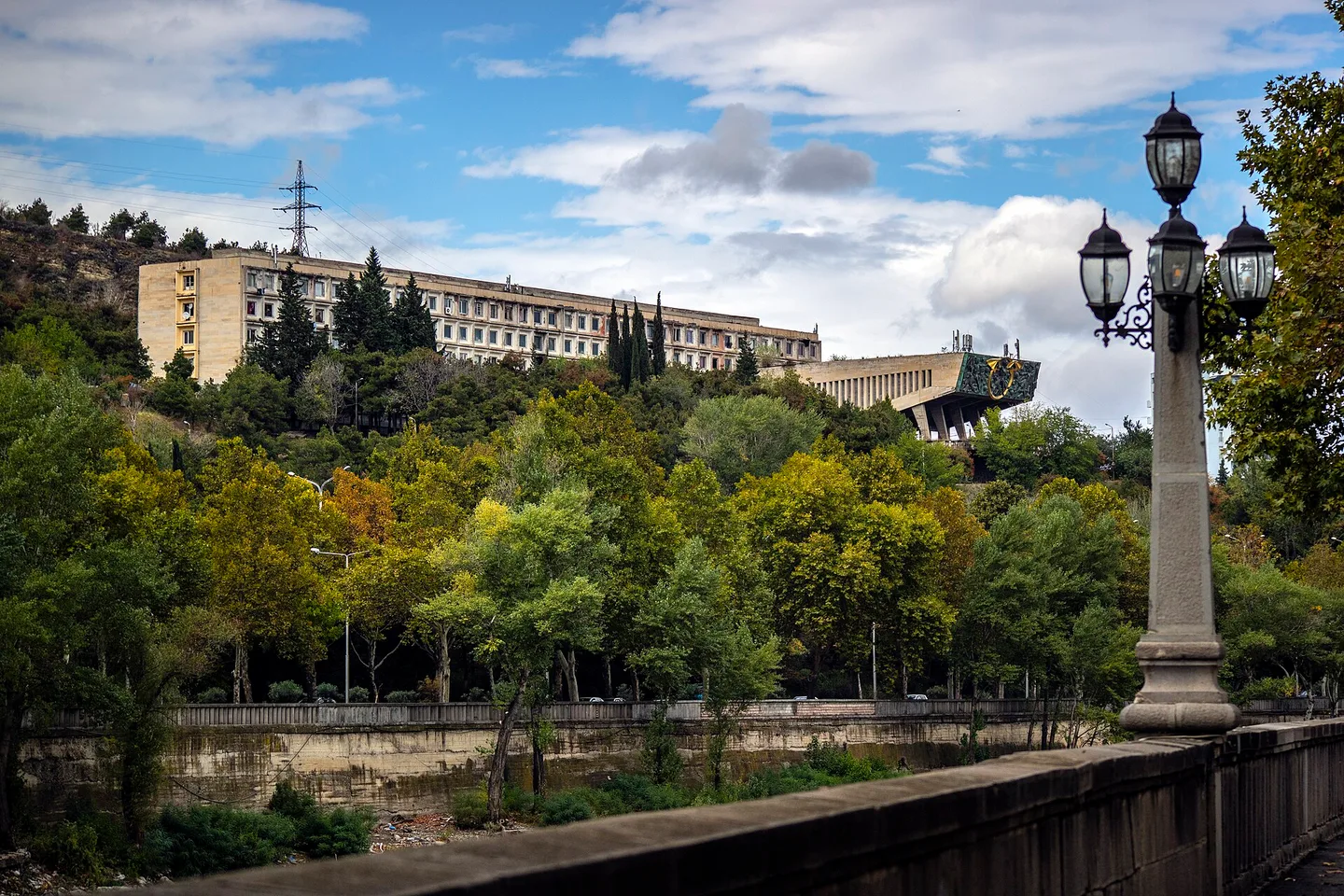
Beyond the medieval core and imperial boulevards, Tbilisi contains exceptional twentieth-century civic architecture. Walking along Cosmonauts Embankment reveals dramatic Soviet-era structures that showcase ambitious concrete engineering. The former Auditorium of the Industrial Technical College stands proudly above the roadway, displaying expressive geometric angles and stepped seating terraces. These public experiments in concrete remind travellers that Tbilisi evolved through multiple ideological and architectural eras. The city continuously absorbs new forms without erasing its older riverside fabric.
Understanding Tbilisi requires accepting these striking transitions between brick bathhouses, classical boulevards, and expressive concrete monuments. We suggest dedicating separate mornings to the historic Old Town and afternoons to the broader avenues along the river. Public buses and metro routes link these disparate zones efficiently across the central corridor. Metro stations display deep escalators, polished stone tiles, and Soviet decorative panels below ground level. Tbilisi rewards patient urban walkers who appreciate complex cityscapes shaped over many centuries.
Official prices and opening hours
- Tbilisi Metro, City Buses & Rike–Narikala Cable CarOfficial site ↗
- Georgian National Museum (Rustaveli Avenue)Official site ↗
Where it is
- 1Tbilisi
- Tbilisi International Airport (TBS) · about 12 km from Tbilisi in a straight line
- Directions in Google Maps
Stations and taxi ranks: OpenStreetMap. Airports: OurAirports. Distances are in a straight line.
Traveller tips
Real advice from people who have been to Tbilisi. Every tip is read by our team before it goes live.
No tips yet. Been here? Yours could be the first.
Thank you! Your tip will appear here after a quick review.
More in Tbilisi
Continue exploring Tbilisi with related neighbourhood, food, and planning guides
What to Eat in Tbilisi: Georgian Dishes and Table Customs
Tbilisi, Georgia
Getting Around Tbilisi: Navigating Transit, Cable Cars and Hills
Tbilisi, Georgia
Old Tbilisi and Abanotubani: Walking the Bath Quarter
Tbilisi, Georgia
Narikala Fortress and the National Botanical Garden: Ridge Walking Guide
Tbilisi, Georgia
