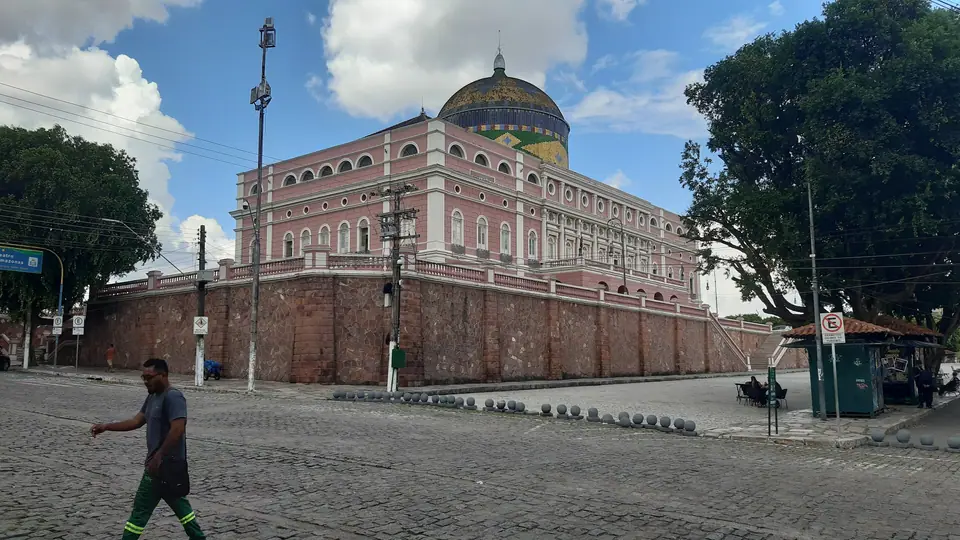
Teatro Amazonas and Largo de São Sebastião: Belle Époque Heart of Manaus
Teatro Amazonas anchors the historic square of Largo de São Sebastião, presenting fine Amazonian architecture from the late nineteenth century.
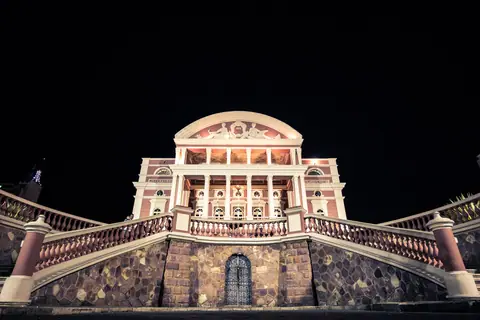
Teatro Amazonas rises above the urban centre of Manaus as the primary symbol of the regional rubber boom. Completed in the late nineteenth century, the opera house reflects the immense wealth that once flowed along the Rio Negro. Wealthy merchants imported Italian marble, Scottish ironwork, and French furniture to erect an elaborate auditorium directly within the equatorial forest zone. Every structural detail reveals the global trade links that connected remote river ports directly to European foundries.
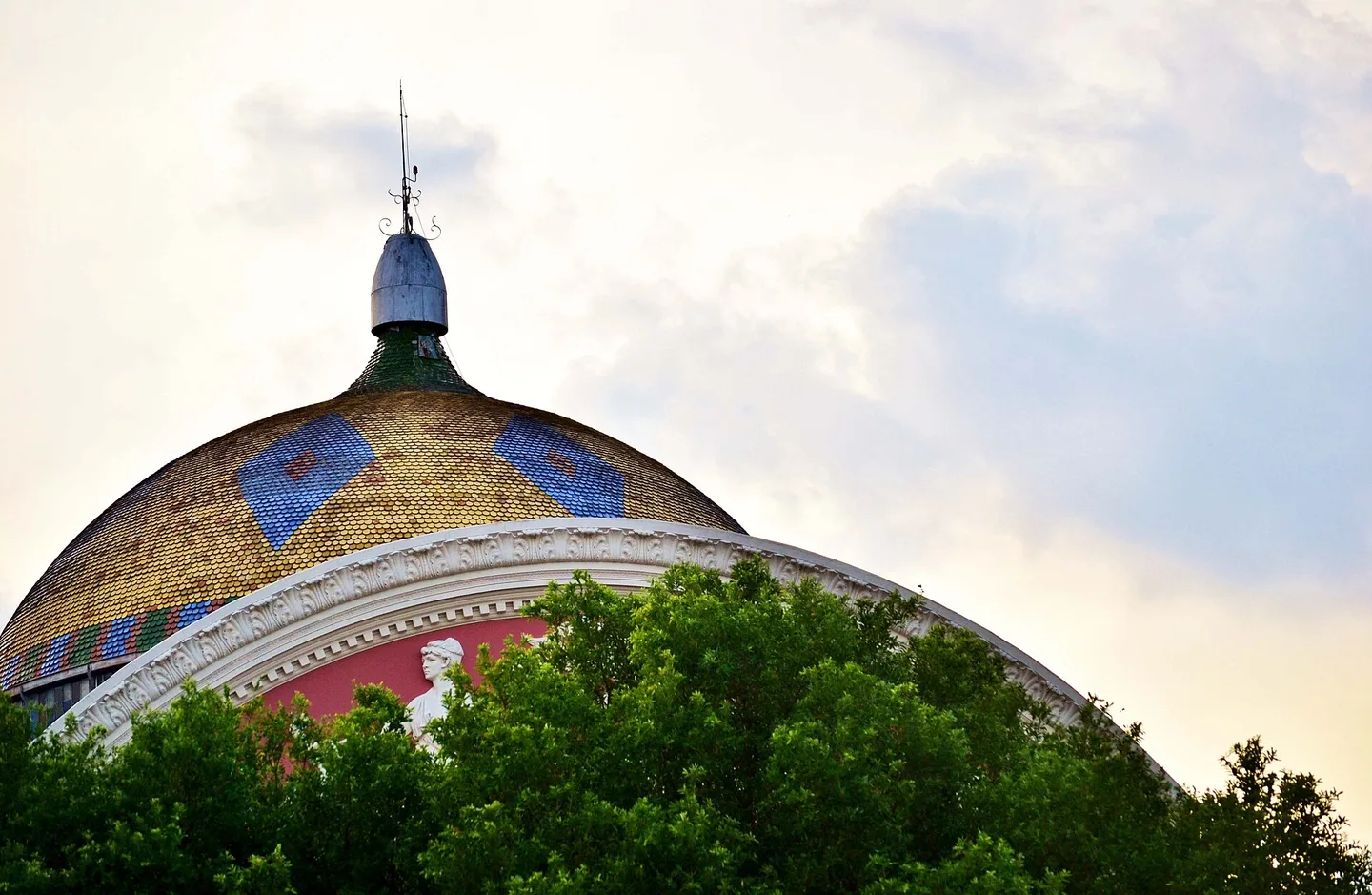
The exterior showcases soft pink masonry contrasted with pale classical pilasters and arched stone entrances. High above the portico, the central dome features thousands of glazed ceramic tiles arranged in the vivid yellow, green, and blue tones of the Brazilian national flag. Looking upwards from street level, observers can appreciate how foreign engineering blended with domestic pride during an era of sudden metropolitan growth.
Inside the grand auditorium, tiered wooden balconies curve around velvet seats beneath an elaborate ceiling canvas painted by Domenico de Angelis. The central chandelier casts warm illumination across carved timber motifs inspired by native flora. Guided walkthroughs allow travellers to stroll through the opulent ballroom, view period stage machinery, and study preserved costumes from early productions.
Navigating the Promenade of Largo de São Sebastião
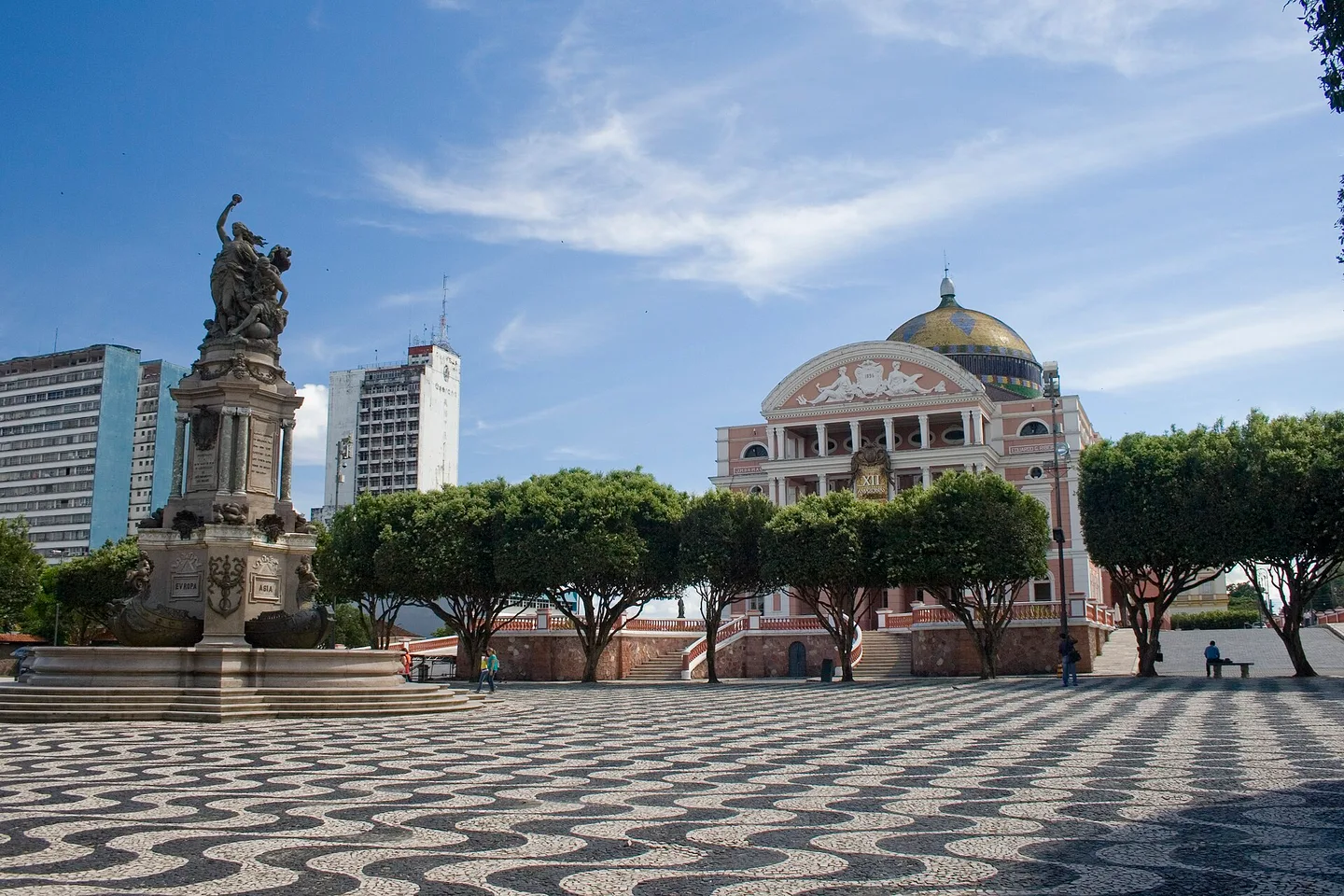
Directly in front of the opera house extends Largo de São Sebastião, an open square lined with leafy shade trees and restored colonial facades. The wide esplanade forms the civic living room of the neighbourhood, drawing writers, painters, and evening diners to its open-air cafe terraces. The pedestrian layout offers an unhurried perspective away from dense downtown traffic.
The square is paved with alternating black and white cobblestones set in a rolling wave pattern known across the country as calçada portuguesa. This undulating mosaic represents the meeting of the dark waters of the Rio Negro and the pale flow of the Rio Solimões. Local historians note that this distinct design appeared here well before its famous reproduction along Copacabana beach in Rio de Janeiro.
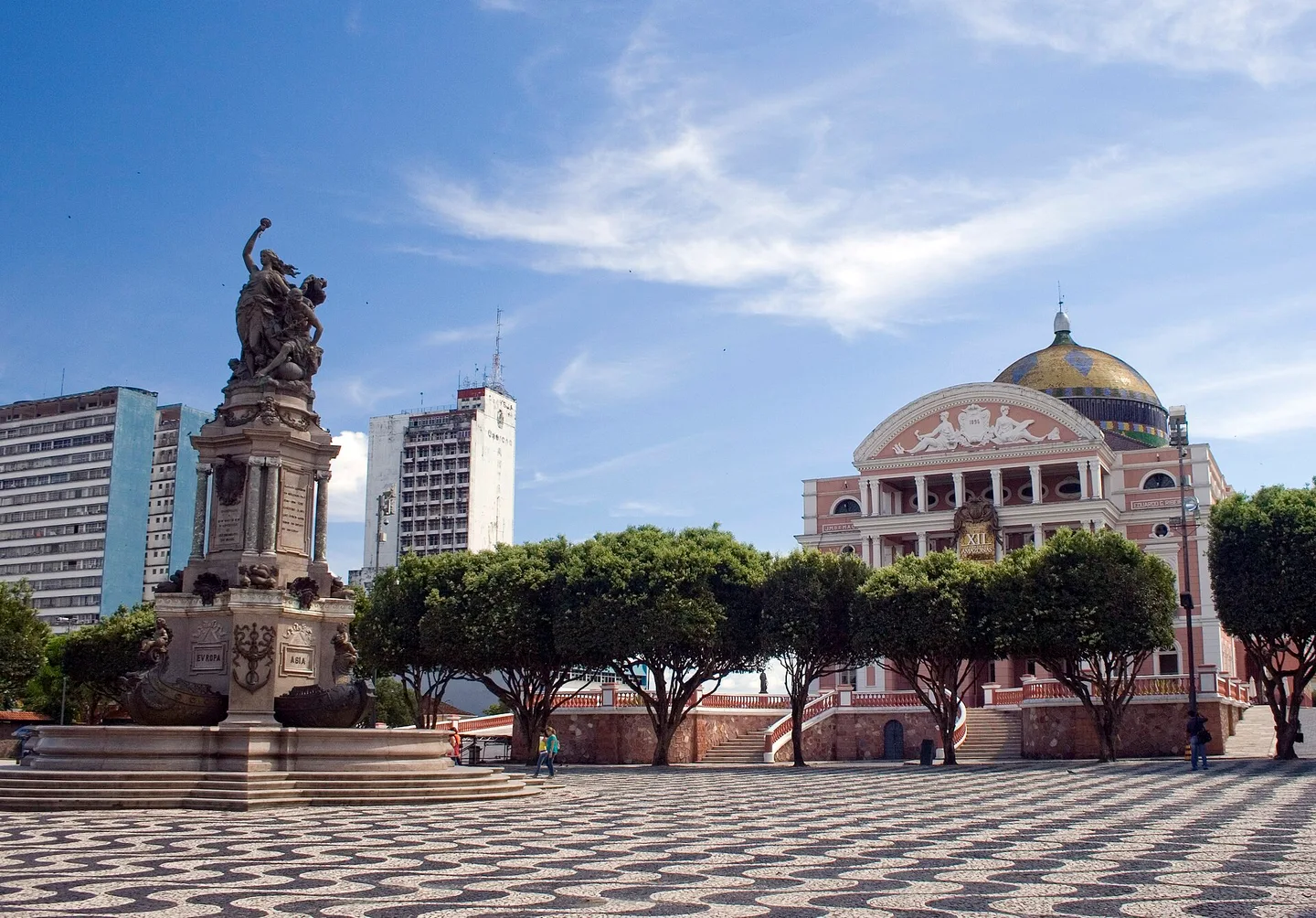
Across from the opera steps stands the Monument to the Opening of the Ports to Friendly Nations, a sculpted marble obelisk commemorating foreign maritime commerce. Nearby, the twin-towered church of São Sebastião blends neo-Gothic elements with an unadorned interior, offering a calm sanctuary away from the tropical humidity outside.
Key Heritage Points Around the Square
When strolling around the plaza, several distinct cultural buildings demand careful attention during your circuit. Planning an itinerary around these surrounding landmarks helps visitors understand the broader historic district:
- The grand ceramic dome of Teatro Amazonas, best appreciated from the southern cobbles of the square.
- The Monument to the Opening of the Ports, displaying fine allegorical stone carvings representing four distant continents.
- The Church of São Sebastião, notable for its stark nineteenth-century masonry and quiet perimeter courtyard.
- The restored Belle Époque townhouses that now house independent art galleries and local craft cooperatives.
- The sweeping stone wave mosaic, offering a classic vantage point for evening photography without vehicular obstruction.
Walking Routes and Practical Historic Connections
Reaching Largo de São Sebastião on foot from central river terminals remains straightforward along paved avenues. Travellers walking north from the port zone pass traditional commercial streets before climbing the gentle rise leading toward the plaza. Use our district transit and climate notes to orient yourself comfortably before setting out on foot.
Because tropical heat rises sharply by midday, exploring the exterior plaza during cooler morning or late afternoon hours gives the most comfortable walking conditions. Surrounding lanes feature small dining rooms serving chilled cupuaçu juices and traditional Amazonian river fish dishes. Pairing opera square visits with other city landmarks and forest parks makes it easy to fill a rich afternoon.
Leaving the square toward adjacent streets reveals smaller cultural institutes, print shops, and public reading rooms situated in pastel townhouses. The compact scale of the historic core lets visitors loop effortlessly between the grand opera entrance, shaded museum courtyards, corner bakeries, and quiet stone benches without fatigue. Lingering on the square until dusk rewards guests with warm architectural spotlights illuminating the pink dome and classical facade cleanly against the darkening equatorial sky.
Official prices and opening hours
- Teatro Amazonas (Largo de São Sebastião)Official site ↗
- MUSA — Museu da Amazônia (Reserva Ducke)Official site ↗
Where it is
- 1Teatro Amazonas and Largo de São Sebastião
- Eduardo Gomes International Airport (MAO) · about 11 km from here in a straight line
- Directions in Google Maps
Stations and taxi ranks: OpenStreetMap. Airports: OurAirports. Distances are in a straight line.
Traveller tips
Real advice from people who have been to Manaus. Every tip is read by our team before it goes live.
No tips yet. Been here? Yours could be the first.
Thank you! Your tip will appear here after a quick review.
More in Manaus
Continue exploring Manaus with related neighbourhood, food, and planning guides
Manaus Field Guide: Navigating the Rubber Boom City and Rio Negro
Manaus, Brazil
Best Things to Do in Manaus: Opera House, River Confluence and Canopy Towers
Manaus, Brazil
Travelling to Manaus: Flights, River Boats and Highway BR-174
Manaus, Brazil
Manaus River Levels, Flood Seasons, and Equatorial Planning
Manaus, Brazil
