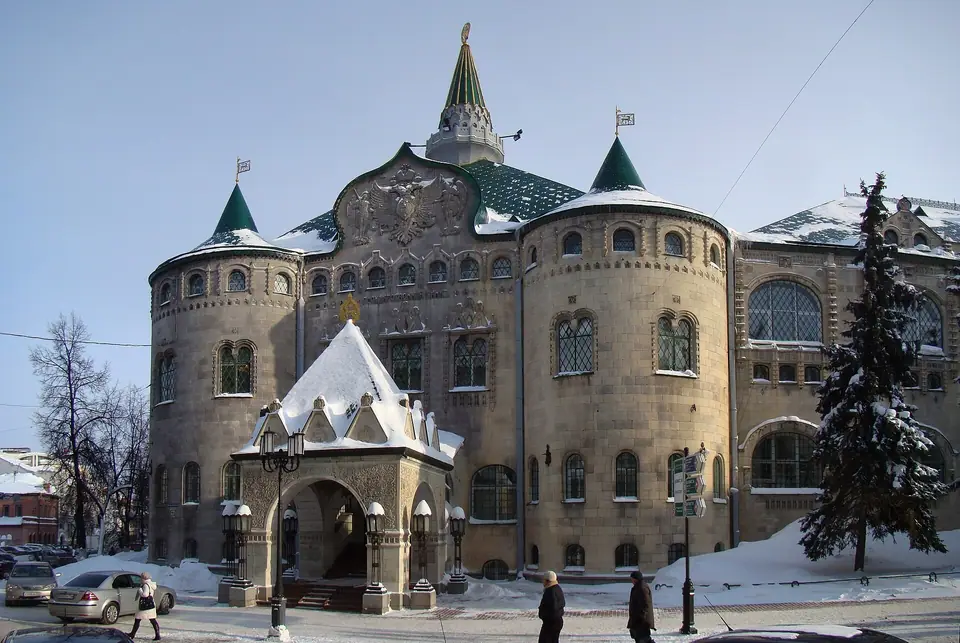
Photo: Bestalex · CC BY-SA 4.0
Bolshaya Pokrovskaya Street and the 1913 State Bank
A complete walking guide to Bolshaya Pokrovskaya Street in Nizhny Novgorod, covering the 1913 Neo-Russian State Bank, historic facades, architecture, and transit access.
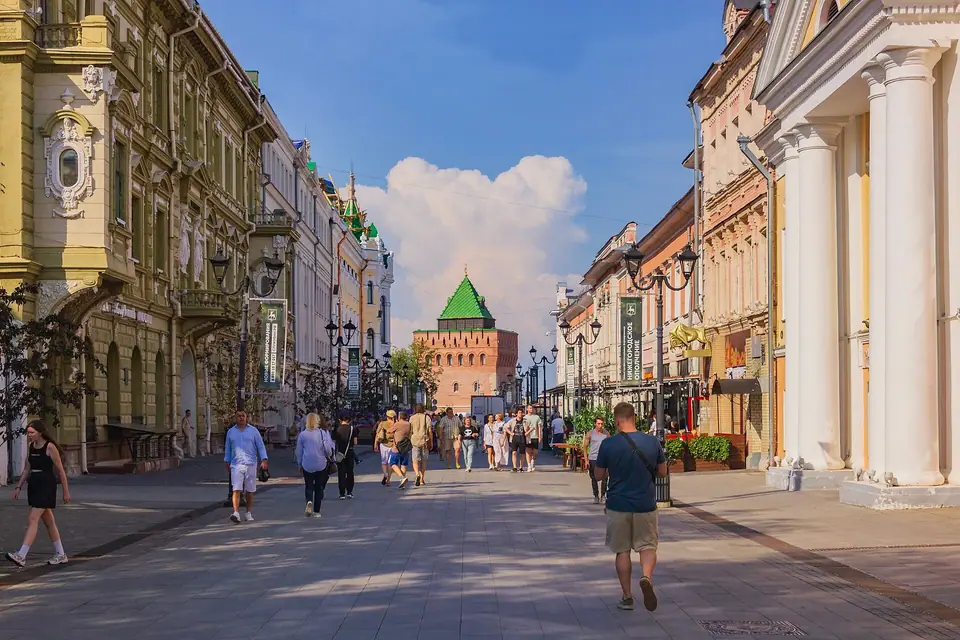
Running southwest from Minin and Pozharsky Square directly opposite Dmitrievskaya Tower of the Nizhny Novgorod Kremlin, Bolshaya Pokrovskaya Street serves as the central architectural axis of the Upper Town. Known informally to residents as Pokrovka, the thoroughfare takes its name from the historic Church of the Intercession of the Holy Virgin. The street spans an overall distance of 2,232 metres toward Lyadov Square. A dedicated stretch of 1,236 metres between Minin and Pozharsky Square and Malaya Pokrovskaya Street functions entirely as a paved pedestrian zone. Municipal authorities closed this northern section to vehicular traffic in the 1980s, followed by extensive granite repaving carried out between 2004 and 2006.
Today, the pedestrian avenue connects historic civic squares, commercial arcades, and stone residences dating from the late eighteenth to the early twentieth century. It forms an indispensable link on any walking route planned through our Nizhny Novgorod 3-day itinerary. Walking the full pedestrian course reveals how provincial Russian classicism gave way to theatrical eclecticism and national romantic revivals during the final decades of the Russian Empire.
The 1913 Neo-Russian State Bank at No. 26
The undisputed masterpiece of the entire thoroughfare stands at no. 26: the Nizhny Novgorod branch of the State Bank. Built between 1911 and 1913 to mark the 50th anniversary of the State Bank of the Russian Empire and the 1913 Romanov Tercentenary, this complex was designed by architect Vladimir Pokrovsky. Construction finished in time for an official opening ceremony on 14 May 1913. Three days later, on 17 May 1913, Tsar Nicholas II inspected the newly finished banking palace during his dynastic tour of the Volga basin.
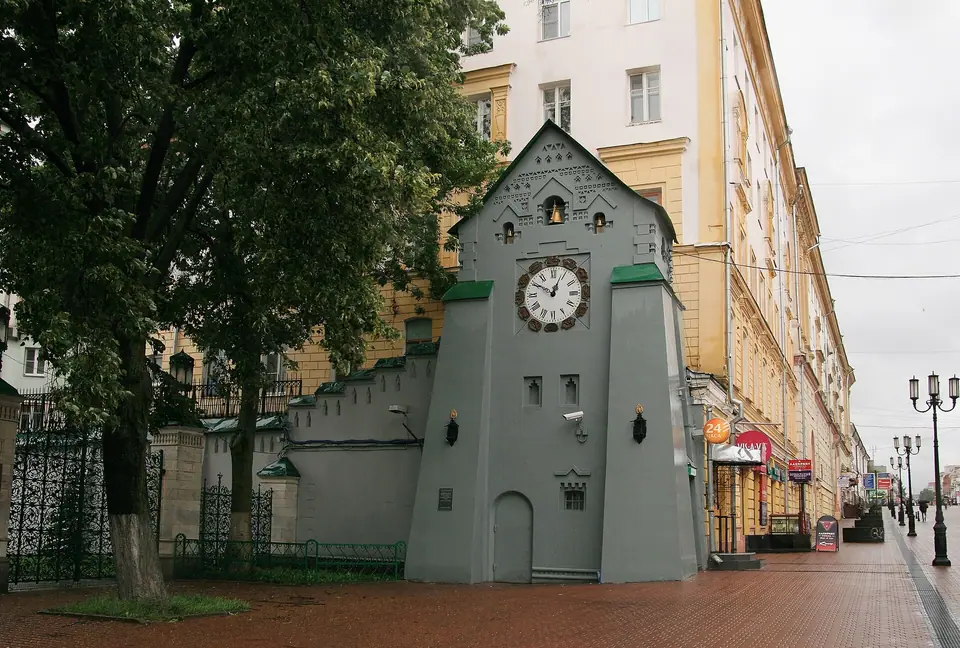
Pokrovsky conceived the building as an evocative fairy-tale citadel, echoing seventeenth-century boyar palaces and medieval northern Russian stone fortresses. The exterior uses smooth greyish-white stone facing, broken by decorative relief carvings, a massive carved porch sporting imperial coats of arms, and heavy wrought-iron metalwork. A monumental stone archway connects the primary banking block to an auxiliary residential wing. Above this archway rises a medieval-style clock tower decorated with painted depictions of the signs of the Zodiac. Because the building remains an operating branch of the Central Bank of the Russian Federation, general interior access requires specific open-door appointments arranged via official heritage channels. The vaulted banking halls contain extraordinary painted murals depicting Russian commerce, traditional crafts, and the historic 1612 civilian militia organised within Nizhny Novgorod.
Drama Theatre, City Duma, and Noble Assembly
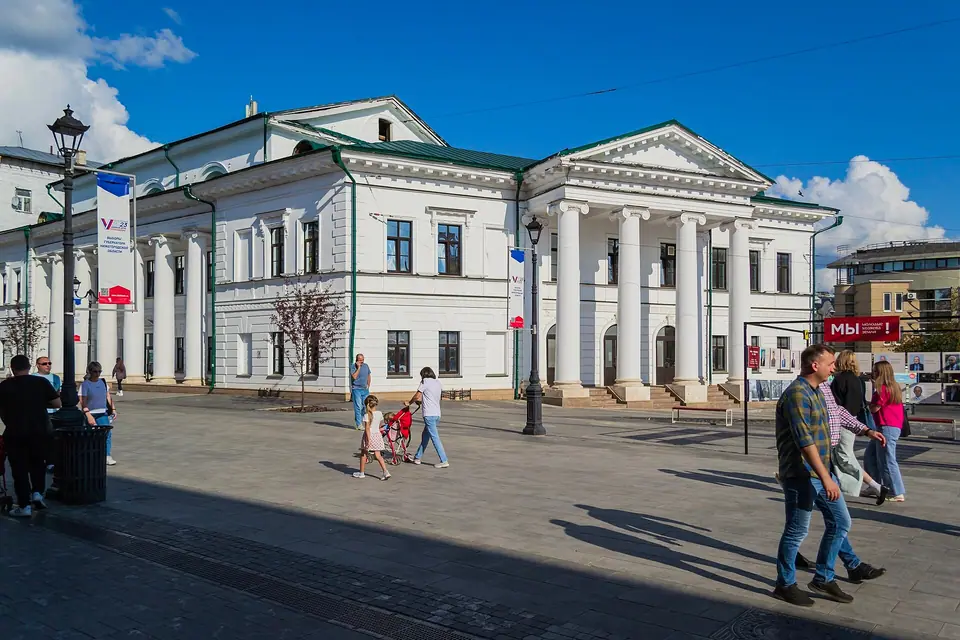
Bolshaya Pokrovskaya preserves an exceptional concentration of institutional architecture. At the entry to the pedestrian precinct stands no. 1, the former City Duma completed in 1904. Across the street at no. 2 stands the Rukavishnikov Bank building, completed in 1913 with an expressive facade displaying industrial motifs and commercial prosperity. Further south at no. 18 rests the historic Noble Assembly, constructed between 1822 and 1826 under architect Ivan Efimov upon an estate originally established in 1798. This two-storey classical building features a refined four-column portico overlooking the roadway.
At no. 13 stands the Nizhny Novgorod State Academic Drama Theatre, designed by academician Viktor Schröter and opened on 14 May 1896. Schröter gave the building balanced proportions and neo-Renaissance details, creating one of the premier performance halls along the Volga. The theatre company traces its lineage back to 1798, making it one of the oldest continuing drama companies in provincial Russia. Strolling past the theatre, visitors encounter an array of cast bronze genre statues installed during municipal restorations, representing historical townspeople, photographers, and artists.
Architectural Milestones Along Bolshaya Pokrovskaya
The pedestrian avenue features diverse design languages from classicism to Art Nouveau. The table below outlines key structures along the promenade, their historical origin, and primary stylistic traits.
| Street Address | Historic Structure | Construction Date | Architectural Style |
|---|---|---|---|
| No. 1 Bolshaya Pokrovskaya | City Duma Building | Completed 1904 | Eclectic Civic Classicism |
| No. 2 Bolshaya Pokrovskaya | Rukavishnikov Bank | Completed 1913 | Modern Commercial Revival |
| No. 13 Bolshaya Pokrovskaya | Drama Theatre | Completed 1896 | Late Imperial Neo-Renaissance |
| No. 18 Bolshaya Pokrovskaya | Noble Assembly Hall | Built 1822 to 1826 | Russian Classicism |
| No. 26 Bolshaya Pokrovskaya | State Bank Complex | Built 1911 to 1913 | Neo-Russian Medieval Revival |
Seasonal Promenade Conditions and Transit Access
Bolshaya Pokrovskaya sits upon the Upper Town plateau roughly 80 metres above the Oka and Volga confluence. Weather conditions vary sharply through the year. According to long-term meteorological data collected between 2015 and 2024, winter brings intense freezing conditions, with January recording an average daytime high of -6.5°C and a nighttime low of minus 11.6 degrees across 17 wet days. Heavy snowfall turns the granite paving slippery, requiring sturdy boots with reliable rubber grip, as detailed in our guide on what to wear in Nizhny Novgorod.
Spring transition is brisk. April sees daytime highs reach 10.9°C, while May averages 18.7 degrees across 10 wet days. July marks the warmest period of the year, averaging afternoon highs of 24.9 degrees and lows of 15.5 degrees with 74 millimetres of rainfall. Summer afternoons are well suited for leisurely outdoor walking, pavement dining, and evening photography. By October, average highs dip to 8.2 degrees across 13 wet days, and November ushers in persistent sub-zero frost with an average low of minus 3.8 degrees.
Reaching the pedestrian strip is straightforward via municipal transport. Gorkovskaya Metro Station, opened in November 2012 on the Avtozavodskaya Line, sits near Maxim Gorky Square at the southern terminal area of the pedestrian section. The historic 1,524-millimetre electric tram network, originally inaugurated in May 1896, provides cross-town links; Tram 2 City Ring circles adjacent streets and offers easy connections toward the Kremlin. For wider transport logistics between the Upper Town and Moskovsky Railway Station, check our advice on getting around Nizhny Novgorod.
Where it is
- 1Bolshaya Pokrovskaya Street and the 1913 State Bank
- Nizhny Novgorod / Strigino International Airport (GOJ) · about 17 km from here in a straight line
- Directions in Google Maps
Stations and taxi ranks: OpenStreetMap. Airports: OurAirports. Distances are in a straight line.
Traveller tips
Real advice from people who have been to Nizhny Novgorod. Every tip is read by our team before it goes live.
No tips yet. Been here? Yours could be the first.
Thank you! Your tip will appear here after a quick review.
More in Nizhny Novgorod
Continue exploring Nizhny Novgorod with related neighbourhood, food, and planning guides
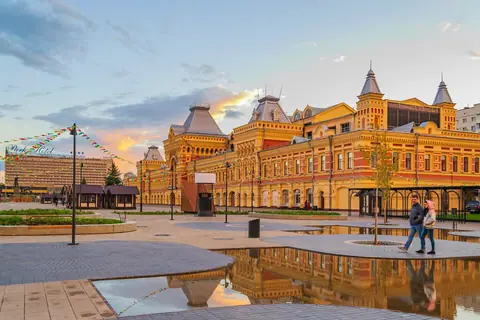
Nizhny Novgorod 3-Day Itinerary: Kremlin, Strelka, Cableway and Gorodets
Nizhny Novgorod, Russia
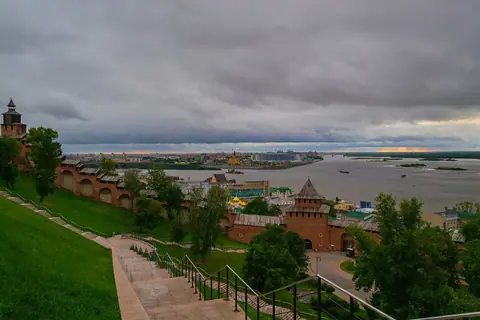
Nizhny Novgorod: Geography, Districts and Seasons
Nizhny Novgorod, Russia
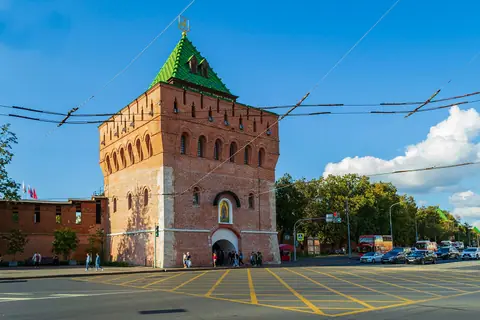
Things to Do in Nizhny Novgorod: Kremlin Walls, River Lookouts and Fairgrounds
Nizhny Novgorod, Russia
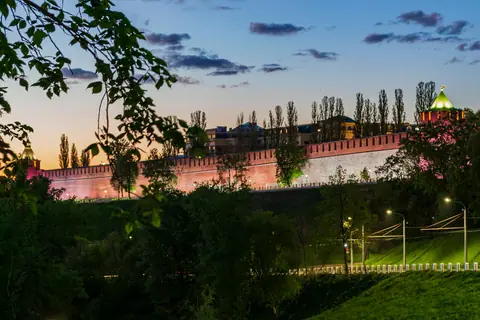
Nizhny Novgorod Kremlin: 13 Towers, Fortress Walls and Archangel Cathedral
Nizhny Novgorod, Russia
