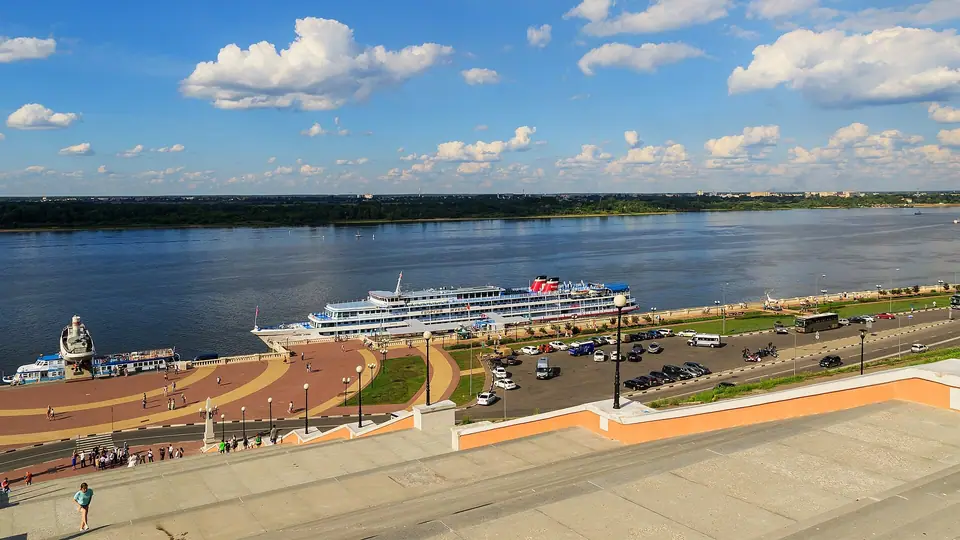
Photo: A.Savin · CC BY-SA 4.0
Chkalov Stairs and Upper Volga Embankment: Mansions and River Panoramas
Discover Nizhny Novgorod's 560-step Chkalov Stairs and the historic Upper Volga Embankment, lined with the 1877 Rukavishnikov Mansion and sweeping river lookouts.
Beginning beside St George's (Georgievskaya) Tower of the Nizhny Novgorod Kremlin towers and Archangel Cathedral, the Chkalov Stairs and the Upper Volga Embankment form the signature clifftop promenade of the Upper Town. Emperor Nicholas I visited Nizhny Novgorod in 1834 and ordered the removal of dilapidated wooden houses and refuse pits from the bluff. In 1836, municipal engineers paved the esplanade and landscaped the steep hillside into the public Alexandrovsky Garden. The boulevard extends 1.75 kilometres east from Minin and Pozharsky Square to Sennaya Square, offering open vistas across the broad Volga floodplains toward the low-lying town of Bor.
Positioned on an 80-metre ridge above the river, this pedestrian route combines monumentality with classic Russian riverbank architecture. Visitors exploring the Upper Town frequently connect this promenade with an afternoon route along Bolshaya Pokrovskaya Street and the 1913 Neo-Russian State Bank or down toward the lively merchant quarters. The elevation protects the promenade from the heavy traffic found along the riverfront, making it one of the most practical routes for walking across the city centre.
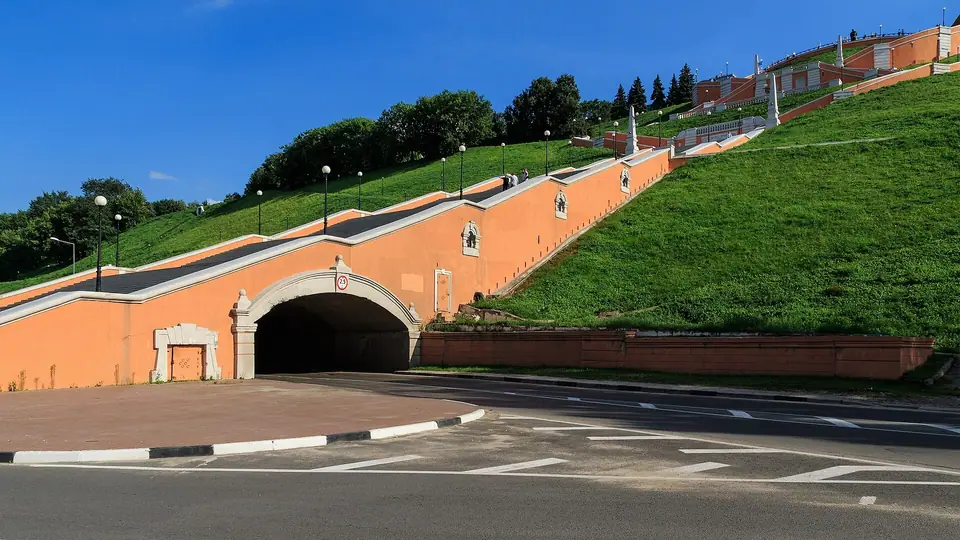
The Engineering and Layout of the Chkalov Stairs
Descending the precipitous green incline of the Alexandrovsky Garden, the monumental Chkalov Stairs connects the clifftop promenade with the 3-kilometre Lower Volga Embankment. Conceived in 1943 to honour the Soviet victory at Stalingrad, the structure was designed by architects Alexander Yakovlev, Lev Rudnev, and Vladimir Munts. Construction began in 1944 and concluded in 1949. The staircase cascades down the hillside in two intersecting circular rings shaped like a figure eight, featuring two intermediate observation platforms where the descending flights cross.
Pedestrians counting the steps straight along the right-hand flight from bottom to top register 442 steps. If you count every flight across both curved sides of the two intersecting rings, the total reaches 560 steps. At the clifftop terrace stands the 1940 bronze monument by sculptor Isaac Mendelevich depicting native Soviet aviation pioneer Valery Chkalov. In 1937, Chkalov piloted the first non-stop flight from Moscow across the North Pole to Vancouver, Washington. At the foot of the stairs beside the river water rests the historic Volga Military Flotilla tugboat Hero (Kater Geroy), placed on its concrete pedestal in 1985.
Climbing the staircase requires sound physical conditioning, particularly on warm summer afternoons. Those seeking a complete regional walking circuit can pair this climb with a broader itinerary outlined in the Nizhny Novgorod 3-day itinerary. Descending from the top terrace to the boat monument takes roughly ten minutes at an easy pace, whereas climbing upward typically demands fifteen to twenty-five minutes depending on stops at the viewing circles.
Rukavishnikov Mansion and Upper Embankment Architecture
The Upper Volga Embankment showcases some of the finest merchant estates constructed during the nineteenth and early twentieth centuries. At no. 7 stands the three-storey Rukavishnikov Mansion, completed between 1875 and 1877 for the wealthy industrialist merchant family. Designed by architect Pyotr Boitsov with sculptural additions by Mikhail Mikeshin, the mansion presents an elaborate Italianate facade finished in rich blue and white tones, supported by sculpted atlantes and ornate cast-iron railings. Today the property operates as an architectural museum preserving gilded ceiling stuccowork, parquet floors, and historic reception rooms.
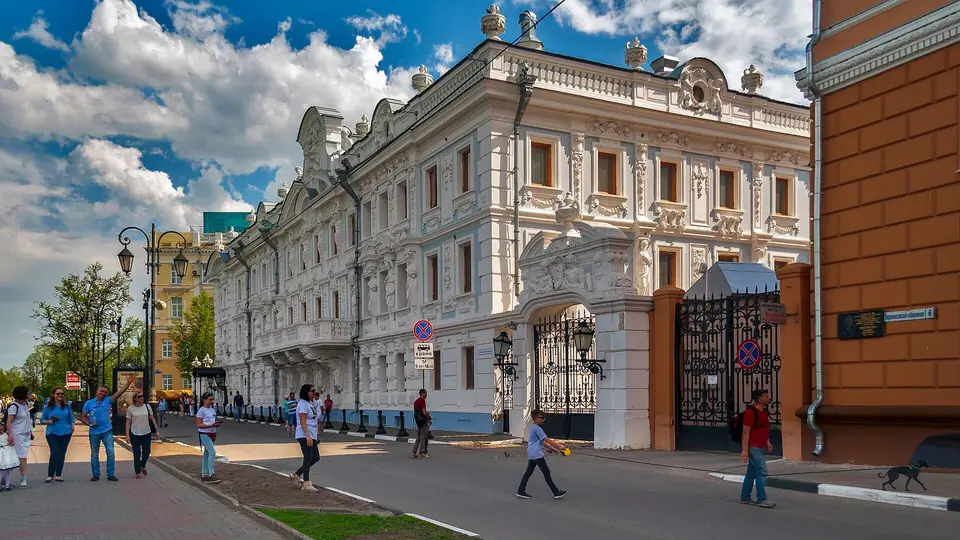
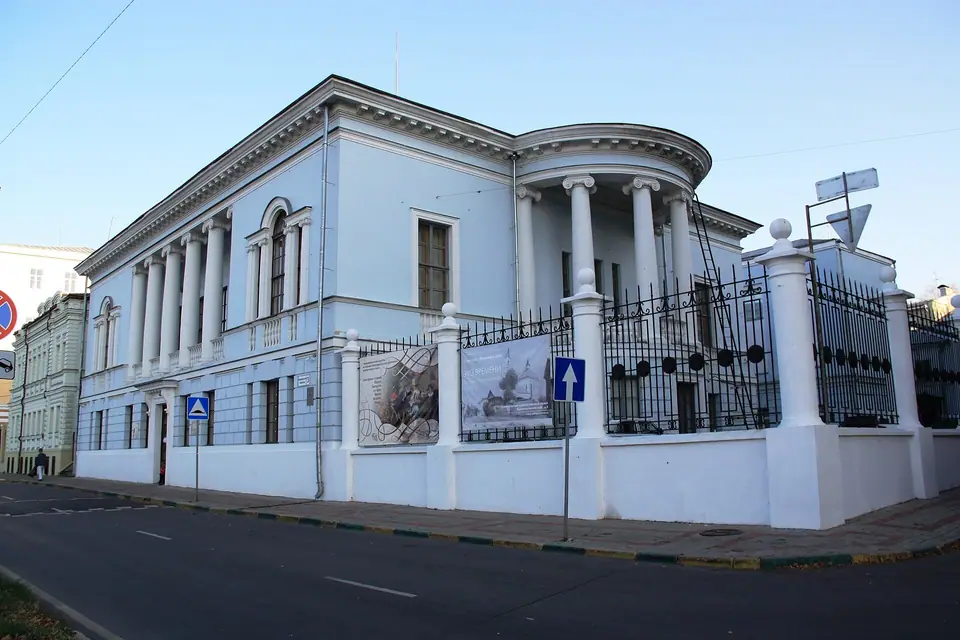
Just west of the estate at no. 3 sits the 1916 neoclassical Sirotkin House, built between 1913 and 1916 by the Vesnin brothers for merchant Sergei Sirotkin. This refined residence now functions as an exhibition wing of the Nizhny Novgorod State Art Museum, which was originally established in 1896. Further east along the paved promenade, no. 8 presents a notable residential block constructed in 1937, illustrating the transition from imperial merchant splendour to late 1930s Soviet monumentalism.
Embankment Landmarks and Practical Specifications
To plan your walk along the Upper Volga Embankment efficiently, review the key structural landmarks, dates, and architectural characteristics in the table below:
| Landmark | Construction Period | Key Architects or Sculptors | Primary Architectural Style |
|---|---|---|---|
| Chkalov Stairs | 1944 to 1949 | A. Yakovlev, L. Rudnev, V. Munts | Soviet Monumental Classicism |
| Valery Chkalov Monument | 1940 | Isaac Mendelevich | Heroic Bronze Realism |
| Rukavishnikov Mansion | 1875 to 1877 | Pyotr Boitsov, Mikhail Mikeshin | Italianate Eclectic Revival |
| Sirotkin House | 1913 to 1916 | Leonid, Viktor, and Alexander Vesnin | Russian Neoclassicism |
| Alexandrovsky Garden | 1834 to 1836 | Ordered by Nicholas I | Imperial English Landscape Park |
Weather Considerations and Seasonal Walking Conditions
Because the Upper Volga Embankment sits exposed on an 80-metre river bluff, wind off the water significantly affects walking comfort. Winter conditions are severe. January averages high temperatures of minus 6.5 degrees and lows of minus 11.6 degrees with 17 wet days, while February records highs of minus 5.2 degrees and lows of minus 10.9 degrees across 14 wet days. During these months, ice collects rapidly on the 560 steps of the Chkalov Stairs. Snow clearing occurs regularly, but sturdy insulated boots with rubber grip soles are essential for descending without slipping.
Spring thaw brings rapid changes. March remains cold with average highs of 1.1 degrees and lows of minus 5.1 degrees over 12 wet days. By April, conditions moderate to average highs of 10.9 degrees and lows of 2.3 degrees across 10 wet days. May provides pleasant walking conditions, averaging 18.7 degrees during the day and 8.9 degrees overnight. For appropriate footwear choices across these varying seasons, consult what to wear in Nizhny Novgorod.
Summer brings the highest foot traffic. July is the warmest month with average highs of 24.9 degrees, lows of 15.5 degrees, and 74 millimetres of rainfall across 10 wet days. June and August average daytime highs of 22.6 degrees and 22.7 degrees respectively. Autumn cools down gradually. September records average highs of 16.2 degrees and lows of 8.6 degrees, while October drops to highs of 8.2 degrees and lows of 2.8 degrees across 13 wet days. November brings freezing weather back to the bluff, with daytime highs of 0.1 degrees, night lows of minus 3.8 degrees, and 16 wet days.
Route Connections to Sennaya Square and the Cable Car
Walking east along the 1.75-kilometre Upper Volga Embankment leads directly into Sennaya Square. From this eastern terminus, travellers can easily continue their journey to the Nizhny Novgorod to Bor aerial cableway. This transport link carries passengers across an 882-metre unsupported span over the Volga River in 13 minutes, providing another vantage point over the floodplains. Alternatively, turning south allows quick access to local tram and bus networks connecting to the historic railway districts. When organizing your daily schedule, check official transit sites for real-time operating schedules and ticketing instructions.
Where it is
- 1Chkalov Stairs and Upper Volga Embankment
- Nizhny Novgorod / Strigino International Airport (GOJ) · about 18 km from here in a straight line
- Directions in Google Maps
Stations and taxi ranks: OpenStreetMap. Airports: OurAirports. Distances are in a straight line.
Traveller tips
Real advice from people who have been to Nizhny Novgorod. Every tip is read by our team before it goes live.
No tips yet. Been here? Yours could be the first.
Thank you! Your tip will appear here after a quick review.
More in Nizhny Novgorod
Continue exploring Nizhny Novgorod with related neighbourhood, food, and planning guides
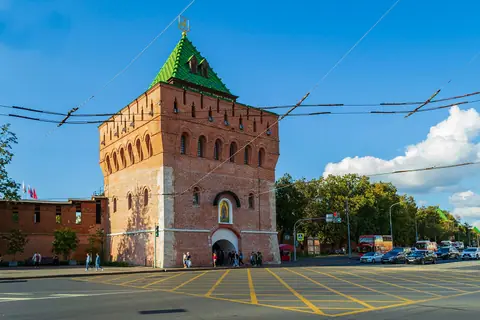
Things to Do in Nizhny Novgorod: Kremlin Walls, River Lookouts and Fairgrounds
Nizhny Novgorod, Russia
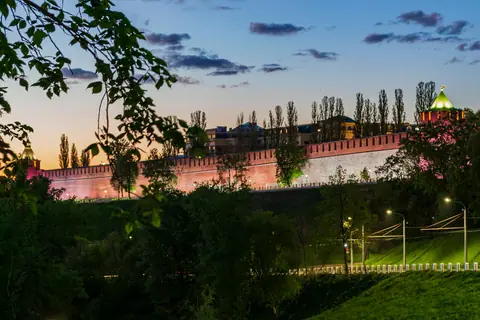
Nizhny Novgorod Kremlin: 13 Towers, Fortress Walls and Archangel Cathedral
Nizhny Novgorod, Russia
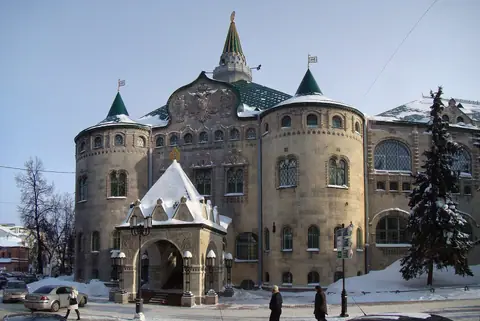
Bolshaya Pokrovskaya Street and the 1913 State Bank
Nizhny Novgorod, Russia
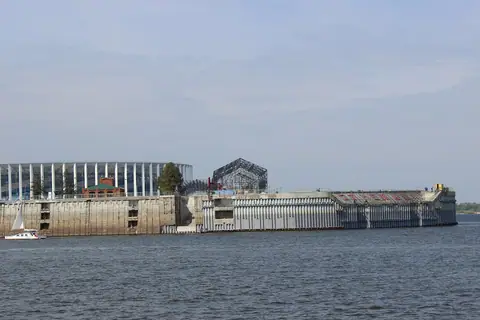
Strelka Spit: Alexander Nevsky Cathedral, Pakgauzy and Fairgrounds
Nizhny Novgorod, Russia
