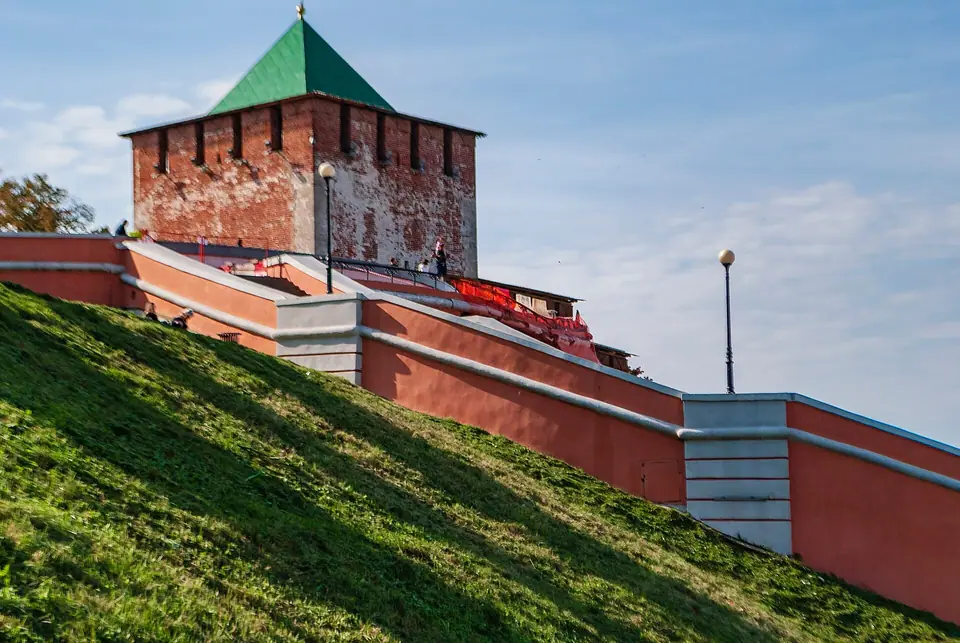
Photo: Алексей Трефилов · CC BY-SA 4.0
What to Wear in Nizhny Novgorod: Seasonal Layers, Footwear and River Wind
Practical packing advice for Nizhny Novgorod: prepare for blustery river confluences, steep elevation climbs, humid continental weather, and sacred church dress codes.
Packing for Nizhny Novgorod requires preparing for a humid continental climate and two radically different microclimates encountered on a single walk. Sheltered pedestrian boulevards such as Bolshaya Pokrovskaya Street hold afternoon warmth. In contrast, exposed riverside esplanades rising 80 metres above the Oka and Volga confluence funnel powerful winds straight across the water. Adapting your wardrobe to these shifting elevations and seasons ensures comfortable sightseeing across the city.
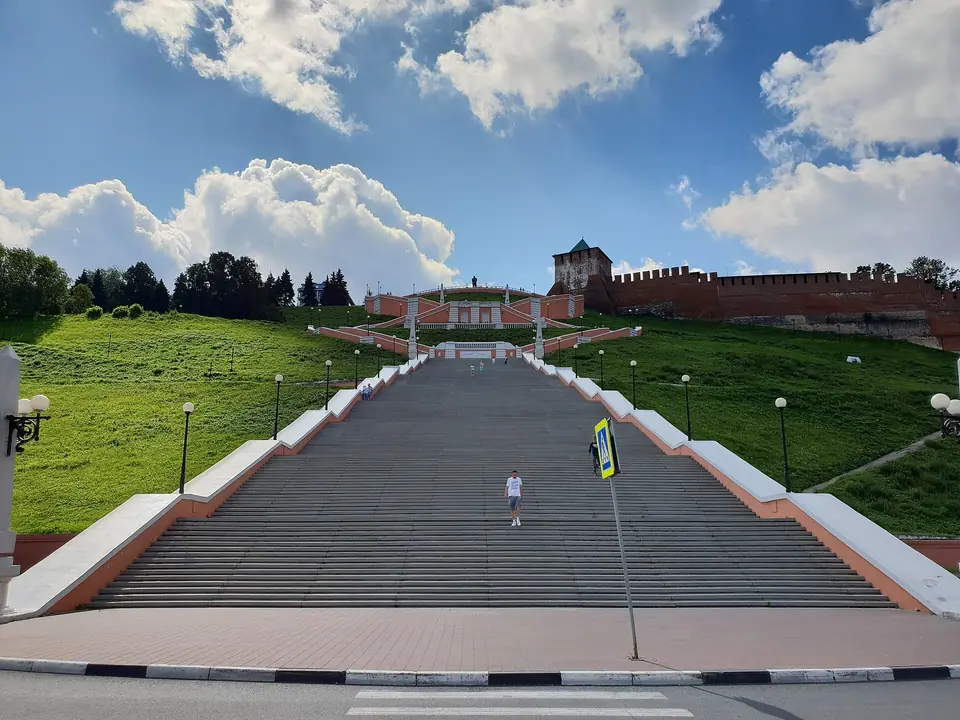
Essential Footwear for Steep Elevation and Stone Pavements
Sightseeing in Nizhny Novgorod involves far more vertical climbing than most Volga basin destinations. The Upper Town sits on steep bluffs, requiring durable shoes with high traction. Ascending the 442 right-hand steps of the Chkalov Stairs, which total 560 steps across both sides of its sweeping figure-eight rings, tests calf muscles and balance. Loose slip-on shoes or thin fashion sandals will quickly cause blisters and fatigue.
Sturdy, broken-in trainers or low-cut trail walking shoes are indispensable. Walking the 2,045-metre brick wall of the fortress during a visit to the Nizhny Novgorod Kremlin towers involves navigating uneven brick surfaces and steep stone stairwells between defensive towers. Granite paving stones along Rozhdestvenskaya Street and the rolling dirt paths around Pechersky Ascension Monastery also demand supportive footbed cushioning.
During winter and the early spring thaw, smooth stone stairs and riverside promenades glaze over with sheet ice. Footwear with deep rubber tread lugs or slip-on rubber traction cleats is vital between November and March. Freezing slush lines the descent down Zelensky Syezd, so waterproof treated leather or insulated boots with Gore-Tex linings protect feet from freezing puddles.
Adapting to Exposed Volga and Oka River Confluence Winds
The geography of Nizhny Novgorod creates sharp temperature differences. The Upper Volga Embankment, Fedorovsky Embankment, and the Lower Volga Embankment catch unobstructed gales sweeping across the open water. Even when midsummer air temperatures reach daytime highs of 24.9°C in July, an evening stroll near the water can feel several degrees cooler once the sun dips behind the horizon.

Pack a windproof, breathable outer shell across all seasons. In late spring and summer, a lightweight packable windbreaker or denim overshirt shields against the stiff breeze while riding the 3,660-metre aerial cableway over the Volga to Bor or watching the sunset from the hilltop benches. For autumn excursions, a hooded softshell jacket keeps out chilly squalls without adding bulk when walking between indoor museums.
Seasonal Packing Guide from Deep Winter to Summer Heat
The city experiences distinct seasonal extremes, ranging from sub-zero winter freezes to sun-drenched continental summers. Planning your wardrobe around these distinct quarterly windows prevents overpacking while keeping you fully protected against sudden weather shifts.
| Season | Open-Meteo Climate Normals | Recommended Core Clothing | Essential Accessories |
|---|---|---|---|
| Winter (Dec to Feb) | Highs -4.7°C to -6.5°C, Lows -9.3°C to -11.6°C | Thermal base layers, fleece mid-layer, heavy down parka | Fleece-lined woollen beanie, insulated gloves, traction cleats |
| Spring (Mar to May) | Highs 1.1°C to 18.7°C, Lows -5.1°C to 8.9°C | Water-resistant outer jacket, long trousers, breathable knitwear | Compact umbrella, sunglasses, spare dry socks |
| Summer (Jun to Aug) | Highs 22.6°C to 24.9°C, Lows 13.2°C to 15.5°C | Linen shirts, cotton t-shirts, light chinos, walking shorts | UV-protective hat, high-SPF sunscreen, light evening windbreaker |
| Autumn (Sep to Nov) | Highs 0.1°C to 16.2°C, Lows -3.8°C to 8.6°C | Windproof coat, merino wool jumper, waterproof boots | Fleece gloves, knit scarf, sturdy folding umbrella |
Winter demands heavy insulation. Between December and February, monthly daytime averages hover between minus 4.7 and -6.5°C, while night temperatures regularly drop below minus 11 degrees. You will need moisture-wicking thermal leggings, a thick merino wool or fleece mid-layer, and an insulated down parka extending to mid-thigh. A windproof hat that covers the ears, fleece-lined waterproof mittens, and a warm neck gaiter are non-negotiable for walking the 3-kilometre Lower Volga Embankment.
Summer brings pleasant warmth, with July averaging comfortable daytime highs near 25°C. However, rain is frequent. July records 74 millimetres of rainfall across 10 wet days, while June sees 68 millimetres. Pack quick-drying cotton or linen clothing, but keep an umbrella or packable rain poncho close at hand during afternoon walks around Minin and Pozharsky Square.
Spring and autumn are erratic transition periods. April sees daytime highs around 10.9°C, but overnight temperatures can sink to 2.3 degrees. October brings brisk highs of 8.2 degrees and 13 wet days. A modular three-layer system works best in these shoulder months: a breathable base layer, an insulating wool sweater, and a wind-resistant, water-repellent jacket that you can shed inside heated trams or the metro.
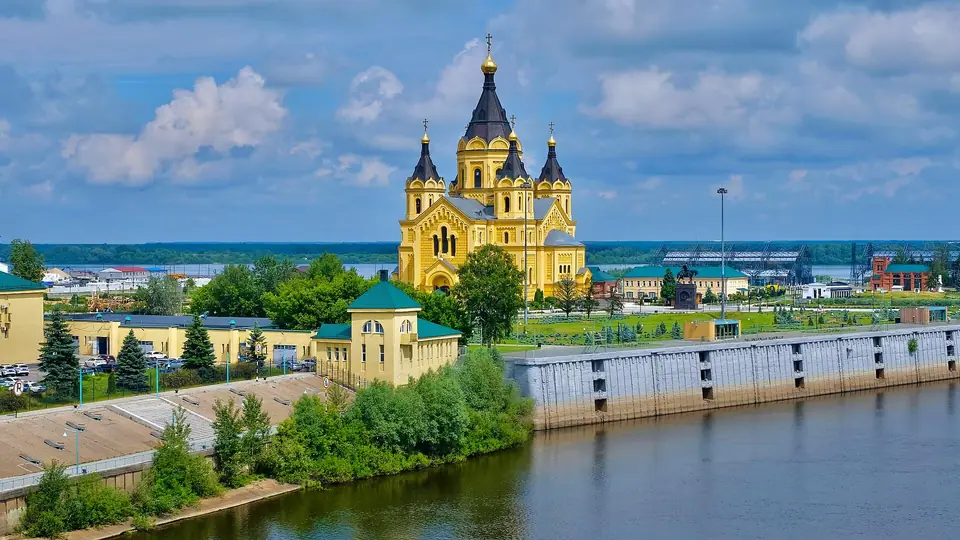
Dress Etiquette for Active Orthodox Cathedrals and Monasteries
Nizhny Novgorod holds magnificent historic religious complexes, including the 1631 Archangel Michael Cathedral inside the fortress, the Stroganov Church on Rozhdestvenskaya Street, and the monumental 87-metre Alexander Nevsky Cathedral across the river at the Strelka Spit. These are active places of worship with strictly enforced traditional dress codes.
Both men and women must cover their shoulders and knees. Tank tops, athletic gym shorts, and revealing garments are prohibited inside church interiors. Men must remove hats, caps, and hoods before stepping across the threshold. Long trousers are standard for men; entering in shorts is considered deeply disrespectful by clergy and worshippers.
Women are expected to cover their heads with a scarf, shawl, or silk foulard upon entering Orthodox sanctuaries. Modest skirts or dresses extending below the knee are customary. While many urban parish churches tolerate women in modest trousers, historic monastic foundations such as the Annunciation Monastery and Pechersky Ascension Monastery enforce traditional skirts. These monastic sites provide wrap-around aprons and headscarves in wicker baskets at the entrance gates, but carrying your own lightweight pashmina ensures a comfortable, clean fit.
Evening Dining and Cultural Venue Expectations
The city maintains a relaxed yet polished standard for evening leisure. Smart casual attire serves well at modern Volga fish restaurants along Rozhdestvenskaya Street and the riverside quays. Dark denim jeans, clean leather trainers or tailored shoes, and a collared shirt or stylish sweater blend seamlessly with the local dining crowd.
If you hold tickets for a performance at the 1896 Nizhny Novgorod Drama Theatre or an orchestral concert inside the iron Pakgauzy pavilions at Strelka, dress codes lean smarter. Local patrons dress up for cultural evenings. Men frequently wear tailored blazers or crisp collared shirts, while women opt for blouses, midi dresses, or tailored trousers. Theatres operate strict, well-managed coat-check cloakrooms where you must deposit bulky winter coats, rain jackets, hats, and wet umbrellas before taking your seat in the auditorium.
Weather by month
Nizhny Novgorod is warmest in July, with average highs around 25°C, and coldest in January, when nights drop to about -12°C. July is the wettest month by rainfall (74 mm), with rain on about 10 days. For mild weather with fewer rainy days, aim for May, June and August.
| Month | Low | Range | High | Rain | Rainy days |
|---|---|---|---|---|---|
| Jan | -12°C | -6°C | 47 mm | 17 d | |
| Feb | -11°C | -5°C | 39 mm | 14 d | |
| Mar | -5°C | 1°C | 37 mm | 12 d | |
| Apr | 2°C | 11°C | 39 mm | 10 d | |
| May | 9°C | 19°C | 46 mm | 10 d | |
| Jun | 13°C | 23°C | 68 mm | 11 d | |
| Jul | 16°C | 25°C | 74 mm | 10 d | |
| Aug | 14°C | 23°C | 66 mm | 10 d | |
| Sep | 9°C | 16°C | 56 mm | 11 d | |
| Oct | 3°C | 8°C | 61 mm | 13 d | |
| Nov | -4°C | 0°C | 53 mm | 16 d | |
| Dec | -9°C | -5°C | 53 mm | 18 d |
Averages of daily values from 2015 to 2024. Rainy days are days with at least 1 mm of rain. Source: Open-Meteo · Compare destinations by month.
Where it is
- 1Nizhny Novgorod
- Nizhny Novgorod / Strigino International Airport (GOJ) · about 18 km from Nizhny Novgorod in a straight line
- Directions in Google Maps
Stations and taxi ranks: OpenStreetMap. Airports: OurAirports. Distances are in a straight line.
Traveller tips
Real advice from people who have been to Nizhny Novgorod. Every tip is read by our team before it goes live.
No tips yet. Been here? Yours could be the first.
Thank you! Your tip will appear here after a quick review.
More in Nizhny Novgorod
Continue exploring Nizhny Novgorod with related neighbourhood, food, and planning guides
Day Trips from Nizhny Novgorod: Gorodets, Makaryev and Shukhov Tower
Nizhny Novgorod, Russia

What to Eat in Nizhny Novgorod: Volga Fish, Ukha and Gorodets Pryanik
Nizhny Novgorod, Russia

How to Get to Nizhny Novgorod: Rail Terminals and Airport Arrivals
Nizhny Novgorod, Russia

Getting Around Nizhny Novgorod by Metro, Tram and Cable Car
Nizhny Novgorod, Russia
