Photo: Алексей Трефилов · CC BY-SA 4.0
Getting Around Nizhny Novgorod by Metro, Tram and Cable Car
Master urban transit in Nizhny Novgorod with practical routes across the Oka and Volga rivers, covering the two-line Metro, historic 1896 trams, and the aerial cableway.
Topography and Urban Transit Across the Oka River
Nizhny Novgorod presents an unusual physical layout that dictates daily transit patterns across the city. The Oka River divides the urban landscape into two distinct halves. The flat Lower Town, known locally as Zarechnaya, occupies the left bank around industrial districts, transport terminals, and the historic fairgrounds. In contrast, the Upper Town, known as Nagornaya, stands atop steep right-bank bluffs rising 80 metres above the water. Historical monuments, administrative seats, and scenic embankments cluster along these elevated ridges. Navigating between these zones requires combining underground rail corridors, historic surface trams, river bridges, and aerial cable cars. Walking between river levels involves steep flights of stone stairs or mechanical climbing links, making transit choices essential for efficient urban movement.
Travellers moving between hotels, rail hubs, and sightseeing clusters can coordinate journeys by pairing rapid cross-river underground trains with scenic pedestrian streets. Reviewing our Where to Stay in Nizhny Novgorod guide clarifies how selecting accommodation near an interchange station reduces daily transit times across the river bluffs.
The Two-Line Nizhny Novgorod Metro Network
The Nizhny Novgorod Metro began operation on 20 November 1985 as the third underground system constructed in Russia and the tenth in the Soviet Union. The current heavy-rail network covers 21.6 route kilometres across two lines and 15 stations. All cross-river journeys pass through the central transfer hub at Moskovskaya, situated directly beneath Moskovsky Railway Station on the left bank of the Oka River. Moskovskaya features a spacious four-track hall with two island platforms that allow direct cross-platform interchange between lines without ascending intermediate escalators.
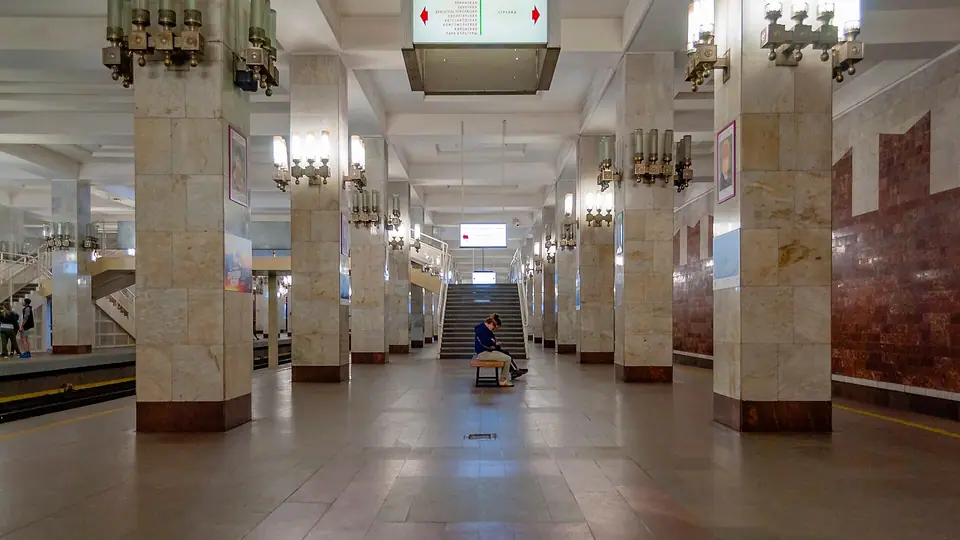
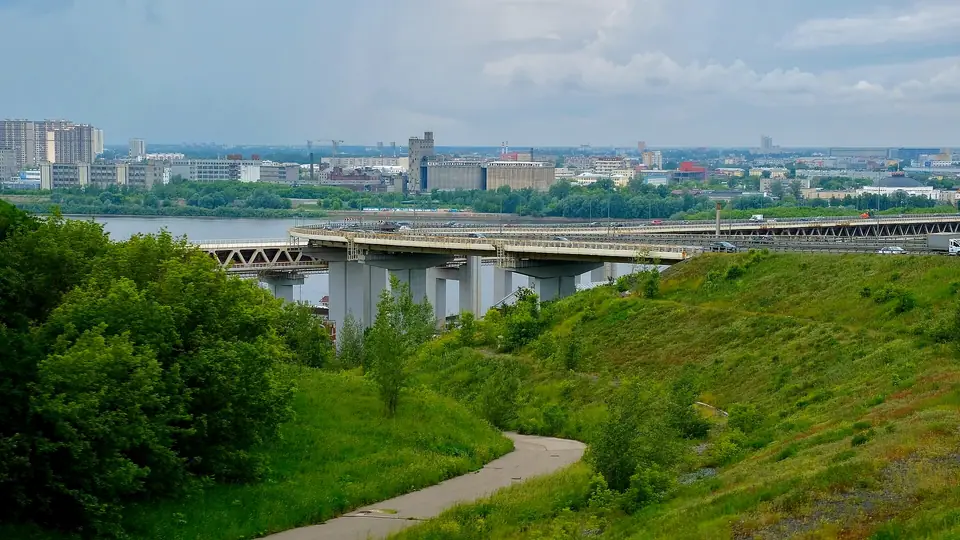
Line 1, the Avtozavodskaya Red Line, connects the southern industrial districts and the GAZ motor plant with the central transport hub before crossing the Oka River. The tracks emerge from subterranean tunnels onto the lower rail deck of the two-level steel Metro Bridge. The line terminates at Gorkovskaya station, which opened on 4 November 2012 beneath Maxim Gorky Square. Gorkovskaya provides the primary underground entry point to the Upper Town, placing visitors at the southern gateway to the pedestrian thoroughfare along Bolshaya Pokrovskaya Street. Line 2, the Sormovsko-Meshcherskaya Blue Line, runs northwest from Moskovskaya toward Burevestnik and east toward Strelka station. Opened on 12 June 2018 for the international football tournament, Strelka serves the 44,899-seat stadium, the open-work iron Pakgauzy concert pavilions, and the trade halls explored in our Strelka Spit and Fairgrounds subguide.
Ticketing Protocols and Payment Methods
Station entry across all 15 underground stops relies on automated turnstiles. Passengers acquire single-ride round plastic transit tokens from ticket booths and automated vending machines located in station vestibules. Local domestic transit cards and Mir payment cards function across these gates. Due to international financial restrictions, foreign-issued payment cards do not operate on local turnstiles or automated ticket machines. International visitors must carry cash in local currency to purchase standard physical transit tokens or paper tickets from staffed station counters before passing the barriers. Fares remain fixed across the entire underground route regardless of journey length or transfers at Moskovskaya. Station halls open in the early morning and close around midnight, but travellers should consult the official transit operator portal for exact daily timetables.
Historic Electric Tramways and City Ring Routes
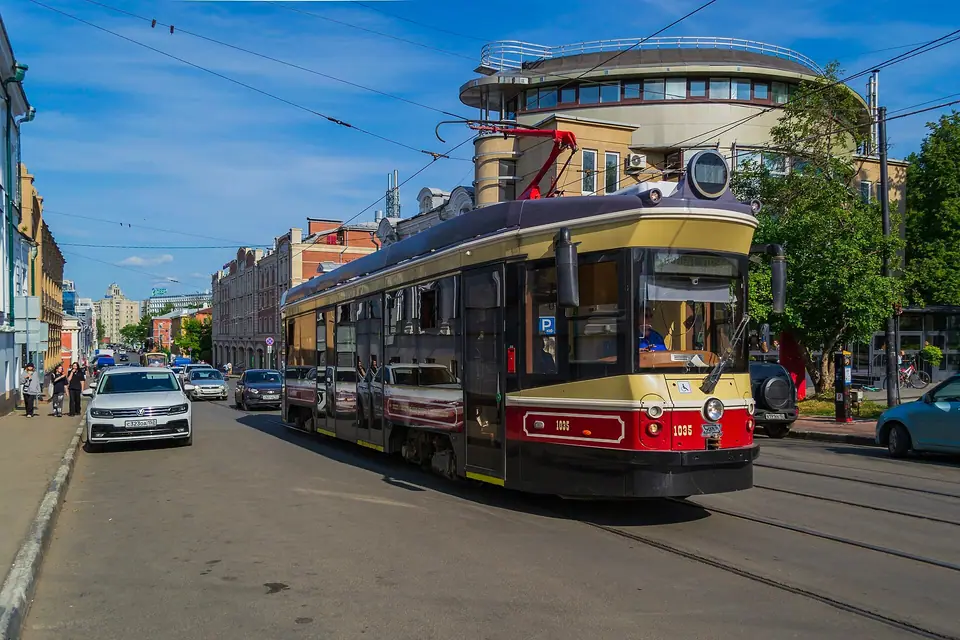
Surface transit includes an extensive 1,524 mm electric tram network that first carried passengers on 8 May 1896, establishing it among the oldest electric tram systems in Russia. The tramway remains a practical method for touring historic neighbourhoods in the Upper Town without navigating subterranean stations. Modernised single-car and articulated trams operate over street rails that cut through older residential quarters, ravine edges, and commercial avenues.
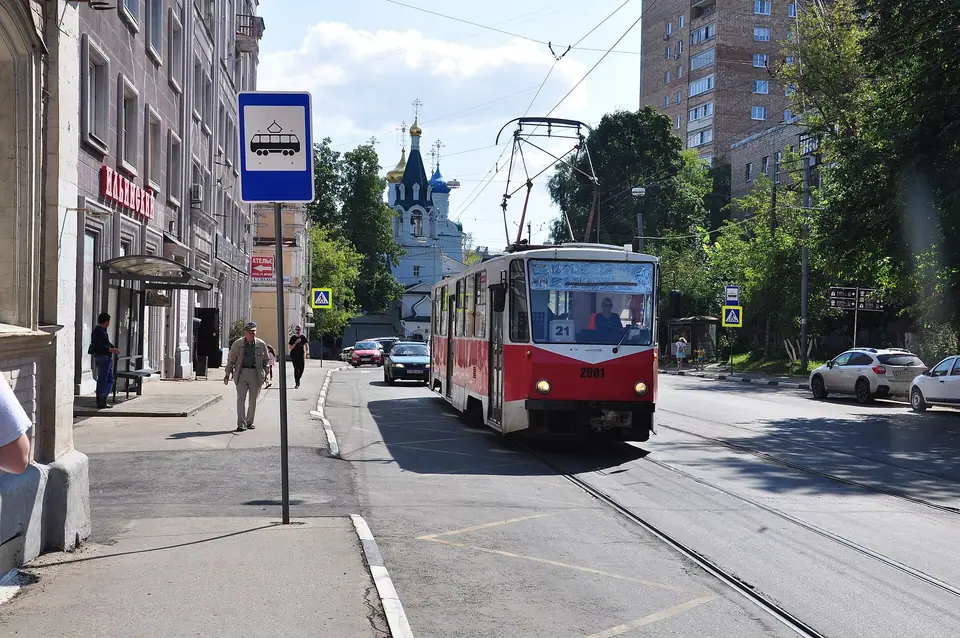
Tram Route 2, designated as the City Ring, forms a circular loop around the historic core of the Upper Town. It passes through Bolshaya Pokrovskaya Street, Ilyinskaya Street, and Belinsky Street, providing convenient access to 19th-century timber architecture and church spires. Tram Route 11 operates along the base of the bluffs on Rozhdestvenskaya Street, connecting the lower river quays with the base of the Kremlin bluffs. Surface tickets can be obtained directly from conductors inside the carriage using local cash. Boarding trams during peak commuting periods offers reliable transit when motor traffic congests major river bridges.
Trans-Volga Aerial Cableway and Cliff Ascents
Crossing between Nizhny Novgorod and the town of Bor on the opposite bank of the Volga River is facilitated by the Nizhny Novgorod to Bor aerial cableway. Inaugurated on 9 February 2012, this passenger ropeway stretches across 3,660 metres of cable supported by 10 steel towers. Two central masts measuring 82 metres in height carry an unsupported 882-metre span directly over the main river channel, representing one of the longest continuous water crossings in Europe. Eight-passenger cabins complete the aerial journey in approximately 13 minutes, operating between the terminal on Sennaya Square and the Bor terminal station. Detailed visiting advice is available in our Volga Cable Car and Pechersky Monastery guide.
For short vertical ascents inside the historic core, the restored Kremlin funicular links the Lower Volga Embankment near the Church of Saint John the Baptist with the western ramparts of the brick fortress. It revives an inclined rail system that originally operated on 15 July 1896 for the All-Russia Exhibition. The funicular bypasses the demanding climb up the hillside, sparing visitors the steep steps of the 560-step Chkalov Stairs. Tickets for the funicular and the aerial ropeway must be purchased separately at their respective terminal buildings, as standard underground transit tokens are not valid on aerial or inclined rail services.
Transit Modes Across Nizhny Novgorod
| Transit Mode | Primary Terminals and Stations | Strategic Transport Function | Cross-River Capability |
|---|---|---|---|
| Metro Line 1 (Red) | Park Kultury to Gorkovskaya via Moskovskaya | Connects southern industrial quarters with the Upper Town ridge | Yes, crosses Oka River on lower deck of Metro Bridge |
| Metro Line 2 (Blue) | Burevestnik to Strelka via Moskovskaya | Links western districts with Strelka Spit and football stadium | No, operates entirely on the flat Lower Town riverbank |
| Tram Route 2 | City Ring loop via Ilyinskaya and Belinsky | Serves historical quarters, monuments, and residential zones | No, operates exclusively within the Upper Town district |
| Tram Route 11 | Rozhdestvenskaya Street along river quay | Connects commercial trade buildings with Annunciation Monastery | No, runs parallel to the lower Oka River shoreline |
| Bor Aerial Cableway | Sennaya Square station to Bor town terminal | Transports passengers over the Volga River channel in 13 minutes | Yes, clears an 882-metre unsupported water span over the Volga |
Coordinating journeys across these complementary transit modes ensures seamless travel between historical fortress ramparts and modern transport hubs throughout Nizhny Novgorod.
Where it is
- 1Nizhny Novgorod
- Nizhny Novgorod / Strigino International Airport (GOJ) · about 18 km from Nizhny Novgorod in a straight line
- Directions in Google Maps
Stations and taxi ranks: OpenStreetMap. Airports: OurAirports. Distances are in a straight line.
Traveller tips
Real advice from people who have been to Nizhny Novgorod. Every tip is read by our team before it goes live.
No tips yet. Been here? Yours could be the first.
Thank you! Your tip will appear here after a quick review.
More in Nizhny Novgorod
Continue exploring Nizhny Novgorod with related neighbourhood, food, and planning guides
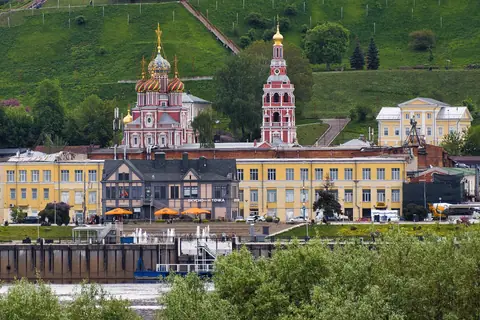
Rozhdestvenskaya Street, Stroganov Church and Fedorovsky Embankment
Nizhny Novgorod, Russia
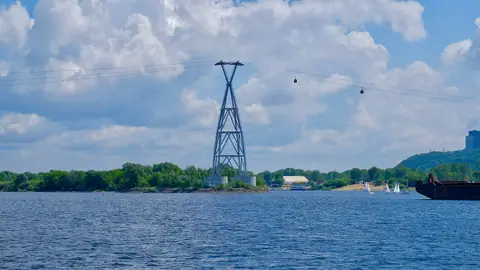
Volga Aerial Cable Car to Bor and Pechersky Ascension Monastery
Nizhny Novgorod, Russia
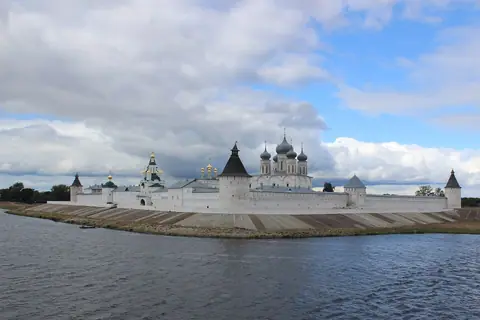
Day Trips from Nizhny Novgorod: Gorodets, Makaryev and Shukhov Tower
Nizhny Novgorod, Russia
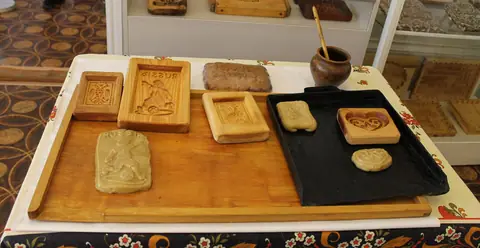
What to Eat in Nizhny Novgorod: Volga Fish, Ukha and Gorodets Pryanik
Nizhny Novgorod, Russia
