Photo: Алексей Трефилов · CC BY-SA 4.0
Nizhny Novgorod Kremlin: 13 Towers, Fortress Walls and Archangel Cathedral
Walk the dramatic 2,045-metre brick perimeter of the Nizhny Novgorod Kremlin, explore its 13 fortified towers, and discover the historic 1631 Archangel Michael Cathedral.
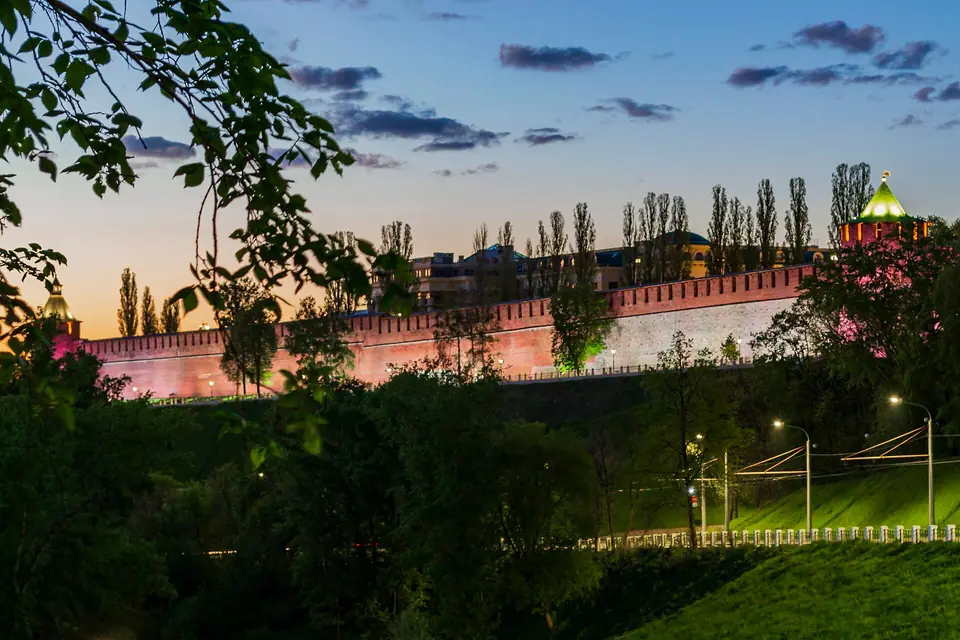
Crowning the steep river bluffs above the Oka and Volga confluence, the Nizhny Novgorod Kremlin stands as one of the most formidable brick fortresses in Russia. Grand Prince Yuri II Vsevolodovich founded the town in 1221, first establishing an earthen and timber enclosure. The surviving red-brick citadel was constructed between 1500 and 1515 under the direction of Italian architect Pietro Francesco, recorded in local chronicles as Peter Fryazin. Designed as Muscovy's premier eastern frontier bastion against the Kazan Khanate, this stronghold successfully withstood hostile sieges in 1520 and 1536. Throughout its operational military history, hostile forces never captured the citadel.
The 2,045-Metre Curtain Wall and 13 Fortified Towers
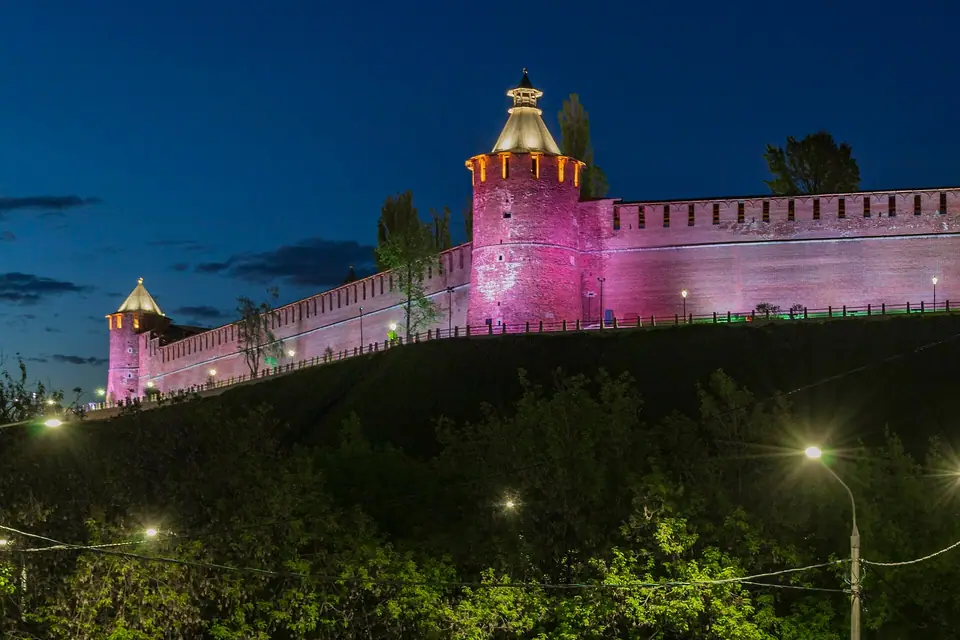
The fortress ramparts extend for 2,045 metres, encircling a dramatic hillside elevation change of roughly eighty metres between the Upper Town bluffs and the lower shoreline. The continuous brick circuit comprises thirteen towers, divided into five rectangular gate structures and eight multi-tiered round towers. Visitors typically begin exploration from Minin and Pozharsky Square through Dmitrievskaya Tower, the principal ceremonial gate. Architect Nikolai Sultanov comprehensively redesigned this gate tower in 1895 in preparation for the landmark 1896 All-Russia Industrial and Art Exhibition.
Following a severe hillside landslide in 1785, the riverfront Zachatskaya Tower collapsed into ruins, breaking the defensive ring for more than two centuries. Municipal engineers and preservationists fully rebuilt Zachatskaya Tower in 2012, restoring the full 2-kilometre elevated rampart walk. Today, an energetic walk takes visitors across a sequence of varied strongholds, including Kladovaya, Nikolskaya, Koromyslova, Taynitskaya, Severnaya, Chasovaya (Clock Tower), Ivanovskaya, Belaya, Borisoglebskaya, Georgievskaya, and Porokhovaya towers. If you plan a multi-day regional itinerary, consult our Nizhny Novgorod 3-Day Itinerary: Kremlin, Strelka, Cableway and Gorodets to time your walk effectively.
| Tower Name | Architectural Form | Fortress Position | Key Strategic Function |
|---|---|---|---|
| Dmitrievskaya Tower | Rectangular gate tower | Upper Town main square | Central entrance, artillery storage, civic museum exhibitions |
| Chasovaya (Clock) Tower | Round tower with wooden cabin | Northwestern river bluff | Primary observation lookout, historic bell and timekeeping outpost |
| Ivanovskaya Tower | Rectangular passage gate | Lower hillside ravine | Main gate leading towards the historic river port and tradesmen quarter |
| Zachatskaya Tower | Rectangular water gate | Lower Volga riverbank | Shoreline defence, rebuilt in 2012 over eighteenth-century ruins |
| Georgievskaya Tower | Square gate structure | Northeastern bluff crest | Overlooks the Volga escarpment and the Chkalov monument stairs |
Archangel Michael Cathedral and the Tomb of Kuzma Minin
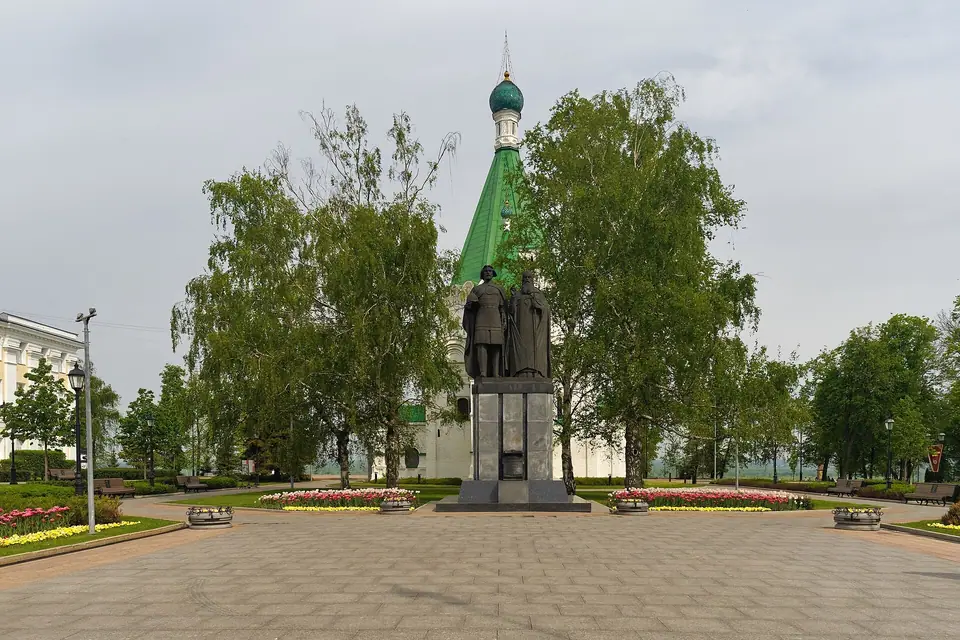
Situated within the central administrative court of the fortress, the Archangel Michael Cathedral is the oldest surviving religious building inside the Kremlin walls. The initial wooden church was consecrated at the founding of the city in 1221, followed by a white limestone rebuild in 1227. Master masons Lavrenty Vozoulin and Antipa Konstantinov erected the current stone structure between 1628 and 1631. The building features an elegant tented roof, a classic seventeenth-century Russian architectural style that predates later imperial baroque influences.
The cathedral serves as a memorial sanctuary for national military history. Inside rests the tomb of regional merchant Kuzma Minin, who rallied civic volunteers and financed the 1611 to 1612 people's militia beside Prince Dmitry Pozharsky to liberate Moscow. In front of the cathedral stands a granite memorial obelisk erected to honour the patriotic commanders. After paying respects inside the sanctuary, step outside onto the surrounding terrace to survey the grand panorama across the river confluence. For wider exploration ideas across the urban bluffs, review our curated guide to Things to Do in Nizhny Novgorod: Kremlin Walls, River Lookouts and Fairgrounds.
Navigating Steep Terrain, Embankments and Changing Seasons
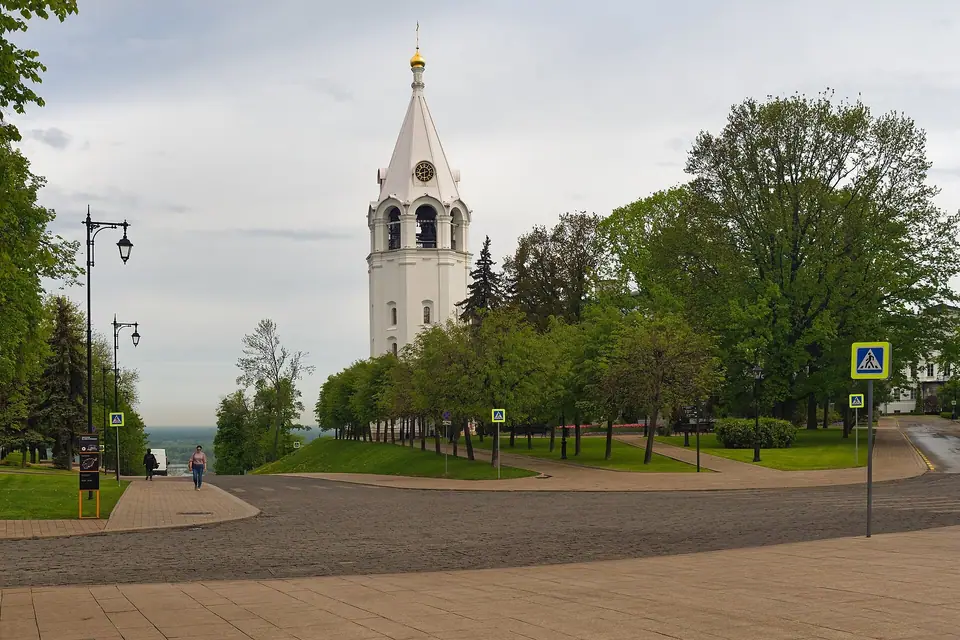
Walking the entirety of the fortress demands stout footwear and basic cardiovascular fitness. The northern sections of the curtain wall plunge down severe slopes toward the riverfront. Historic stone staircases within the mural chambers feature uneven, deep steps that require measured footwork. Near the foot of Ivanovskaya Tower, modern visitors can trace how the medieval garrison held off eastern armies while managing logistical supply trains from the Lower Volga Embankment.
To prepare your wardrobe for variable weather and elevation changes, read our practical packing advice in What to Wear in Nizhny Novgorod: Seasonal Layers, Footwear and River Wind. Weather conditions shift markedly through the year based on verified regional climate records:
- Winter (December to February): Sub-zero conditions dominate, with average January daily highs of -6.5°C and night lows falling to -11.6°C. Rampart walkways and outdoor stone steps develop slippery patches of glaze ice.
- Spring (March to May): Rapid warming transitions the bluffs from March averages of 1.1°C to pleasant May highs of 18.7°C, accompanied by moderate seasonal rainfall of roughly 46 millimetres across 10 wet days.
- Summer (June to August): The warmest season brings long daylight hours, with July peak daytime averages reaching 24.9°C. Heavy convective showers produce 74 millimetres of July precipitation across 10 wet days.
- Autumn (September to November): Temperatures drop quickly from September highs of 16.2°C to November averages around freezing (0.1°C), with 16 wet days in November bringing cold rain and early snow flurries.
Historic transport links also frame the fortress slopes. The municipal funicular railway originally began passenger operations on 15 July 1896, carrying visitors from Rozhdestvenskaya Street directly to the upper citadel. The eastern perimeter wall meets the monumental staircase built by Lev Rudnev and Alexander Yakovlev between 1943 and 1949. Visitors can finish their fortress circuit by exiting past Georgievskaya Tower toward the upper terrace of the Chkalov monument to admire open views across the vast Volga basin.
Where it is
- 1Nizhny Novgorod Kremlin
- Nizhny Novgorod / Strigino International Airport (GOJ) · about 18 km from here in a straight line
- Directions in Google Maps
Stations and taxi ranks: OpenStreetMap. Airports: OurAirports. Distances are in a straight line.
Traveller tips
Real advice from people who have been to Nizhny Novgorod. Every tip is read by our team before it goes live.
No tips yet. Been here? Yours could be the first.
Thank you! Your tip will appear here after a quick review.
More in Nizhny Novgorod
Continue exploring Nizhny Novgorod with related neighbourhood, food, and planning guides
What to Eat in Nizhny Novgorod: Volga Fish, Ukha and Gorodets Pryanik
Nizhny Novgorod, Russia
How to Get to Nizhny Novgorod: Rail Terminals and Airport Arrivals
Nizhny Novgorod, Russia
Getting Around Nizhny Novgorod by Metro, Tram and Cable Car
Nizhny Novgorod, Russia
What to Wear in Nizhny Novgorod: Seasonal Layers, Footwear and River Wind
Nizhny Novgorod, Russia
