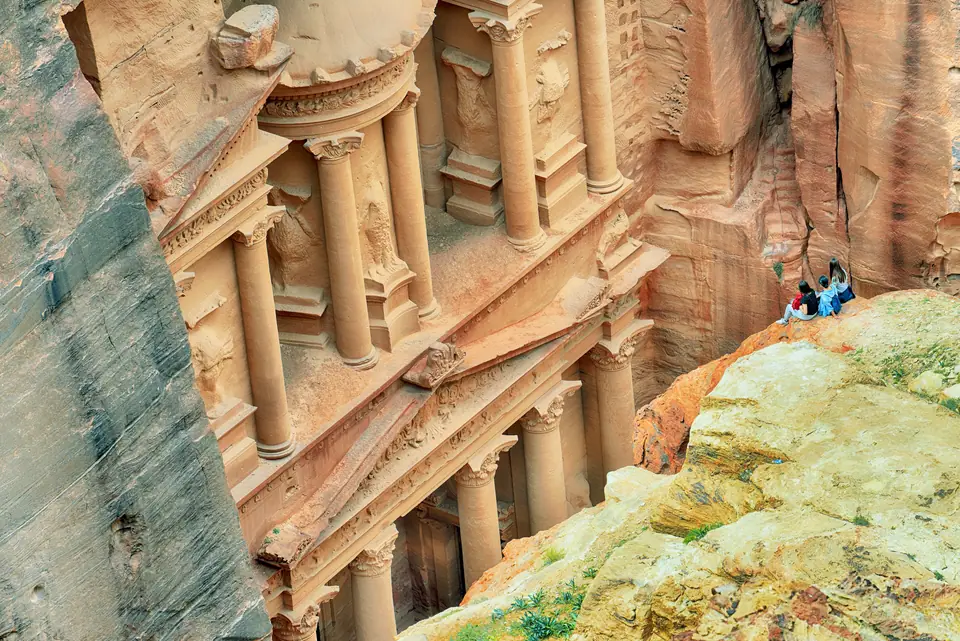
Photo: Qais Tweissi · CC BY-SA 4.0
Al-Khazneh (The Treasury) Guide: Light, High Overlooks and Etiquette
Morning light illuminates the rose-red facade of Al-Khazneh as visitors navigate the narrow Siq gorge toward responsible high cliff routes.
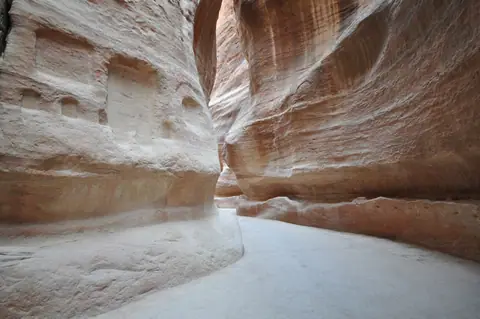
Walking through the Siq remains one of the quietest rituals in ancient travel when begun at first daylight. The canyon walls rise above the sandstone floor, curving sharply to block direct sunlight and keep the corridor cool during morning hours. Sound travels in strange echoes between the vertical rock faces, carrying the crunch of gravel underfoot and the occasional call of local handlers. As the gorge narrows towards its eastern termination, a slim vertical slit appears between the dark rocks. Through that crack, the glowing rose stone of Al-Khazneh appears, illuminated as dawn reaches the outer rock face.
We emerge from the dim shadows of the gorge directly onto the gravel plaza facing the monument. Morning light strikes the upper pediments first, turning the deep iron-rich sandstone into warm orange and terracotta tones. Arriving early gives visitors space to stand quietly before tour groups gather across the canyon floor. Walkers can link dawn entry schedules with park logistics across Wadi Musa to arrive right as outer gates unlock.
Reading the Nabataean Carvings and Weathered Details
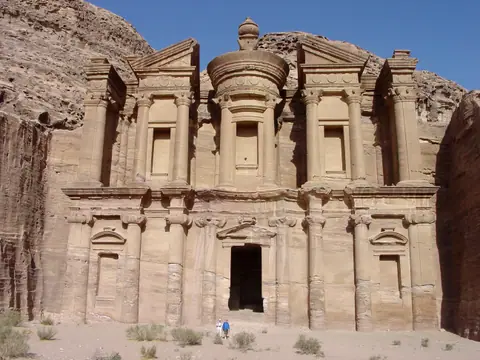
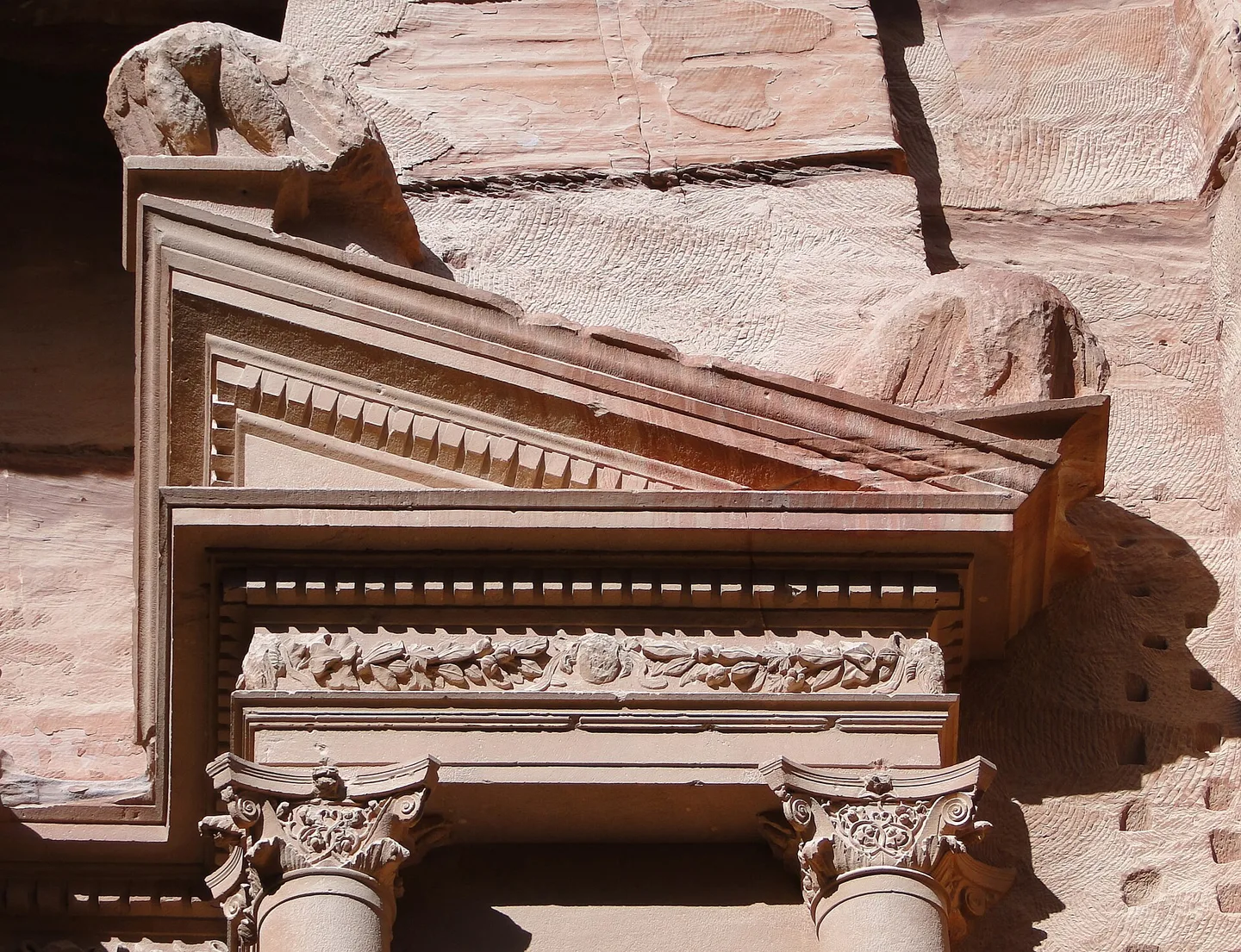
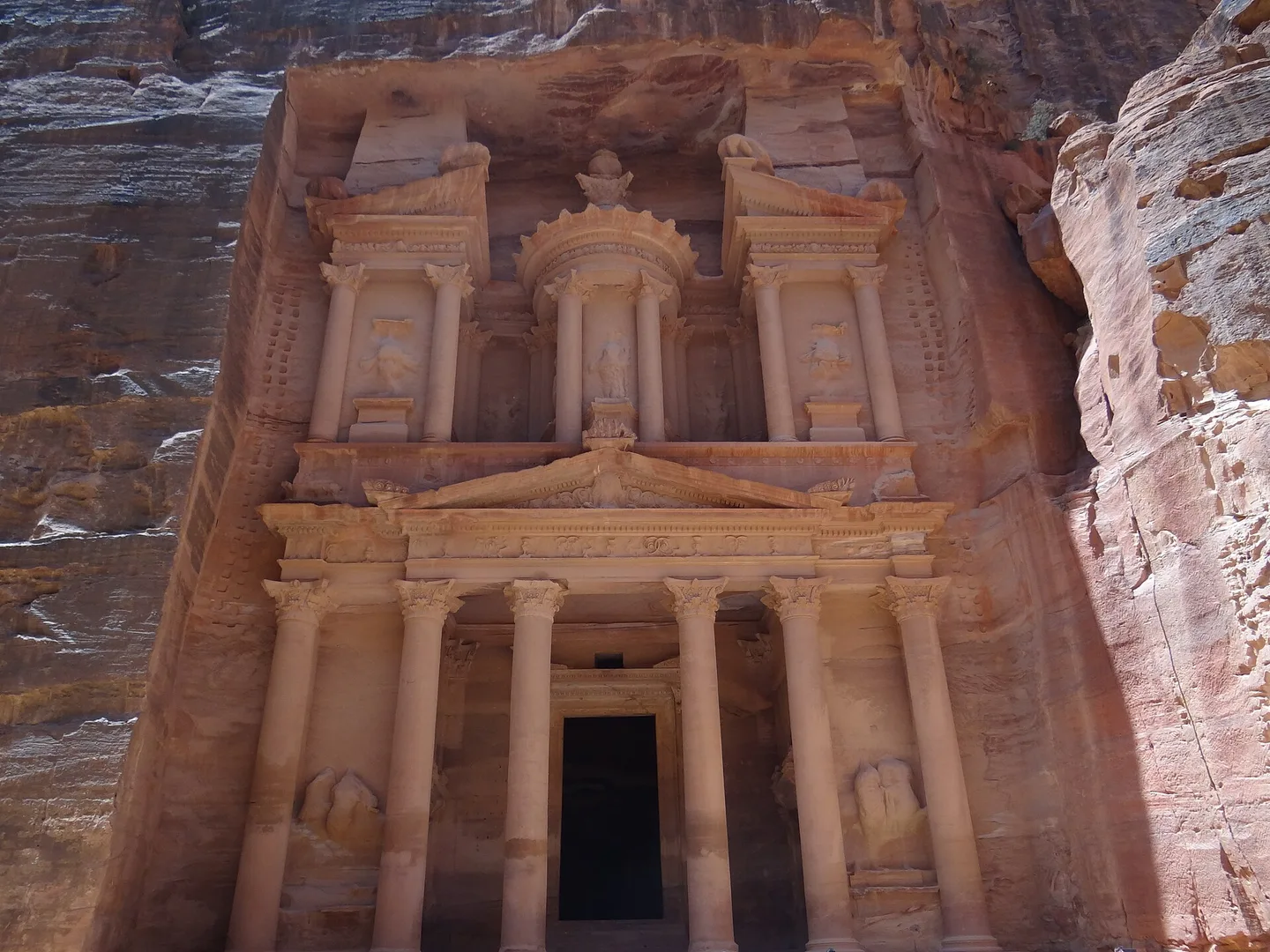
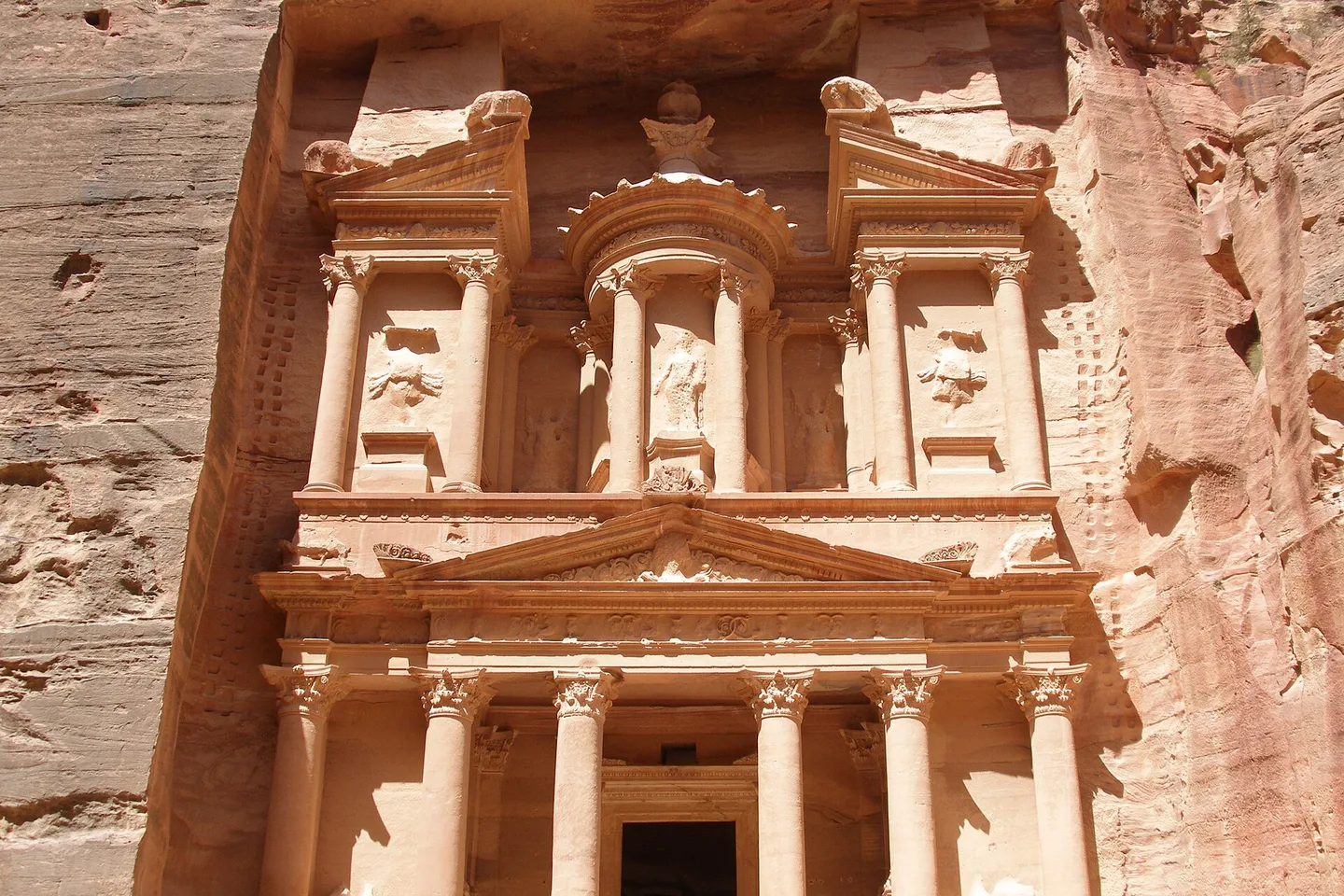
Standing before the monument reveals how Nabataean stonecutters shaped classical Hellenistic architecture into living rock. The facade divides into two distinct registers, carved directly from top to bottom into the sandstone cliff face. The upper tier features a central cylindrical tholos topped by a conical roof and a heavy stone urn. Broken pediments flank the tholos, showing carved figures that have weathered softly under centuries of desert wind and flash flooding.
The lower register displays six towering Corinthian columns supporting a classical entablature, creating a recessed porch. Flanking equestrian reliefs honour the heavenly twins Castor and Pollux, who guided souls safely into the underworld. Bullet scars pit the surface of the top urn, left by Bedouin tribesmen who once believed pharaonic gold lay hidden within. Modern archaeological soundings below the plaza floor have revealed subterranean tombs, proving that the monument served royal funerary ceremonies rather than currency storage.
| Structural Feature | Architectural Form | Cultural Purpose |
|---|---|---|
| Top Urn | Carved sandstone vessel | Symbolic funerary tribute |
| Central Tholos | Circular pillared pavilion | Equestrian and deity housing |
| Lower Portico | Hexastyle Corinthian facade | Ceremonial tomb entrance |
| Buried Chambers | Subterranean rock vaults | Nabataean royal interments |
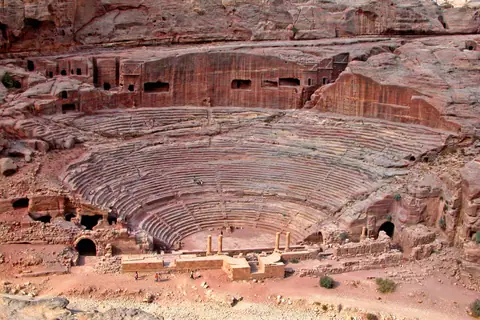
We notice how the sandstone shifts colour as the morning sun moves across the canyon rim. Pink veins give way to yellow swirls and dark red streaks, formed by mineral sedimentation millions of years ago. Taking time to study these stone strata reveals the sheer physical skill required to chisel smooth entablatures without scaffolding. Longer routes link this plaza directly onward toward the Roman theatre and Ad-Deir stairways deeper inside the canyon.
Navigating High Overlooks and Cliffside Paths
Viewing the Treasury from elevated vantage points provides a fresh sense of scale against the surrounding mountains. Several routes lead to canyon rims above the plaza, though they vary considerably in footing, safety, and legal access. The official route follows the Al-Khubtha trail behind the Royal Tombs, climbing rock staircases to reach a plateau high above the monument. This marked path allows hikers to look straight down upon the tholos urn while keeping to established park trails.
- Follow marked mountain stairs up the Al-Khubtha cliff edge rather than untracked scree slopes.
- Wear sturdy walking shoes with deep rubber tread because smooth sandstone loses grip when covered in loose sand.
- Carry ample drinking water in your daypack, as the rocky climb offers little midday shade along the ridge.
- Remain well back from unprotected cliff drops where gusting canyon winds can surprise unsuspecting walkers.
Unauthorised shortcuts climbing directly from the Treasury plaza involve loose rock scrambles with steep drop-offs. Local youths often offer to guide visitors up these unofficial ledges for private payments, sometimes leading travellers onto dangerous sheer rock. We advise sticking firmly to the marked park trails, avoiding routes that cause stone erosion along fragile cliff edges. Taking the long way around rewards hikers with wide views across the valley floor and safer mountain walking.
Etiquette, Local Interactions, and Canyon Dynamics
The plaza in front of the Treasury functions as a lively meeting point where desert traditions meet modern international foot traffic. Camels decorated in woven wool tassels rest along the gravel margins, their handlers offering short rides for photographs. Bedouin vendors sell silver jewellery, sage tea, and postcards from small fabric stalls tucked against the canyon walls. A polite shake of the head and a quiet word of thanks easily deflects unwanted offers without creating tension.
Animal welfare remains an important consideration throughout the central archaeological reserve. Donkeys and horses carry riders through the sand, yet high heat and hard stone surfaces can prove taxing for working livestock. Choosing to explore the canyon on foot preserves animal wellbeing while letting you set an unhurried, independent pace. Respecting working animals and following designated lanes maintains park safety for both pedestrians and handlers.
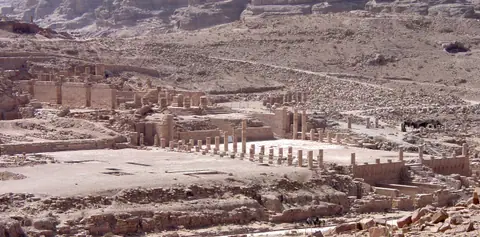
Once sunlight fills the gorge and crowds expand across the plaza, walking westward opens up the wider Nabataean capital. The canyon walls draw back into the Street of Facades, leading toward the Roman theatre and the colonnaded street. Leaving Al-Khazneh behind before noon allows you to cross the open desert valley before afternoon temperatures peak. Looking back one last time shows the carved portico receding into shadow, framed forever by the rose rock of Petra.
Official prices and opening hours
- Petra Archaeological Park Entry TicketsOfficial site ↗
- Jordan Pass (Includes Petra + 40 Sites)Official site ↗
Where it is
- 1Al-Khazneh (The Treasury)
- Ramon International Airport (ETM) · about 78 km from here in a straight line
- Directions in Google Maps
Stations and taxi ranks: OpenStreetMap. Airports: OurAirports. Distances are in a straight line.
Traveller tips
Real advice from people who have been to Petra. Every tip is read by our team before it goes live.
No tips yet. Been here? Yours could be the first.
Thank you! Your tip will appear here after a quick review.
More in Petra
Continue exploring Petra with related neighbourhood, food, and planning guides