Photo: David Berkowitz from New York, NY, USA · CC BY-SA 4.0
Navigating Petra: Jordan Pass, Ancient Trails and Park Logistics
Walking the ancient Nabataean capital requires steady preparation, comfortable footwear, and a clear understanding of park trails and entry documentation.
Securing Entry and the Jordan Pass
Entering the ancient stone city begins at the modern visitor centre outside Wadi Musa. Most international travellers arrive holding a Jordan Pass, which combines national tourist entry with park admission. This arrangement helps streamline border checks and site gates during your journey. Smooth coach and car routes to Wadi Musa help you arrive rested before clearing the turnstiles. Keep your digital or printed pass readily accessible at the gates. Staff scan the barcode alongside your passport before granting entry at dawn.
Passing the gate early lets you beat the heaviest mid-morning foot traffic. Large group excursions frequently arrive from Amman or Aqaba by mid-morning. The visitor centre complex offers clean washrooms, an information desk, and licensed guides waiting near the main courtyard. Hiring an official guide right at the entrance gives deep historical context on Nabataean hydraulic engineering before you set foot on the trail. Starting your day with ample drinking water and sun lotion is essential. Shops become sparser once you descend into the gorge.
Walking the Bab Al Siq and the Main Canyon
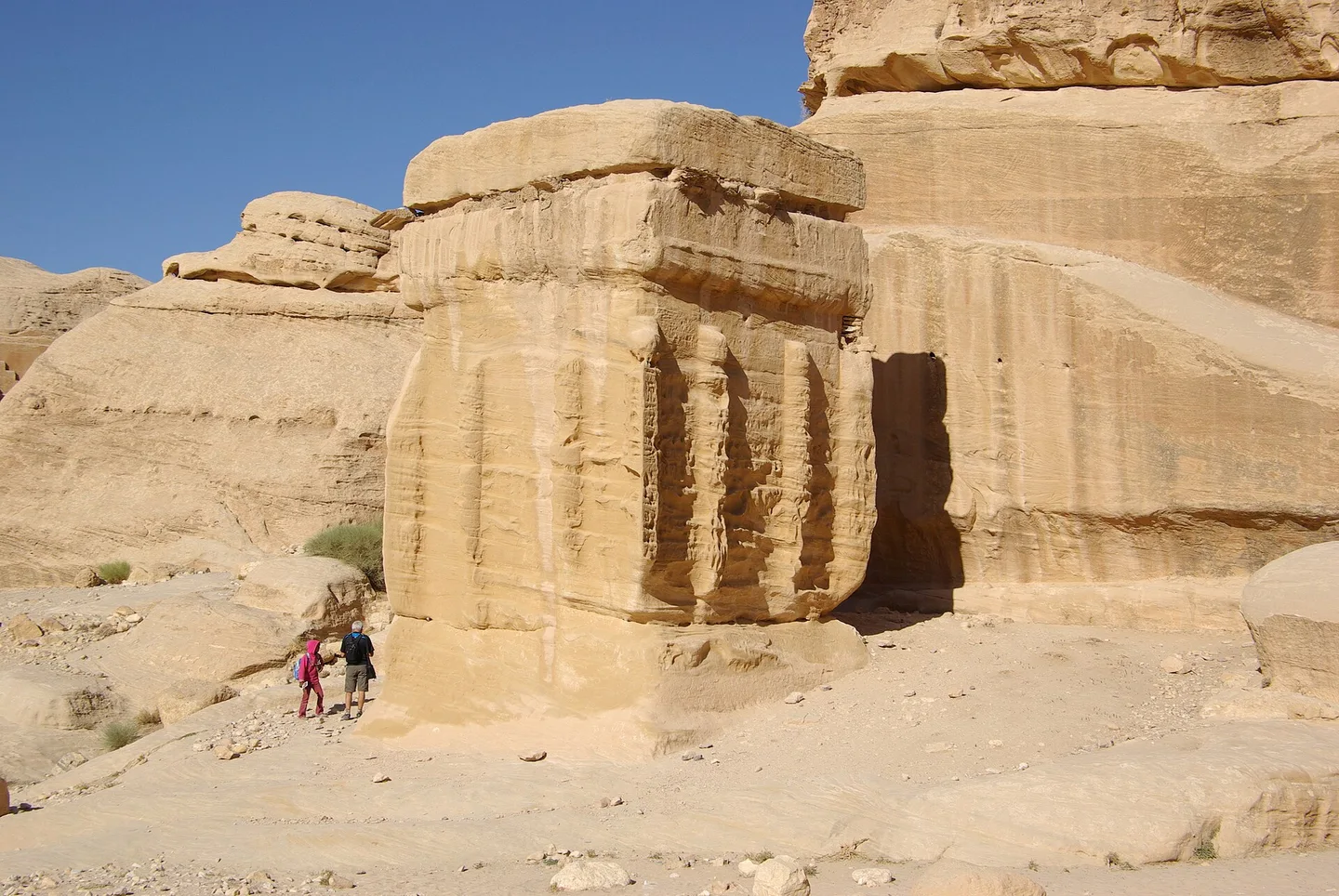
The journey commences along the wide, open gravel path known as Bab Al Siq, descending gently toward the gorge entrance. Here you pass three towering carved sandstone monoliths, known locally as the Djinn Blocks, standing alongside ancient funerary monuments. This unshaded stretch quickly introduces the arid desert climate, making wide-brimmed hats and protective clothing sensible choices. Following advice on proper footwear and layered clothing will protect you against both rough loose stones and sharp sun.
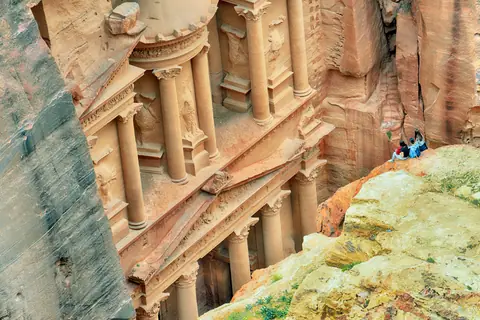
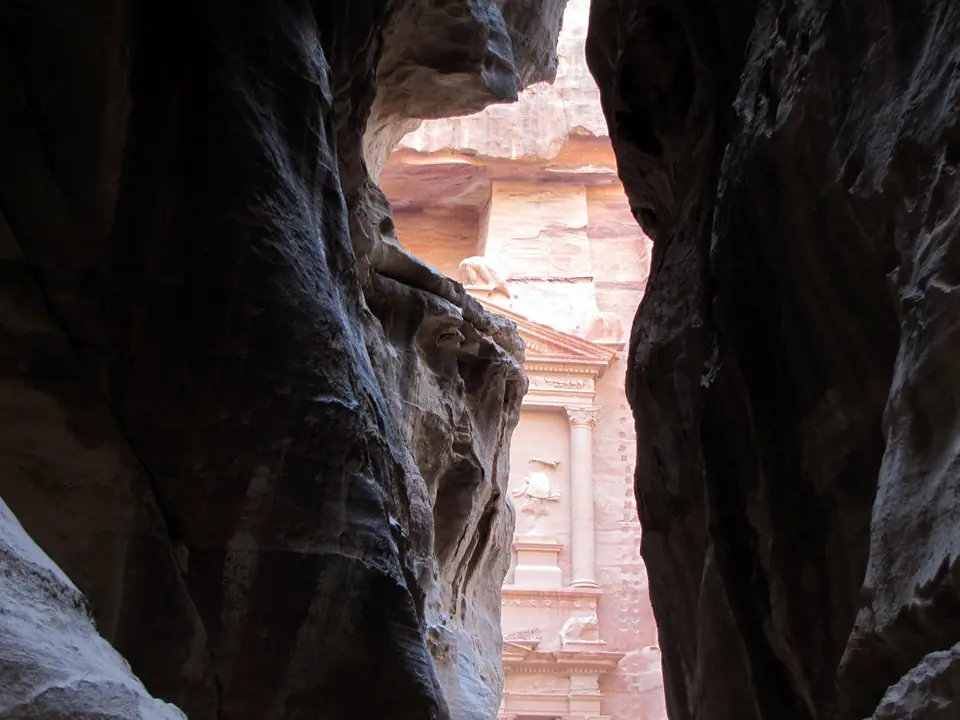
The open path soon narrows into the Siq, a split gorge bounded by sheer rock faces rising high overhead. Walking beneath these curved sandstone walls offers natural shade and a notable drop in ambient temperature. Channels carved into the base of the rock display the sophisticated water catchment systems constructed by the Nabataeans thousands of years ago. As the narrow passage reaches its end, the dark stone opens into a sliver of light revealing the carved facade of the Treasury.
Core Basin Monuments and the Monastery Ascent
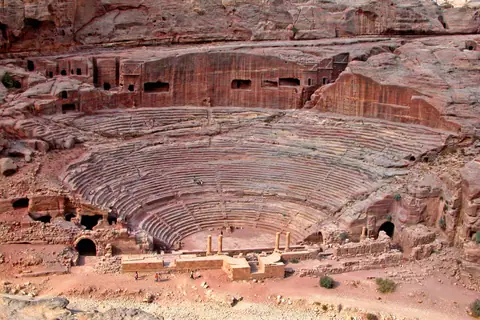
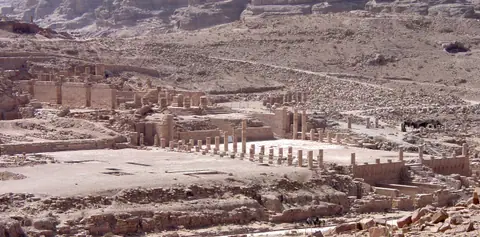
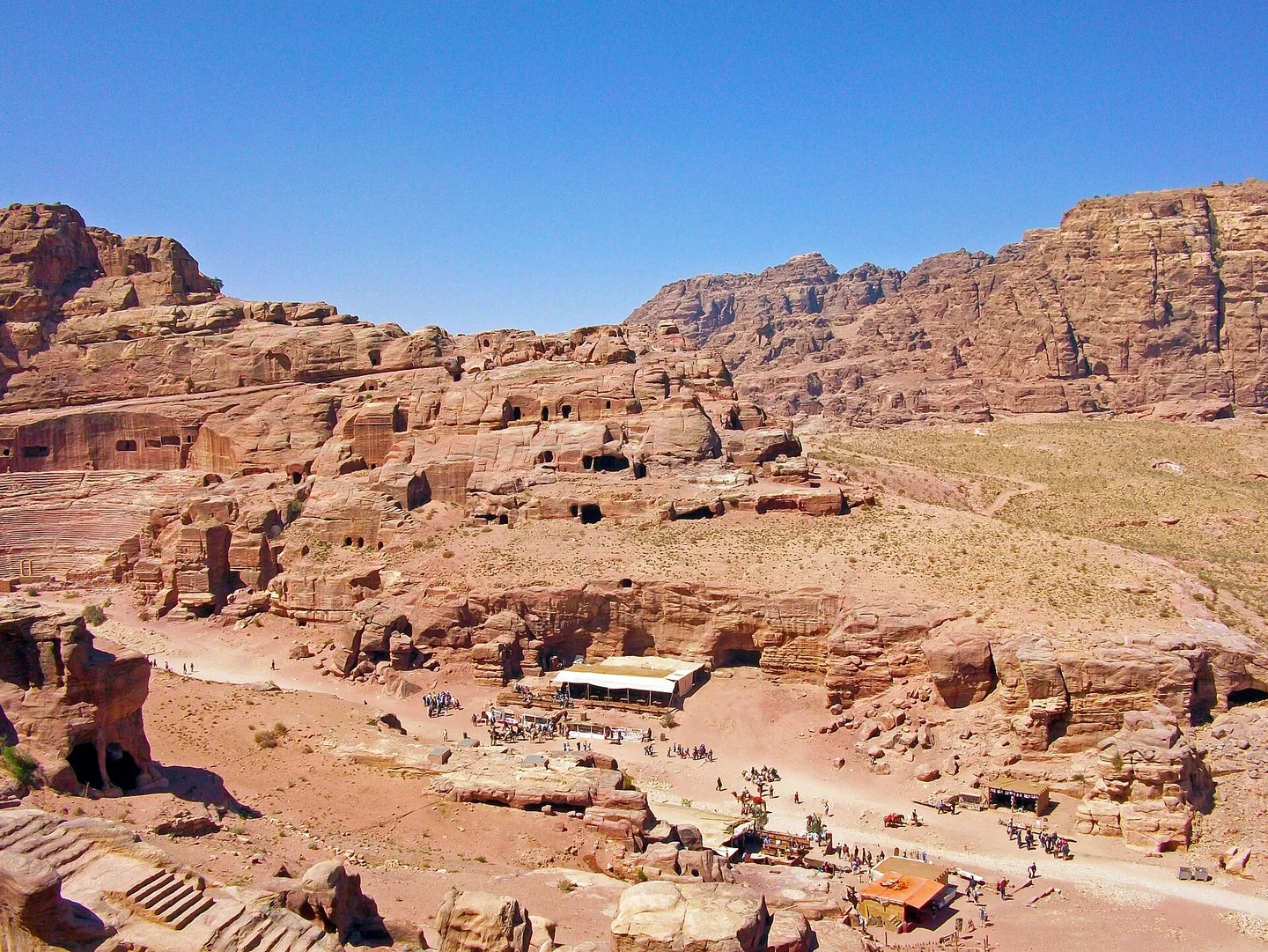
Beyond the Treasury, the valley broadens out into the Street of Facades, leading toward the vast rock-cut theatre and the royal tombs. Walking along the Colonnaded Street takes you through the civic heart of the ancient settlement towards Qasr Al Bint. You can review top landmarks across historic trails and monuments to help prioritise which cliffside paths to explore. This central basin contains shaded rest stops, basic facilities, and outdoor seating where you can rest tired legs.
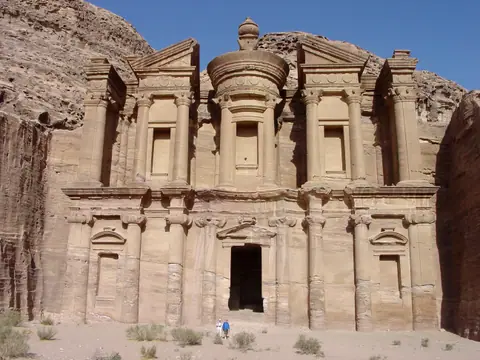
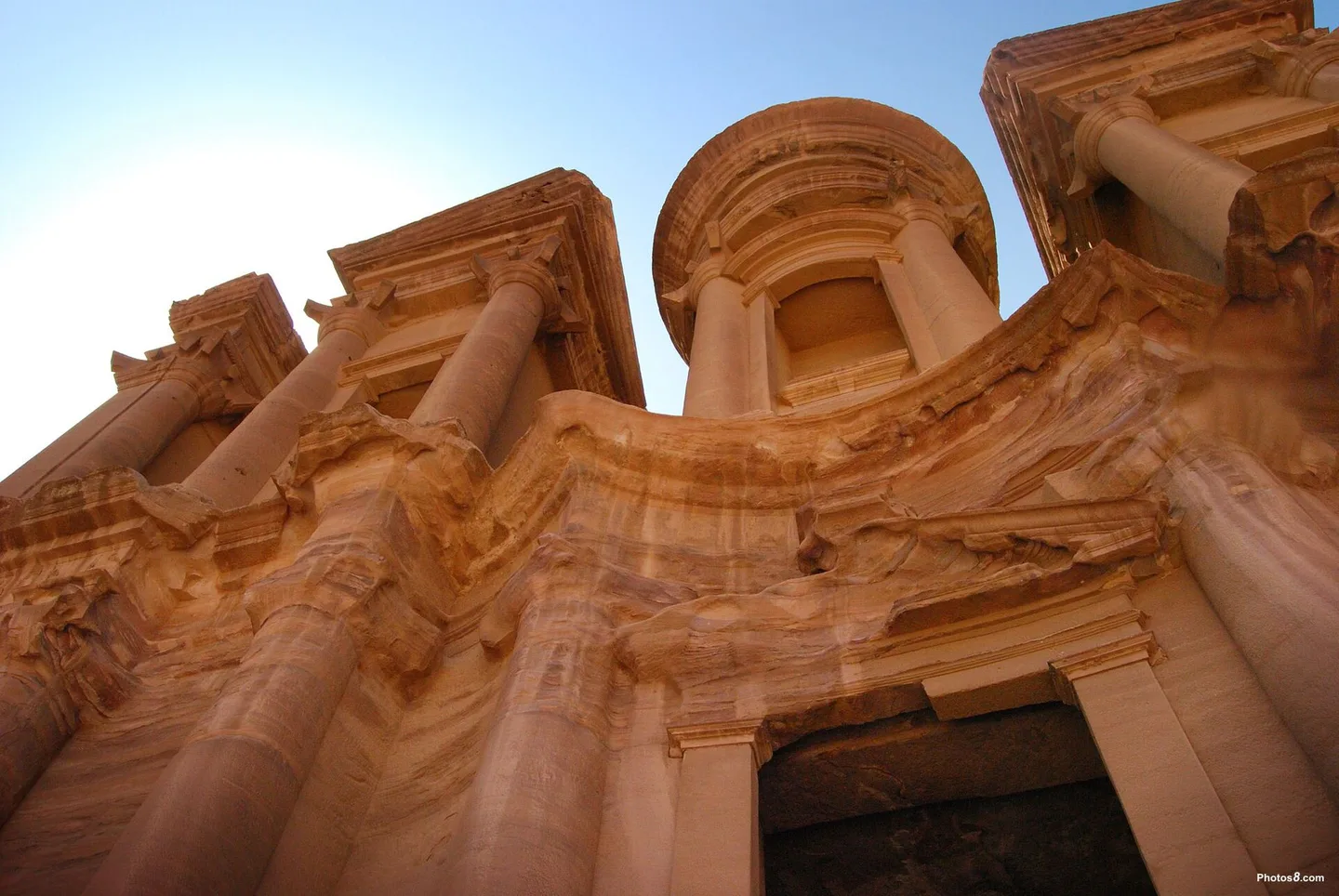
From the basin, energetic visitors continue up the rocky staircase leading to Ad Deir, commonly called the Monastery. The path climbs ancient sandstone steps cut directly into the mountain, requiring steady balance on uneven rock. Local bedouin stalls line sections of the route, selling warm sweet mint tea and handmade souvenirs to weary climbers. Reaching the wide plateau rewards your physical effort with sweeping panoramic views across the arid peaks of the rift valley.
Terrain Demands and Trail Navigation
Planning your day inside the park requires sensible pacing, as distances accumulate rapidly across the desert floor. The return journey from the Monastery back to the visitor centre involves a steady uphill walk through the Siq. Selecting the ideal travel season prevents you from tackling the long exposed gorge during oppressive midday heat. The table below highlights key walking segments, footing conditions, and practical route notes to help organise your route.
| Park Section | Terrain Type | Practical Route Note |
|---|---|---|
| Bab Al Siq | Unpaved gravel track | Exposed to direct sunlight before reaching the main canyon. |
| The Siq | Hard packed stone and paving | Supplies natural shade between steep sandstone cliffs. |
| Colonnaded Street | Flat dirt and original stone slabs | Central thoroughfare connecting major civic ruins and cafes. |
| Monastery Staircase | Steep, uneven rock-cut steps | Demands supportive footwear and deliberate pacing during ascent. |
Carrying a small backpack with water, dried fruit, and a lightweight layer will keep you comfortable across the day. Never rush through the gorge, as changes in sunlight illuminate different sandstone bands across the canyon walls. Taking regular breaks at designated rest stops allows you to absorb the scale of this ancient desert metropolis without exhaustion.
Official prices and opening hours
- Petra Archaeological Park Entry TicketsOfficial site ↗
- Jordan Pass (Includes Petra + 40 Sites)Official site ↗
Where it is
- 1Petra
- Ramon International Airport (ETM) · about 79 km from Petra in a straight line
- Directions in Google Maps
Stations and taxi ranks: OpenStreetMap. Airports: OurAirports. Distances are in a straight line.
Traveller tips
Real advice from people who have been to Petra. Every tip is read by our team before it goes live.
No tips yet. Been here? Yours could be the first.
Thank you! Your tip will appear here after a quick review.
More in Petra
Continue exploring Petra with related neighbourhood, food, and planning guides