Photo: Bernard Gagnon · CC BY-SA 4.0
Exploring Petra: Monuments, Ancient Trails, and Canyon Vistas
Carved sandstone monuments, dramatic desert gorges, and steep mountain stairways define the ancient Nabataean capital hidden within Jordan's southern desert ranges.
Entering Petra begins at the edge of Wadi Musa, where the dusty plateau narrows into a dramatic geological fracture. The canyon approach, known as the Siq, winds between towering vertical cliffs that blot out harsh desert sunlight for over a kilometre. Along the lower rock bands, ancient Nabataean water channels still trace the stone contours. These channels showcase ingenious water management systems that sustained an entire trading hub. Walking along the polished flagstones reveals centuries of erosion, chisel marks, and preserved relief carvings. As the chasm tapers towards its narrowest gap, the detailed pediment of Al-Khazneh, or the Treasury, appears through the shaded stone frame.
Standing before the Treasury reveals intricate Corinthian capitals and sculptural figures carved directly into the pink sandstone cliff. Morning light filters into the canyon floor, catching the warm mineral pigments before moving across the upper frieze. Crowds tend to concentrate heavily right at this junction, but following the valley further opens up much wider spaces. Wear sturdy boots matched to desert trails and gritty canyon sand, because soft scree quickly damages thin trainers.
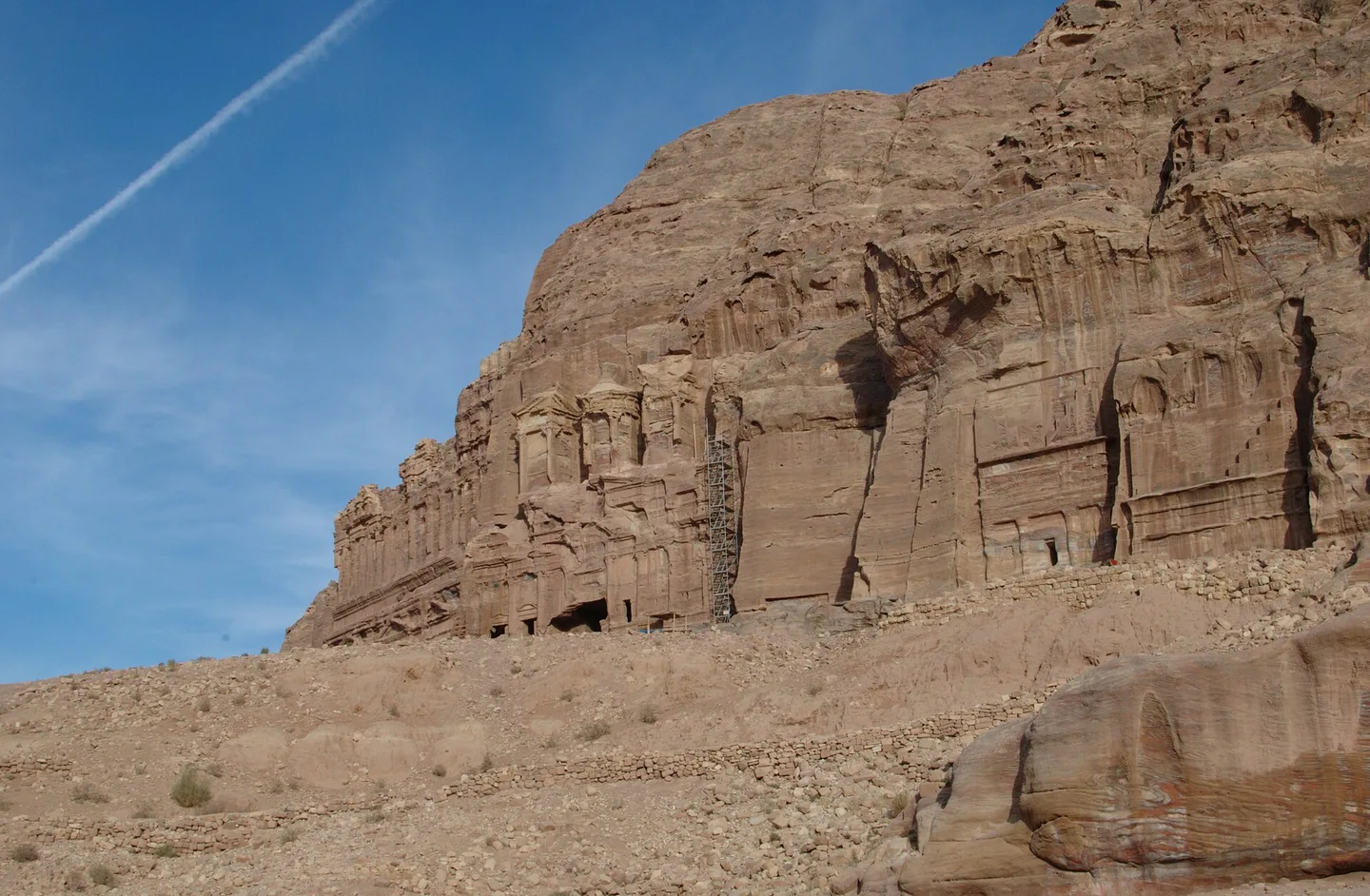
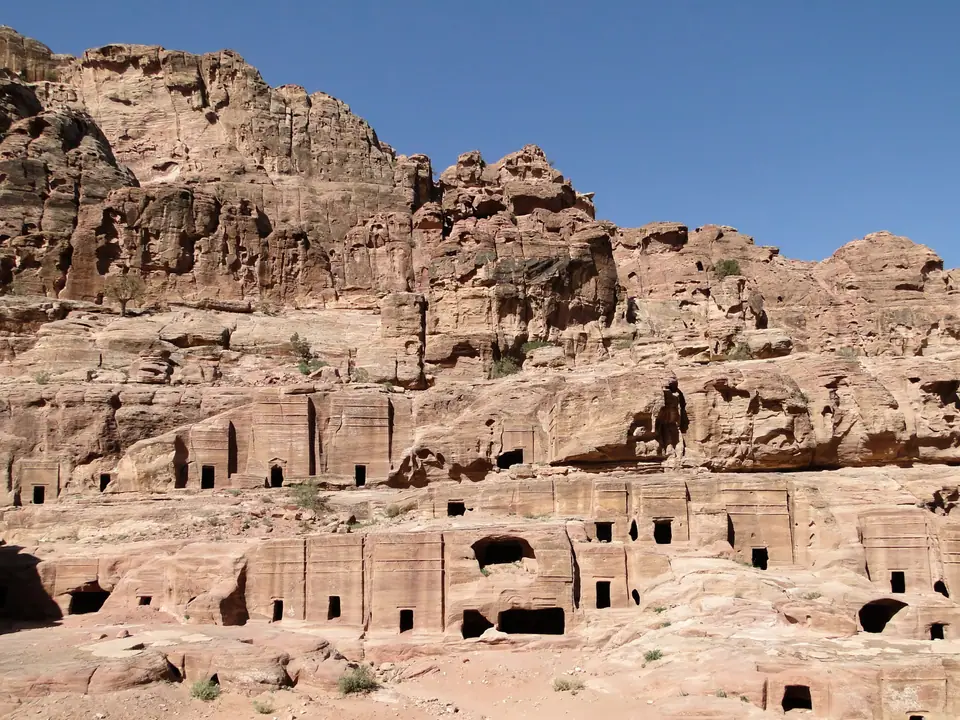
Beyond the Treasury, the canyon expands into the Outer Siq and connects directly with the Street of Facades. Here, dozens of monumental tomb structures line the northern and southern cliffs, showing various stages of completion. Nabataean stonemasons carved these chambers from the top down, cutting rough ledges before refining symmetrical columns and stepped crenellations. Some tombs retain only broad rectangular doorways, while adjacent cliff faces exhibit delicate decorative capitals and deep interior burial niches. Observing these unfinished facades gives rare insight into ancient excavation methods and stone-dressing techniques.
Further along the central basin, the Roman colonnaded street marks where urban civic life flourished centuries after Nabataean architects shaped the rock. Sandstone stairs lead toward the Great Temple complex, where collapsed columns and elevated platforms offer views across the lower valley. We can pause around the temple ruins to trace stone drainage systems and broad administrative courtyards before continuing onward. Before setting your daily departure times from regional hubs, double-check transport arrangements through transit options to Petra to align your valley hours comfortably.
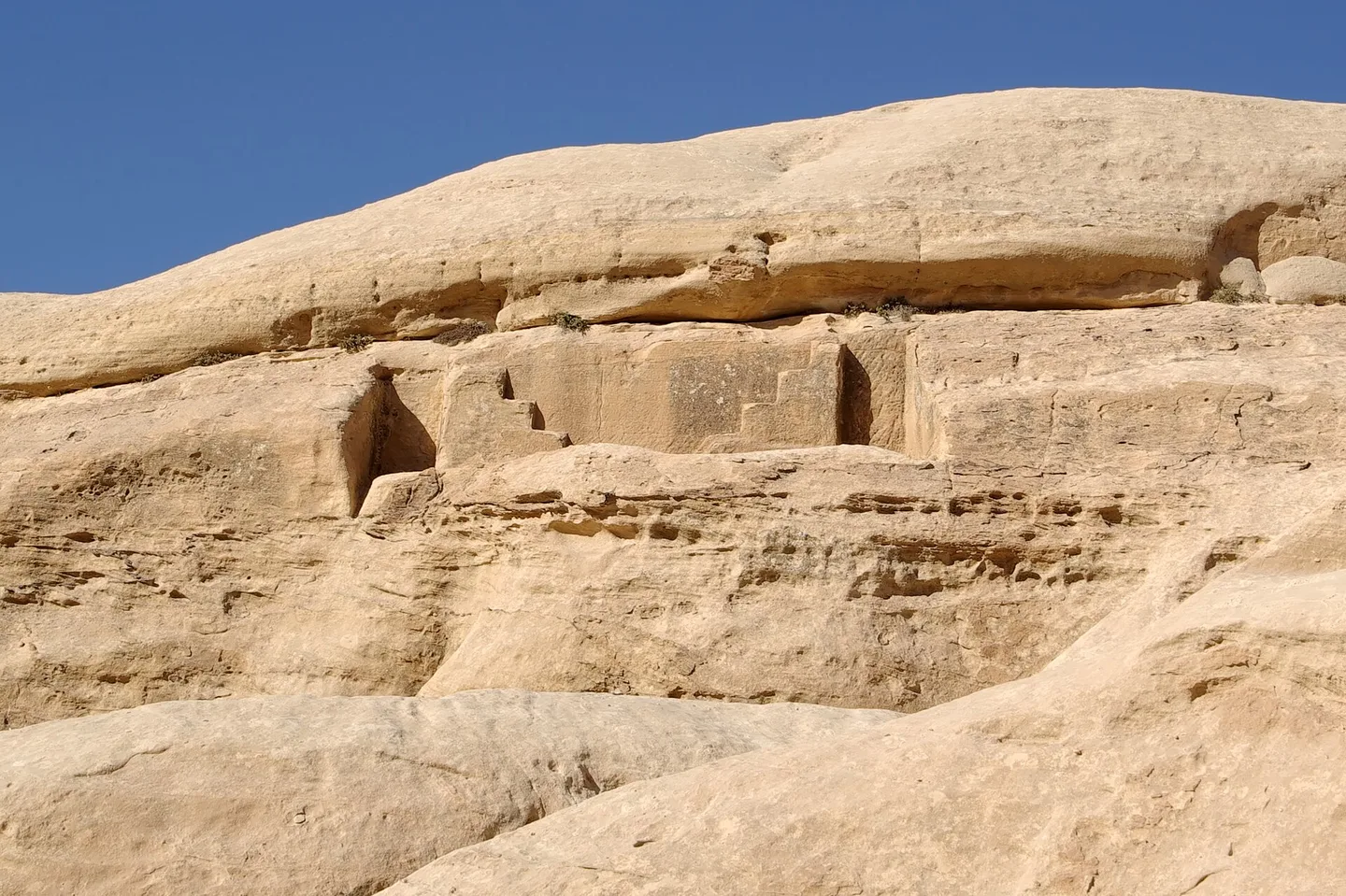
The route ascending toward Ad-Deir, or the Monastery, forms the most demanding common day climb in the entire archaeological park. Hundreds of uneven stone steps weave through narrow ravines, climbing past isolated tea shelters and steep rock shelves. Donkeys share this narrow path, so keeping to the cliff side of each turn prevents accidental bumps. The effort pays off at the mountain plateau, where the monumental facade of the Monastery emerges against open desert skies. Its colossal doorway and urn finial dwarf visitors resting across the sandy esplanade.
Past the Monastery plateau, short footpath extensions lead directly to outward clifftop viewpoints looking toward the arid Wadi Araba depression. Desert winds blow briskly across these high ridges, offering welcome relief after the hot staircase ascent. These elevated perches illustrate how effectively Nabataean leaders controlled trade routes passing between the Arabian Peninsula and Mediterranean ports. Taking time to absorb this vast panoramic context completes the physical experience of ascending the park's highest formal monument.
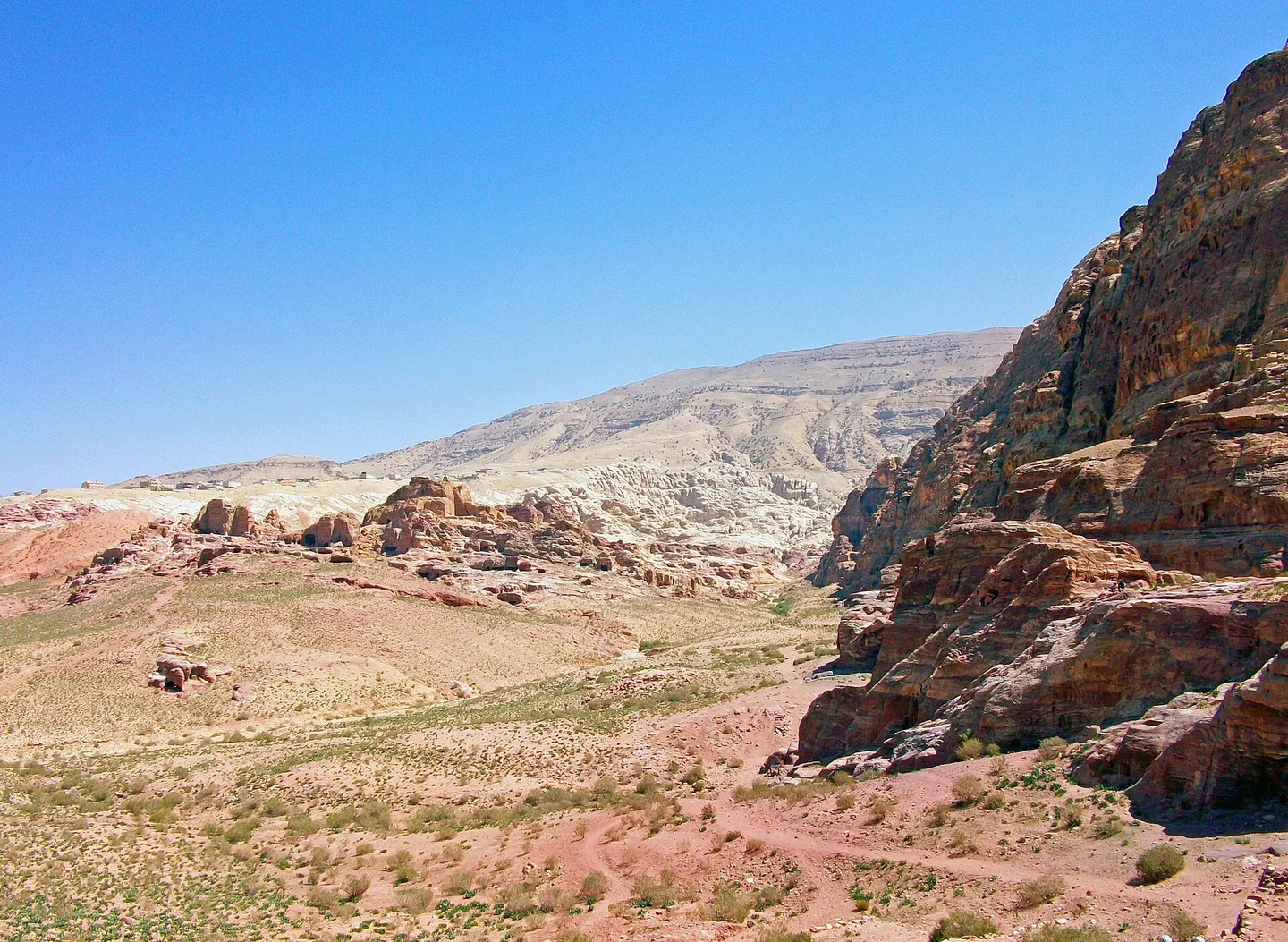
Planning a thorough visit across the park demands sensible pacing across multiple trail sectors, as distances between monuments add up quickly. We recommend dividing the expansive grounds into logical morning and afternoon loops to balance strenuous climbs with level valley strolls.
| Park Sector | Primary Feature | Terrain Character | Typical Sequence |
|---|---|---|---|
| The Siq to Treasury | Shaded gorge and Al-Khazneh | Gentle downhill packed sand | Early morning entry route |
| Street of Facades | Rock-cut tombs and civic ruins | Broad, open valley floor | Midday architectural survey |
| Ad-Deir Ascent | Mountain stairway and Monastery | Steep rock-cut steps | Afternoon climb and ridge views |
| Royal Tombs Rim | Elevated palace facades | Rocky paths and stone ledges | Late afternoon return walk |
To experience these distinct sectors comfortably, carry plenty of drinking water and plan your foot pace around shifting sun exposure. The following practical priorities help structure a rewarding day on the trails:
- Start through the Siq early to experience the narrow chasm in quiet morning light before mid-valley foot traffic builds up.
- Take the mountain staircase to the Monastery during steady afternoon hours when western ridges cast helpful shadows across steep sections.
- View the uncarved tomb chambers near the Street of Facades to appreciate ancient rock-quarrying processes from ceiling to floor.
- Cross the colonnaded street slowly to observe original paving slabs and reconstructed temple column drums.
- Allow ample reserve time for the return march uphill through the Siq toward the main park gate.
By treating Petra as an expansive landscape rather than a single attraction, visitors encounter remarkable Nabataean craftsmanship across every canyon bend. The interplay between raw geological sandstone and refined hand-chiseled architecture creates a singular archaeological realm. Every step through this ancient desert capital reveals deep historical layers that reward patient exploration.
Official prices and opening hours
- Petra Archaeological Park Entry TicketsOfficial site ↗
- Jordan Pass (Includes Petra + 40 Sites)Official site ↗
Where it is
- 1Petra
- Ramon International Airport (ETM) · about 79 km from Petra in a straight line
- Directions in Google Maps
Stations and taxi ranks: OpenStreetMap. Airports: OurAirports. Distances are in a straight line.
Traveller tips
Real advice from people who have been to Petra. Every tip is read by our team before it goes live.
No tips yet. Been here? Yours could be the first.
Thank you! Your tip will appear here after a quick review.
More in Petra
Continue exploring Petra with related neighbourhood, food, and planning guides
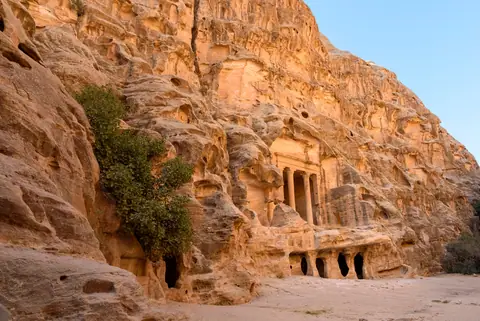
Three Days in Petra: The Main Canyon, Monastery and Mountain High Places
Petra, Jordan
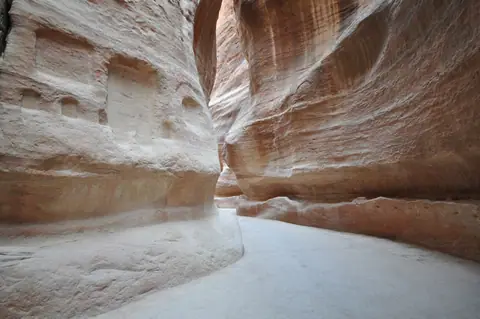
Walking the Siq in Petra: Bab al-Siq, Djinn Blocks and Water Channels
Petra, Jordan
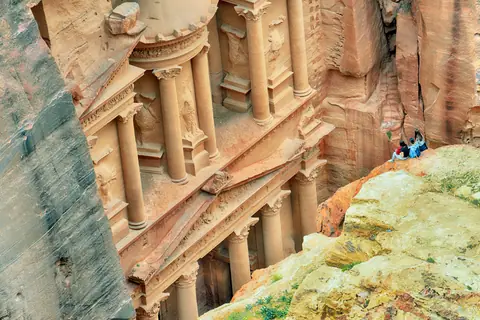
Al-Khazneh (The Treasury) Guide: Light, High Overlooks and Etiquette
Petra, Jordan
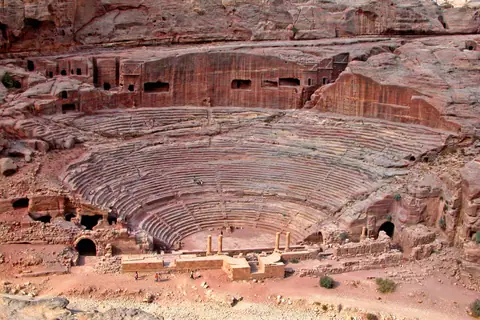
Street of Facades, Roman Theatre and Royal Tombs Walk in Petra
Petra, Jordan
