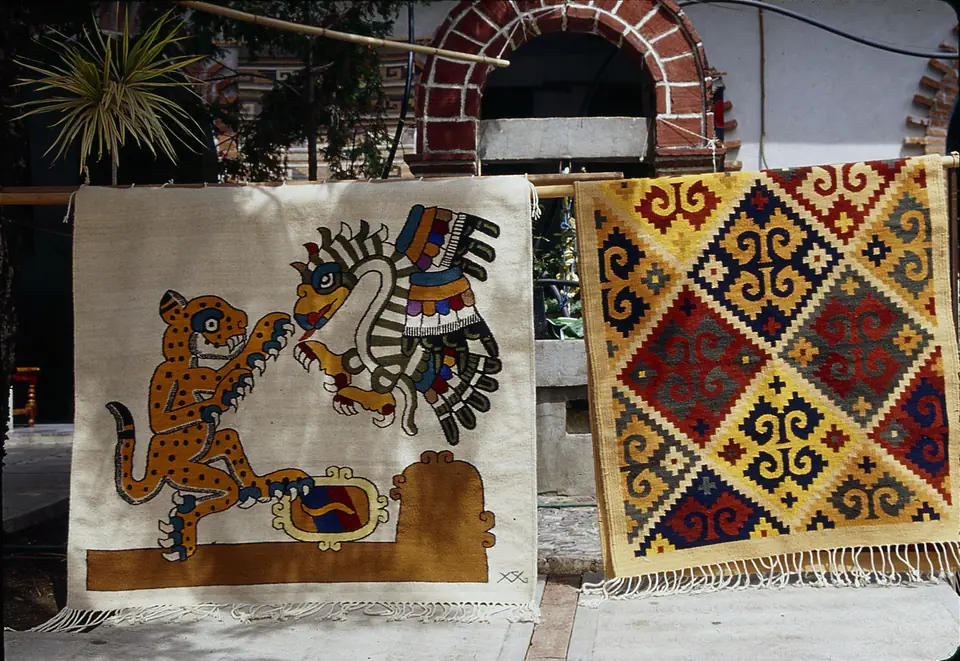
Photo: Wikimedia Commons · CC BY-SA 4.0
Oaxaca Mezcal Distilleries, Teotitlán Weavers and Artisan Craft Villages
We explore traditional mezcal palenques, Zapotec wool rug workshops, and burnished black clay studios across Oaxaca's central valleys.
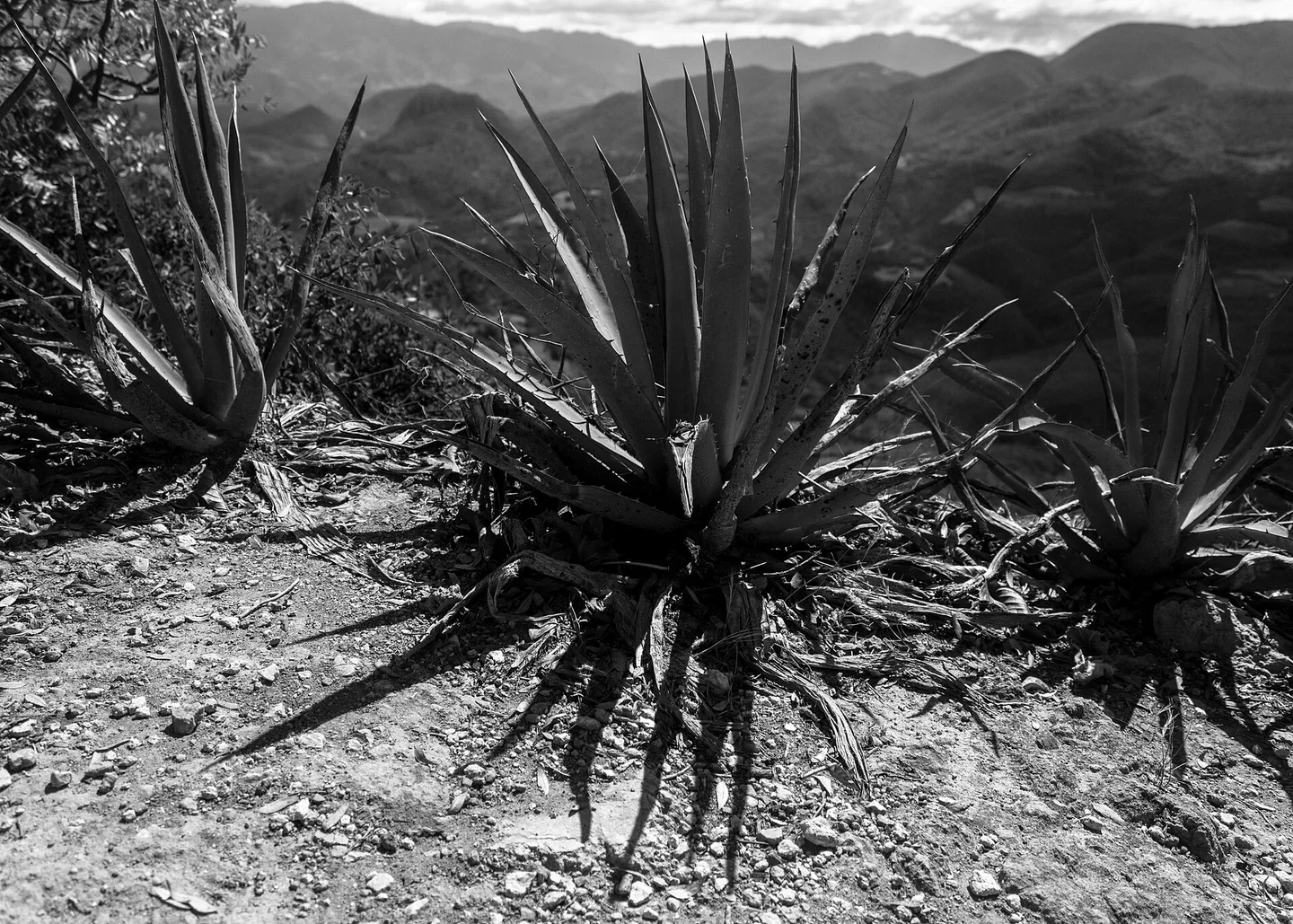
Travelling south and east through the Central Valleys leads straight into family-run distillery courtyards known locally as palenques. Here mezcaleros harvest mature agave plants by trimming away spiky leaves to expose dense central hearts. These fibrous cores roast slowly inside conical stone pits sealed beneath layers of earth, damp agave fibre, and hot river stones. Underground baking concentrates natural sugars and leaves earthy wood smoke flavours that remain distinct from industrial spirits.
Once roasting ends, horses or small mules pull heavy circular stone wheels around masonry troughs to crush the softened agave fibres. Open oak or pine vats gather the sweet mash for spontaneous wild yeast fermentation before small-batch distillation inside copper stills or clay pots. Wandering across these rural yards reveals patient artisanal routines rooted in regional agave varieties and family recipes. Our overview of central museums and highland sites shows how rural craft traditions echo food stalls back downtown.
Natural Dyes and Zapotec Weaving in Teotitlán del Valle
East along the valley floor sits Teotitlán del Valle, a foothills town where extended families keep centuries-old Zapotec textile weaving alive. Weavers wash and card raw sheep fleece, spin strong wool yarn on drop spindles, and dye skeins exclusively using wild botanical pigments. Dried cochineal insects scraped from prickly pear paddles yield rich scarlets, crimsons, and rose tones adjusted by lemon juice or wood ash. Fermented indigo vats, wild marigold blooms, pomegranate husks, and oak bark create deep blues, warm golds, and quiet earth browns.
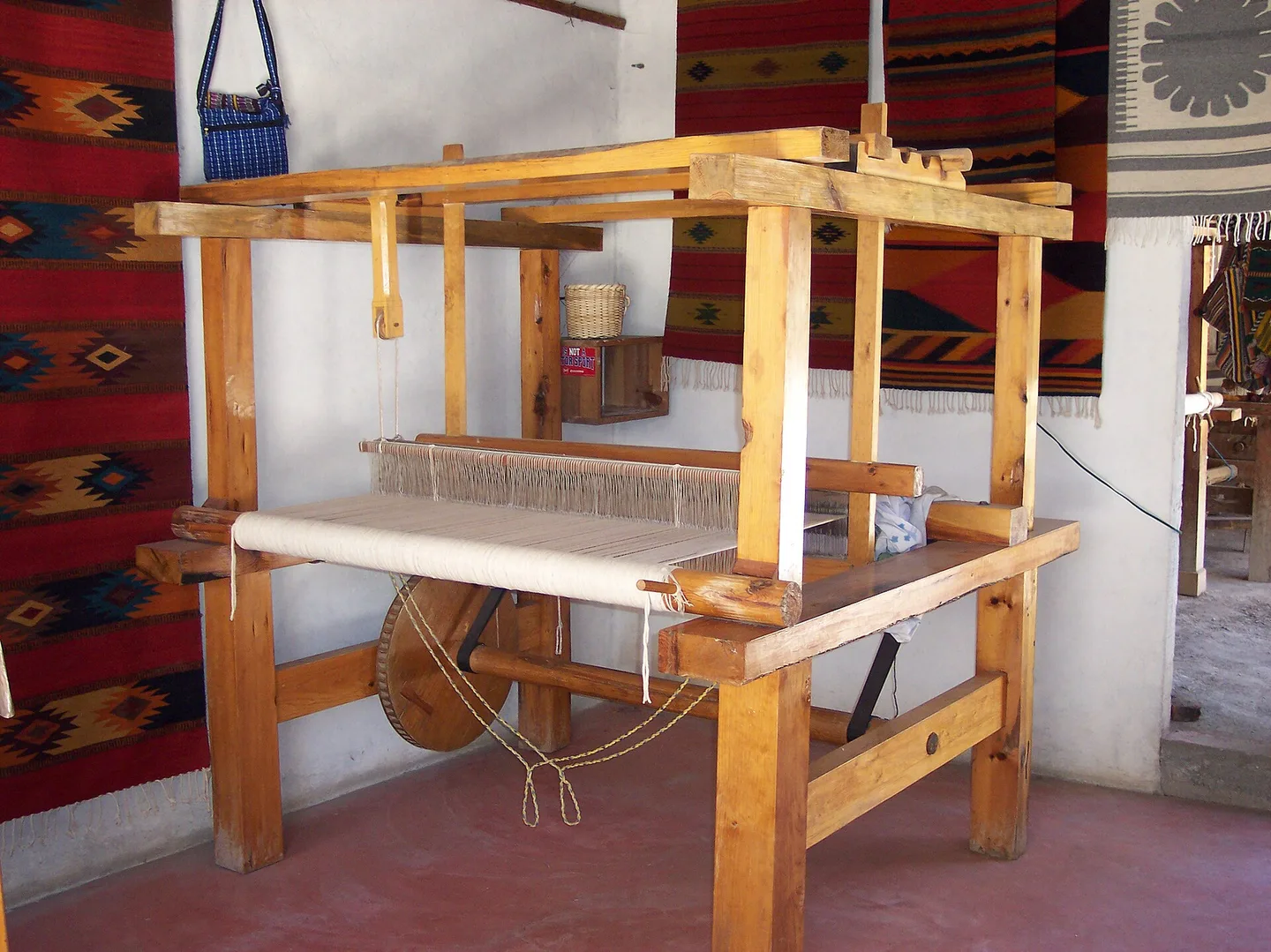
Heavy wooden pedal looms fill sunlit domestic patios across town, clacking rhythmically under the steady footwork of master weavers. Intricate diamond medallions, stepped fretwork borders, and lightning bolts grow thread by thread without preliminary paper sketches on the warp lines. Large ceremonial runners take weeks of patient counting to finish properly. Travellers planning morning loops can check public bus and colectivo connections before setting off toward eastern highway villages.
Smoked Black Clay Pottery of San Bartolo Coyotepec
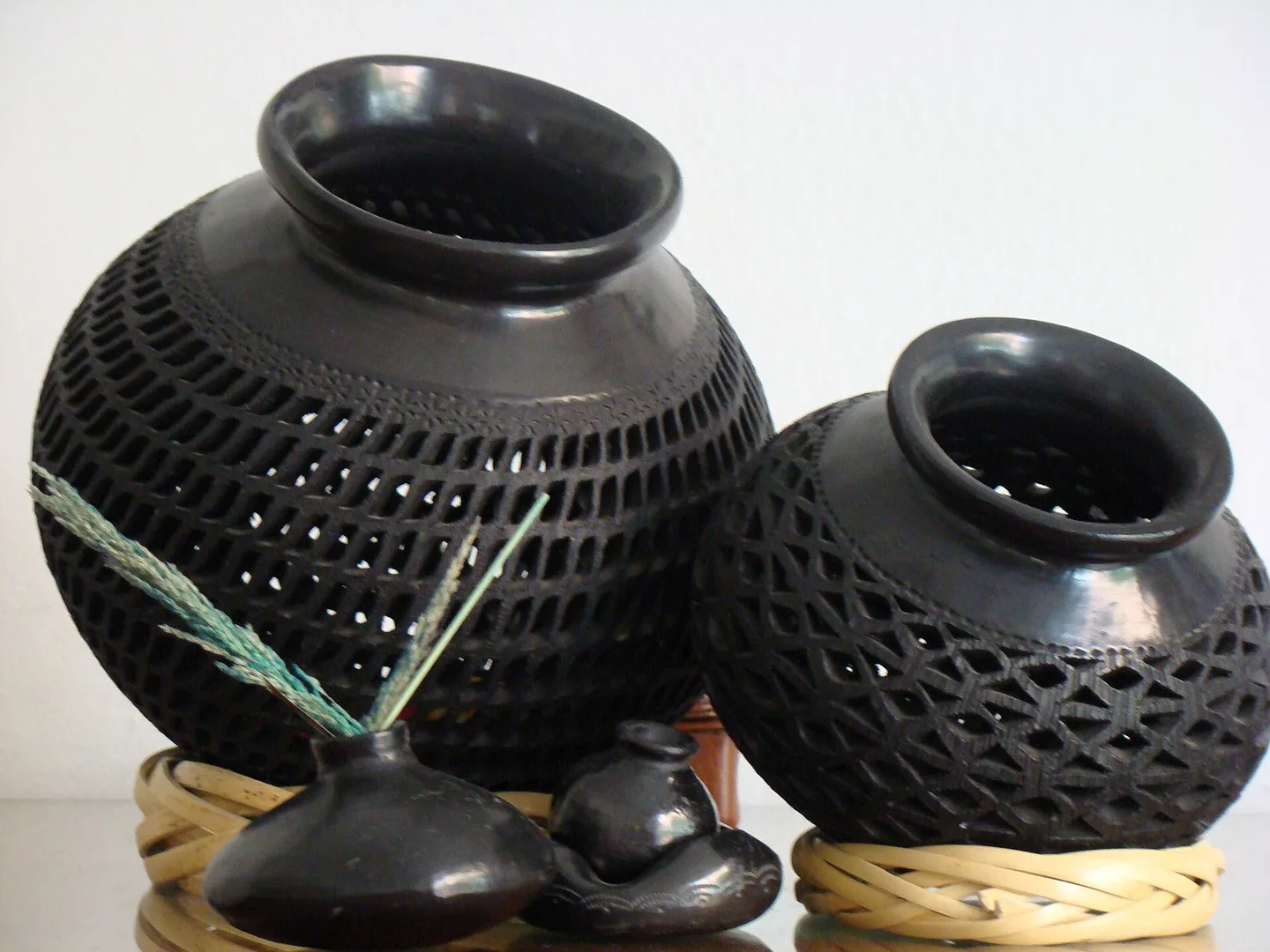
South of the state capital, San Bartolo Coyotepec centres almost entirely on burnished black earthenware pottery shaped by hand. Potters dig dense grey clay from nearby valley seams, knead damp earth by foot, and throw thin jars upon two wooden balance dishes. These revolving plates spin freely without electricity, allowing skilled hands to lift symmetrical jars and open-work lanterns smoothly. Newly shaped pieces dry steadily inside shaded back rooms so warm midday winds never crack delicate rims.
Before firing starts, artisans polish leather-hard clay surfaces with smooth river quartz pebbles until pale grey sheen shines across the walls. Pots then enter sealed subterranean pit kilns burning thick resinous pine timber to starve flames of oxygen. Inside smoky underground chambers, natural iron particles fuse jet black without synthetic glazes or lead washes. Stepping into courtyard workshops lets visitors watch craftspeople burnish vases carefully by hand before firing.
Artisan Village Routes and Practical Route Connections
Visiting artisanal towns works best with morning departures before midday sun heats open courtyard patios and rural roadside stops. Grouping valley workshops along either the eastern Mitla highway or the southern Ocotlán road cuts out awkward cross-city transit. Many family palenques pour small tasting flights of wild agave varieties alongside roasted espadín while explaining copper distillation steps calmly. We map key valley craft settlements below to organise practical rural day excursions:
| Craft Valley Arm | Key Settlement | Signature Tradition | Road Access Note |
|---|---|---|---|
| East Valley Route | Santiago Matatlán and Teotitlán | Pit-roasted mezcal and woven wool rugs | Colectivos along the eastern valley highway |
| South Valley Route | San Bartolo Coyotepec | Burnished black clay earthenware | Southern buses from Abastos market |
| Ocotlán Corridor | San Martín Tilcajete | Hand-carved copal wood figurines | Shared taxis south past Coyotepec |
- Carry small Mexican peso notes, as rural family studios and roadside weavers rarely process card payments.
- Ask politely before taking close-up photographs of loom work, boiling dye pots, or family kilns.
- Wear cool linen shirts and closed walking shoes suited to dusty stone courtyards and ash-lined kiln rooms.
Frequent rural colectivos and second-class buses connect southern Oaxaca terminals directly to each craft village crossroads throughout daylight hours. Workshop opening habits and general rural visitor details are listed in the practical details box.
Official prices and opening hours
- Zona Arqueológica de Monte Albán (INAH)Official site ↗
Where it is
- 1Oaxaca Mezcal Distilleries, Teotitlán Weavers and Artisan Craft Villages
- Xoxocotlán International Airport (OAX) · about 25 km from here in a straight line
- Directions in Google Maps
Stations and taxi ranks: OpenStreetMap. Airports: OurAirports. Distances are in a straight line.
Traveller tips
Real advice from people who have been to Oaxaca. Every tip is read by our team before it goes live.
No tips yet. Been here? Yours could be the first.
Thank you! Your tip will appear here after a quick review.
More in Oaxaca
Continue exploring Oaxaca with related neighbourhood, food, and planning guides

Sierra Norte Hiking Guide: Pueblos Mancomunados Paths and Cloud Forests
Oaxaca, Mexico
What to Eat in Oaxaca: Traditional Moles, Tlayudas and Market Food
Oaxaca, Mexico
Oaxaca: Valleys, Heritage Streets and Local Logistics
Oaxaca, Mexico
Best Things to Do in Oaxaca: Monte Albán, Santo Domingo and Local Markets
Oaxaca, Mexico
