Photo: Kaldari · CC BY-SA 4.0
Santo Domingo Church, Ethnobotanical Garden and Calle Alcalá Walk
Historic stone corridors line Calle Macedonio Alcalá toward Santo Domingo and its neighbouring botanical grounds in central Oaxaca.
Walking north from the main town square along Calle Macedonio Alcalá reveals one of the most cohesive colonial pedestrian passages in southern Mexico. The green cantera paving stones give this central spine a calm rhythm, free from bus exhaust and private car congestion. Along the path, historic townhouses contain open courtyards where artists display graphic prints and weavers show traditional textiles. Before setting out across the historic district, check our Oaxaca orientation overview to coordinate your daily walking circuits.
The route acts as an open urban gallery where local musicians play marimba tunes and buskers gather near quiet stone archways. Low colonial doorways lead into airy cafes that serve local drinking chocolate flavoured with ground almonds and cinnamon. As the street gently ascends toward the north, the twin towers of the temple begin to frame the skyline against distant mountain slopes. Taking your time along the stone flags allows you to appreciate the steady architectural balance between domestic facades and religious monuments.
Small independent bookshops, ceramic studios, and courtyard printmakers cluster along every side street feeding into this pedestrian artery. Travellers frequently pause in shady vestibules to admire hand-carved cedar beams and whitewashed masonry walls. Morning light illuminates the pale green volcanic rock, bringing out subtle textures carved by stonemasons centuries ago. Walking here connects the everyday civic pulse of modern residents with historic colonial architecture.

Baroque Carvings and History Inside Santo Domingo
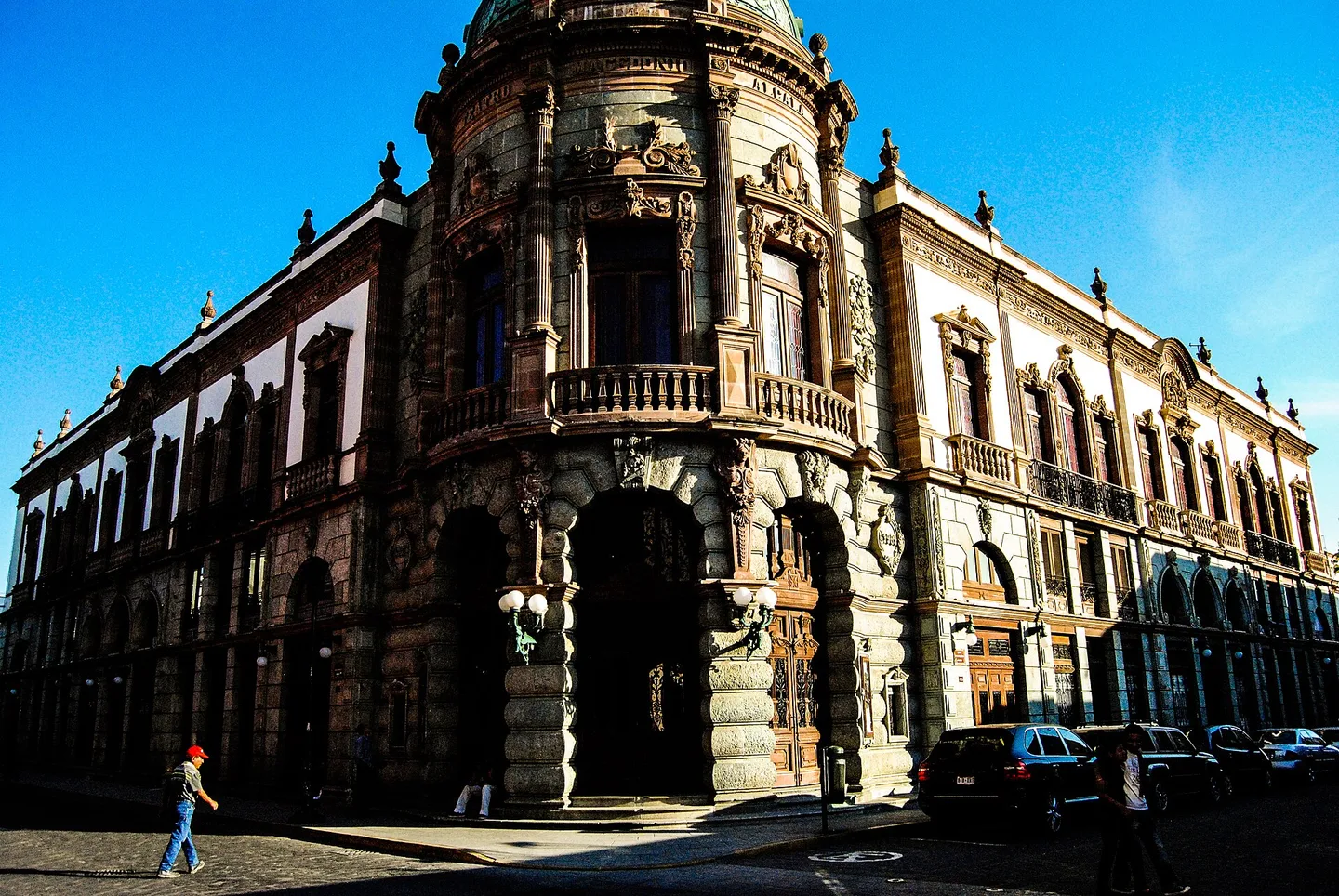
The facade of the Templo de Santo Domingo de Guzmán stands as an enduring example of regional New Spanish baroque architecture. Heavy ashlar walls made of local pale green stone were constructed thick and low to withstand repeated seismic activity across the valley. Entering through the main wooden portal brings you beneath an astonishing vaulted ceiling covered with gilded stucco reliefs. Intricate vines, cherubs, and Dominican saints weave across the stone surface in deeply layered plasterwork.
Beside the nave, the Capilla del Rosario glitters with gold leaf applied over carved wooden altarpieces and polished plaster cornices. The adjacent former monastery complex now houses extensive cultural galleries displaying regional pre-Hispanic artefacts alongside colonial church silver. You can pause by the second-floor cloister windows to look down across the central stone fountain and the enclosed monastic passages. These broad stone halls offer quiet retreats from midday street noise.
Sunlight filters through high clerestory windows, highlighting gilded family trees and painted biblical scenes on the interior vaults. Thick masonry pillars support the choir loft, revealing how Dominican builders engineered resilience into artistic grandeur. Visitors often note the cool interior microclimate maintained by the immense stone walls even during warm tropical afternoons. Standing in the central aisle gives a comprehensive sense of the religious heritage of the valley.
Native Cacti and Terraced Courtyards in the Ethnobotanical Garden
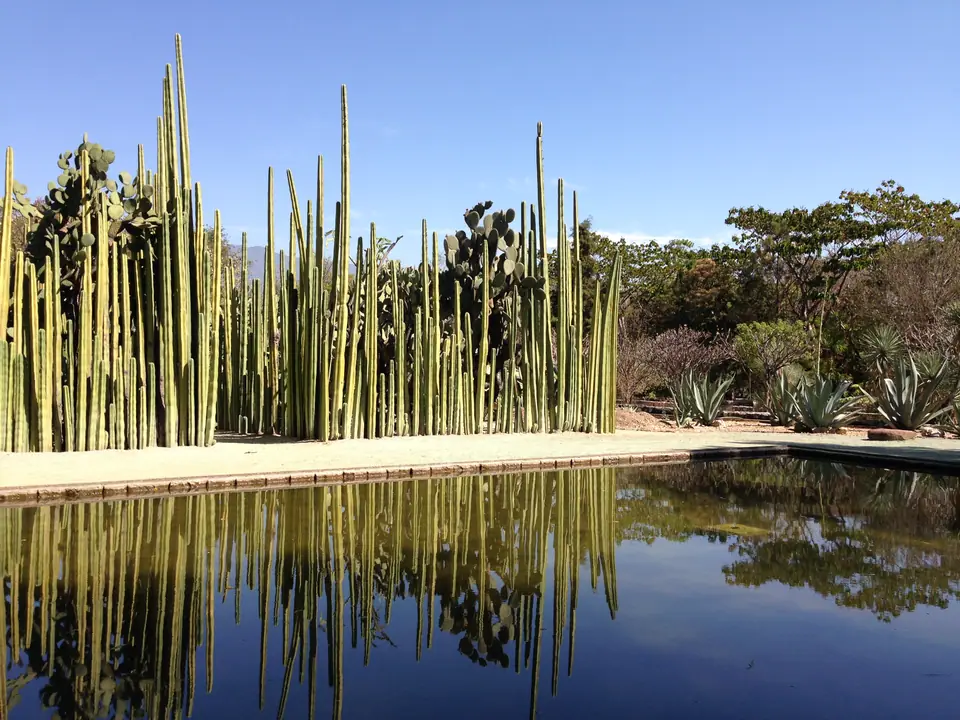
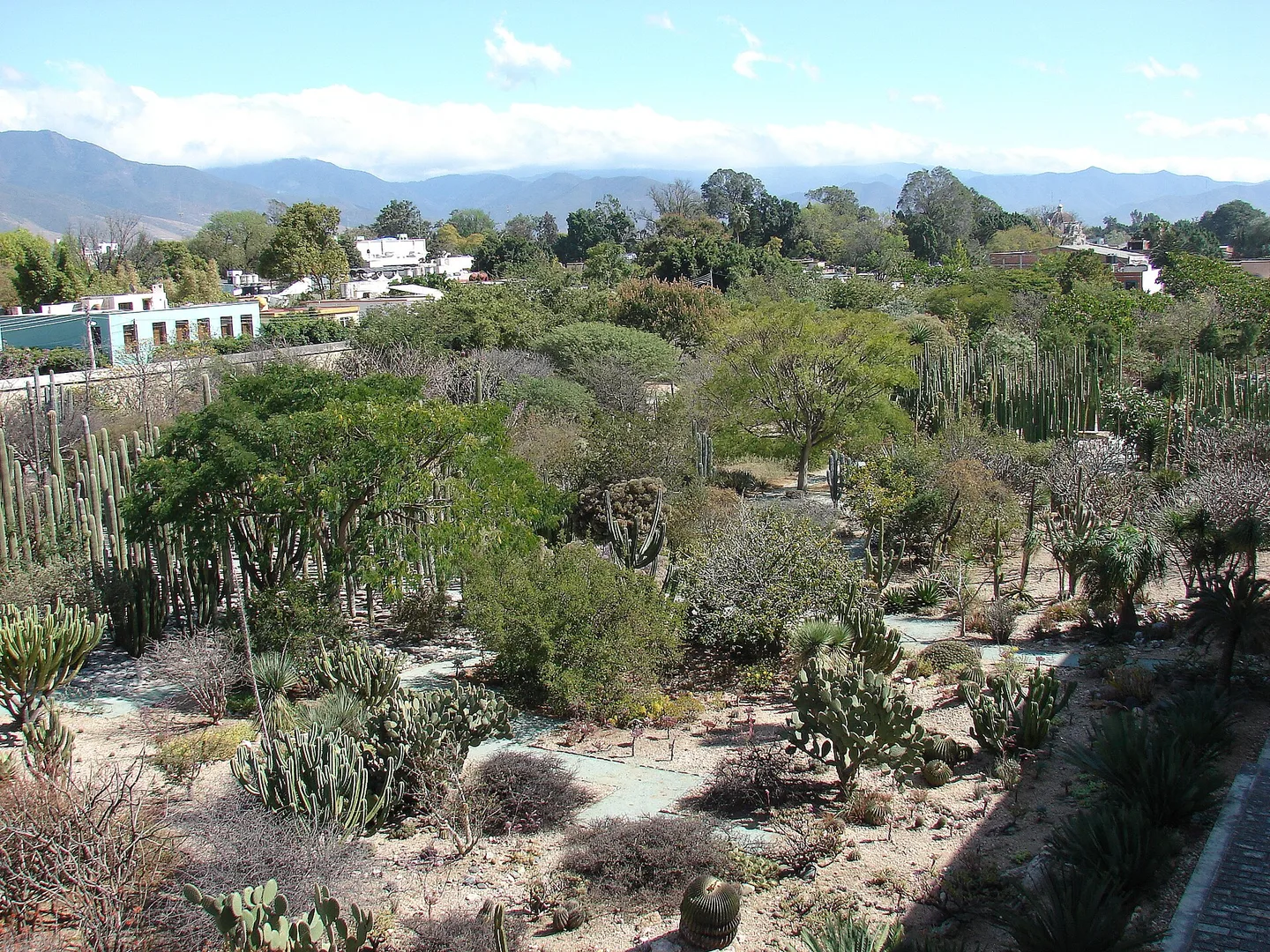
Immediately behind the former convent walls lies the Jardín Etnobotánico de Oaxaca, designed to celebrate the deep link between local plants and indigenous cultures. The grounds occupy land that served as military barracks and monastery orchards for several centuries before community artists helped restore the space. Today, thousands of individual cacti, agaves, and drought-hardy shrubs line formal gravel paths that mirror the geometry of the surrounding stone architecture.
We can follow structured pathways between towering organ-pipe cacti and ancient barrel specimens rescued from rural road construction projects across the state. Shallow water channels reflect the convent walls, cooling the arid courtyard breeze during bright midday sunshine. The garden presents a living archive of plant species used for food, traditional medicine, and natural textile dyes like cochineal. To plan your day alongside other key activities in town, consult our recommendations for historic centre landmarks.
Curated zones within the grounds replicate different geographical microclimates from across the state of Oaxaca. Rare botanical collections highlight ancient agricultural traditions, including native maize strains and wild medicinal herbs. Shaded pavilions offer views of stone buttresses rising behind dense arrangements of spiny succulents. The contrast between structured stone walls and wild desert forms creates an impressive educational landscape.
- Templo de Santo Domingo: Baroque altarpieces, carved plaster genealogies, and seismic stone architecture.
- Ethnobotanical Garden: Preserved native agave species, traditional medicinal plantings, and reflective water features.
- Calle Macedonio Alcalá: Pedestrian stone corridor connecting neighbourhood galleries, small bookshops, and quiet cafes.
Navigating the Surrounding Quarter and Nearby Cultural Stops
The open plaza in front of Santo Domingo functions as a lively meeting ground where families, craft sellers, and walkers gather under wild fig trees. Broad steps offer comfortable vantage points to watch passing wedding processions led by towering paper puppets and brass bands. Several contemporary art institutions sit within two blocks of the church steps, offering rotating exhibitions of modern ceramics and printmaking. Stone benches around the plinth catch cooling mountain breezes as the afternoon sun sinks behind the valley ridgeline.
Exploring the quiet side lanes running east of the plaza leads directly into residential pockets filled with small mezcal tasting rooms and artisan shops. Early morning remains the quietest time to photograph the green cantera facades before foot traffic gathers along the main corridor. The entire walking loop between the central square, the church interior, and the botanical perimeter covers an easy, level distance. This compact quarter provides an ideal introduction to the layered cultural life of the valley.
Street musicians often gather near the plaza during the evening, filling the surrounding porticoes with traditional strings and acoustic melodies. Outdoor tables at neighbourhood cafes invite travellers to unwind while tasting local single-origin coffees. Navigating the quiet side streets reveals hidden courtyards full of bougainvillea and hand-painted tiles. Taking time to wander without a rigid timetable rewards visitors with authentic glimpses of Oaxacan community life.
Official prices and opening hours
- Zona Arqueológica de Monte Albán (INAH)Official site ↗
Where it is
- 1Santo Domingo Church, Ethnobotanical Garden and Calle Alcalá Walk
- Xoxocotlán International Airport (OAX) · about 7 km from here in a straight line
- Directions in Google Maps
Stations and taxi ranks: OpenStreetMap. Airports: OurAirports. Distances are in a straight line.
Traveller tips
Real advice from people who have been to Oaxaca. Every tip is read by our team before it goes live.
No tips yet. Been here? Yours could be the first.
Thank you! Your tip will appear here after a quick review.
More in Oaxaca
Continue exploring Oaxaca with related neighbourhood, food, and planning guides
What to Wear in Oaxaca: Altitude Layers, Monte Albán Sun and Cobblestones
Oaxaca, Mexico
Where to Stay in Oaxaca: Best Quarters and Bases
Oaxaca, Mexico
3 Days in Oaxaca: Centro, Monte Albán, and Mitla Valley Route
Oaxaca, Mexico
Monte Albán Visitor Guide: Ridge Pyramids, Danzantes and Transport
Oaxaca, Mexico
