Photo: DavidConFran · CC BY-SA 4.0
Monte Albán Visitor Guide: Ridge Pyramids, Danzantes and Transport
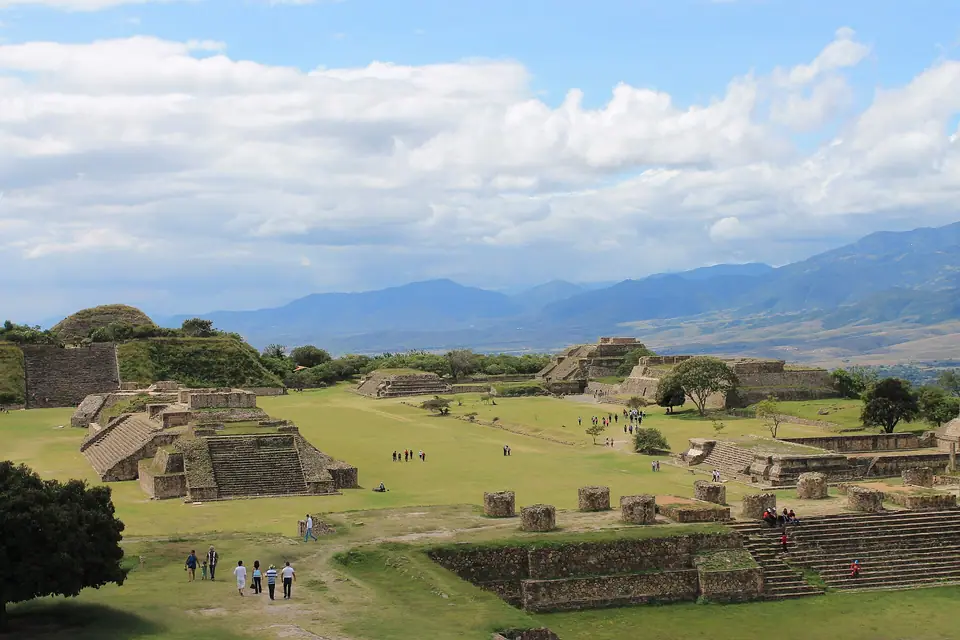
Perched across an engineered ridge overlooking the central valleys, Monte Albán reveals ancient Zapotec ceremonial plazas, stone monuments, and panoramic terraces.
Rising high above the valley floor, the ancient Zapotec capital occupies an artificially levelled mountain crest that surveys three intersecting valleys. Broad stone steps link colossal residential complexes with civic courtyards, creating an open architectural landscape shaped over centuries of continuous habitation. Ascending this ridge above central Oaxaca streets reveals how monumental engineering reshaped the surrounding hillside terrain. The central ceremonial area forms an expansive open-air complex bounded by massive terraced platforms at either end.
Walking along the open expanse gives visitors a clear perspective of the defensive advantages and civic planning of the Zapotec rulers. The wide open court once served as a venue for religious processions, diplomatic assemblies, and marketplace gatherings. Because the mountain ridge lacks tall tree cover, sunlight reflects intensely off the exposed stones throughout the midday hours. Planning a morning arrival allows you to wander between the monuments before the sun reaches its peak.
Ceremonial Alignments and Building J
Among the central structures in the main court, Building J stands apart due to its distinct arrowhead plan. Unlike the rectangular platforms that align strictly with cardinal directions, this unusual structure points out towards distant celestial coordinates. Archaeologists identify the building as an astronomical observatory constructed to track celestial movements across the regional sky. Inscribed stone slabs set into the outer walls depict conquered provinces, regional place glyphs, and upturned heads.
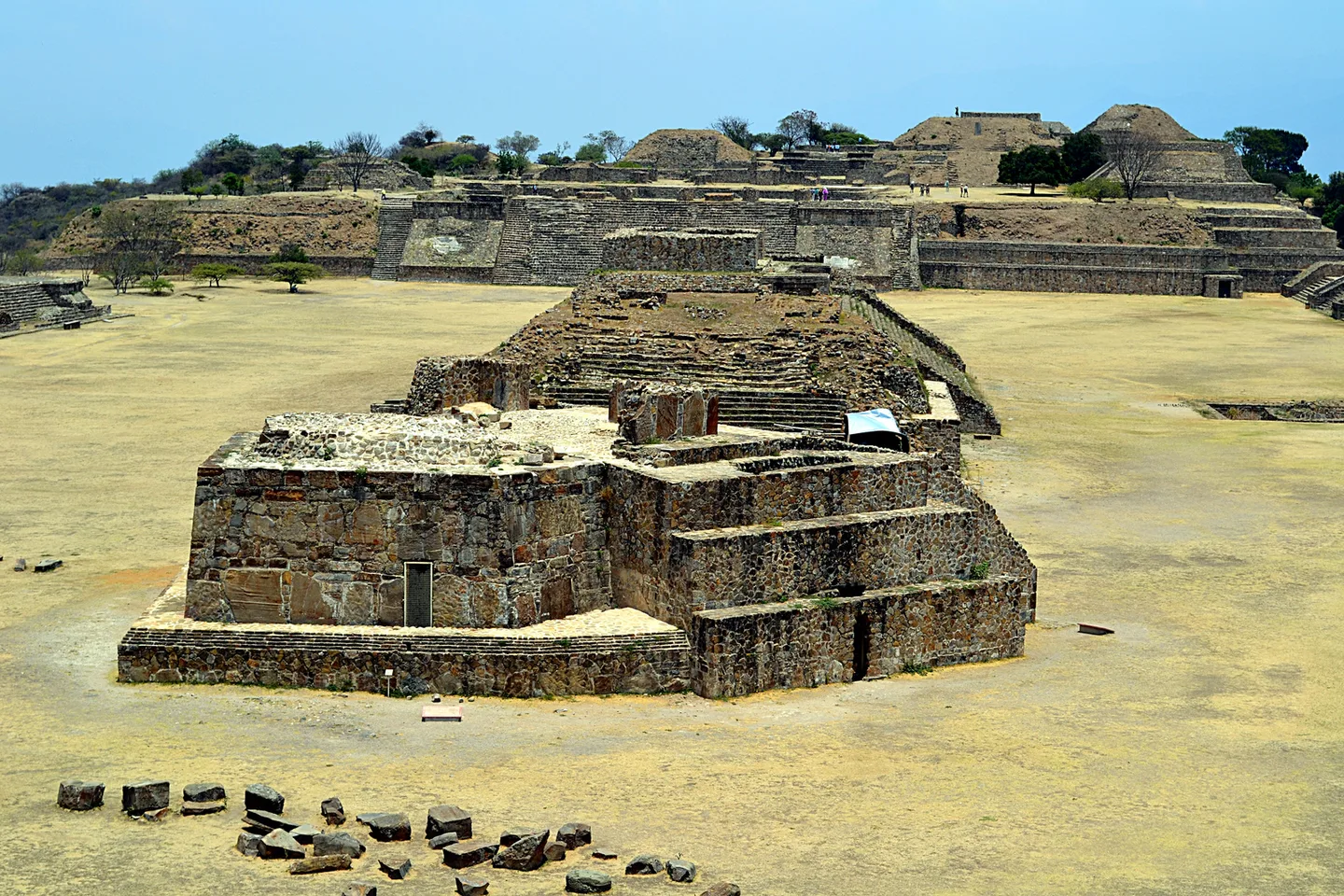
The orientation of Building J likely helped priests coordinate agricultural calendars with regional seasonal shifts. Looking out across the surrounding platforms, you can see how stone masonry incorporated volcanic rocks, limestone, and local mortar. Climb the steps of nearby platforms to study the geometric symmetry linking the ceremonial core to the mountains beyond. Checking opening hours and ticket arrangements in the practical details box before setting out keeps arrival smooth.
Los Danzantes and Stelae Carvings
Along the western edge of the main plaza stands the platform housing the celebrated carved stones known as Los Danzantes. These low-relief orthostats display twisted human characters carved directly into local rock. Early excavators originally believed these stone depictions represented dancers, but contemporary scholarship interprets the twisted bodies as captured rival rulers. The contorted postures, closed eyes, and open mouths suggest physical suffering and ritual sacrifice.
Near the Danzantes court, numerous stelae display early Zapotec hieroglyphic inscriptions, recording lineage genealogies, military victories, and astronomical numbers. Viewing these carved monuments links naturally to baroque convents and artisan valleys across the wider region. While many original slabs now reside in climate-controlled museum galleries to prevent erosion, outdoor copies keep the spatial scale intended by ancient stonemasons. Walking quietly along the base wall reveals intricate ear spools and decorative headdresses.
Transit Links, Valleys, and Site Context
Reaching the mountain ridge from the historic city centre is straightforward using dedicated tourist shuttles, local colectivos, or regulated taxis. Shuttles depart regularly from downtown pick-up spots, transporting passengers through switchback curves up the mountain road. Choosing a shared transport service simplifies access, especially if you plan your day around local transport advice. Once past the entry gates, broad stone trails lead visitors towards the southern platform, the ball court, and the site museum.
| Site Sector | Key Features | Terrain Character |
|---|---|---|
| Grand Plaza | Central open area, residential mounds | Flat gravel clearing, exposed stone steps |
| Building J | Arrowhead observatory, glyph slabs | Angled masonry walls, narrow stone perimeter |
| Los Danzantes Platform | Carved bas-reliefs, stelae inscriptions | Paved stone path, low relief wall |
| South Platform | Panoramic views, twin ceremonial altars | Steep stone staircase, elevated viewpoint |
To experience the ceremonial core comfortably, keep these essential site considerations in mind before arriving:
- Carry drinking water and sun protection, as the elevated mountain plateau leaves minimal natural shade across the ruins.
- Wear sturdy walking shoes with strong grip to navigate uneven gravel paths and weathered stone steps safely.
- Never buy unverified artefacts from informal vendors, helping keep ancient heritage protected inside accredited collections.
The on-site museum near the entrance displays ceramic vessels, obsidian blades, and carved bone fragments uncovered across residential compounds. Walking through the indoor galleries rounds off your grasp of Zapotec craftsmanship and daily civic routines. Stepping outside to look across the valley floor underlines why this high ridge remained the heart of regional power for generations.
Official prices and opening hours
- Zona Arqueológica de Monte Albán (INAH)Official site ↗
Where it is
- 1Monte Albán Visitor
- Xoxocotlán International Airport (OAX) · about 7 km from here in a straight line
- Directions in Google Maps
Stations and taxi ranks: OpenStreetMap. Airports: OurAirports. Distances are in a straight line.
Traveller tips
Real advice from people who have been to Oaxaca. Every tip is read by our team before it goes live.
No tips yet. Been here? Yours could be the first.
Thank you! Your tip will appear here after a quick review.
More in Oaxaca
Continue exploring Oaxaca with related neighbourhood, food, and planning guides
What to Wear in Oaxaca: Altitude Layers, Monte Albán Sun and Cobblestones
Oaxaca, Mexico
Where to Stay in Oaxaca: Best Quarters and Bases
Oaxaca, Mexico
3 Days in Oaxaca: Centro, Monte Albán, and Mitla Valley Route
Oaxaca, Mexico
Santo Domingo Church, Ethnobotanical Garden and Calle Alcalá Walk
Oaxaca, Mexico
