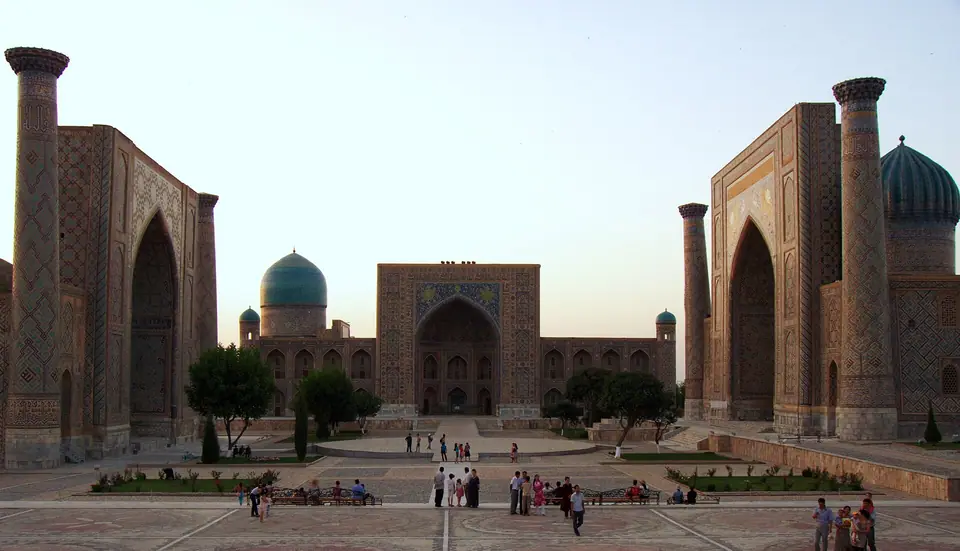
Photo: Fulvio Spada from Torino, Italy · CC BY-SA 2.0
Samarkand
Samarkand links grand Timurid monuments, ancient Silk Road trade routes, rich ceramic crafts, and modern high-speed rail connections across central Uzbekistan.
Quick decisions
How many days?
Plan two full days for primary architectural sites, or three days to explore crafts and outer museums comfortably.
Where should I stay?
Choose family-run guesthouses behind Registan for walking access, or the Russian Quarter for shaded avenues and calmer evenings.
Do I need a car?
You do not need a private vehicle within central zones, as walking and inexpensive local taxis cover every major monument.
Best for
Architecture lovers, cultural historians, and rail travellers exploring central Uzbekistan will find exceptional monumental tilework throughout the city.
Before you go
Reserve high-speed rail tickets several weeks ahead, and prepare modest clothing that covers shoulders and knees for active religious sites.
Getting around
Use local ride-hailing apps or metered yellow cabs for outer journeys, while pedestrian corridors easily connect central madrasahs and bazaars.
Continue your trip
Catch the direct electric train onward to Tashkent across the steppe, booking seats well ahead during peak spring travel.
Overview
Samarkand stands at the crossroads of Central Asian trade, carrying over two millennia of recorded history across its broad avenues and domestic quarters. The urban fabric divides distinctly between the monumental core built under Timur, older Sogdian archaeological mounds, and nineteenth-century Russian avenues shaded by mature plane trees. This varied layout allows travellers to experience ceramic craftsmanship alongside relaxed residential living within compact central districts.
Sunlight defines the local atmosphere, illuminating glazed majolica domes and ochre brick walls that glow deeply before sunset. Wide boulevards connect the restored ceremonial monuments with leafy university quarters, creating an accessible destination that feels historic and lived-in. Exploring on foot reveals quiet side alleys where communal bread ovens and teahouses remain integral to daily life.
Centuries of regional trade fostered distinct architectural styles across the city. Monumental arches rise abruptly beside residential lanes, where private courtyards conceal vine-shaded seating platforms and fruit trees. The contrasting townscape offers quiet retreats only minutes away from grand public squares and busy thoroughfares.
Urban preservation efforts have kept ancient ceramic traditions alive in local artisan workshops. Master potters and tile painters continue restoring historic facades using traditional cobalt pigments and geometric formulas. Visiting these active ateliers provides direct insight into decorative crafts that have defined the skyline since the fourteenth century.
Getting there
High-speed electric rail service directly links the capital with Samarkand station, positioned a few kilometres north-west of the historical core. Taxis wait outside the terminal concourse, offering quick transfers into residential neighbourhoods through fixed-fare booking kiosks or approved local mobile applications. Compare options under rail arrivals and regional coach links before setting out.
Samarkand International Airport lies north-east of the town, receiving scheduled services from regional hubs alongside seasonal chartered routes. Local tram lines and urban minibuses link outer stations with central markets, while walking works best between inner monuments. Read district layouts and street tram corridors before boarding public transport.
Train travel remains the most practical transport mode across Uzbekistan. Modern high-speed locomotives connect major Silk Road oases reliably, avoiding lengthy road journeys through desert terrain. Purchasing electronic tickets several weeks in advance is advisable during peak travel months.
Shared intercity cars depart from designated regional terminals situated along the city ring road. These vehicles depart once all passenger seats are filled, offering flexible alternatives when scheduled rail departures are fully booked. Agreeing on fares beforehand makes for straightforward transfers between regional towns.
Where to stay
Selecting a neighbourhood determines your daily rhythm in Samarkand. The old Jewish Quarter and residential lanes immediately east of Registan offer traditional courtyard guesthouses, where carved wooden pillars frame peaceful central gardens. Staying here gives travellers direct morning access to major monuments before tour coaches arrive from regional hubs. Compare options under old-quarter courtyard guesthouses and boulevard hotels matching different travel styles.
Travellers seeking modern amenities, quieter night environments, and European-style dining often prefer the University Boulevard area. This leafy district features wider footpaths, historic tsarist administrative villas, and upscale boutique hotels surrounded by parkland. It sits slightly further from main archaeological complexes, though frequent short taxi hops bridge the gap easily.
Family-run bed and breakfasts offer home-cooked breakfasts with fresh bread, dried fruits, and local mountain honey. Hosts frequently share practical advice regarding neighbourhood walking routes and dependable taxi drivers. Courtyards remain comfortable gathering places during warm afternoons when public streets empty.
Budget guesthouses cluster in the pedestrian alleys behind major architectural sites. These properties allow travellers to explore floodlit facades late in the evening without requiring car transport. High-end international hotels occupy outer commercial avenues, catering to conference attendees and tour groups.
Things to do
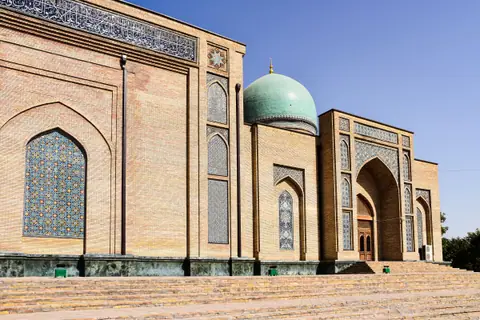
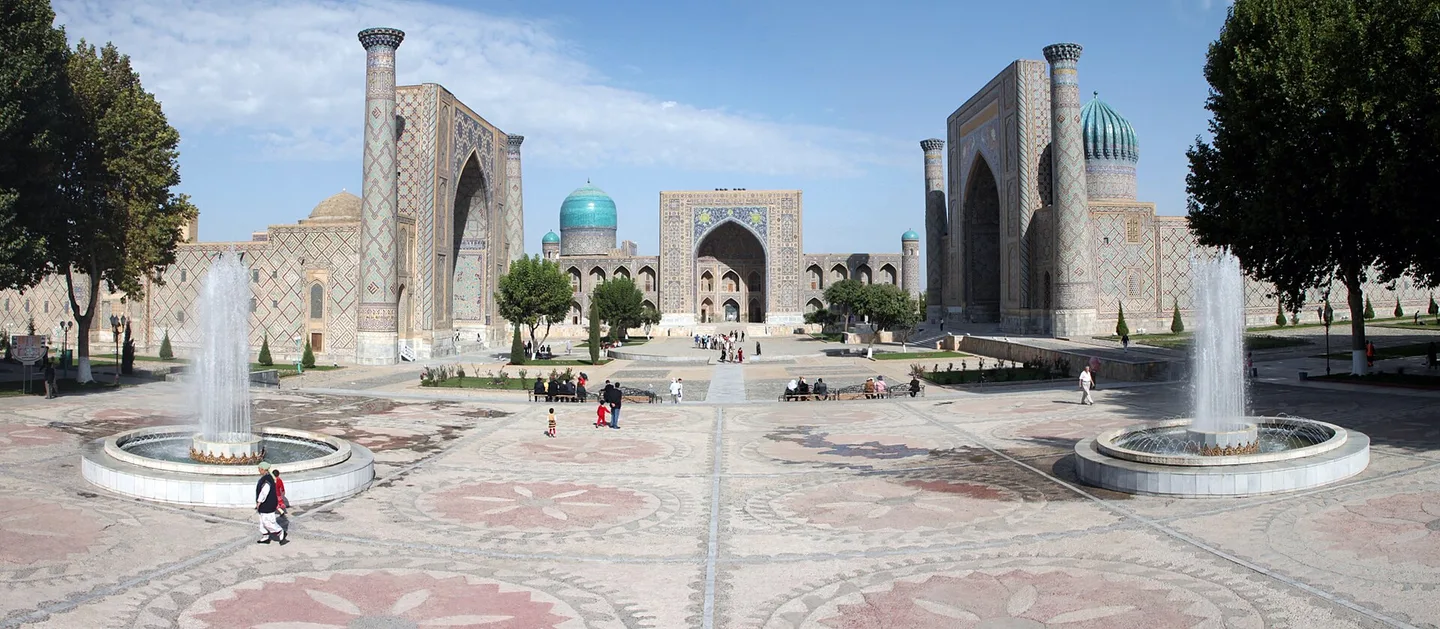
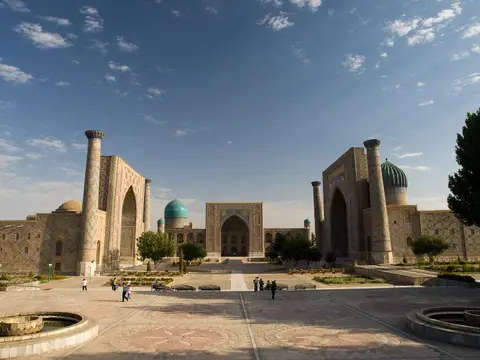
The monumental heart centres on Registan Square, flanked by three grand madrasahs featuring intricate blue tilework, fluted domes, and grand entrance portals. A short walk along pedestrian avenues leads to the massive arch of Bibi-Khanym Mosque and the lively stalls of Siyob Bazaar. Pair these landmarks cleanly with madrasah circuits and craft workshops across walkable quarters.
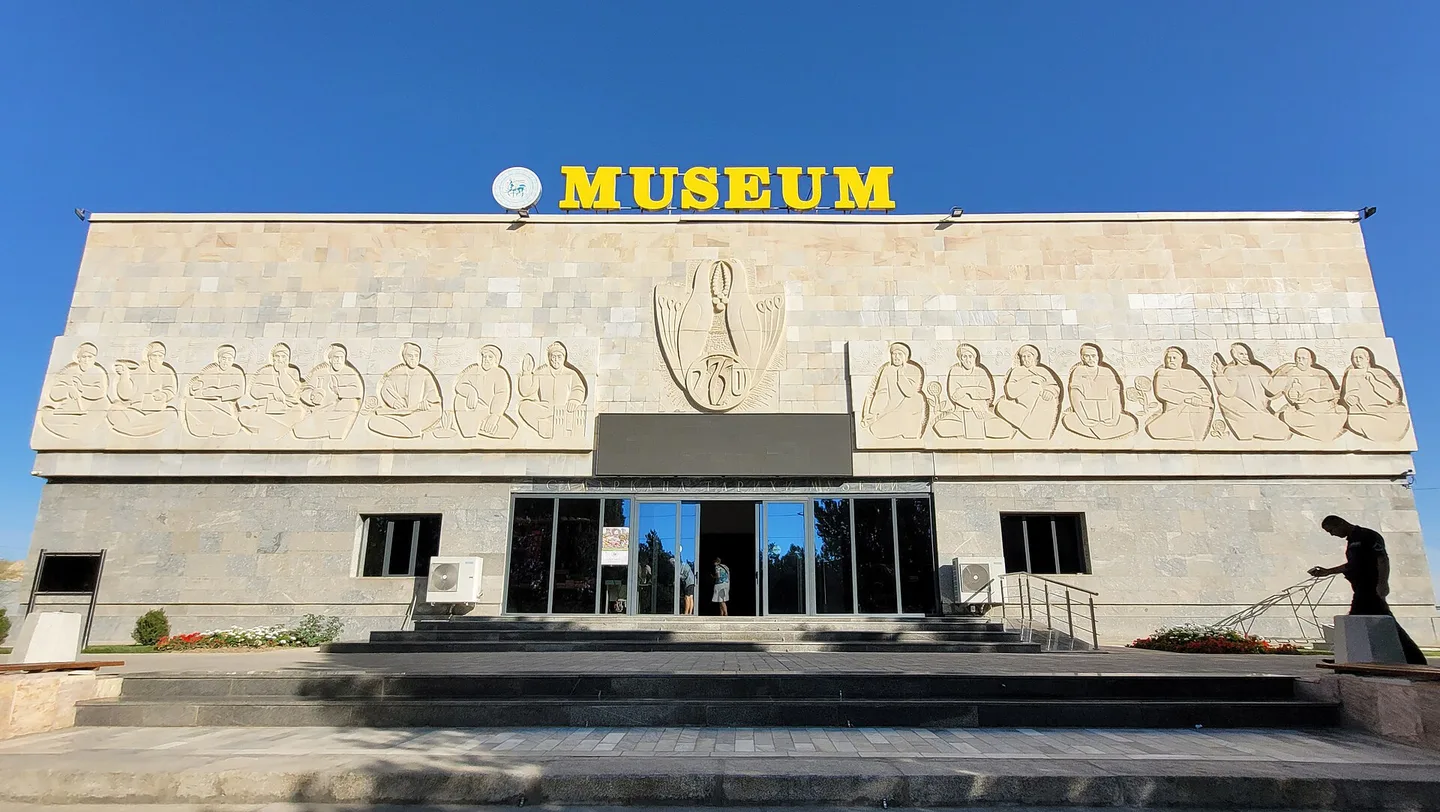
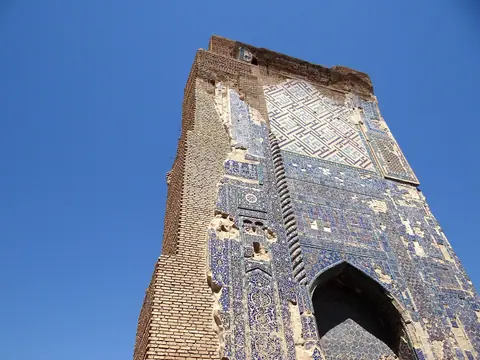
Further north along the ancient ridge, the Shah-i-Zinda necropolis presents an ascending avenue of royal mausoleums decorated with remarkable turquoise mosaic work. Nearby, the Afrosiab Museum protects delicate Sogdian wall frescoes unearthed from ancient citadel mounds. Group sightseeing geographically to avoid midday heat, leaving quieter late afternoons for craft workshops and parkland walks.
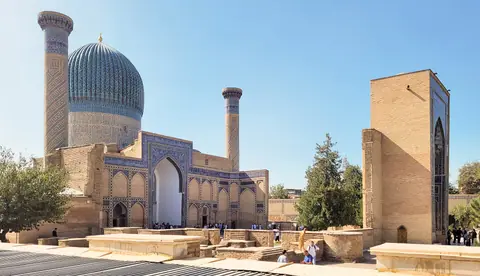
Gur-e-Amir contains the fluted azure dome and jade headstone marking the tomb of Amir Timur. Intricate gilded plasterwork covers the inner ceiling, creating an atmospheric chamber reflecting imperial craft mastery. Morning visits leave unhurried time to study the calligraphic bands encircling the central crypt.
The remains of Ulugh Beg Observatory stand on an exposed hill north of the historic centre. Visitors can view the curved trench of the giant meridian sextant used by medieval astronomers to calculate star positions. An adjoining museum displays astronomical instruments and historical documents tracing the scientific accomplishments of fifteenth-century scholars.
Food and drink
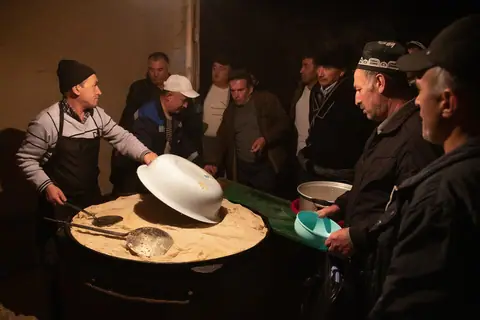
Dining in Samarkand revolves around slow-cooked rice dishes, clay-oven flatbreads, and grilled skewered meats prepared with local cumin and coriander. Samarkand plov is celebrated for its distinct layered presentation, combining tender beef or mutton with yellow carrots, chickpeas, and raisins cooked in cast-iron cauldrons. Local teahouses serve these substantial midday meals alongside fresh tomato and onion salads, followed by pots of fragrant green tea.
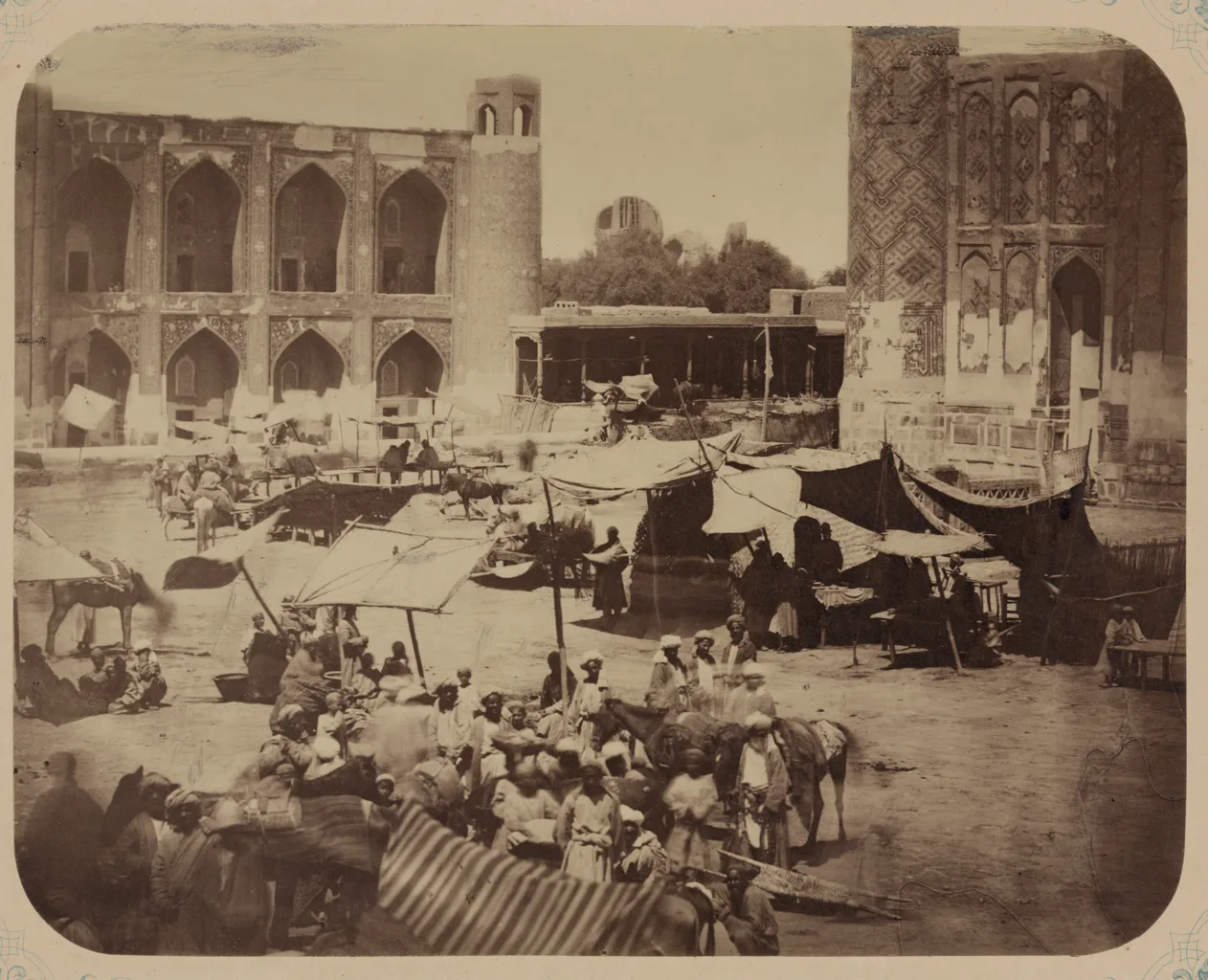
The bakeries surrounding Siyob Bazaar produce heavy, glossy rounds of local bread decorated with central stamped patterns. These dense loaves stay fresh for days and form the foundation of every traditional family table. Evening dining shifts towards open-air courtyards serving hand-pulled noodles and savoury pumpkin pastries, offering relaxed spaces to unwind after sightseeing.
Traditional teahouses, known locally as chaikhanas, serve as community gathering hubs throughout residential mahallas. Patrons sit cross-legged on raised tapchan platforms draped in woven carpets and padded mattresses. Green tea arrives in decorated ceramic pots paired with small matching bowls rather than handled mugs.
Seasonal fruits play an important role in daily meals from late spring until autumn. Market vendors display sweet melons, dark figs, and mountain grapes alongside bowls of toasted walnuts and dried apricots. Small cafes often prepare refreshing fruit compotes to accompany afternoon snacks.
Culture
Samarkand maintains warm hospitality traditions rooted in deep communal respect and Silk Road exchange. When entering active shrines, mosques, and working cemeteries, visitors should remove footwear when requested and maintain quiet voices. Covering shoulders and knees shows consideration for local worshippers, particularly around venerated tombs and holy wells.
Spring and autumn bring comfortable weather for extensive walking, with April seeing highs of 21°C and October averaging pleasant 21°C daytime conditions. Summer months turn intensely dry and hot, with July reaching highs of 36.3°C and zero rain days. Winter remains brisk, dropping to -2.4°C in January with occasional light snow dustings on turquoise domes. Follow our 3-day itinerary to organise your journey through every seasonal transition.
Greeting customs involve placing a right hand over the chest while extending polite verbal greetings. Respect for elders is demonstrated across public spaces, including public transport and community tea gatherings. Photography inside working prayer halls requires permission from caretakers or attending worshippers.
Ceramic markets and craft ateliers welcome unhurried browsing and polite price negotiation. Craftsmen take pride in explaining the historical origin of specific decorative motifs and firing techniques. Showing genuine interest in local artisan methods fosters warm personal connections throughout the ancient quarters.
Official prices and opening hours
- Registan Square Madrasahs (Ulugh Beg, Sher-Dor, Tilya-Kori)Official site ↗
- Afrosiyob High-Speed Train (Tashkent – Samarkand)Official site ↗
Weather by month
Samarkand is warmest in July, with average highs around 36°C, and coldest in January, when nights drop to about -2°C. March is the wettest month by rainfall (97 mm), with rain on about 13 days. For mild weather with fewer rainy days, aim for October.
| Month | Low | Range | High | Rain | Rainy days |
|---|---|---|---|---|---|
| Jan | -2°C | 8°C | 59 mm | 9 d | |
| Feb | -1°C | 11°C | 67 mm | 9 d | |
| Mar | 4°C | 16°C | 97 mm | 13 d | |
| Apr | 8°C | 21°C | 72 mm | 9 d | |
| May | 14°C | 27°C | 67 mm | 8 d | |
| Jun | 18°C | 34°C | 7 mm | 2 d | |
| Jul | 21°C | 36°C | 1 mm | 0 d | |
| Aug | 19°C | 34°C | 3 mm | 1 d | |
| Sep | 14°C | 29°C | 4 mm | 1 d | |
| Oct | 8°C | 21°C | 38 mm | 6 d | |
| Nov | 2°C | 14°C | 47 mm | 7 d | |
| Dec | -1°C | 9°C | 33 mm | 8 d |
Averages of daily values from 2015 to 2024. Rainy days are days with at least 1 mm of rain. Source: Open-Meteo · Compare destinations by month.
Samarkand on the map
Every place we cover in Samarkand. Tap a category or pin to explore.
In-depth Samarkand guides
Browse the guides grouped by topic: sights, neighbourhoods, food, transport, day trips and trip planning.
Sights, Landmarks & Parks
Key monuments, viewpoints, museums and nature trails.
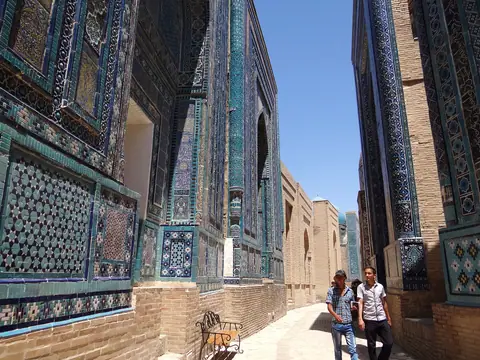 What to Do in Samarkand: Registan, Shah-i-Zinda and Historic MonumentsMajestic Timurid tilework, historic madrasahs, and leafy boulevards shape the daily rhythm of exploration across monumental Samarkand.
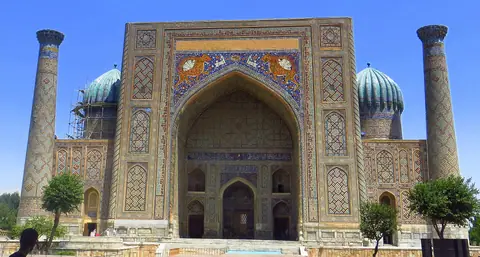 Registan Square: Ulugh Beg, Sher-Dor, and Tilya-Kori MadrasahsThree monumental madrasahs frame Registan Square in central Samarkand, preserving brilliant majolica tilework and historic Timurid scholarly architecture across a grand open plaza.
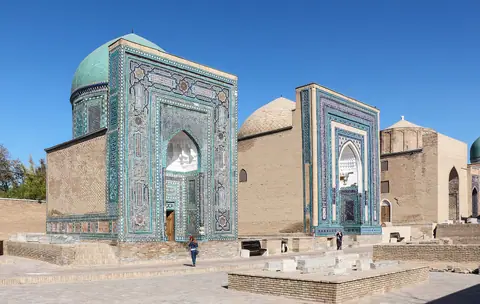 Shah-i-Zinda Necropolis: Blue Mausoleums and Sacred AvenuesShah-i-Zinda rises along ancient hillside terraces, displaying vivid cobalt tilework across medieval tombs and honoured pilgrimage chambers in north-eastern Samarkand.
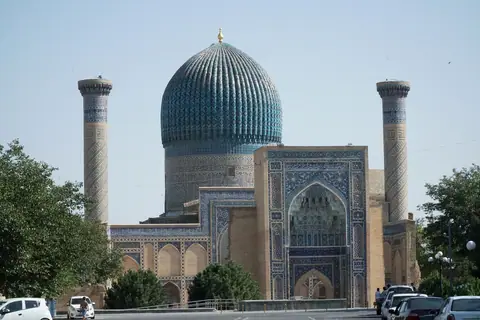 Gur-e-Amir Mausoleum and Aksaray Crypt GuideWe explore the fluted azure dome of Gur-e-Amir and the nearby Aksaray crypt across central Samarkand on foot.
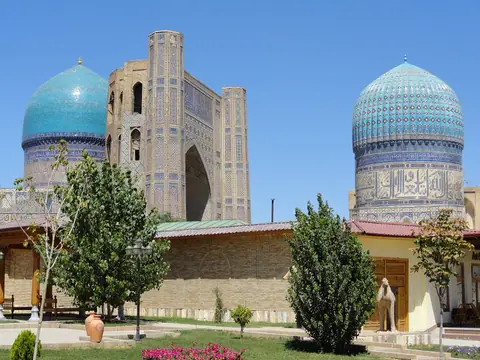 Bibi-Khanym Mosque and Siyob Bazaar Walking GuideWe trace the grand pedestrian route connecting the monumental Bibi-Khanym complex with the spice counters of Siyob Bazaar in Samarkand.
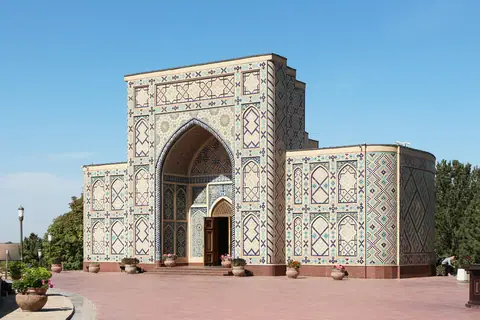 Ulugh Beg Observatory & Afrosiab GuideDiscover ancient Sogdiana and medieval Timurid astronomy across the northern hills of Samarkand at Afrosiab and the Ulugh Beg Observatory.
Neighbourhoods & Where to Stay
Districts, historic quarters and the best bases for your stay.
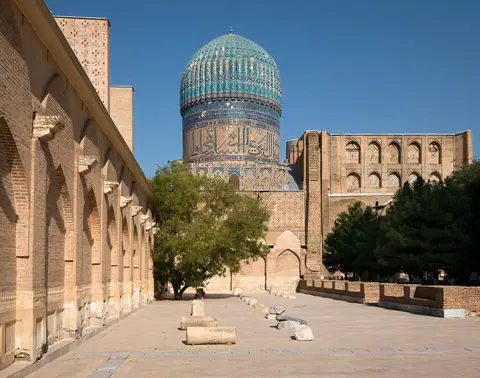 Samarkand Accommodation and Neighbourhood GuideChoosing the right quarter in Samarkand shapes how you wander between tiled medieval monuments and quiet residential alleys.
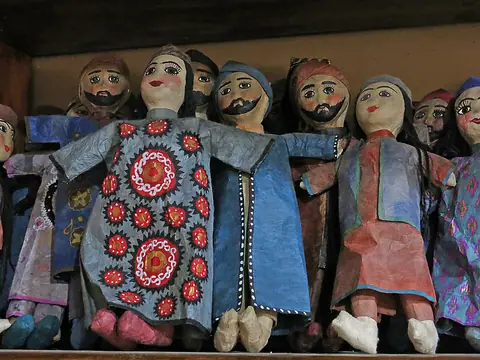 Konigil Paper Mill and Urgut Crafts: Samarkand Workshop RouteWaterwheels along the Siab stream power historic mulberry papermaking mills beside rural artisan workshops outside the ancient city of Samarkand.
Food & Drink
Local dishes, markets, cafés and dining districts.
Getting Around & Arrival
Airport transfers, public transit, passes and driving rules.

Day Trips & Excursions
Easy half-day and full-day trips from the city.
Trip Planning & Itineraries
When to visit, what to pack and day-by-day routes.
 Samarkand Urban Guide: Walking Paths, Transit & LayoutOur Samarkand travel guide outlines key walking routes, local transport choices, and district orientations across this historic silk route oasis.
 Samarkand Seasonal Calendar: Navruz, Crisp Autumns, and Desert ClimateChoosing the right season shapes your experience of Uzbekistan, balancing mild Silk Road weather against intense desert heat across historic plazas.
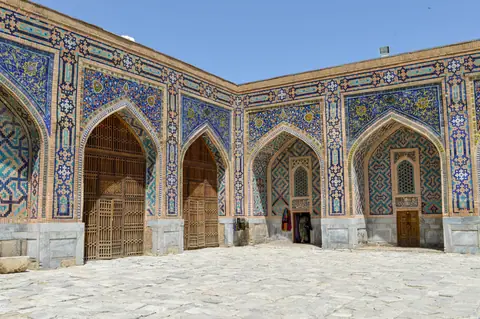 What to Wear in Samarkand: Shrine Modesty & Seasonal LayersCareful layering and respectful shrine attire help you navigate holy courtyards and open madrasahs across Samarkand with ease.
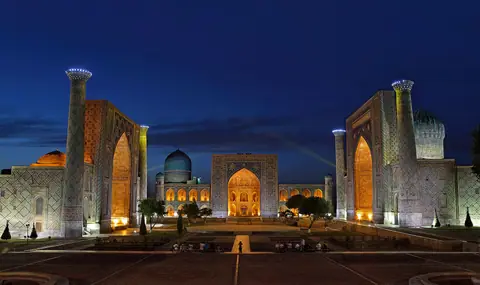 Three Days in Samarkand: Walking Routes and Historic MonumentsOur three-day circuit leads through the grand madrasahs, quiet shrines, and leafy avenues of Samarkand across three structured days.
Need your embassy or consulate in Uzbekistan? See embassies and consulates in Uzbekistan.
Reviews
Log in to write a review.
No reviews yet.