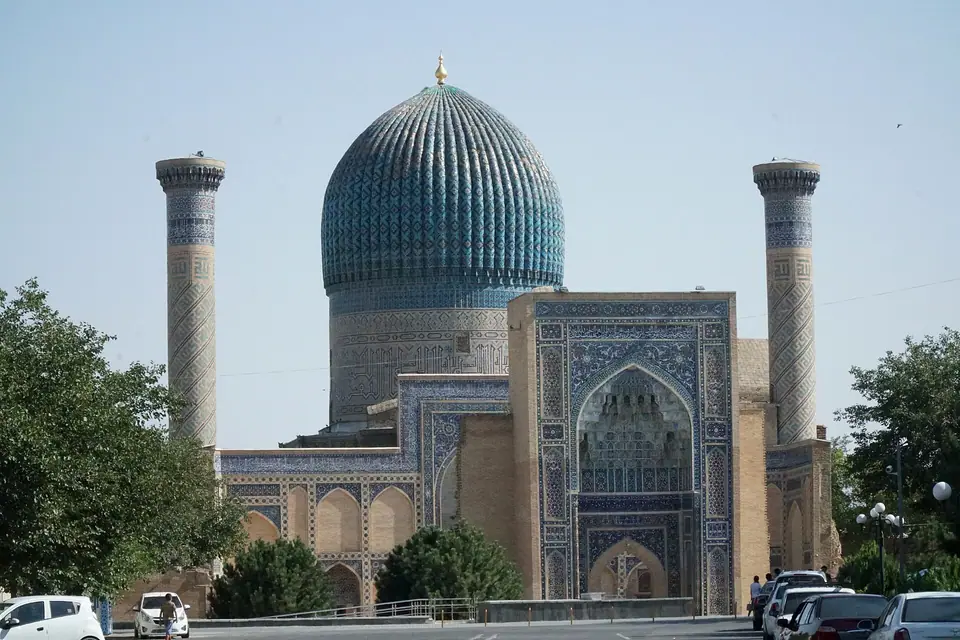
Photo: Adam Harangozó · CC BY-SA 4.0
Gur-e-Amir Mausoleum and Aksaray Crypt Guide
We explore the fluted azure dome of Gur-e-Amir and the nearby Aksaray crypt across central Samarkand on foot.
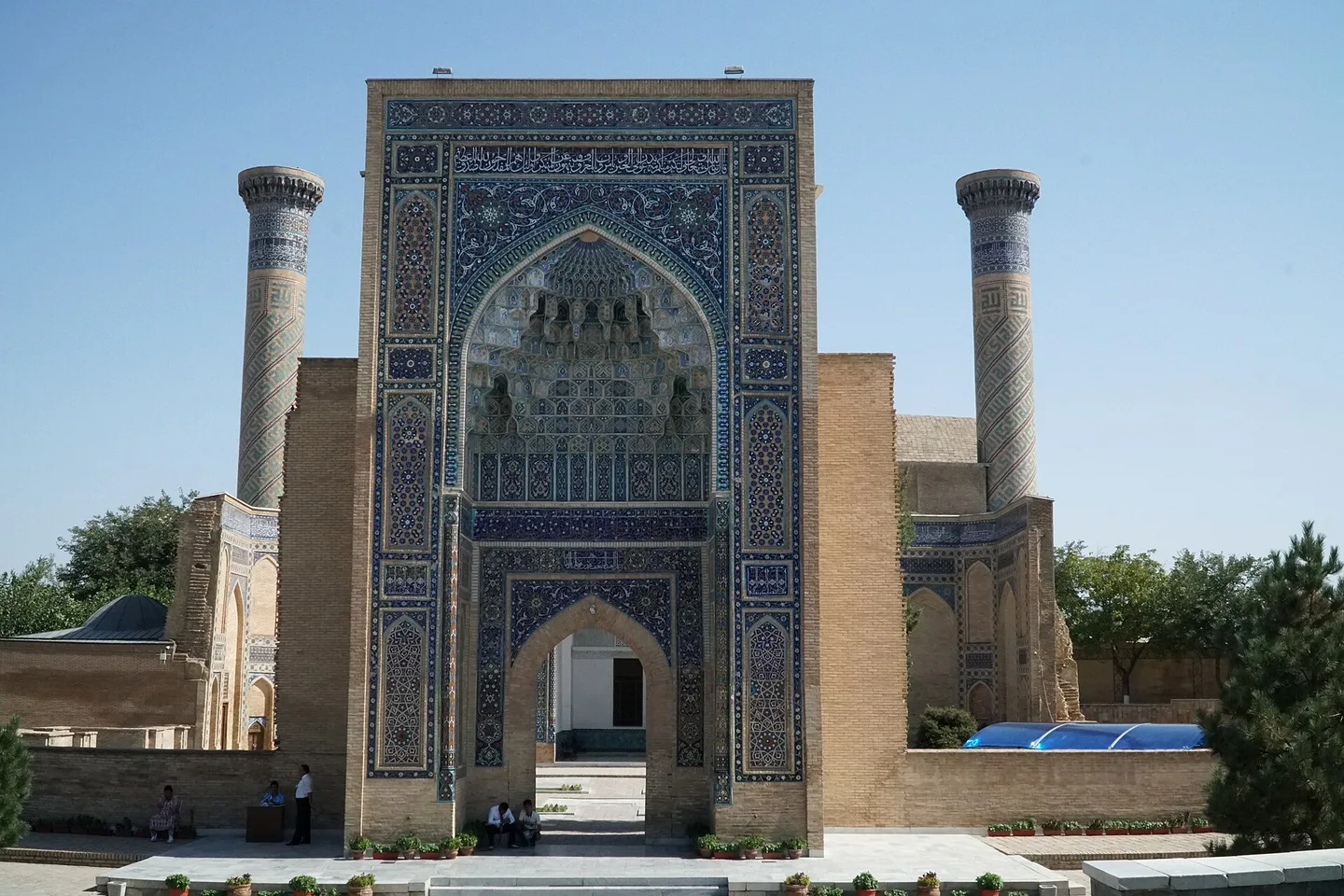
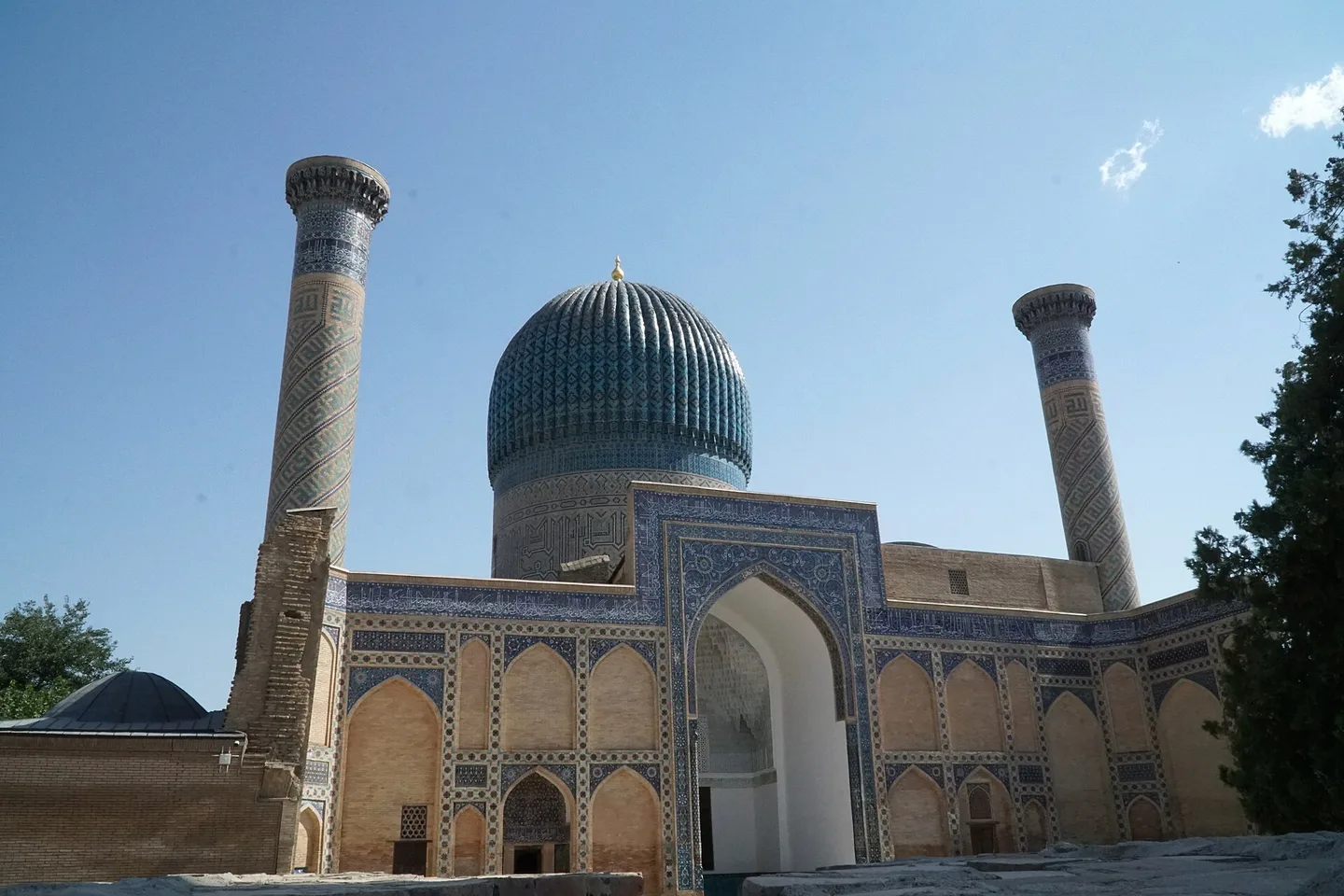
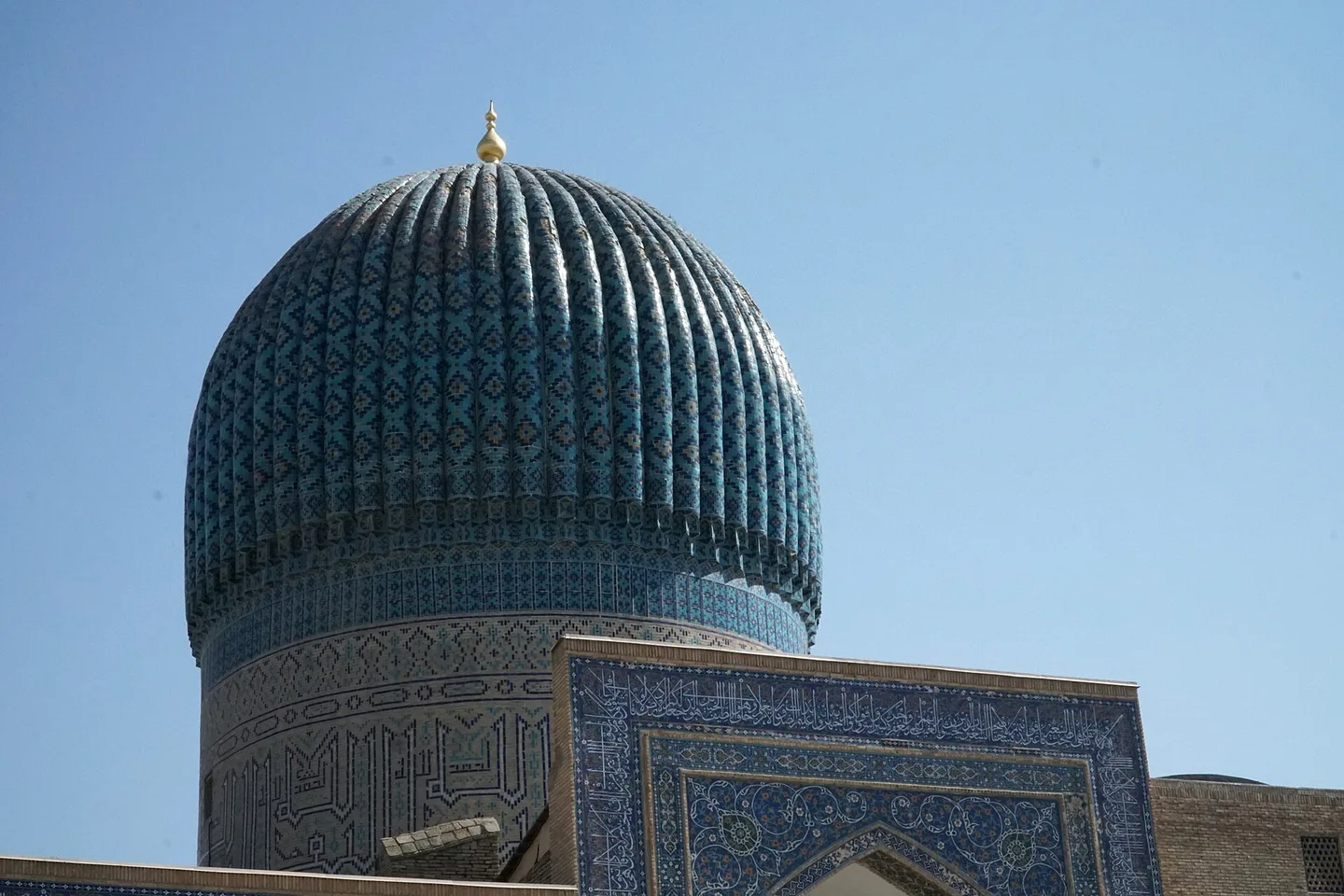
Standing before the main gateway of Gur-e-Amir, we notice how the ribbed turquoise dome rises above the residential streets of Samarkand. The entrance portal presents elaborate mosaic tilework framed by deep geometric bands that lead into a peaceful central courtyard. We recommend approaching along the landscaped pedestrian avenue from the north. There, manicured lawns open up full views of the historic brick towers. This orientation yields clean sightlines of the sixty-four flutes running up the dome exterior before crowds gather around the threshold.
The surrounding brick courtyard retains traces of foundation walls from earlier educational buildings that once flanked the main prayer hall. Walking along the stone perimeter allows us to appreciate how master builders balanced monumental height with delicate glazed patterns. Sunlight reflects off turquoise tiles against the baked terracotta brickwork. These angles create distinct shadows across the carved portal niches throughout clear mornings. Taking ten minutes to observe the outer perimeter helps visitors understand the structural scale before stepping inside.
Inside the Central Chamber and Cenotaphs
Passing through the low entrance corridor brings us into a high vaulted room covered in gilded papier-mache relief and deep lapis lazuli plaster. At the centre of the floor rest dark carved cenotaphs, surrounded by an intricate openwork marble screen. The dark nephrite jade block marking the central tomb draws immediate attention with its fine calligraphic inscriptions. Quiet stillness fills the chamber beneath the high gilded dome, where filtered daylight enters through high lattice windows.
Travellers should remember that these decorative markers on the ground floor are symbolic memorials rather than actual resting places. The authentic burials lie directly beneath our feet in an unadorned vaulted crypt within the lower foundations. While the subterranean vault remains closed during standard visits, the upstairs hall displays remarkable gold leaf restoration work along its high muqarnas squinches. A walk here pairs naturally with Registan domes and historic bazaar routes across the old city.
- Central hall features dark jade and marble cenotaphs enclosed by carved stone screens.
- Vaulted ceilings showcase restored gilded papier-mache reliefs and blue calligraphy.
- Lower crypt beneath the main floor contains the authentic structural burial vaults.
- Outer courtyard corners preserve weathered brick foundations from surrounding madrasah walls.
Walking Route to the Aksaray Crypt
Few visitors realise that another Timurid tomb stands tucked behind southern residential alleys just steps from the main complex. Leaving the rear gateway of Gur-e-Amir, we walk south down a quiet lane toward the Aksaray mausoleum. This modest brick structure lacks the soaring fluted dome of its famous neighbour. It presents a raw brick exterior beneath leafy neighbourhood trees. Quiet courtyards keep the lane peaceful, where tour groups rarely linger and daily life unfolds beside shaded clay garden walls.
Inside Aksaray, exposed cross-axial vaulting reveals medieval engineering techniques without heavy gilded paint. The central chamber displays delicate plaster stalactite work that survived centuries of dry continental weather and regional earth tremors. Stepping down into the lower burial crypt below ground level shows original brick masonry foundations up close. Pairing both tombs highlights clear shifts in royal memorial architecture across different construction decades.
Neighbourhood Links and Transit Connections
Reaching Gur-e-Amir on foot from the monumental square of Samarkand takes roughly fifteen minutes along wide pedestrian avenues. Paved park paths run southwest from Registan, lined by shade trees, drinking fountains, and resting benches along the walkway. From the railway station, local city buses and registered street taxis drop passengers right along University Boulevard. Review rail arrivals and urban taxi routes ahead of setting off.
The surrounding neighbourhood houses shaded tea rooms and modest family-run cafes along side streets just off the main avenue. Visitors can pause for fresh clay-oven flatbread, dried fruits, toasted walnuts, and green tea under wooden verandas before walking onwards to Registan Square. After touring both tomb precincts, paved park paths lead easily back north toward historic madrasahs or across into the nearby public gardens, where benches face flower beds and pine trees. Morning light hits the fluted azure dome tiles cleanly without strong afternoon glare on the gateway mosaics, while flat walking shoes handle brick steps comfortably across both historic compounds.
Official prices and opening hours
- Registan Square Madrasahs (Ulugh Beg, Sher-Dor, Tilya-Kori)Official site ↗
- Afrosiyob High-Speed Train (Tashkent – Samarkand)Official site ↗
Where it is
- 1Gur-e-Amir Mausoleum and Aksaray Crypt
- Samarkand International Airport (SKD) · about 6 km from here in a straight line
- Directions in Google Maps
Stations and taxi ranks: OpenStreetMap. Airports: OurAirports. Distances are in a straight line.
Traveller tips
Real advice from people who have been to Samarkand. Every tip is read by our team before it goes live.
No tips yet. Been here? Yours could be the first.
Thank you! Your tip will appear here after a quick review.
More in Samarkand
Continue exploring Samarkand with related neighbourhood, food, and planning guides
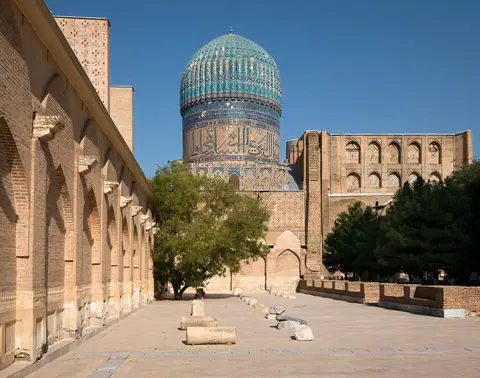
Samarkand Accommodation and Neighbourhood Guide
Samarkand, Uzbekistan
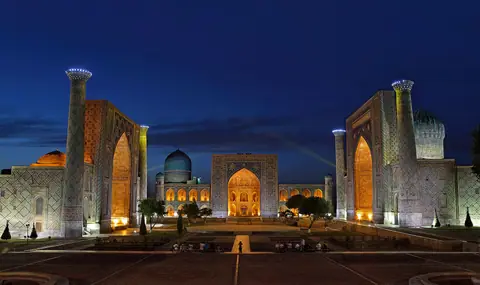
Three Days in Samarkand: Walking Routes and Historic Monuments
Samarkand, Uzbekistan
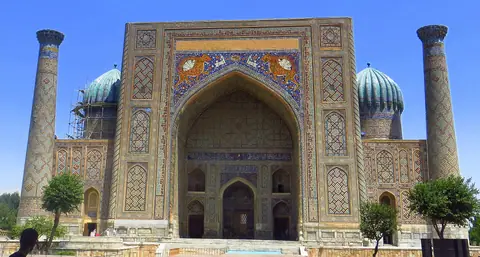
Registan Square: Ulugh Beg, Sher-Dor, and Tilya-Kori Madrasahs
Samarkand, Uzbekistan
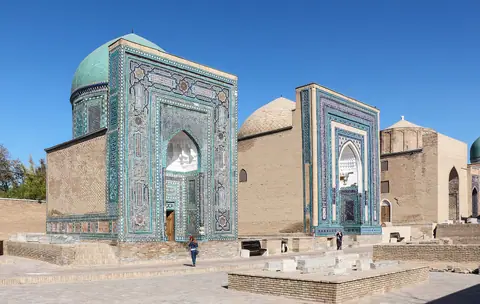
Shah-i-Zinda Necropolis: Blue Mausoleums and Sacred Avenues
Samarkand, Uzbekistan
