Photo: Bobyrr · CC BY-SA 4.0
Travelling to Samarkand by High-Speed Rail, Flight, and Road
Reaching Samarkand combines rapid Spanish-built electric trains across the steppe with regional road corridors and international airport links.
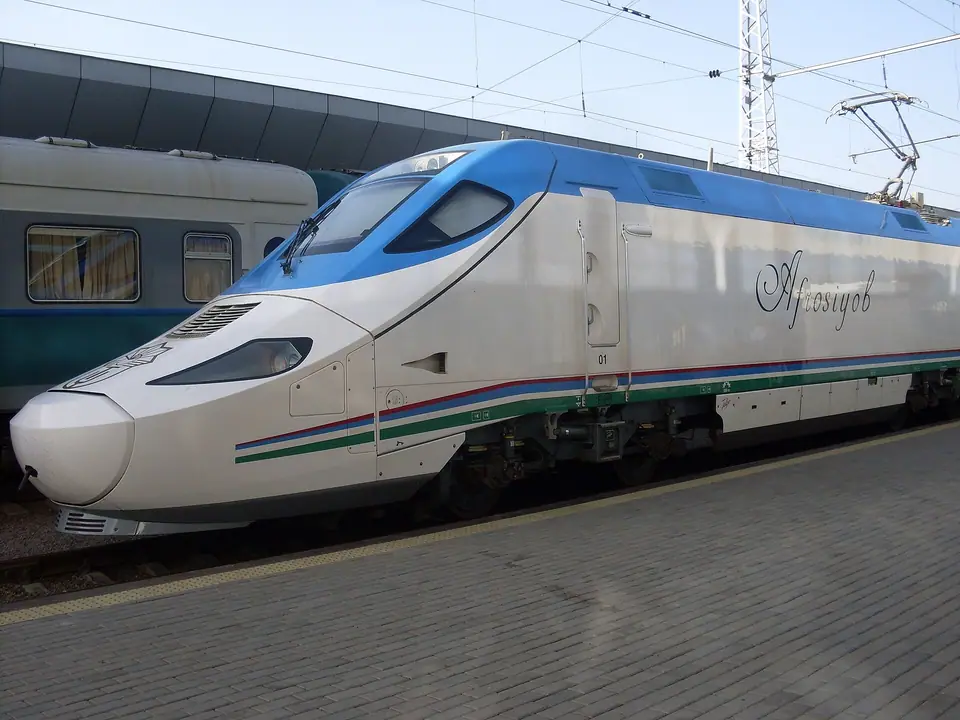
Riding the Afrosiyob High-Speed Rail Link
Boarding the sleek Talgo train at Tashkent South or North station offers the smoothest entry route into the ancient oasis. The aerodynamic carriages glide steadily out of the capital, tracking southwest through irrigated plains towards the desert fringe. Passengers settle into wide cloth seats, while attendants move down the aisles distributing light pastries, mineral water, and steaming cups of green tea.
Booking these high-speed seats requires early preparation, because domestic business travellers and overseas tour groups reserve tickets weeks before departure. The journey sweeps across flat steppe country, passing small rural homesteads, distant irrigation canals, and brick kilns baking in the sun. Gliding along continuous welded rails avoids the bumpy asphalt corridors and heavy vehicle congestion of the shared highway network.
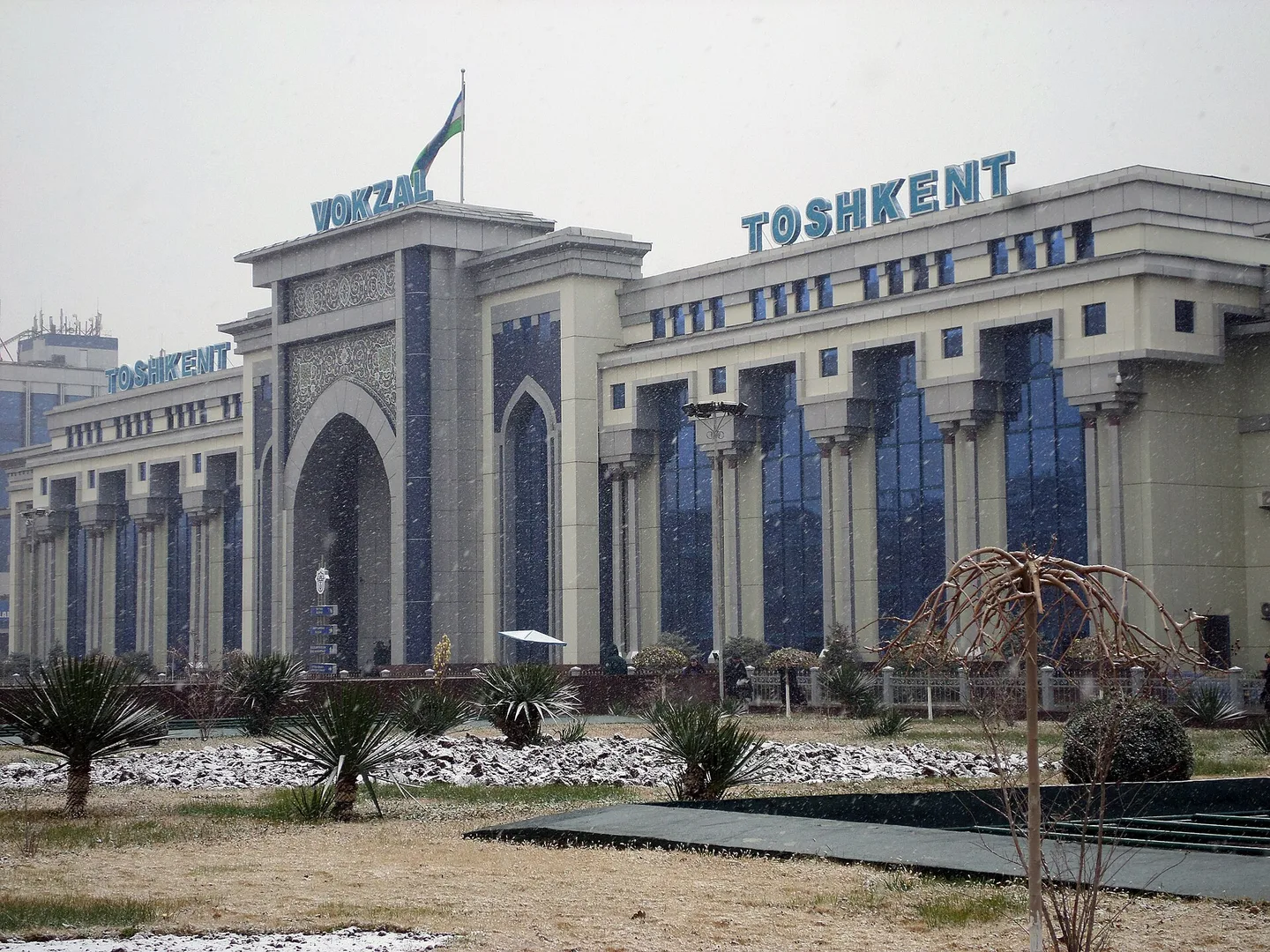
Standard express locomotives run the same route when high-speed services fill up completely, though those older wagons require substantially longer journey windows. Onboard power points allow travellers to charge mobile devices, while wide panoramic windows present unhindered views of the open desert terrain. Coordinate early arrivals with district transit notes and station routes to plan check-ins cleanly
Carriage stewards check passenger tickets before departure, verifying names against domestic registration records. The interior environment stays calm, with cool air circulating through quiet passenger cabins during dry summer heatwaves. Travellers can purchase hot herbal infusions or light snacks from the bistro wagon situated mid-train throughout the morning.
Navigating Samarkand Railway Station and City Taxis
Stepping down onto the windy platform at Samarkand Railway Station places you in the modern western district of the city. Porters offer assistance with heavy suitcases near the exit gates, where metal detectors and ticket scanners monitor passenger flow. Exiting the terminal brings you into a wide tarmac forecourt filled with competing cab drivers calling out destination names.
Travellers prefer to hail metered city taxis or order rides through verified digital hailing smartphone apps rather than negotiating informal fares. Drivers readily accept domestic paper banknotes, though possessing clean currency notes in modest denominations makes settling final sums straightforward. The modern tramway line departs from nearby street islands, shuttling passengers across western residential districts towards the edge of the historic quarter.
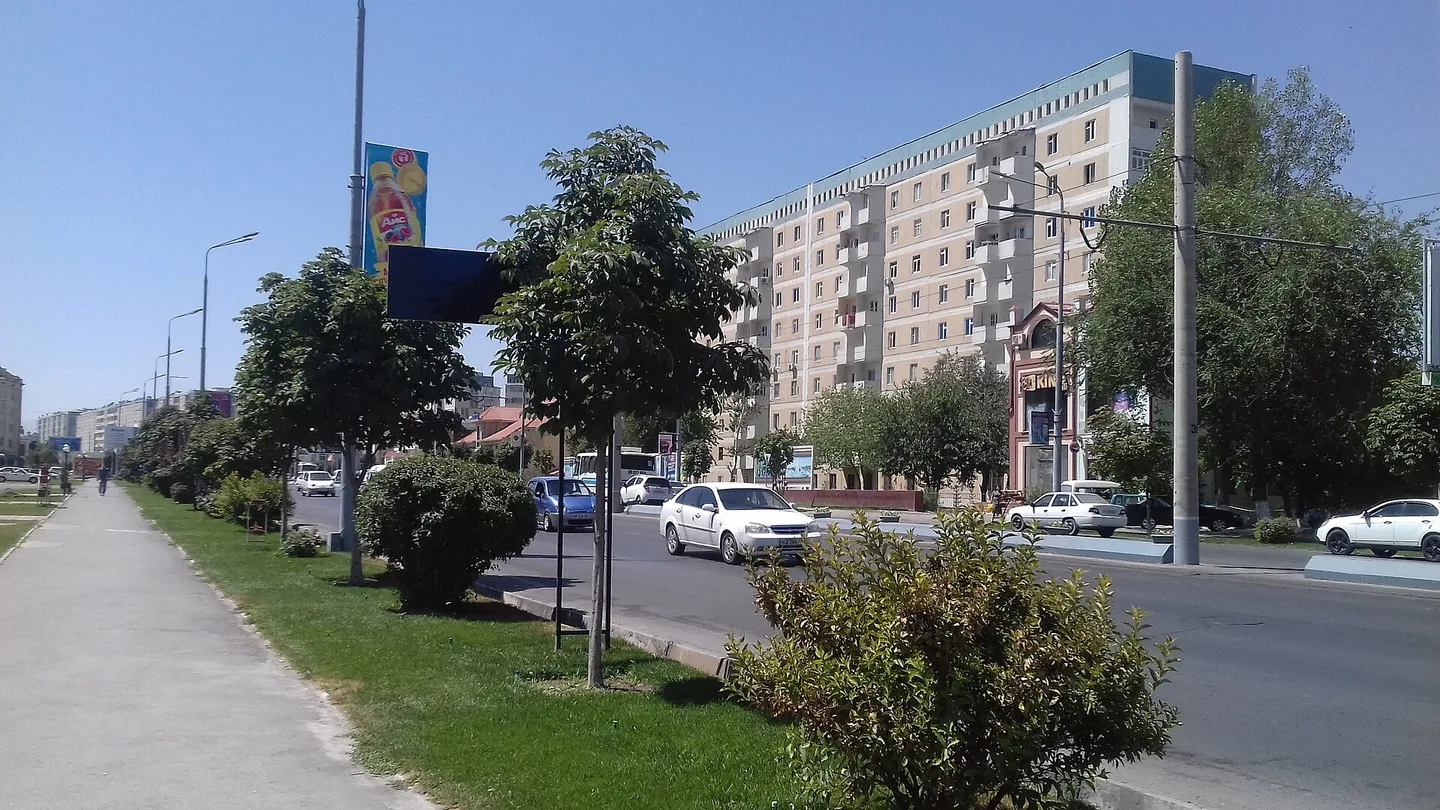
Taking an air-conditioned car along Beruni Street transports visitors straight towards their guesthouses within twenty minutes of leaving the terminal. Traffic flows steadily along broad tree-lined avenues planned during the nineteenth century, passing low administrative blocks and quiet neighbourhood parks. When preparing your packing list, consult advice on what clothing suits local transit during warm weather.
Station forecourts feature official information boards in multiple languages, helping arriving guests locate designated pickup ranks. Drivers maintain brisk speeds along modern ring boulevards, dodging small delivery trucks and local mopeds. Private vehicle hires can also be arranged directly through railway dispatchers stationed at the kerbside information booth.
Arriving by Air at Samarkand International Airport
Air passengers touch down at the modern terminal north of the historic centre, passing through swift passport desks and baggage carousels. International direct connections link the city to major aviation hubs in the Gulf, Turkey, and Central Asia, bypassing Tashkent entirely. Baggage handlers unload hold luggage into the spacious arrival hall, where foreign exchange windows and local telecom desks operate side by side.
Stepping out through automatic glass doors reveals a designated taxi rank and pre-booked private transfer meeting points. The short highway drive south follows flat suburban corridors lined with auto repair shops, roadside melon stalls, and residential brick enclosures. Arriving during late evening hours gives crisp first views as city authorities floodlight the turquoise cupolas across the eastern horizon.
Private hotel shuttles remain the quietest transfer choice for travellers carrying extensive photography equipment or travelling in small family groups. Drivers typically wait near the exterior security gate holding paper signs, ready to guide passengers directly to waiting saloons. After settling your bags in your room, plan your morning walk through the grand monuments in the historic core.
The air passenger hall houses automated teller machines and SIM card counters with multilingual staff. Travellers arriving on international late night flights easily find licensed airport cabs queueing outside arrivals. The short transfer corridor gets visitors to downtown lodging smoothly without urban delays.
Transit Options and Regional Road Links
Selecting the right transport method depends entirely on your starting city, group size, and tolerance for shared rural driving. The high-speed rail corridor remains the prime selection for comfort, whereas shared highway cars offer flexibility for spontaneous travellers moving between regional towns.
| Transport Mode | Departure Hub | Arrival Target | Primary Advantage |
|---|---|---|---|
| Afrosiyob Train | Tashkent Station | Samarkand Rail Station | Smooth high-speed ride |
| Domestic Rail | Bukhara Station | Samarkand Rail Station | Frequent midday departures |
| Shared Taxi | Regional Depots | City Ring Road | Flexible departure timing |
| Airport Transfer | International Terminal | Historic Quarter Hotels | Direct luggage delivery |
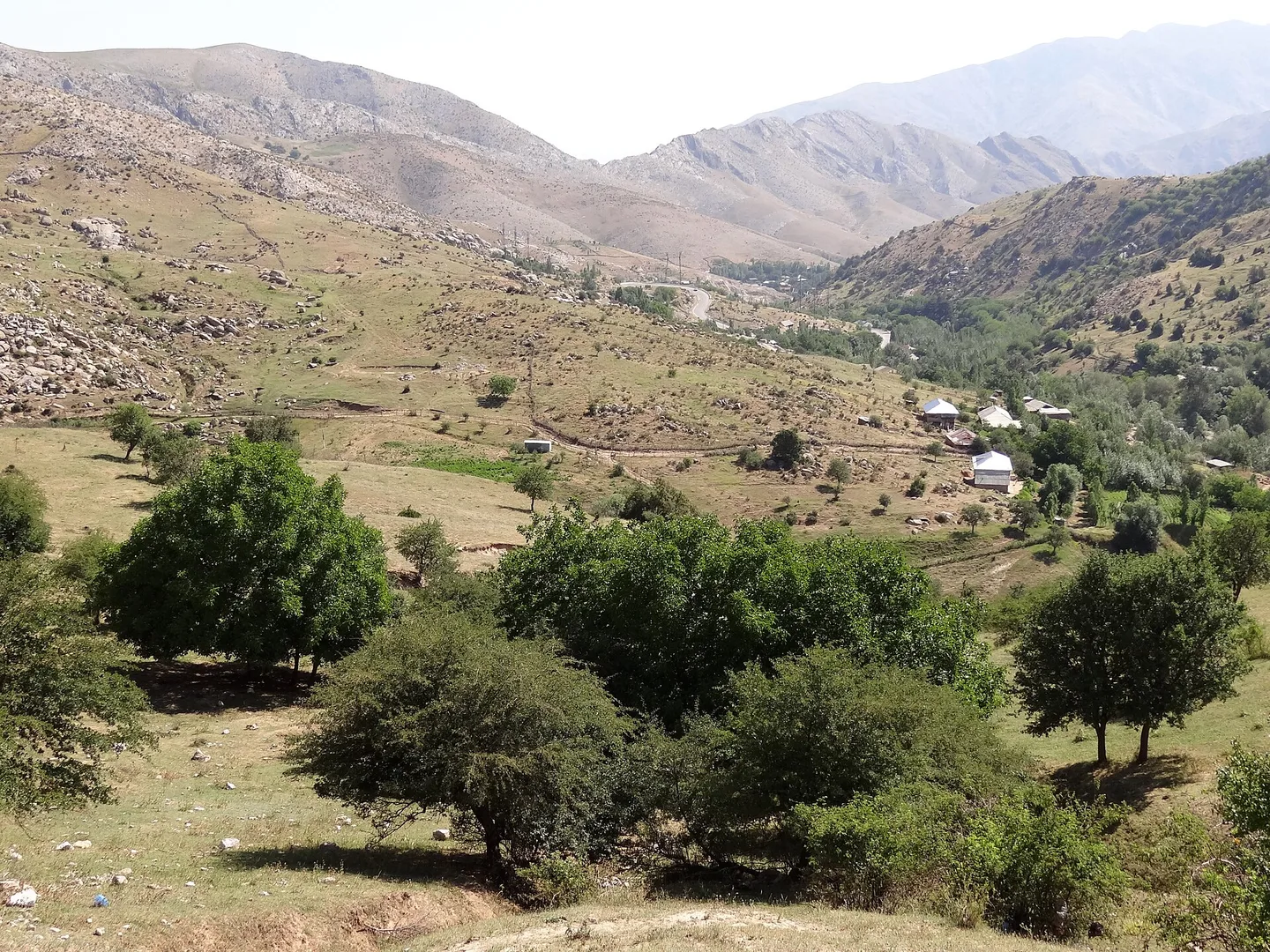
Travellers setting out towards southern mountain passes can hire private vehicles for scenic detours across craggy limestone ridges. The asphalt road climbs past rural hamlets where mountain streams feed terraced apple orchards and roadside clay bread ovens. Checking route conditions with local drivers prevents unexpected detours through narrow rural bypasses during heavy transport periods.
Public marshrutka minibuses run along peripheral ring roads, offering economical transport for experienced backpackers with light daypacks. These white vans collect passengers from informal roadside stops, filling seats before departing along designated suburban routes. Combine regional day trips with monument routes around Registan and Siyob Bazaar to build an efficient city schedule.
Intercity shared cars congregate around established suburban depots, where drivers call out destination cities to waiting passengers. Vehicles depart once every passenger seat has been filled and luggage is stowed neatly in the boot. This ground transit mode connects smaller steppe towns directly to urban terminals across the province.
Official prices and opening hours
- Registan Square Madrasahs (Ulugh Beg, Sher-Dor, Tilya-Kori)Official site ↗
- Afrosiyob High-Speed Train (Tashkent – Samarkand)Official site ↗
Where it is
- 1Samarkand
- Samarkand International Airport (SKD) · about 6 km from Samarkand in a straight line
- Directions in Google Maps
Stations and taxi ranks: OpenStreetMap. Airports: OurAirports. Distances are in a straight line.
Traveller tips
Real advice from people who have been to Samarkand. Every tip is read by our team before it goes live.
No tips yet. Been here? Yours could be the first.
Thank you! Your tip will appear here after a quick review.
More in Samarkand
Continue exploring Samarkand with related neighbourhood, food, and planning guides
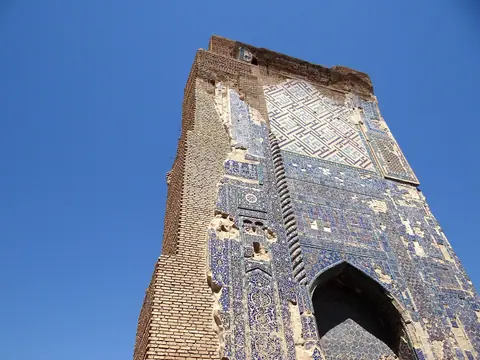
Day Trip to Shakhrisabz and Tahtakaracha Pass from Samarkand
Samarkand, Uzbekistan
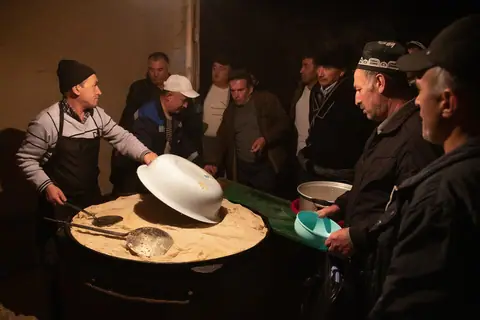
A Food Lover’s Guide to Samarkand
Samarkand, Uzbekistan
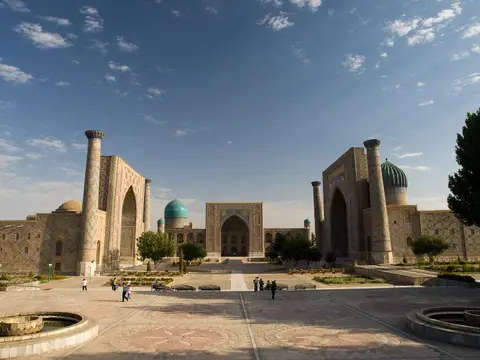
Samarkand Urban Guide: Walking Paths, Transit & Layout
Samarkand, Uzbekistan
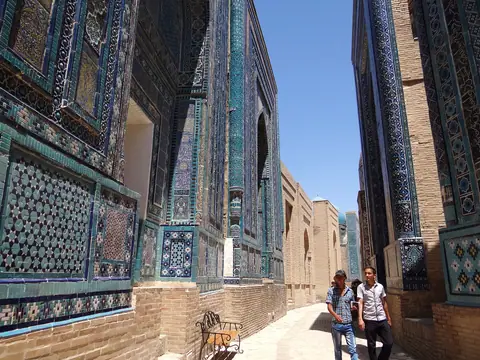
What to Do in Samarkand: Registan, Shah-i-Zinda and Historic Monuments
Samarkand, Uzbekistan
