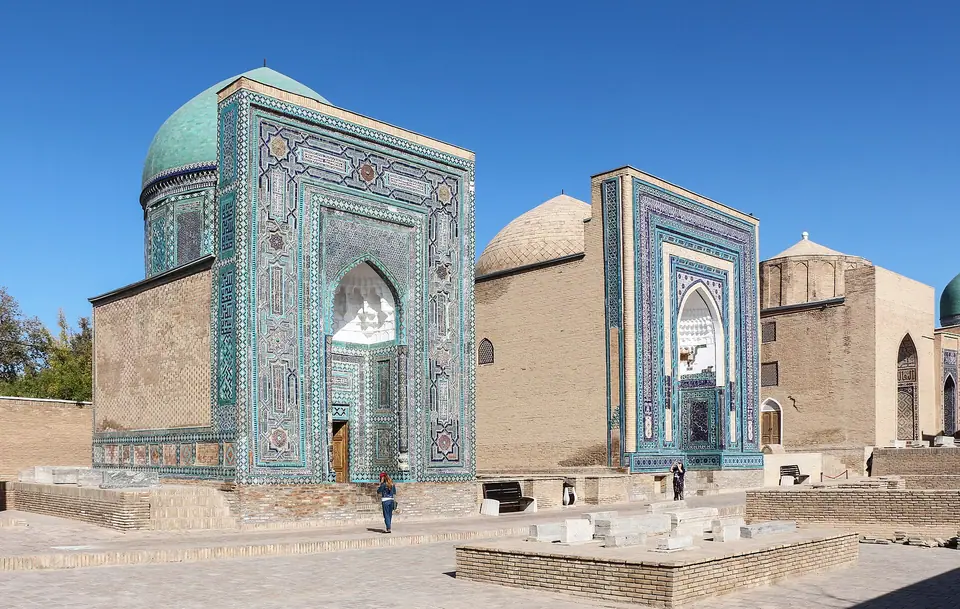
Shah-i-Zinda Necropolis: Blue Mausoleums and Sacred Avenues
Shah-i-Zinda rises along ancient hillside terraces, displaying vivid cobalt tilework across medieval tombs and honoured pilgrimage chambers in north-eastern Samarkand.
Sacred Terraces of the Living King Shrine
Rising along the rocky southern ridge of ancient Afrosiyob, this grand cemetery preserves centuries of dynastic devotion and architectural ambition. The name translates as the Tomb of the Living King, referring to Qusam ibn Abbas, who brought early Islamic traditions to the oasis settlement. Pilgrims have travelled to these mudbrick slopes for generations, seeking quiet blessings beside subterranean vaults and carved wooden lattices. Medieval rulers embellished the site by constructing ever more ornate memorials for their relatives, commanders, and honoured court astrologers. Today, the avenue forms a continuous outdoor museum of decorative ceramic arts, standing apart from modern residential roads.
The ground slopes steadily upwards, leading visitors away from the busy ring road into a serene sanctuary defined by cool shadows and filtered desert sun. As you explore historic monuments across the city, this necropolis presents an intimate spatial character quite different from vast open squares. Burials cluster tightly along an elevated corridor, creating framed vistas of turquoise cupolas against the dry Central Asian sky. Because the complex remains an active house of prayer, local visitors regularly pause before tomb screens to recite quiet verses. Maintaining a calm pace allows you to absorb the spiritual weight and architectural layering without disrupting worship.
Architectural Progression Along the Heavenly Staircase
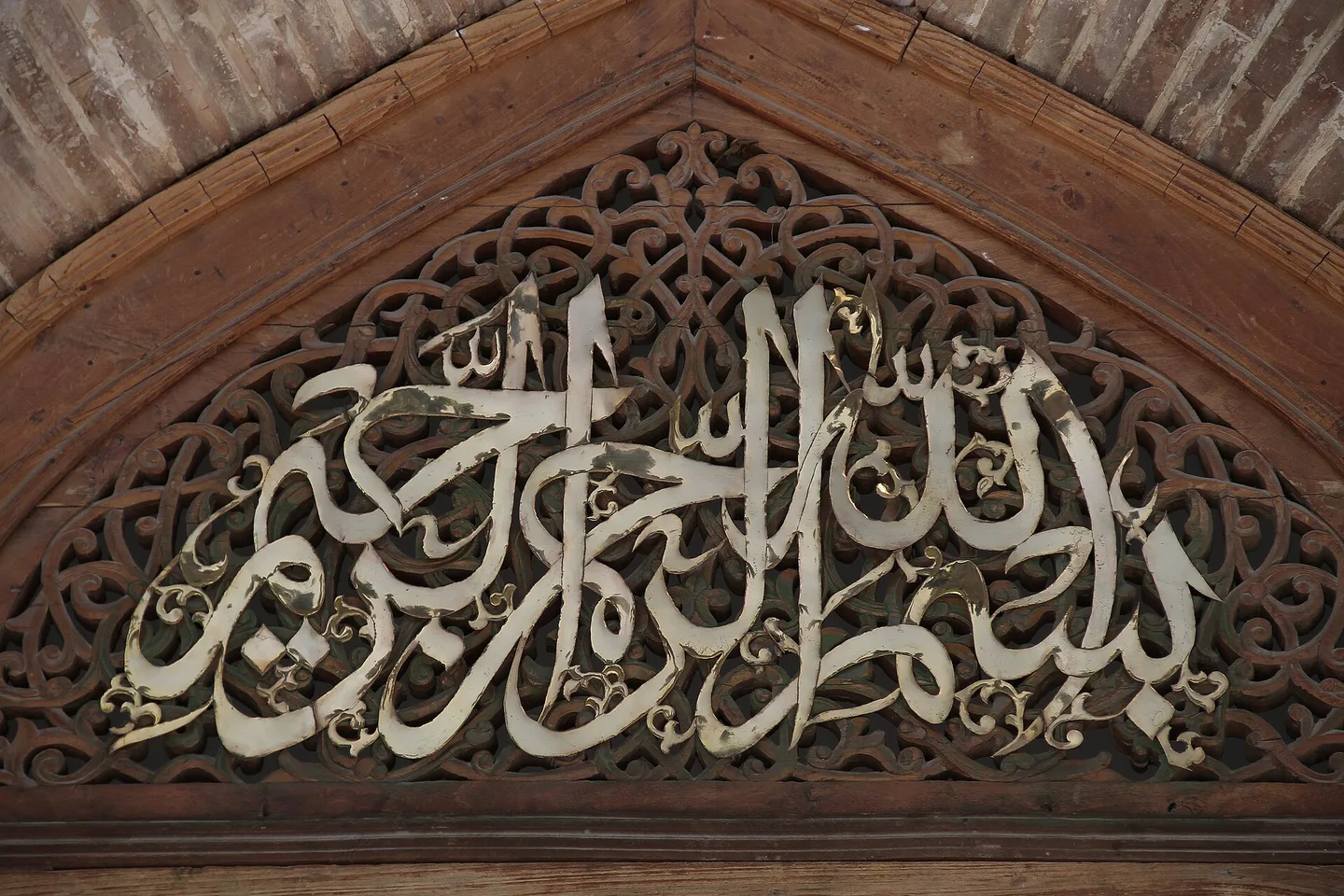
Passing beneath the domed entrance portal built by Ulugh Beg, you encounter an imposing flight of brick steps rising towards the central alley. Known traditionally as the forty stairs, this steep climb invites visitors to count each riser both ascending and descending according to local folklore. The steps serve a practical purpose, elevating worshippers from dusty street level into a refined realm of stone and glaze. At the landing, the corridor narrows dramatically between towering portal facades crowned with pointed arches and deep stalactite niches. Every step brings another facet of intricate lapis lazuli and turquoise into close view.
The architectural journey divides into three distinct spatial segments, each representing different structural epochs and royal patrons. The lower terrace contains grand reception portals and vaulted prayer chambers designed to receive pilgrim gatherings. Moving through the middle corridor reveals slender funerary towers, where exquisite geometric borders surround recessed doorways and calligraphic friezes. Finally, the upper court terminates at the oldest surviving shrine enclosure, creating an enclosed sanctuary that feels deeply protected from outer urban sound.
| Terrace Level | Dominant Features | Visitor Atmosphere |
|---|---|---|
| Lower Gateway | Monumental portal, arched entry vestibule, and initial brick steps | Gathering threshold where pilgrims begin their ascent |
| Middle Corridor | Narrow canyon of fourteenth-century dynastic mausoleums | Intense concentration of cobalt tilework and intricate muqarnas |
| Upper Sanctuary | Qusam ibn Abbas complex and peaceful northern courtyards | Quiet contemplative area dedicated to prayer and reflection |
Walking through the middle defile creates an enduring impression of passing through a corridor of blue ceramic. Morning light strikes the eastern facades, illuminating individual raised motifs, while afternoon sun warms the opposite panels with golden reflections. We recommend taking time on the shaded stone benches to observe how the arched doorways frame one another along the ascending axis. Details reward close observation, from painted plaster floral reliefs to carved terracotta tiles that preserve the confident chisel marks of fourteenth-century artisans.
Cobalt Glazes and Timurid Decorative Arts
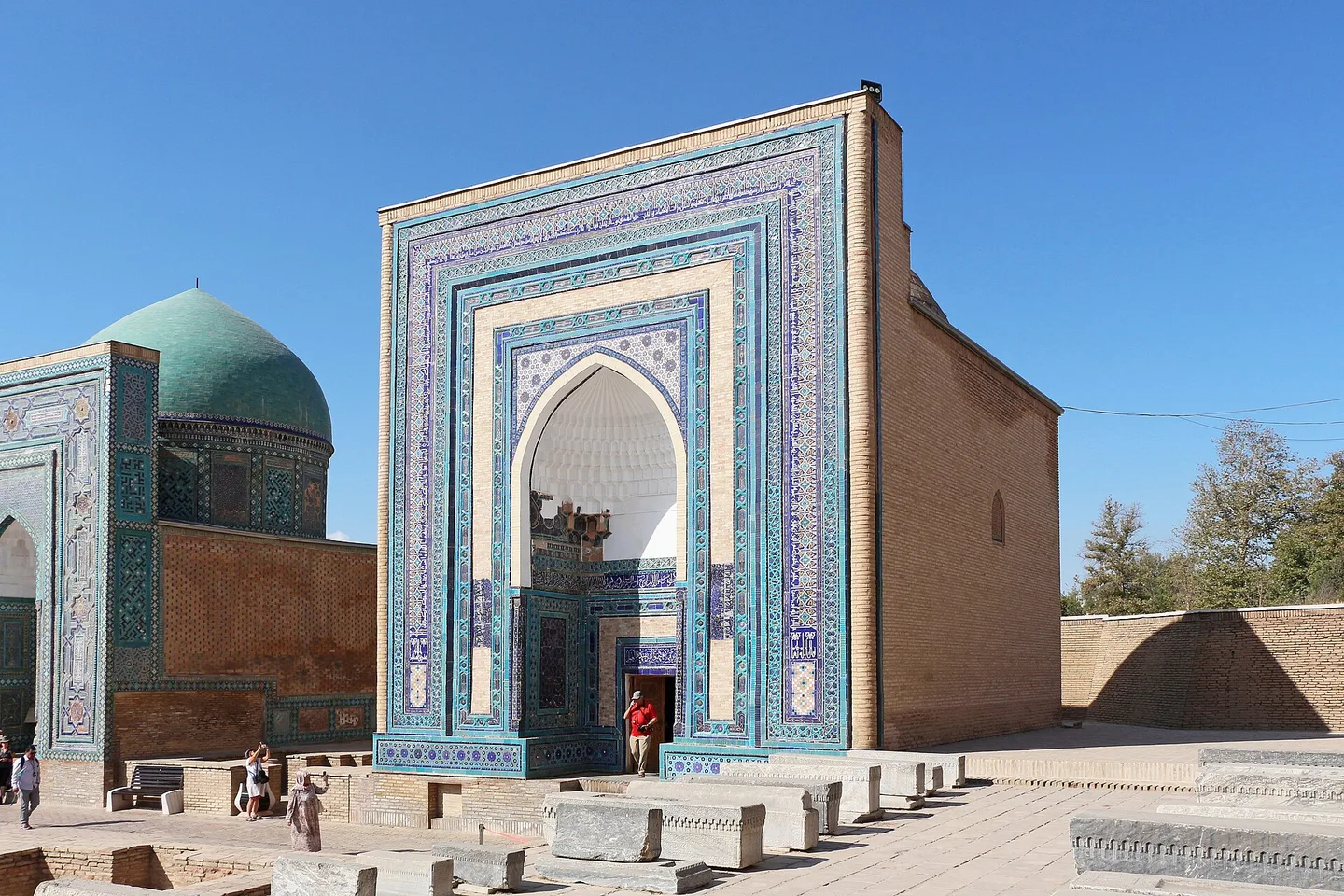
The necropolis showcases the rapid evolution of Islamic ceramic techniques across two pivotal centuries. Early structures feature monochrome glazed bricks arranged in alternating relief patterns, creating subtle shadow play without overwhelming colour. As craftsmanship flourished under imperial patronage, workshops introduced polychrome cuerda seca tiles, overglaze gilding, and intricate mosaic medallions. Rich ultramarine made from crushed badakhshan lapis combines with local copper oxide blues to produce luminous surfaces that withstand centuries of intense steppe sunlight.
Mausoleums belonging to royal princesses and noble commanders demonstrate the remarkable skill of master tilemakers from across Persia and Transoxiana. Intricate calligraphic borders spell out Quranic verses and poetic inscriptions, woven into swirling vine motifs known as islimi. Inside several accessible tomb chambers, soaring rib vaults terminate in grand stalactite pendentives adorned with gold leaf and delicate cobalt brushwork. The contrast between rough sun-dried brick cores and silky ceramic skins highlights the ingenuity of medieval engineering in an active earthquake zone.
- Lower portal structures feature deep turquoise and cobalt glazed bricks assembled into bold geometric kufic inscriptions.
- Middle terrace tombs present carved polychrome terracotta and delicate mosaic faience displaying complex floral motifs.
- Upper prayer chambers contain carved wooden pillars, silver-inlaid railings, and gilded relief plasterwork of exceptional delicacy.
Walking Strategies and Respectful Exploration
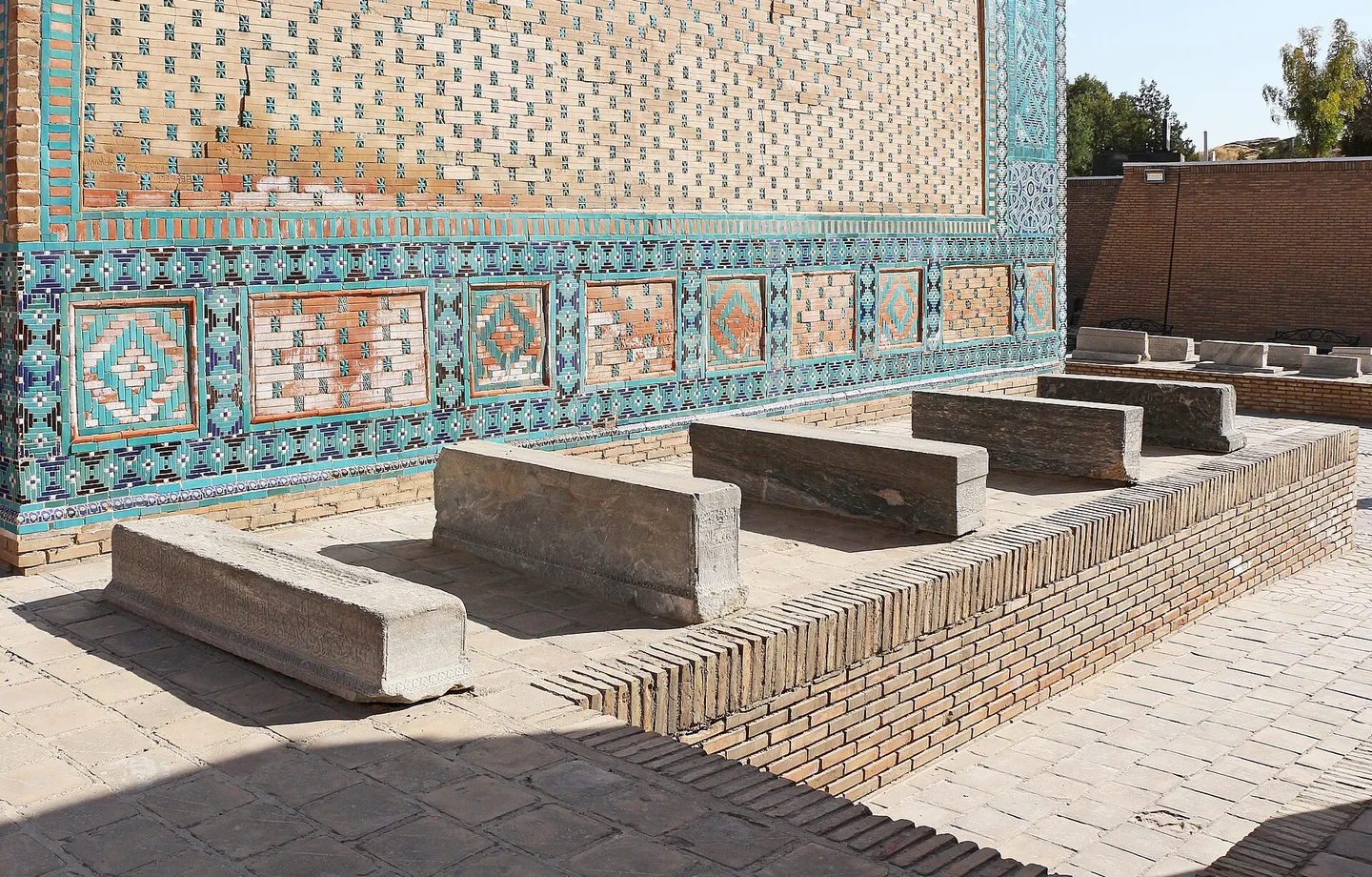
Shah-i-Zinda lies within convenient walking distance of the historic centre, making it simple to combine with nearby sights. When arranging your daily walking route, connect your visit with practical city transport connections to reach the northern hills comfortably. Arriving during the earliest daylight hours allows gentle light across the ceramic facades and lets you experience the corridor in serene quiet before midday crowds arrive. Sturdy footwear with good grip helps on the worn stone flags, which can become slippery after autumn showers.
Because the necropolis remains a revered pilgrimage ground, respectful conduct is essential throughout your visit. Modest dress covering shoulders and knees is strictly observed, and women should carry a light headscarf for entry into the inner tomb chambers. Keep conversations subdued along the narrow central lane, allowing worshippers space to pray undisturbed. Photography is permitted along the outdoor walkways, but visitors must refrain from using flash inside the dim prayer halls. Stepping into the adjacent modern cemetery on the hillside offers a quiet walk and panoramic views across Samarkand minarets and distant mountain ridges.
Official prices and opening hours
- Registan Square Madrasahs (Ulugh Beg, Sher-Dor, Tilya-Kori)Official site ↗
- Afrosiyob High-Speed Train (Tashkent – Samarkand)Official site ↗
Where it is
- 1Shah-i-Zinda Necropolis
- Samarkand International Airport (SKD) · about 4 km from here in a straight line
- Directions in Google Maps
Stations and taxi ranks: OpenStreetMap. Airports: OurAirports. Distances are in a straight line.
Traveller tips
Real advice from people who have been to Samarkand. Every tip is read by our team before it goes live.
No tips yet. Been here? Yours could be the first.
Thank you! Your tip will appear here after a quick review.
More in Samarkand
Continue exploring Samarkand with related neighbourhood, food, and planning guides
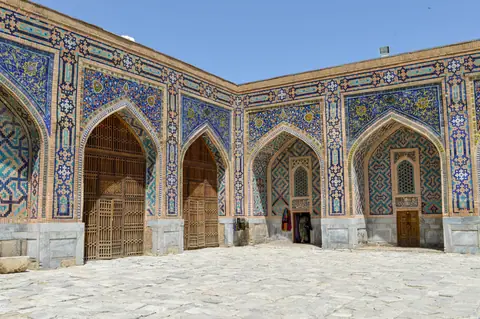
What to Wear in Samarkand: Shrine Modesty & Seasonal Layers
Samarkand, Uzbekistan
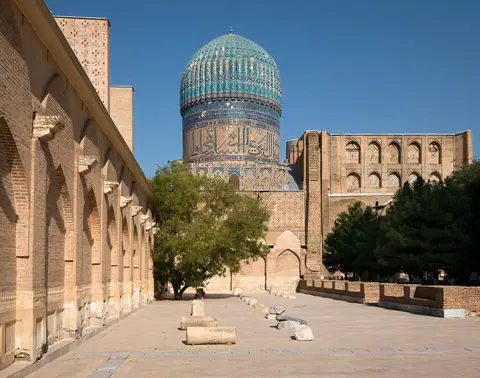
Samarkand Accommodation and Neighbourhood Guide
Samarkand, Uzbekistan
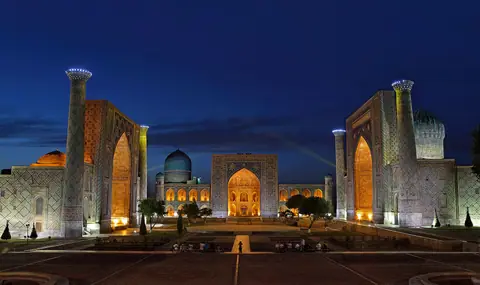
Three Days in Samarkand: Walking Routes and Historic Monuments
Samarkand, Uzbekistan
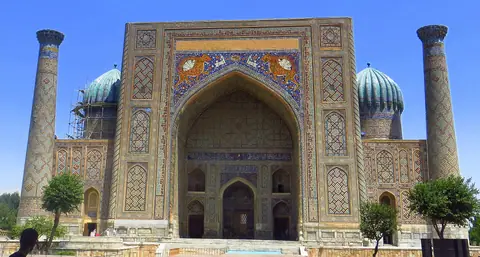
Registan Square: Ulugh Beg, Sher-Dor, and Tilya-Kori Madrasahs
Samarkand, Uzbekistan
