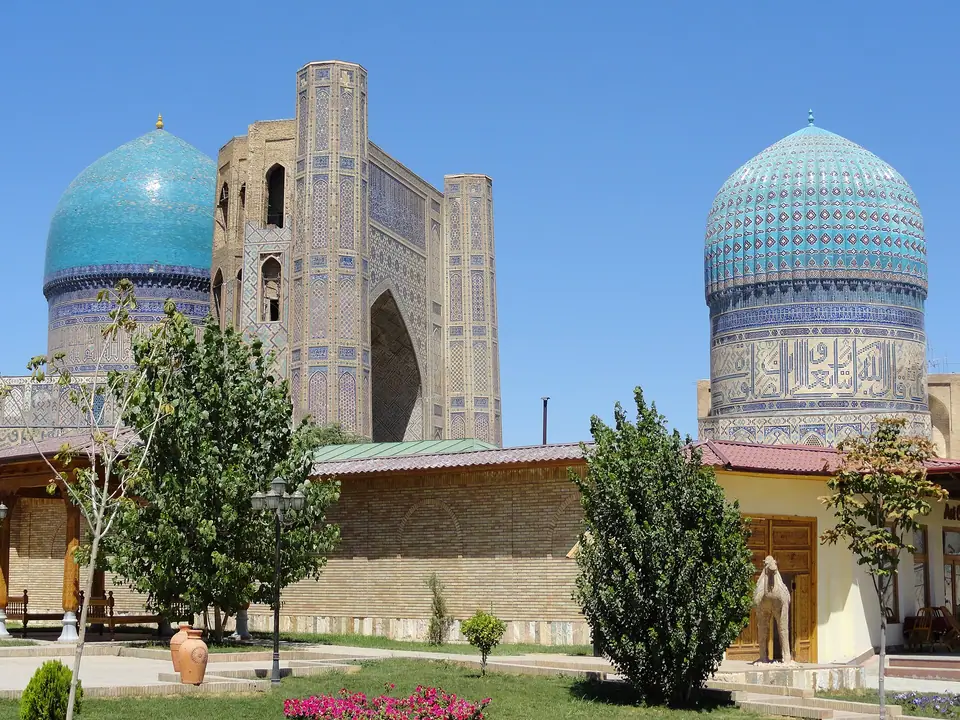
Photo: Fabio Achilli from Milano, Italy · CC BY 2.0
Bibi-Khanym Mosque and Siyob Bazaar Walking Guide
We trace the grand pedestrian route connecting the monumental Bibi-Khanym complex with the spice counters of Siyob Bazaar in Samarkand.
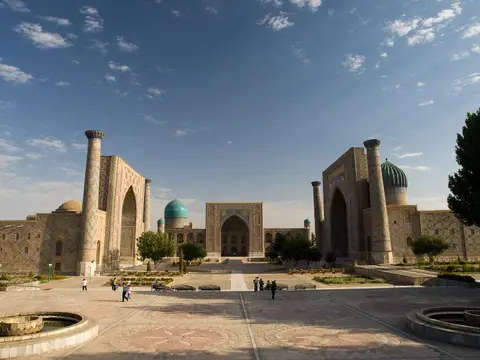
Walking north along the broad stone promenade from Registan leads directly towards the colossal turquoise dome of Bibi-Khanym Mosque. Electric shuttles glide up and down the paved avenue, yet walking remains the finest way to sense the mounting scale of the Timurid portal. As you draw near, the tiled entrance arch towers above the plane trees, revealing patterns of glazed terracotta and deep blue mosaic work. Our detailed Samarkand city guide offers practical advice for orienting yourself across the wider oasis.
Approaching the Monumental Portal from Tashkent Street
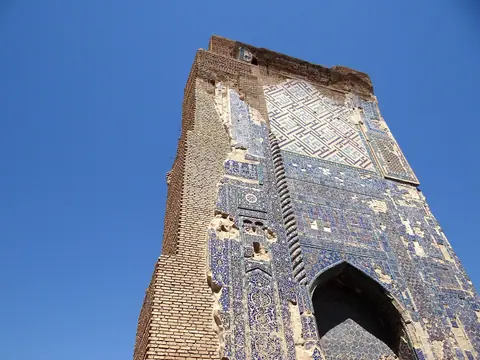
The pedestrian avenue, formerly known as Tashkent Street, links the heart of ancient Samarkand with the market district. Approaching on foot lets you watch the colossal brick masonry resolve from a distant outline into intricate geometric bands. Timur ordered construction of the grand sanctuary following campaigns abroad, demanding dimensions that strained medieval engineering to its absolute limits. Structural settlement plagued the enormous vault almost immediately after completion, leading to centuries of gradual collapse. Soviet and modern Uzbek conservators stabilised the towering main iwan, restoring the vivid glazed script framing the exterior.
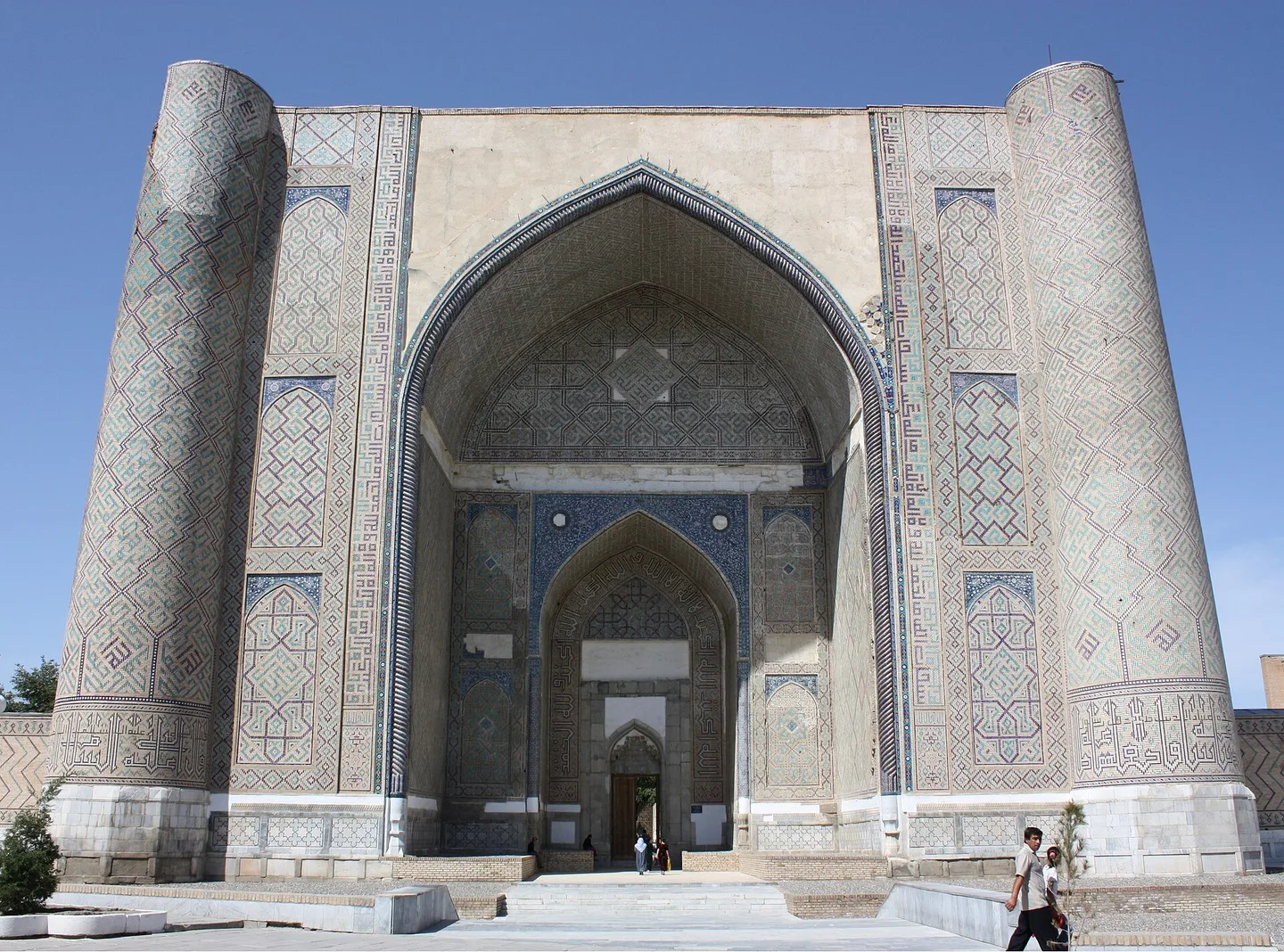
Shaded benches flank the pedestrian way, offering calm vantage points for admiring the turquoise fluted cupola against the desert sky. Morning light illuminates the eastern facade, casting warm highlights across the restored calligraphy panels. Visitors exploring popular monuments and excursions in Samarkand often pair this peaceful avenue walk with a morning market visit. Street sweepers keep the stone paving tidy, and gentle slopes make the stroll accessible for most fitness levels. Take care on warm afternoons, as stone surfaces reflect midday heat with little natural canopy.
Inside the Courtyard and the Stone Quran Stand
Stepping past the entry turnstiles brings you into a vast walled courtyard paved in pale stone slabs. In the centre rests an enormous carved marble stand, originally sculpted to support the legendary seventh-century Quran of Caliph Uthman. Local folk beliefs once held that women crawling beneath the stone trestle would receive blessings of fertility. Today the relic remains protected behind low brass barriers to preserve its carved floral relief work. The side mosques and surviving perimeter galleries create an atmospheric enclosure shielded from avenue traffic.
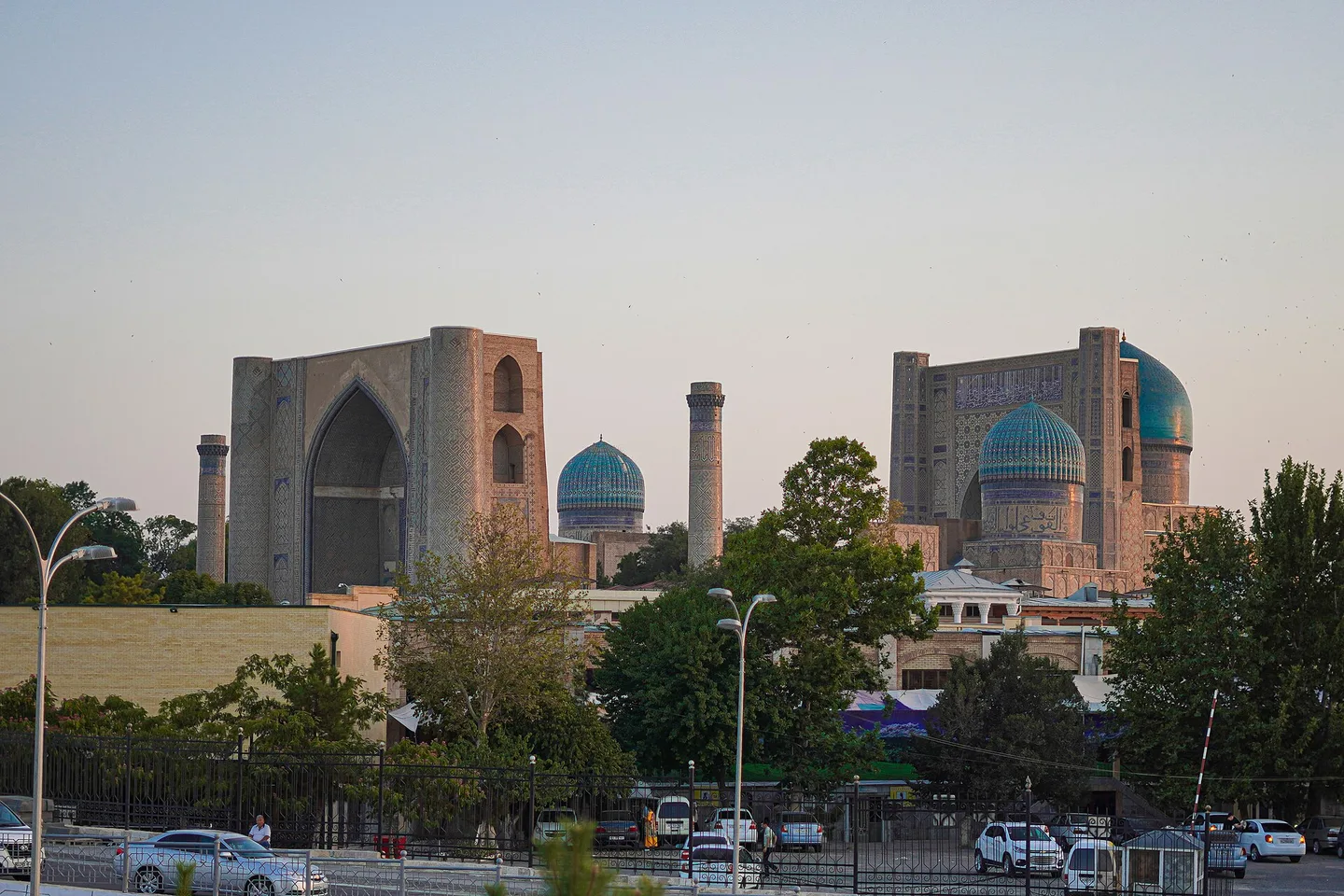
Inside the main sanctuary chamber, the soaring cupola demonstrates how master builders calculated acoustic resonance and natural illumination. Small exhibition panels line the peripheral arcades, displaying archival photographs that document the ruined walls before twentieth-century stabilization works began. Look upwards into the cavernous dome to notice where original plaster stalactites meet contemporary structural bracing. Pigeons flutter across the high cornices, their soft cooing echoing within the hollow vault. We recommend spending unhurried time along the western portico where delicate lapis-coloured tiles retain their deep glaze.
| Route Station | Architectural Feature | Walking Focus |
|---|---|---|
| Main Iwan | Soaring entrance portal | Intricate calligraphy bands and glazed brickwork |
| Central Courtyard | Carved marble Quran stand | Spacious stone pavement and side prayer halls |
| Main Sanctuary | High turquoise fluted dome | Interior plaster conservation and acoustic vault |
| Bibi-Khanym Mausoleum | Octagonal brick funerary dome | Intimate crypt and restored interior fresco bands |
| Siyob Bazaar Gate | Multi-tiered domed pavilion | Traditional bread rows, dried apricots, and spices |
Crossing to the Bibi-Khanym Mausoleum
Directly across the avenue stands the Bibi-Khanym Mausoleum, a modest octagonal structure that often receives far fewer visitors. Built to hold the tombs of female members of the Timurid dynasty, it offers a stark architectural contrast to the grand mosque opposite. The exterior dome displays delicate turquoise ribs, while the interior preserves subtle stalactite vaulting and painted geometric borders. Descending a narrow staircase brings you into the cool underground crypt where simple stone cenotaphs sit in quiet repose.
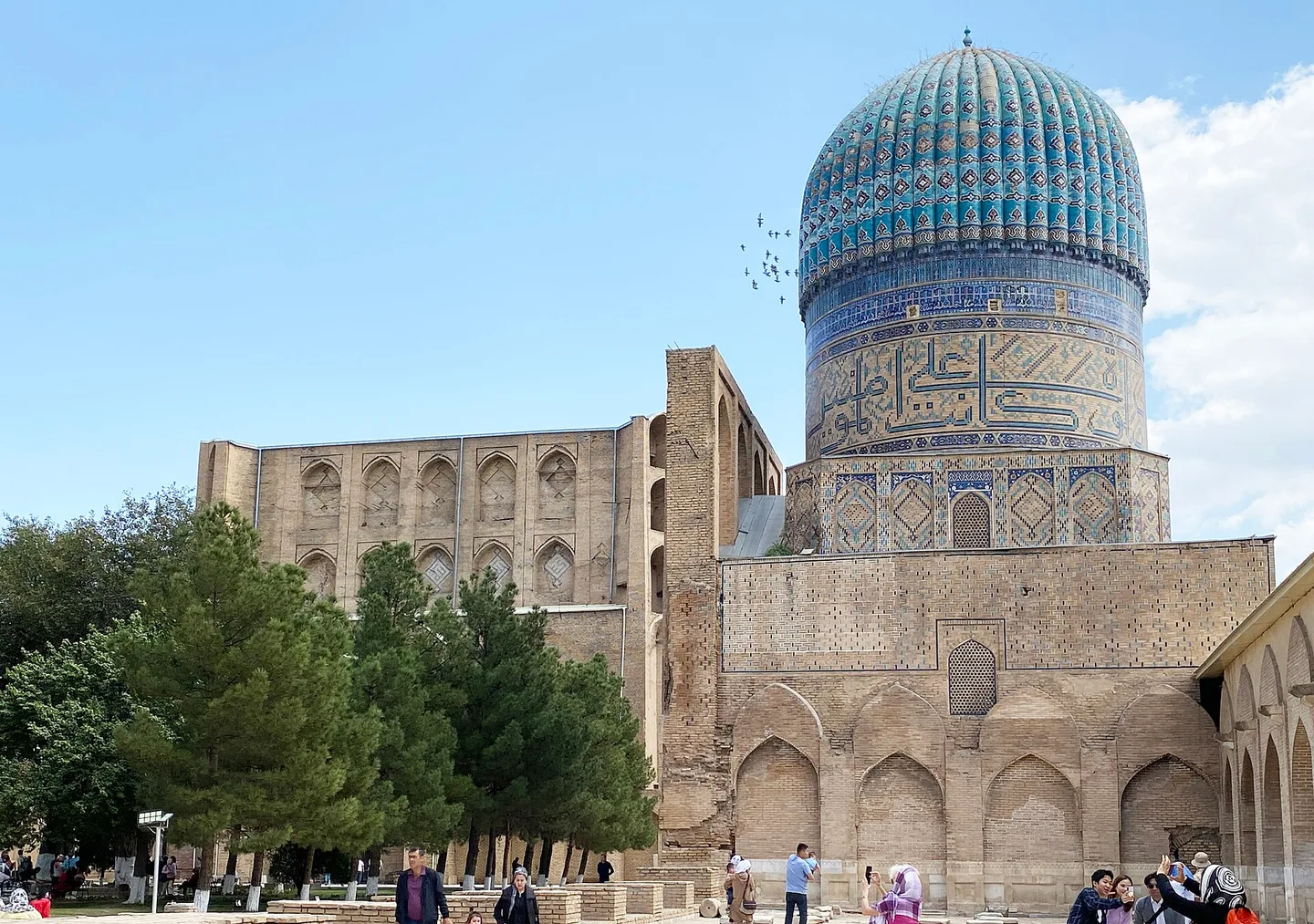
Because the mausoleum stands independent of the main religious precinct, its perimeter garden provides quiet shade beneath blossoming almond boughs. Sitting here gives you an uninterrupted view of the colossal mosque portal framed by shifting shadows. Modest dress remains polite throughout both sites, meaning covered shoulders and knees for both men and women. Taking photographs of the masonry details is permitted throughout the public courtyards without special permits. Allow comfortable time to study the subtle colour transitions between raw earthen brick and turquoise glazed tile.
Navigating the Stalls of Siyob Bazaar
A pedestrian footbridge leads immediately from the mosque perimeter into the energetic multi-tiered pavilions of Siyob Bazaar. This market has served caravan trade along the Silk Road for generations, functioning as Samarkand's primary trading hub. The lower terraces house vendors offering fragrant spices, mountain herbs, golden raisins, and roasted apricot kernels. Towering displays of traditional Samarkand round bread, baked with crisp decorative glaze, fill entire lanes near the western gates. Sellers warmly offer samples of dried melon rolls and salted walnuts as you wander through the aisles.
- Follow the main central thoroughfare to locate the wholesale dried fruit sellers and regional nut merchants.
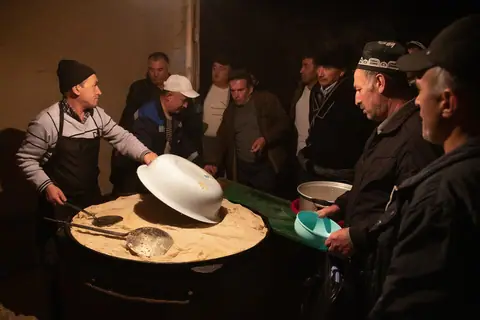
- Head towards the northern covered pavilion to watch bakers stack fresh crusty loaves from clay tandoor ovens.
- Keep small paper currency ready for fresh fruit purchases, as small market stalls rarely process digital card payments.
- Maintain respectful spatial awareness around busy porters pushing laden handcarts along narrow stone corridors.
The bazaar serves as an ideal midday pause after touring monumental architecture, offering tea counters and fresh pomegranate juice. You can easily continue walking eastward towards the blue domes of the Shah-i Zinda necropolis along the ridge. Combining the religious majesty of Bibi-Khanym with the sensory rhythm of Siyob reveals the everyday soul of the city. Remember that ticket offices at the monuments operate cashless card readers, while the market operates entirely on physical sums. Take your time absorbing the aromas of cumin, warm bread, and wild mint before moving onwards.
Official prices and opening hours
- Registan Square Madrasahs (Ulugh Beg, Sher-Dor, Tilya-Kori)Official site ↗
- Afrosiyob High-Speed Train (Tashkent – Samarkand)Official site ↗
Where it is
- 1Bibi-Khanym Mosque and Siyob Bazaar Walking
- Samarkand International Airport (SKD) · about 5 km from here in a straight line
- Directions in Google Maps
Stations and taxi ranks: OpenStreetMap. Airports: OurAirports. Distances are in a straight line.
Traveller tips
Real advice from people who have been to Samarkand. Every tip is read by our team before it goes live.
No tips yet. Been here? Yours could be the first.
Thank you! Your tip will appear here after a quick review.
More in Samarkand
Continue exploring Samarkand with related neighbourhood, food, and planning guides