Alberta Street, Riga: Art Nouveau Facades and the Pēkšēns Museum
Alberta Street displays an exceptional cluster of decorative Art Nouveau apartment blocks, intricate plaster carvings, and preserved residential interiors in central Riga.
Alberta Street forms the central artery of the Quiet Centre district, presenting a dense concentration of early twentieth-century residential architecture. Wealthy merchants commissioned local architects to create statement apartment buildings along newly surveyed plots. Walking down the street offers a direct view of shifting decorative trends, moving from theatrical eclecticism to national romanticism within a few blocks.
The avenue takes its name from Bishop Albert, founder of the medieval settlement beside the Daugava River. Unlike the narrow cobblestone passages of the old core, this district features wide carriageways and broad tree-lined pavements. Visitors can step back comfortably to study the upper storeys without straining their necks. Those planning a full capital schedule can pair central riverfront sights and museums with a quiet morning walk here.
Architectural Origins of the Quiet Centre
Around the turn of the twentieth century, Riga experienced a rapid building boom. Local regulations demanded masonry construction within the central rings. This rule pushed architects to decorate flat brick surfaces with stucco reliefs and carved stone brackets. A new generation of Baltic German and Latvian designers trained at the local polytechnic institute and applied continental artistic currents to modern urban flats.
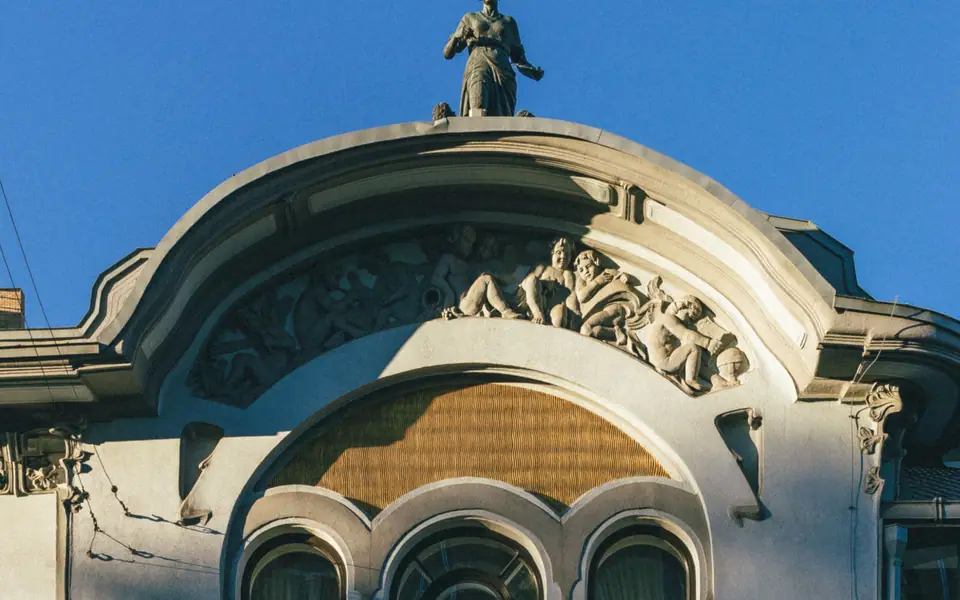
Stylistic choices along the pavement reflect distinct decorative ideas operating side by side. One faction favoured symmetrical German Jugendstil lines, incorporating stylised flora, curved metal balconies, and rhythmic window arrangements. Another embraced flamboyant eclecticism, covering bay windows with classical masks, mythical beasts, and stone maidens. Developers used extravagant ornament along cornice lines to attract affluent tenants to their rental apartments.
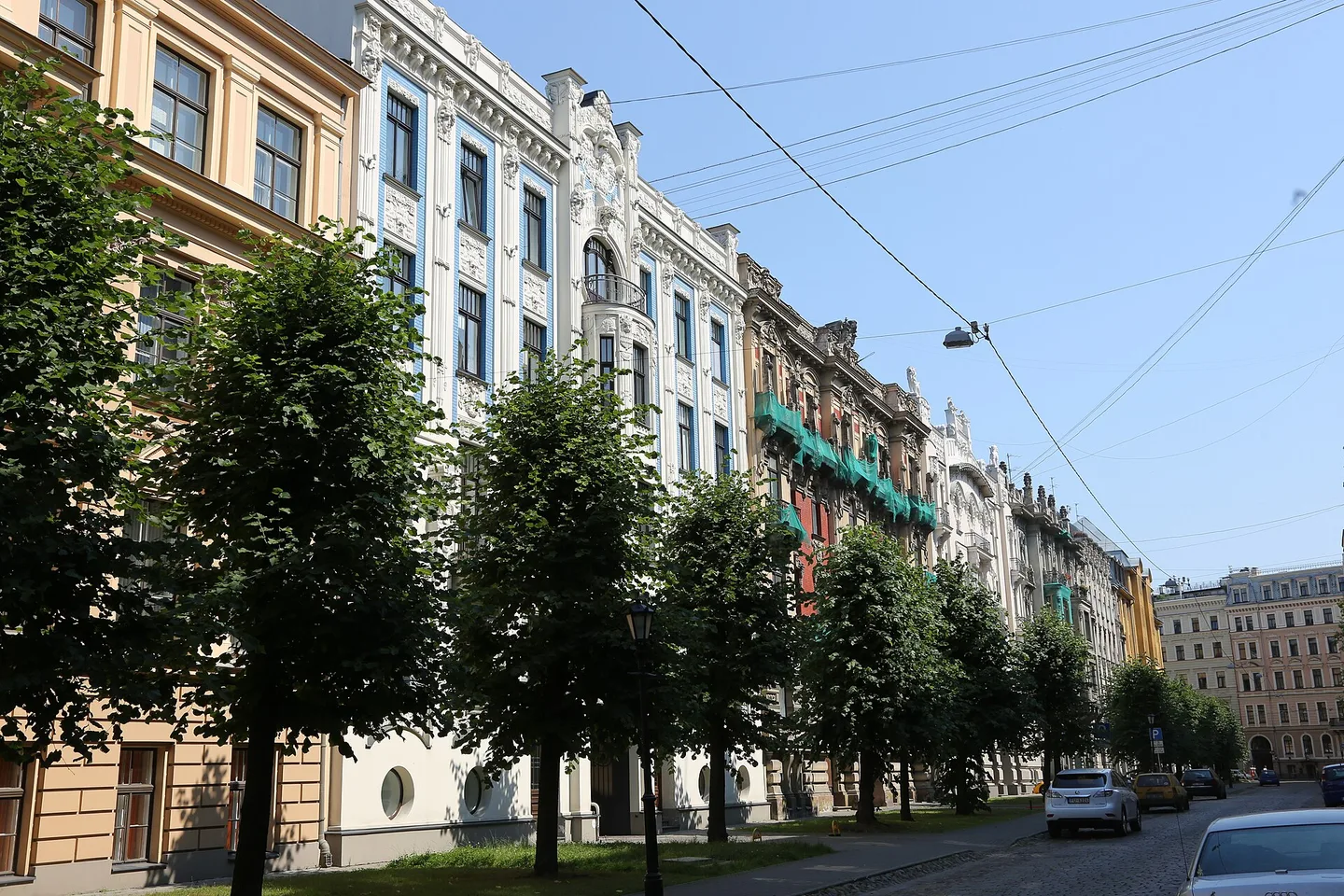
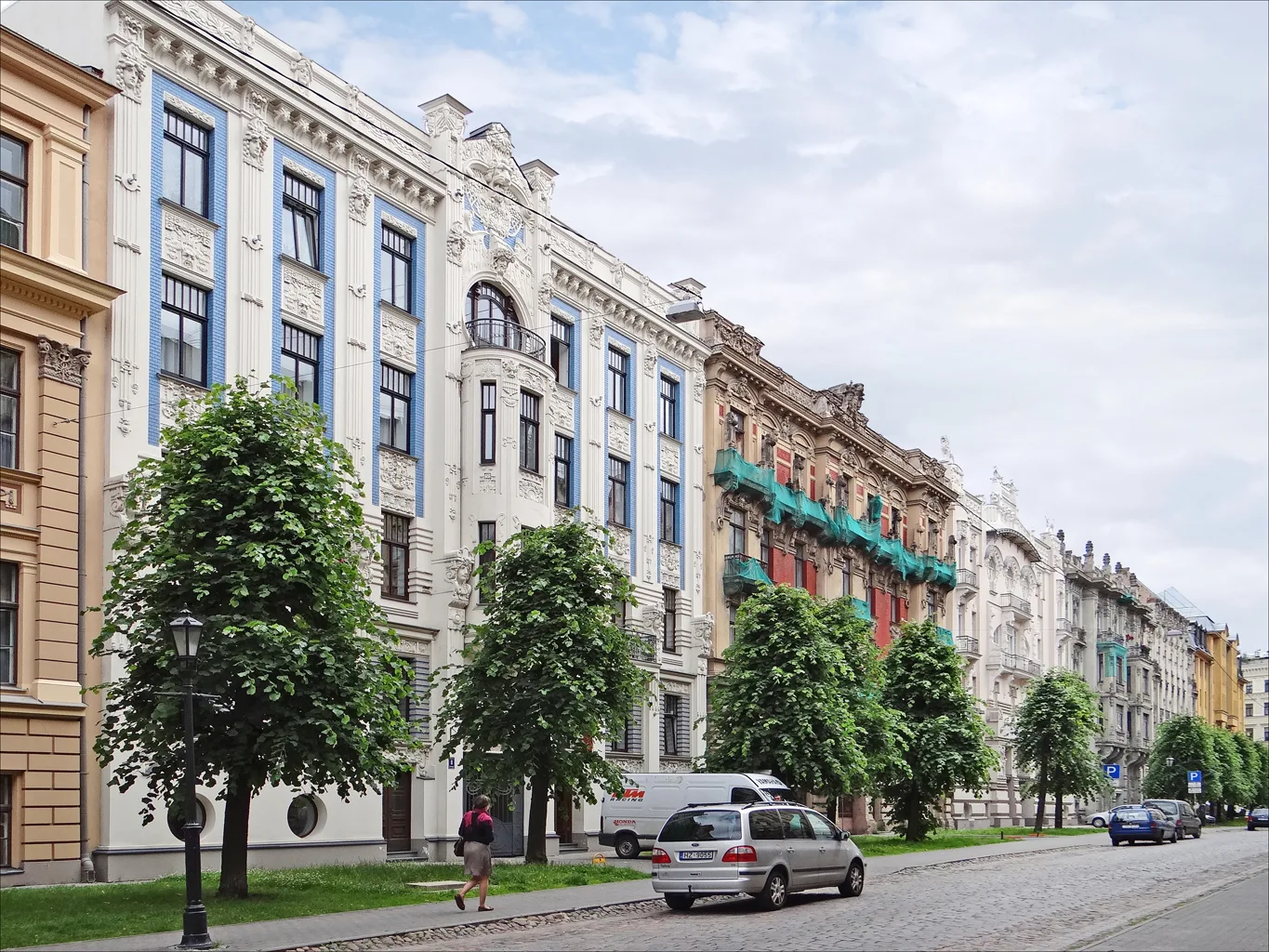
Several master builders defined the neighbourhood's character on adjacent plots. Civil engineer Mikhail Eisenstein became famous for glazed blue bricks and expressive stone faces. In contrast, Konstantīns Pēkšēns and his associate Eižens Laube pioneered a subdued national romantic direction using regional folklore, dark timber accents, and heavy granite bases.
Builders installed central heating, gas lines, and indoor plumbing behind these ornate facades within a single decade. Decorative plasterwork neatly disguised drainage pipes and steel beams across an upscale residential quarter away from riverfront factories.
Notable Facades Along Alberta Street
Walking eastward along the northern pavement brings several striking compositions into view. Number 2a displays an ornamental attic level topped by openwork stone carvings and sphinx figures above the entrance. Number 4 and number 8 pair sculpted lions over projecting bays with stylised peacocks across upper pediments. Natural daylight picks out subtle shifts in plaster texture, best admired alongside the broader Riga city travel guide.
The southern side of the thoroughfare shows tighter structural restraint. Corner properties feature rounded turrets, steep gables, and recessed loggias catching northern light. Original brass fittings still survive on timber entrance doors and wrought-iron gates. Above deep stone archways, projecting bay windows pull winter daylight inside while varied iron weather vanes and stepped gables break the roofline.
- Symmetrical eclecticism: Intricate cartouches, mask reliefs, and blue tile panels dominating upper storeys.
- National romantic details: Textured plaster, dark pine framing, and stylised Baltic motifs set into stone porticos.
- Jugendstil ironwork: Flowing floral balustrades, decorative lamps, and sculpted window transoms along front steps.
Visiting the Pēkšēns Museum and Interior Spaces
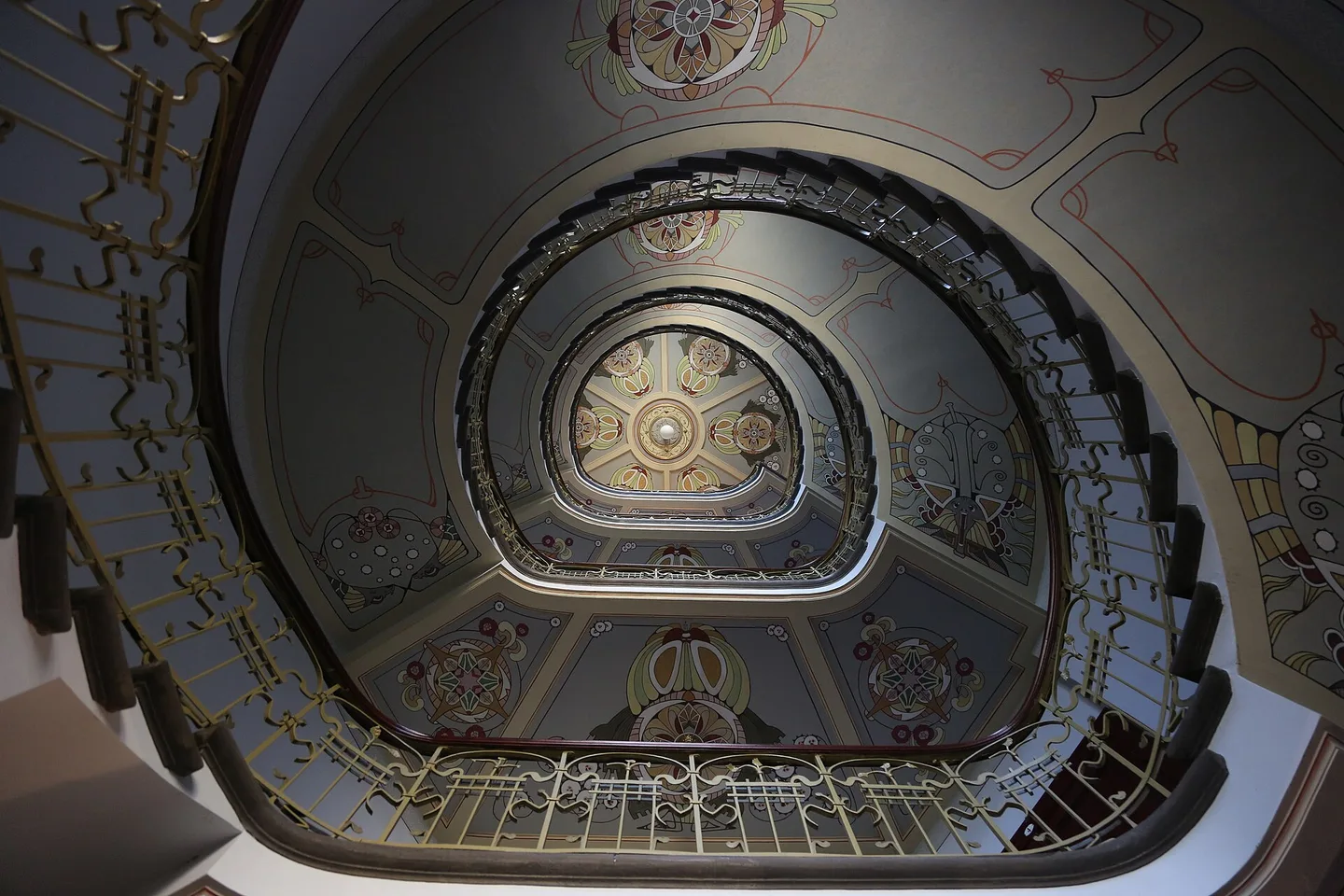
At the western end of the avenue stands number 12, completed by Pēkšēns and Laube. The property houses the Riga Art Nouveau Centre inside the architect's former residence. Stepping past the entrance reveals a grand spiral staircase rising through the stairwell beneath painted ceilings and flowing banisters.
Curators restored the apartment rooms to mirror early twentieth-century daily life. Period furniture, brass lamps, and recreated wall stencilling fill the drawing room, while a tiled ceramic stove anchors the dining space. Custom door handles and window latches echo the facade reliefs outside.
The preserved kitchen and service corridors reveal how household staff operated behind the formal salons, displaying enamelled cookware, wood-burning ranges, and pantry shelving. Check museum opening days and current admission rules ahead of your visit before setting out.
Walking Sequences and Surrounding Streets
Alberta Street fits cleanly into a wider loop through the Quiet Centre. Turning onto Elizabetes Street reveals an expressive frieze of sculpted faces and blue ceramic tiles, while Strēlnieku Street adds grand educational buildings and mansions. Starting from the northern edge of Kronvalda Park along Antonijas Street leads straight into Alberta Street away from heavy traffic, passing quiet bakeries along the cross streets.
| Street Name | Primary Character | Notable Detail |
|---|---|---|
| Alberta Street | Monumental apartment rows | Expressive mask sculptures and spiral staircases |
| Elizabetes Street | Elaborate eclectic facades | Blue glazed brick bands and colossal attic figures |
| Strēlnieku Street | Decorative institutional blocks | Geometric plaster friezes and grand entryways |
| Antonijas Street | Quiet residential corridor | Refined wooden doors and ornate metal balconies |
After circling the Quiet Centre, footpaths lead straight back through the parklands towards central tram stops for museum or market outings elsewhere in town.
Official prices and opening hours
- Rīgas Satiksme Buses, Trams & Airport Bus 22Official site ↗
- Riga Central Market PavilionsOfficial site ↗
Where it is
- 1Alberta Street, Riga
- Riga International Airport (RIX) · about 9 km from here in a straight line
- Directions in Google Maps
Stations and taxi ranks: OpenStreetMap. Airports: OurAirports. Distances are in a straight line.
Traveller tips
Real advice from people who have been to Riga. Every tip is read by our team before it goes live.
No tips yet. Been here? Yours could be the first.
Thank you! Your tip will appear here after a quick review.
More in Riga
Continue exploring Riga with related neighbourhood, food, and planning guides
Choosing the Best Time to Visit Riga: Seasonal Walks and Baltic Weather
Riga, Latvia
Where to Stay in Riga: Comparing Old Town, Centrs and Pārdaugava
Riga, Latvia
Three Days in Riga: Old Town Lanes, Art Nouveau Facades and Kalnciema
Riga, Latvia
What to Eat in Riga: Rye Bread, Grey Peas and Market Specialties
Riga, Latvia
