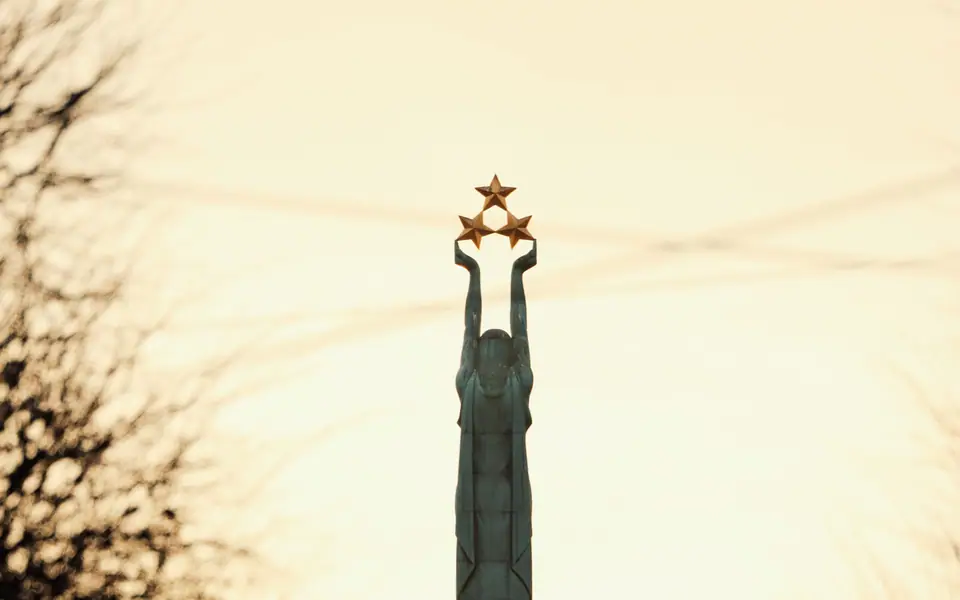
Freedom Monument and Riga's City Canal: A Walk Through the Boulevard Belt
We explore the green boulevard belt connecting Riga's Old Town to the Art Nouveau quarter alongside the scenic City Canal.
The Freedom Monument marks the central threshold between Riga's medieval heart and the broad avenues of the nineteenth-century boulevard belt. Standing tall over Brīvības bulvāris, the stone memorial anchors the city's civic memory and daily pedestrian flow. The surrounding plaza stays calm during morning hours, giving clear space to observe the sculpted relief panels. Carved granite figures portray national heroes, labourers, and guards standing in silent defence around the base. Above the stone tiers, copper figures lift three gilded stars into the open Baltic sky. Study Riga's boulevard layout and district orientation to see how this square links Old Town with newer quarters.
Standing Before the Freedom Monument
Approaching from Old Riga, the pedestrian avenue widens dramatically as it crosses the bridge over the City Canal. The monument honours the soldiers who fought for independence, serving as an enduring national focal point. Guards stand watch at the foot of the plinth, stepping out their formal cadence across the stone paving. Fresh flowers often rest on the lower terrace, placed there by local residents during quiet moments of reflection. Standing on the granite esplanade gives clear sightlines down tree-lined avenues stretching north and east. The visual transition from narrow cobbled alleys to grand imperial boulevards stands out clearly right here.
Navigating the Parklands of the City Canal
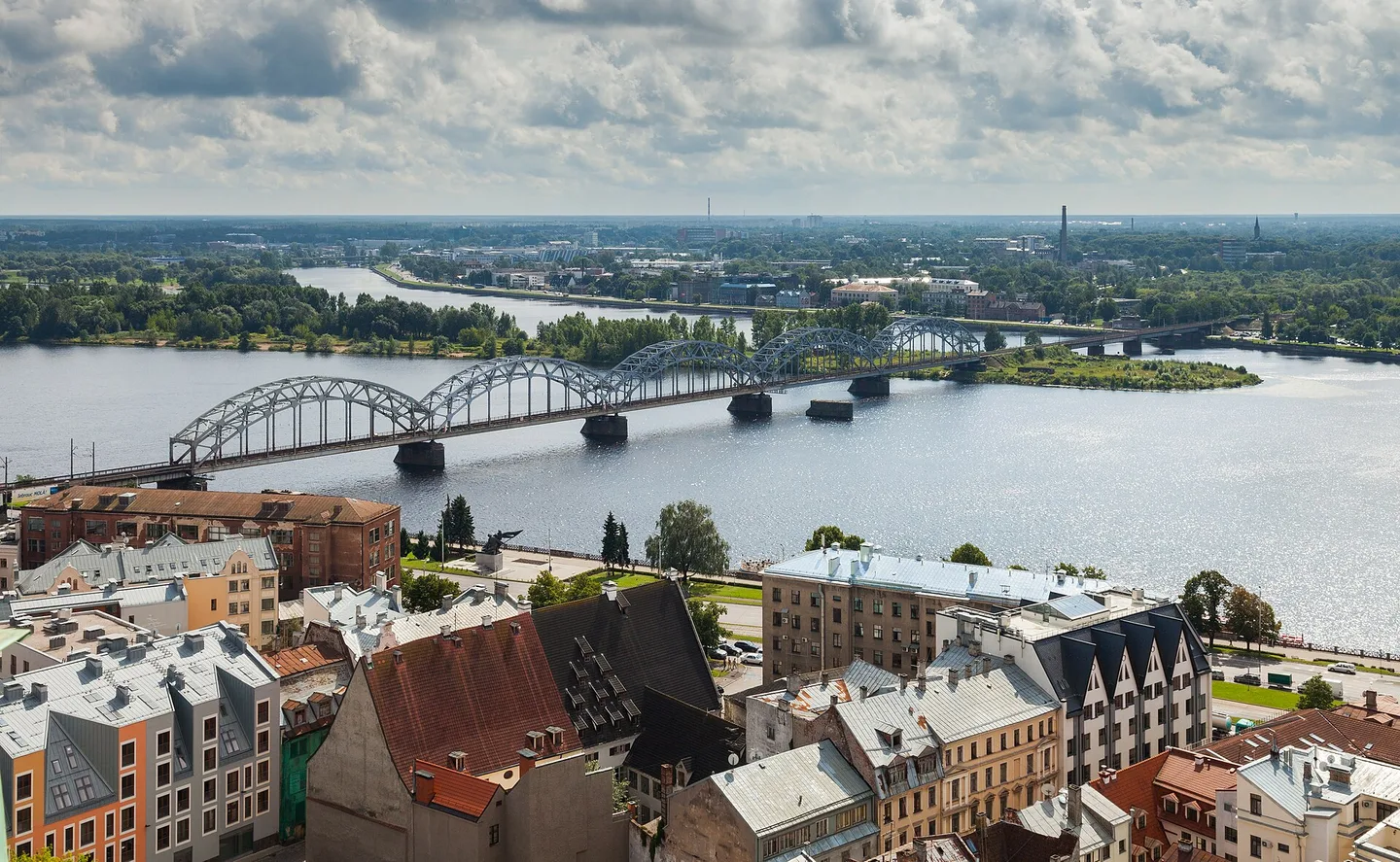
The City Canal zigzags through the former moat system, cradled by manicured parklands known collectively as the Boulevard Ring. Bastejkalns, or Bastion Hill, rises directly beside the water with winding gravel footpaths, miniature cascades, and stone rockeries. Small wooden pleasure boats glide beneath arched stone bridges along the quiet bends. These canal banks buffer street traffic while mature linden trees, weeping willows, and copper beeches shade wooden park benches in summer. Pair waterside park walks with nearby towers and riverfront squares across the central district.
| Boulevard Section | Key Highlights | Atmosphere |
|---|---|---|
| Bastion Hill (Bastejkalns) | Stone bridges, winding gravel paths, canal cascades | Shaded, relaxed, elevated viewpoints |
| National Opera Gardens | Formal flowerbeds, fountains, classical music busts | Refined, orderly, civic gathering spot |
| Kronvalda Park | Wide lawns, canal bends, quiet pavilions | Expansive, tranquil, popular with walkers |
Walking between these distinct park sections reveals how nineteenth-century planners converted old defensive fortifications into public recreation grounds. The canal waters flow gently towards the Daugava, reflecting the pastel facades of neighbouring embassies and civic institutions.
Boulevard Ring Architecture and Heritage Stops
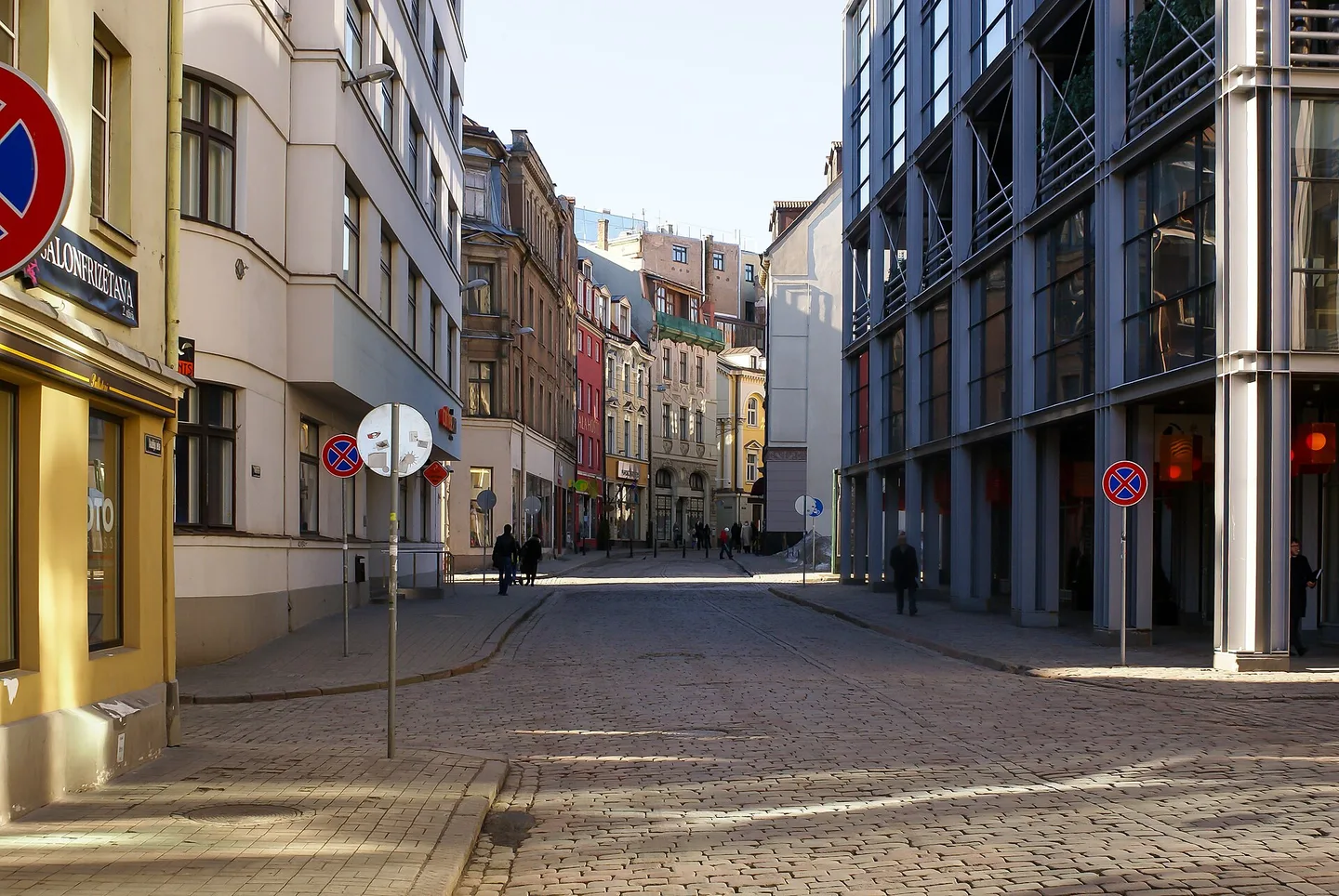
Encircling the canal parklands stands an impressive collection of monumental architecture built after the old defensive walls came down. The Latvian National Opera commands the southern edge of the green belt, its neoclassical portico overlooking formal flowerbeds. Fine concert halls, university faculties, and government ministries line the perimeter streets with symmetrical dignity. Walking down nearby avenues leads smoothly toward the Art Nouveau blocks of the Quiet Centre. Intricate wrought-iron railings, stone balustrades, and detailed masonry trims adorn these stately residential structures, while municipal trams stop along peripheral boulevards to connect outer districts.
Walking Sequences and Seasonal Ground Conditions
A clockwise circuit works cleanly, starting at the Freedom Monument and following the water northward. Survey the sculpted reliefs around the monument plinth, then climb the footpaths of Bastejkalns for elevated canal views. Descend toward the waterside promenade and follow the curving canal north toward Kronvalda Park. This sequence keeps you away from roadway traffic while linking directly with the historic embassy quarter.
- Pause at the monument base to observe the changing of the guard and the stone bas-reliefs.
- Cross the arched stone footbridge onto Bastion Hill for panoramic views across the canal gardens.
- Follow the canal towpath past the National Opera toward the quiet expanses of Kronvalda Park.
- Exit the parkland ring northward along Elizabetes iela into the celebrated Art Nouveau boulevard district.
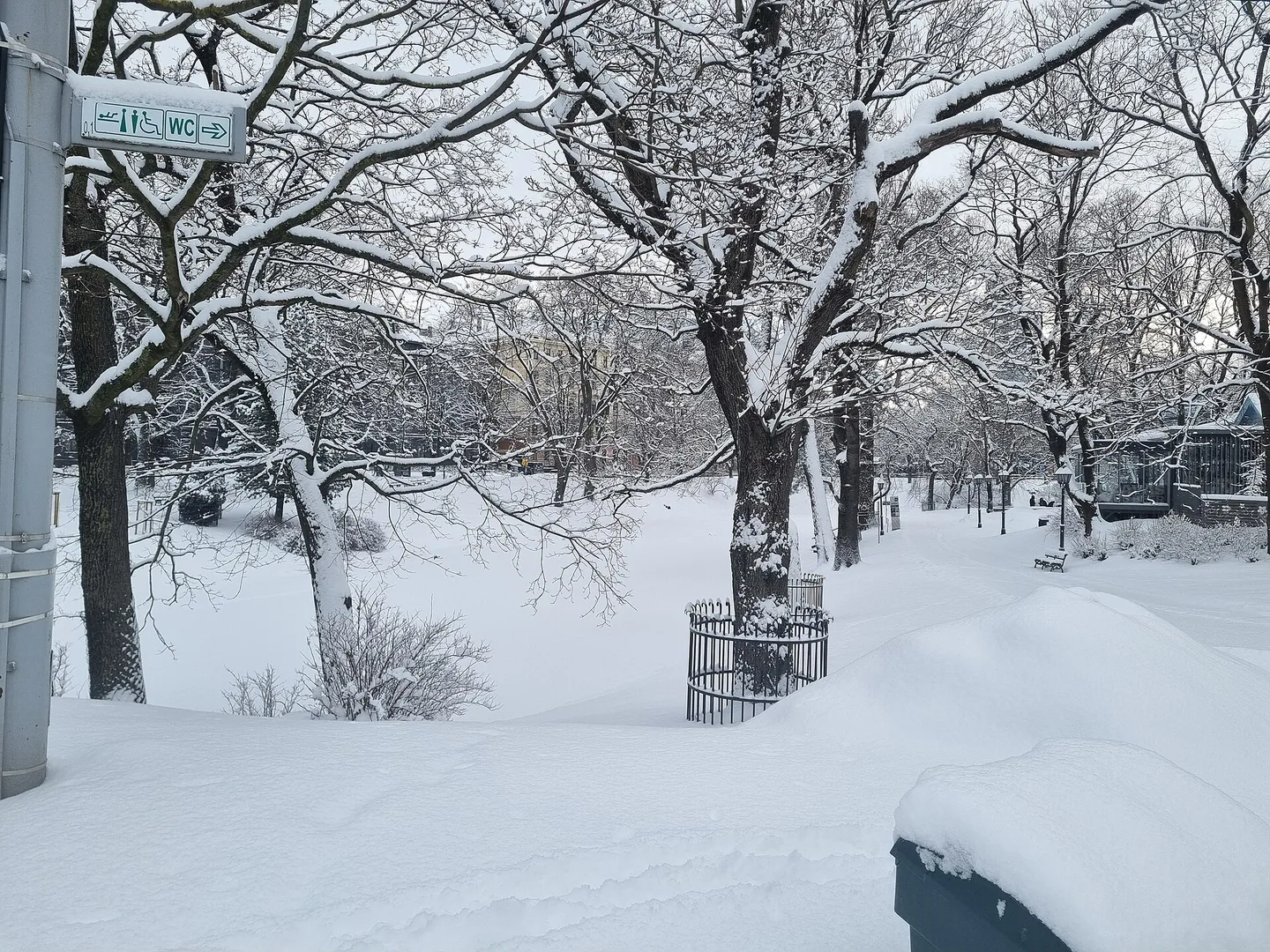
Seasonal conditions alter the walking surface along the canal throughout the year. Spring brings flowering crocuses and fresh greenery to the banks, while autumn covers gravel paths in golden leaves. In deep winter, snow blankets the slopes, and freezing weather turns the canal surface to solid ice. Park crews clear central walkways promptly, yet compacted snow can remain slippery on steeper bridge steps between December and March. Sturdy footwear with dependable grip keeps winter canal walks steady and comfortable.
Official prices and opening hours
- Rīgas Satiksme Buses, Trams & Airport Bus 22Official site ↗
- Riga Central Market PavilionsOfficial site ↗
Where it is
- 1Freedom Monument and Riga's City Canal
- Riga International Airport (RIX) · about 9 km from here in a straight line
- Directions in Google Maps
Stations and taxi ranks: OpenStreetMap. Airports: OurAirports. Distances are in a straight line.
Traveller tips
Real advice from people who have been to Riga. Every tip is read by our team before it goes live.
No tips yet. Been here? Yours could be the first.
Thank you! Your tip will appear here after a quick review.
More in Riga
Continue exploring Riga with related neighbourhood, food, and planning guides
Alberta Street, Riga: Art Nouveau Facades and the Pēkšēns Museum
Riga, Latvia
Riga Central Market and Spīķeri: Food Halls Beside the Daugava
Riga, Latvia
Kalnciema Quarter: Wooden Architecture and Courtyards of Pārdaugava
Riga, Latvia
Āgenskalns and Pārdaugava: Wooden Streets and Market Culture
Riga, Latvia
