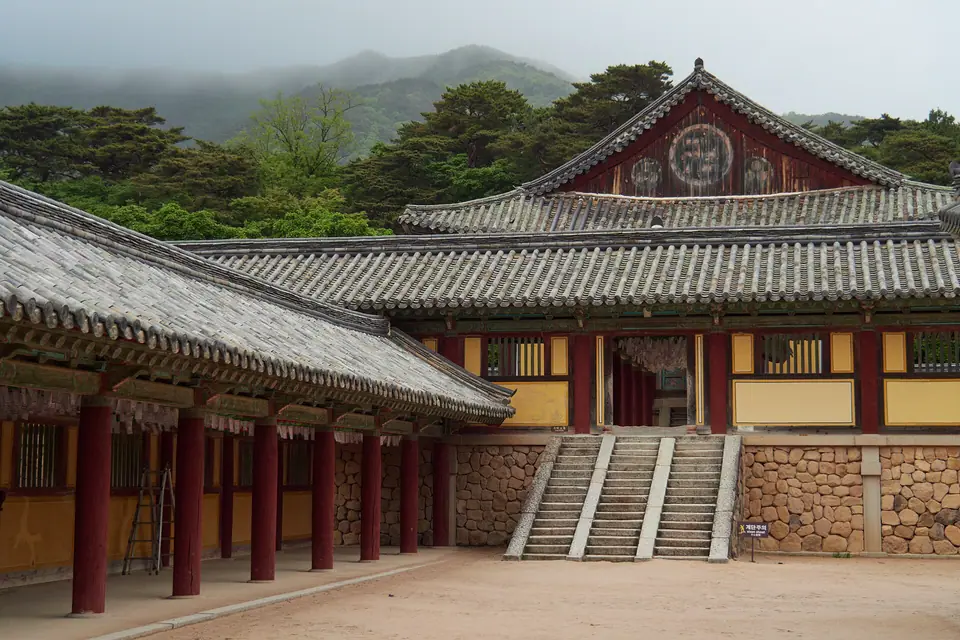
Visiting Bulguksa Temple and Seokguram Grotto in Gyeongju
Bulguksa Temple and Seokguram Grotto showcase classical Silla stone architecture across the slopes of Mount Tohamsan outside central Gyeongju.
Bulguksa sits on the wooded lower slopes of Mount Tohamsan, roughly sixteen kilometres southeast of the central railway station. Local public buses leave regularly from downtown stops near the express bus terminal, skirting agricultural fields before climbing into the forested foothills. Travellers can review regional bus connections and rail links through our Gyeongju transport advice before departing the downtown area. The roadside terminal below the temple grounds features small tea shops, ticketless arrival plazas, and paved walking ramps leading directly toward the outer wooden gates.
Boarding local services early in the morning lets visitors reach the forested perimeter before midday tourist crowds gather around the lower ticket booths. The ride through the eastern suburbs gives a sense of how the ancient Silla capital spread between low mountains and wide river valleys. Keep transport cards topped up in advance to simplify rapid boarding at busy central stops along the main avenue. Stepping off the bus, the air cools noticeably beneath the pine canopy that covers the mountain slopes.
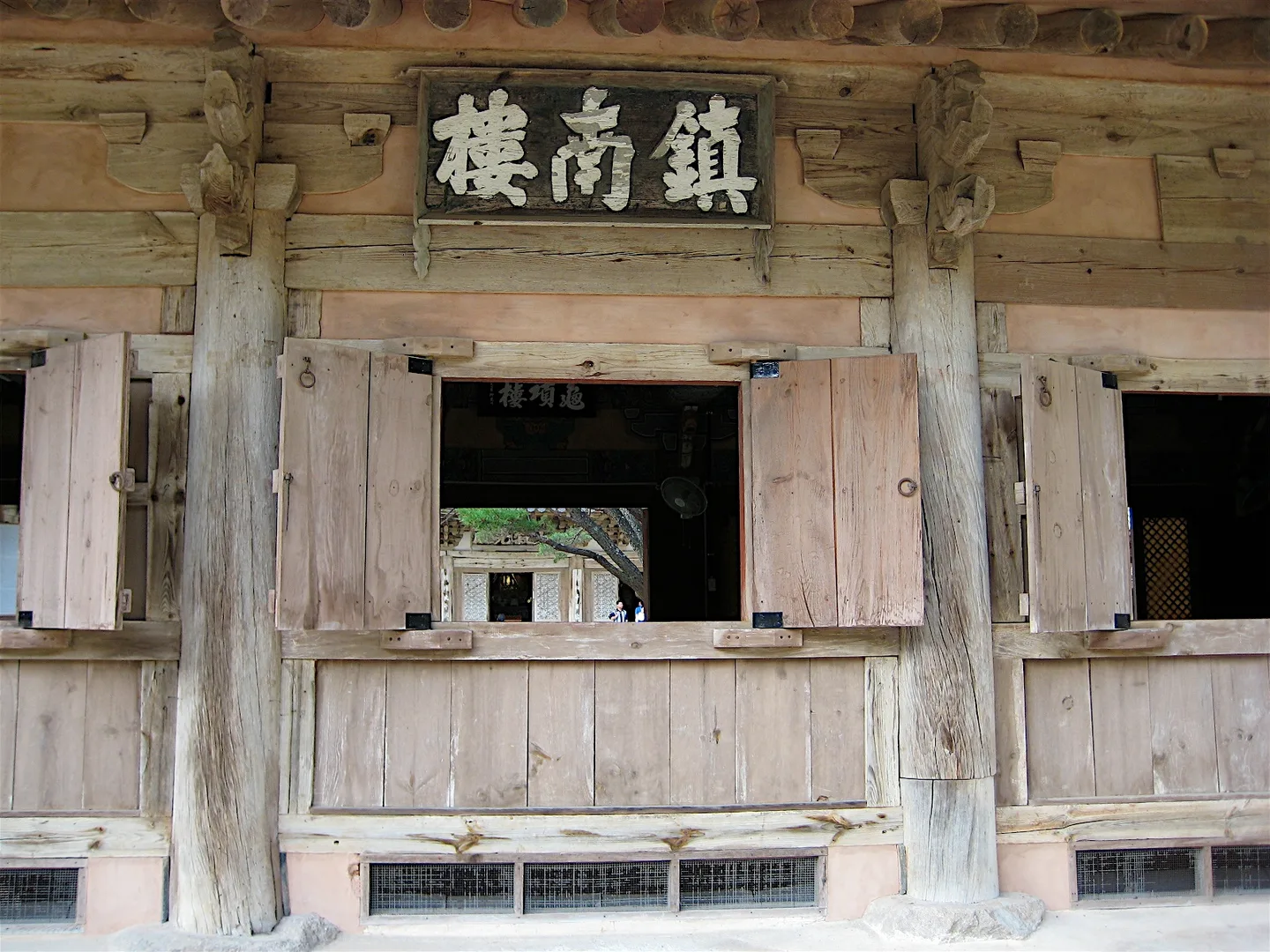
Navigating Bulguksa's Stone Terraces and Pagodas
Entering the temple grounds reveals the massive stone terraces that support the primary wooden prayer halls. The Cheongungyo and Baegungyo bridges, named the Blue Cloud and White Cloud bridges, rise grandly toward the central pavilion gate. Visitors walk around the perimeter paths rather than ascending these delicate historic stairways, protecting the original carved masonry from foot traffic. The stonework demonstrates precise interlocking joints crafted without mortar, anchoring the spiritual compound securely against the mountain incline.
Passing through the side gate brings you into the central courtyard between two contrasting granite monuments. Dabotap pagoda displays intricate stone carving with multiple geometric levels, while Seokgatap stands opposite with austere, clean lines and three unadorned tiers. This deliberate architectural pairing represents different aspects of Buddhist teaching standing in harmonious equilibrium across the gravel courtyard. Travellers building a broader itinerary can explore other historic sights via attractions in Gyeongju across the central tumuli basin.
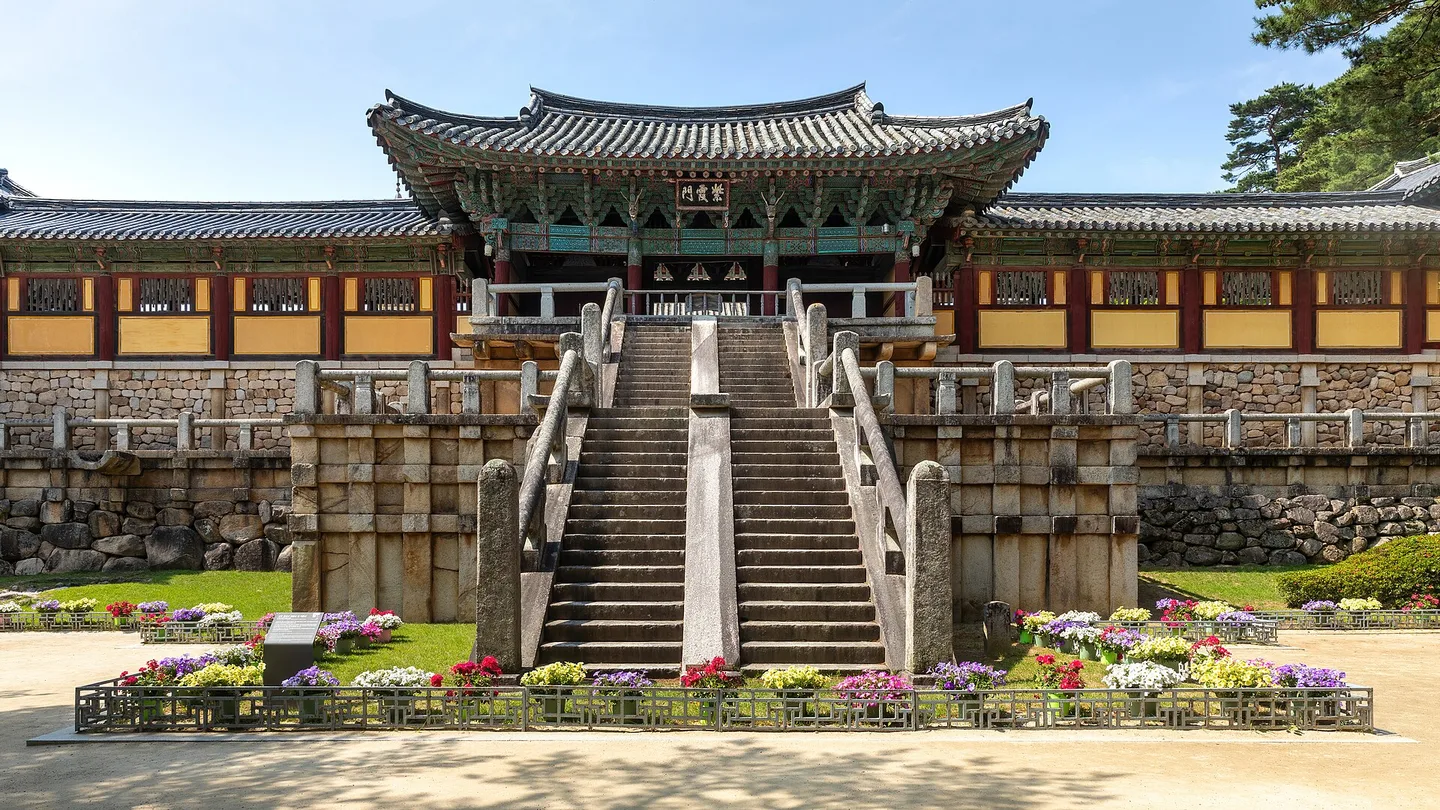
Connecting Upward to Seokguram Grotto
Higher up Mount Tohamsan rests Seokguram Grotto, an artificial stone cave built to house an imposing seated granite Buddha. Reaching the grotto from Bulguksa involves either a winding local shuttle bus ride up the mountain pass or a shaded woodland hiking trail. The uphill path climbs through mixed oak and pine forest, offering steady gradients along dirt tracks and timber steps. Choosing your preferred route depends largely on your walking pace, weather conditions, and overall time budget on the mountain.
| Route Option | Terrain | Primary Consideration |
|---|---|---|
| Mountain Shuttle Bus | Paved hairpin road | Saves walking energy for the summit walk |
| Woodland Footpath | Gravel and earthen track | Requires decent footwear and steady pace |
| Return Ridge Descent | Downward stone steps | Offers calm forest views back to temple gates |
At the upper trailhead, a broad gravel pathway skirts the mountain ridge toward the protective wooden pavilion. Inside, visitors view the serene stone Buddha through a glass partition designed to preserve the delicate interior microclimate. Carved stone guardians, celestial beings, and disciples line the rotunda walls in circular symmetry around the central figure. The view from the mountain terrace sweeps eastward toward the distant sea, highlighting why Silla engineers selected this commanding ridge.
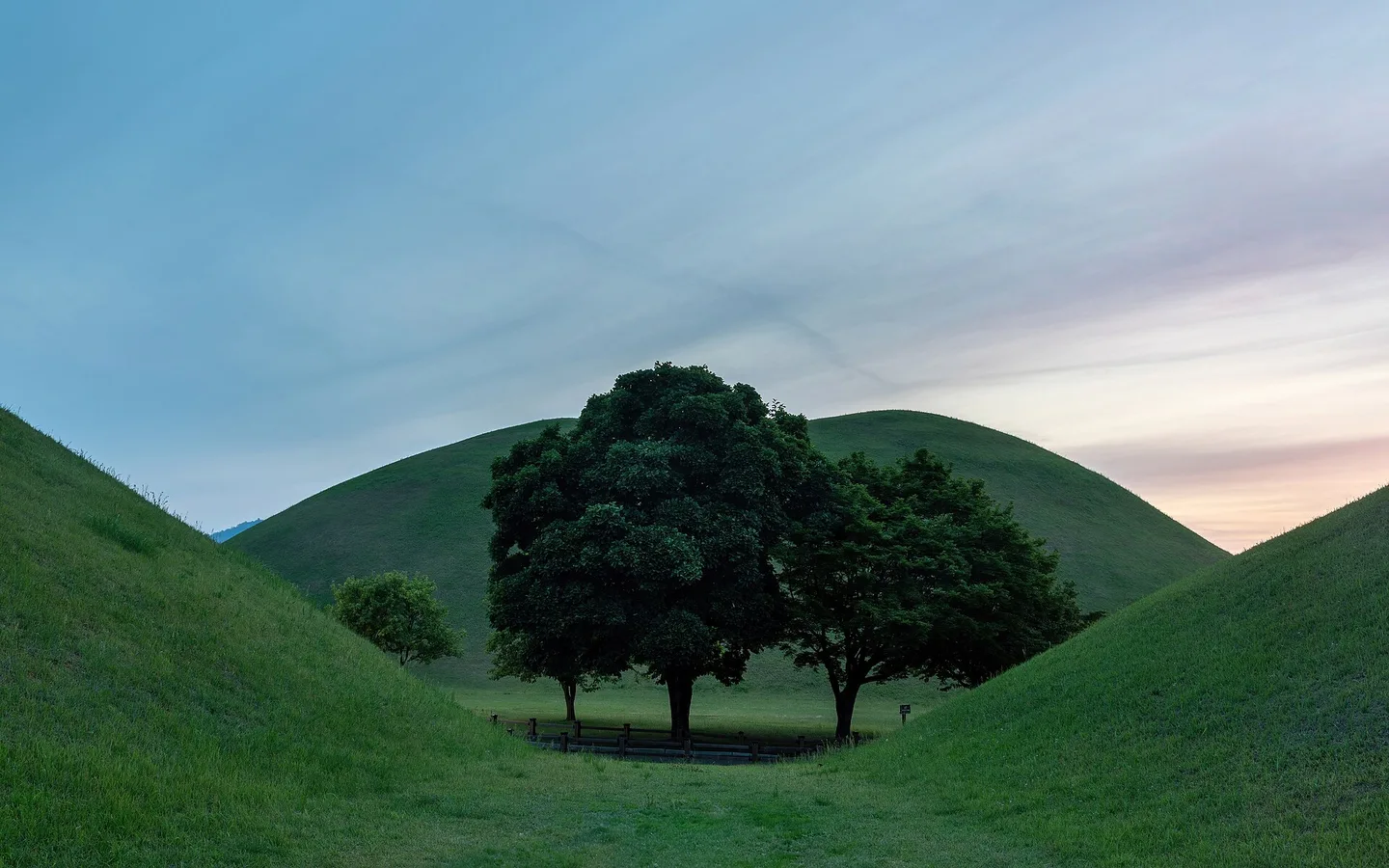
Combining Tohamsan Sights with the Historic Basin
A thorough exploration of both Tohamsan sites fits neatly into half a day when moving at an unhurried pace. After walking down from the mountain ridgeline, travellers often catch returning buses back toward the central tomb parks. Planning lunch around the lower temple village allows you to sample regional wild vegetable dishes and tofu stews before boarding downtown transit. You can find general seasonal advice in the Gyeongju overview guide to help pick comfortable walking months.
Returning downtown leaves ample afternoon daylight for gentle strolls through Daereungwon or along the historic fortress ridges. Balancing the mountain stone craft of Bulguksa with the earthen tumuli in the basin offers a rounded understanding of ancient Korean culture. Wear sturdy walking shoes with good tread, as granite paving and woodland inclines can turn slick following seasonal rains. Setting aside rest pauses helps you appreciate the architectural mastery without feeling rushed along the paths.
Official prices and opening hours
- Gyeongju National MuseumOfficial site ↗
- Donggung Palace & Wolji Pond / Daereungwon TombsOfficial site ↗
Where it is
- 1Visiting Bulguksa Temple and Seokguram Grotto in Gyeongju
- Ulsan Airport (USN) · about 22 km from here in a straight line
- Daegu International Airport (TAE) · about 62 km from here in a straight line
- Directions in Google Maps
Stations and taxi ranks: OpenStreetMap. Airports: OurAirports. Distances are in a straight line.
Traveller tips
Real advice from people who have been to Gyeongju. Every tip is read by our team before it goes live.
No tips yet. Been here? Yours could be the first.
Thank you! Your tip will appear here after a quick review.
More in Gyeongju
Continue exploring Gyeongju with related neighbourhood, food, and planning guides
Gyeongju East Coast Day Trip: King Munmu Underwater Tomb and Gameunsa
Gyeongju, South Korea
What to Eat in Gyeongju: Royal Ssambap, Hwangnam Bread and Hanwoo BBQ
Gyeongju, South Korea
Gyeongju: UNESCO Belts, Free Entry Rules and Navigation
Gyeongju, South Korea
Silla Tombs, Forest Sanctuaries, and Illuminated Waters in Gyeongju
Gyeongju, South Korea
