Photo: riNux from Taipei, Taiwan · CC BY-SA 2.0
Donggung Palace, Wolji Pond and Woljeonggyo Bridge Night Walking Route
Illuminated Silla palace pavilions and reconstructed timber bridges create an evocative evening walking circuit across the ancient parklands of Gyeongju.
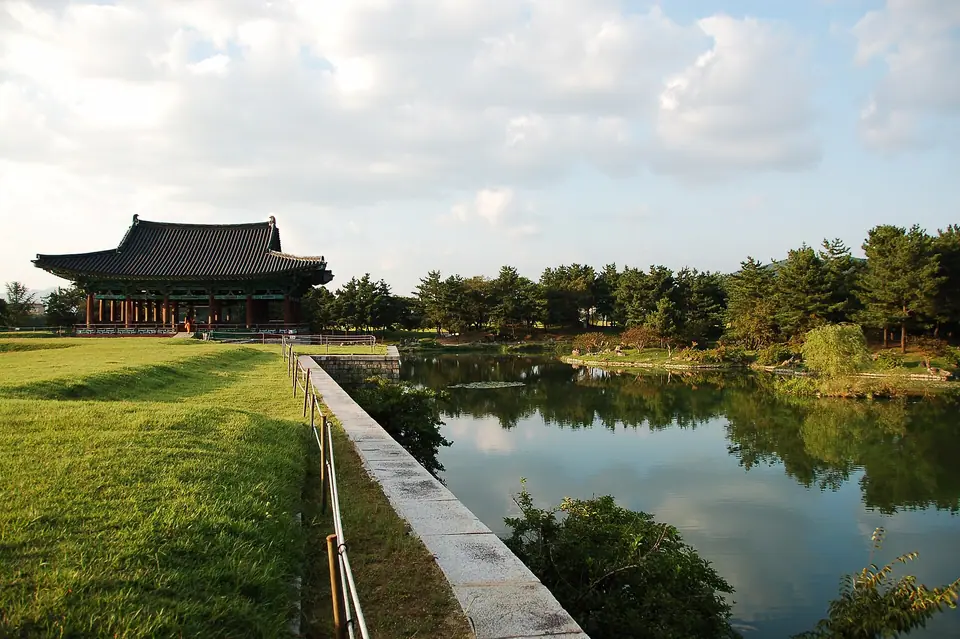
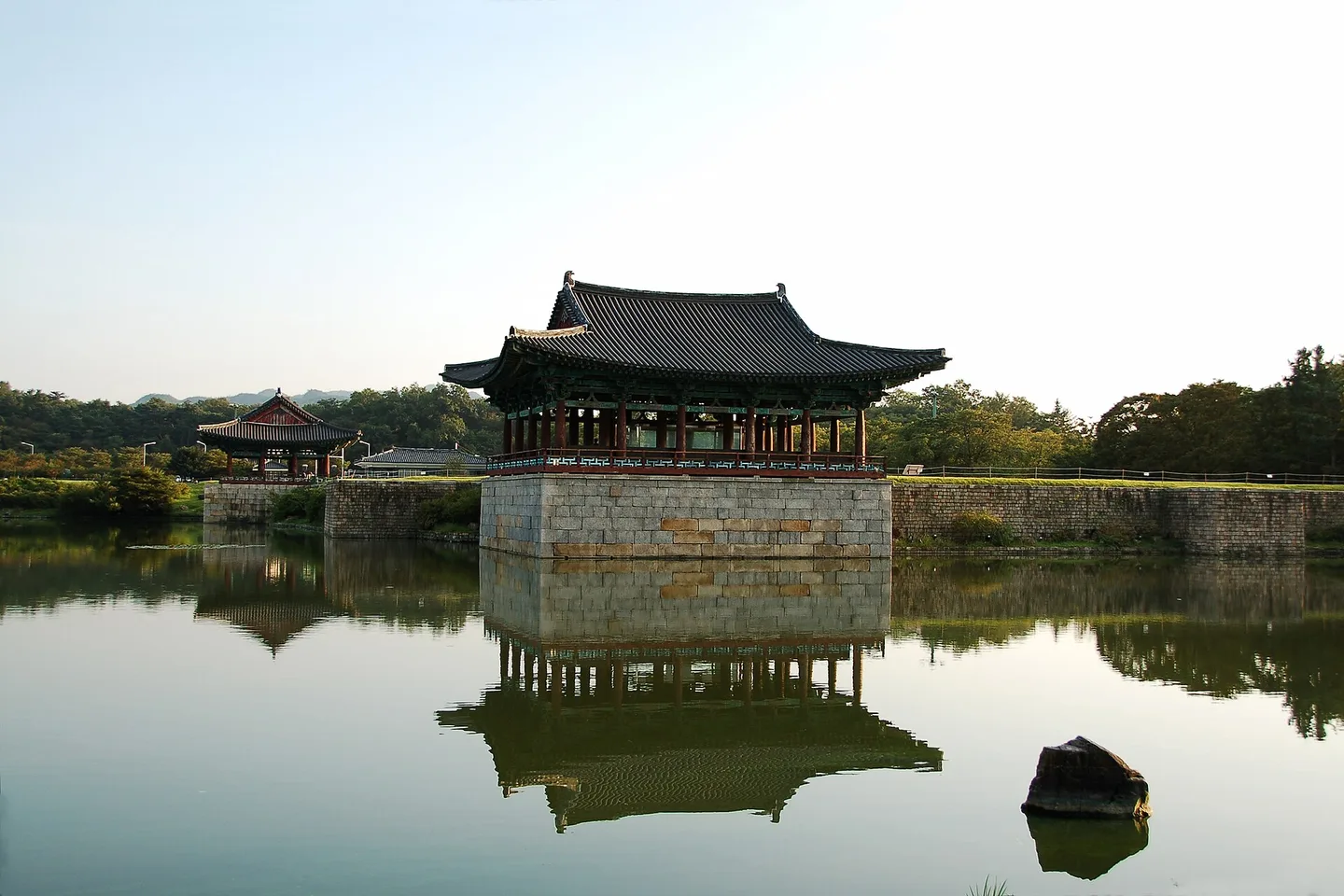
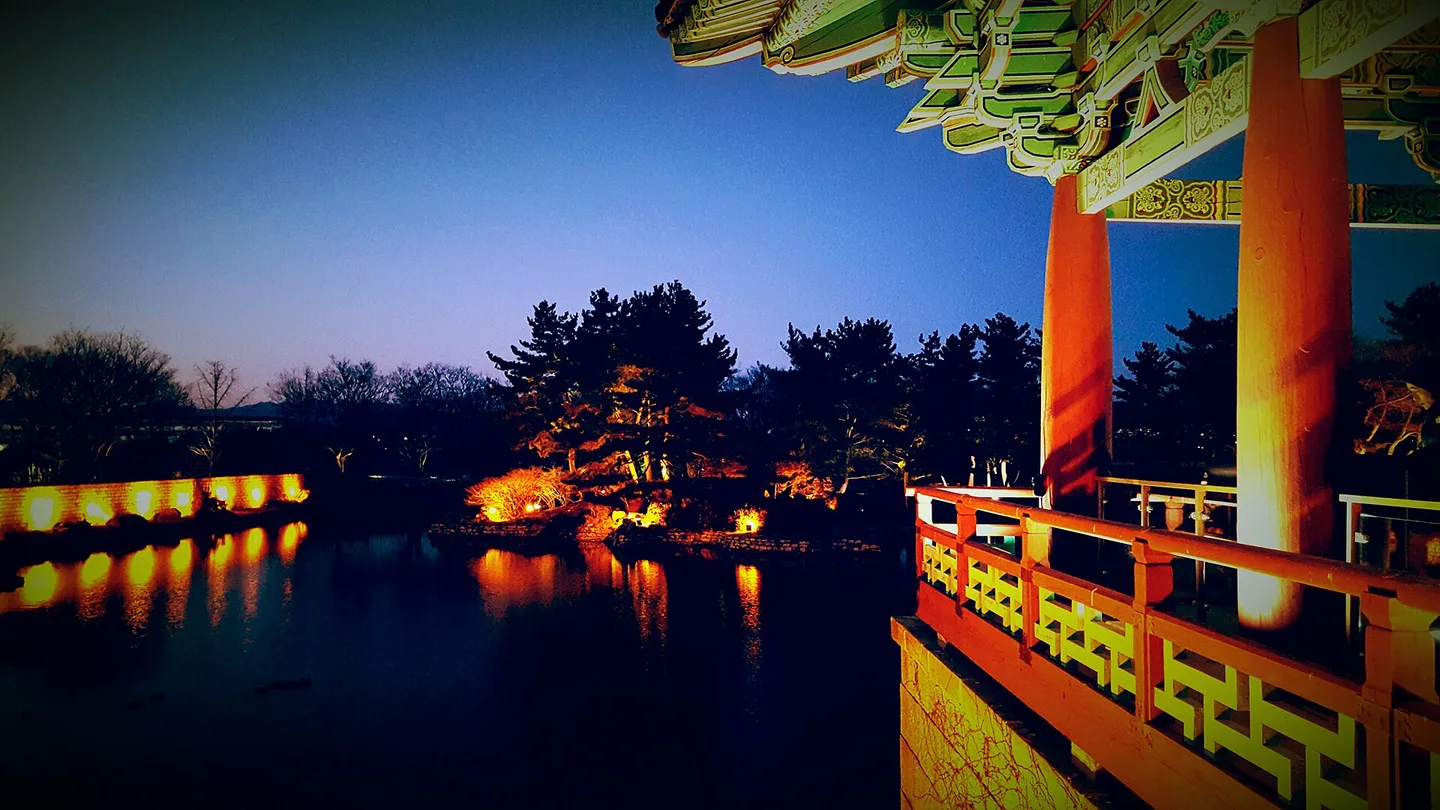
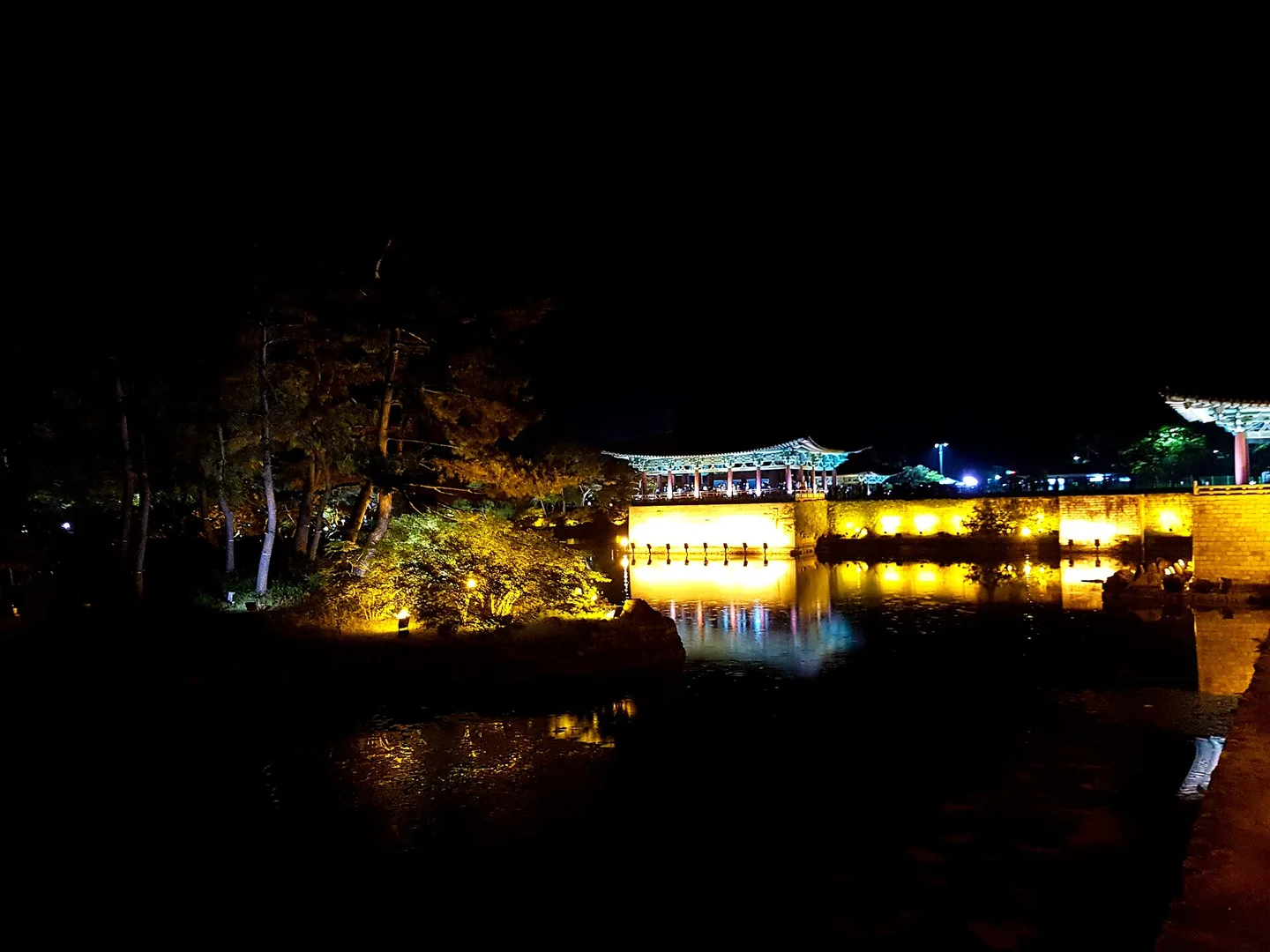
When dusk settles across the historic basin of Gyeongju, golden floodlights illuminate the royal banquet pavilions of Donggung Palace. Wolji Pond transforms into a mirror reflecting curved tiled eaves and surrounding pines, offering quiet perspectives on ancient court life. We begin our evening wander alongside the eastern bank where low perimeter paths trace the original embankments. Water lilies rest on tranquil waters while floodlit timber columns glow against the darkening mountain backdrop. Visitors discovering historic Silla sites across Gyeongju encounter an evocative introduction to the royal quarter along this lakeside route. Every bend reveals fresh vistas across stone foundations and re-erected wooden halls. The calm water surface catches crisp reflections of warm lantern illumination. Walking slowly around the perimeter lets visitors appreciate how master builders shaped the shoreline to conceal its actual boundaries.
The artificial shoreline features deliberate indentations and gentle promontories designed to make the modest body of water appear boundless from royal banquet terraces. In ancient times, banquets hosted foreign envoys and celebrated victorious campaigns beneath these sweeping wooden eaves. Excavations across the lakebed recovered tens of thousands of relics, including gilt-bronze Buddha figurines, ornate roof tiles, and wooden writing tablets. Today, carefully positioned spotlights highlight the intricate roof joinery without producing harsh glare across the water surface. Gentle ripples caused by evening breezes break the mirrored reflections into shimmering golden ribbons. Small wooded islands rise from the central waters, planted with native pine trees that silhouette dramatically against twilight skies.
Leaving the eastern pond enclosure, our walk heads west through grassy open parklands that border the royal forest. Wide flat earth trails guide visitors away from the immediate palace precinct towards the riverbank. Cool evening breezes drift across open meadows where quiet footpaths remain clear and easy to follow. Along the route, low stone boundary markers remind walkers of the sprawling ancient capital that once flourished here. The transition between palace grounds and the river corridor feels tranquil and unhurried. Subtle pathway lighting keeps the gravel tracks visible without washing out the starry night sky. Walking this stretch allows your eyes to adjust to softer ambient darkness before the river comes into view.
The open meadows between Donggung Palace and the Namcheon stream preserve the subterranean foundations of forgotten administrative halls and royal storehouses. Walking across these quiet fields offers an unhurried interlude between the two brightly illuminated heritage monuments. Crickets chirp quietly in the tall grass during mild summer and autumn evenings. Distant silhouettes of ancient burial mounds rise like smooth rounded hills along the horizon. Well-maintained gravel paths handle pushchairs and steady walking at a leisurely pace. Signboards along the trail outline archaeological discoveries uncovered during twentieth-century salvage surveys.
Key Evening Walking Stages
We recommend dividing the walking route into distinct stages to savour the changing evening light and diverse heritage architecture. The path links tranquil lake scenery directly to wide riverfront views.
- Donggung Palace circuits offer classic pavilion reflections on still waters during twilight.
- The meadow corridor provides open sky views and flat walking trails between historic monuments.
- Woljeonggyo riverbanks present dramatic vistas of two-storey gatehouses and timber archways.
- The covered bridge walkway features exposed wooden beams and soft floor-level lanterns.
- Stepping-stone weirs crossing the stream allow adventurous photographers to capture low-angle water reflections.
- Traditional hanok village alleys south of the stream provide quiet flagstone routes back towards local teahouses.
Architectural Highlights of Woljeonggyo Bridge
Arriving at the Namcheon stream, the monumental timber structure of Woljeonggyo Bridge dominates the watercourse with its two-storey pavilion gates. Reconstructed traditional rooflines rise gracefully above solid stone piers that divide the gentle current. Powerful spotlights accent the red and green mineral pigments painted across the bracket systems beneath the eaves. Stepping onto the covered wooden deck, visitors find an airy gallery framed by massive timber pillars. We pause mid-span to watch river currents break softly around the cutwater stonework below. The combination of flowing water and illuminated timber creates an entirely different mood from the enclosed pond paths. Looking back towards the bank reveals how seamlessly the bridge ties the royal palace district to southern historic mounds.
Woljeonggyo was originally constructed during the Unified Silla period to connect the royal fortress of Banwolseong with southern ceremonial areas. Although the original superstructure burned down centuries ago, deep underwater stonework and charred timber relics survived in the river mud. Meticulous archaeological excavations verified the exact dimensions and spacing of the stone piers before reconstruction commenced. Modern master carpenters rebuilt the bridge using traditional joinery methods without relying on visible steel bolts or modern fasteners. The upper gallery contains educational display models detailing the ten-year reconstruction effort and historical documentation.
Walking across the river leads into nearby heritage lanes where low clay-and-stone walls flank quiet residential alleys. Lanterns hanging outside small tea rooms cast warm circles on flagstone surfaces. Visitors exploring the historic capital of Gyeongju can easily coordinate this nighttime walk with daytime visits to nearby royal tombs and museums. Wear comfortable walking shoes, as the circuit crosses packed earth, riverbank gravel, and polished wooden floorboards. Temperatures near open water drop quickly after nightfall, so carrying an extra warm layer is sensible during spring and autumn. These illuminated landmarks offer a memorable perspective on the timeless beauty of the ancient kingdom.
Official prices and opening hours
- Gyeongju National MuseumOfficial site ↗
- Donggung Palace & Wolji Pond / Daereungwon TombsOfficial site ↗
Where it is
- 1Donggung Palace, Wolji Pond and Woljeonggyo Bridge Night Walking Route
- Daegu International Airport (TAE) · about 52 km from here in a straight line
- Directions in Google Maps
Stations and taxi ranks: OpenStreetMap. Airports: OurAirports. Distances are in a straight line.
Traveller tips
Real advice from people who have been to Gyeongju. Every tip is read by our team before it goes live.
No tips yet. Been here? Yours could be the first.
Thank you! Your tip will appear here after a quick review.
More in Gyeongju
Continue exploring Gyeongju with related neighbourhood, food, and planning guides
Gyeongju Seasonal Guide: Cherry Blossoms, Autumn Foliage and Weather
Gyeongju, South Korea
What to Wear in Gyeongju: Temple Etiquette, Hanbok Rental and Trail Layers
Gyeongju, South Korea
Where to Stay in Gyeongju: Hwangnidan-gil Hanoks vs Bomun Lake Resorts
Gyeongju, South Korea
Gyeongju in Three Days: Ancient Tombs, Forest Shrines, and Coastal Valleys
Gyeongju, South Korea
