
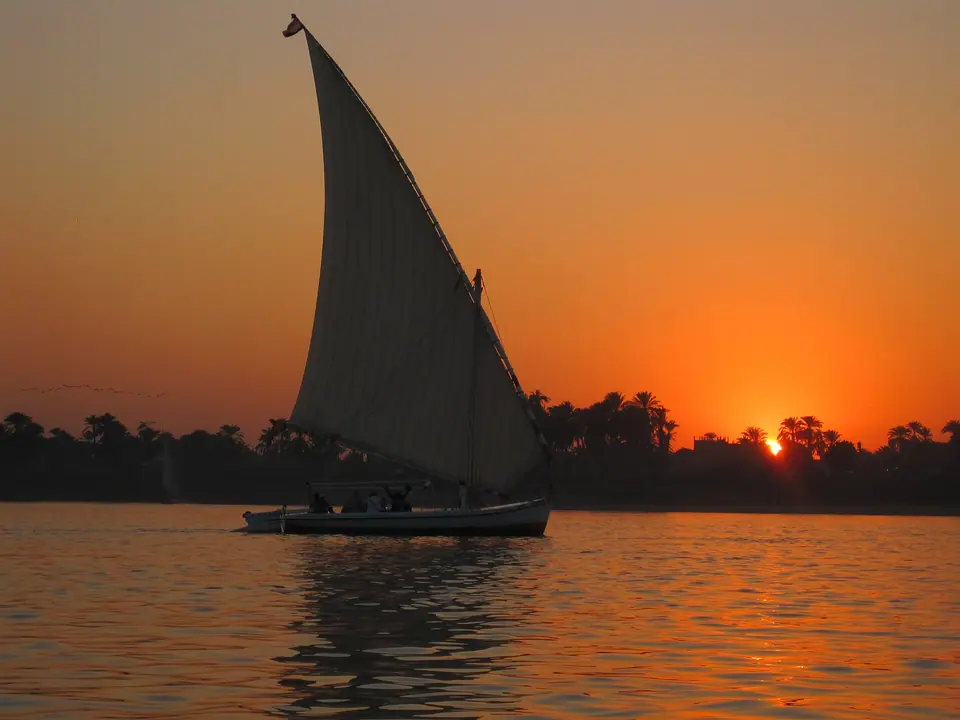
Photo: Marcosleal · CC BY-SA 4.0
Best Time to Visit Luxor: Desert Seasons, Winter Sun & Heat Strategy
Plan your trip to Luxor with seasonal weather insights, shoulder-season mornings, and practical ways to handle summer canyon heat.
Located deep inside the hyper-arid Sahara belt of Upper Egypt, Luxor is among the sunniest, driest inhabited cities on earth. Climatological records confirm that the city receives very little measurable rainfall per year across few rain days, while clear skies deliver abundant annual sunshine. While rain is virtually nonexistent, seasonal daytime temperatures swing from mild winter afternoons to intense summer highs inside the reflective limestone amphitheatres of the West Bank. Below is how to time both your travel month and your daily sightseeing schedule.
| Season & Months | Mean Temperatures | Crowd & Price Level | Field Verdict & Daily Strategy |
|---|---|---|---|
| 1. Winter Peak (Dec to Feb) | Mild daytime / Chilly nights | High (Nile cruises peak) | Pleasant midday walking. Pack a warm fleece for cool dawn ferry and balloon rides |
| 2. Shoulder Windows (Mar to Apr & Oct to Nov) | Warm days / Mild nights | Moderate to High | November and March are prime. Enter West Bank tombs early and rest through midday heat |
| 3. Summer Low Season (May to Sep) | Intense heat / Warm nights | Low (empty tombs, low hotel rates) | Strict early outdoor window. Return for illuminated night temples after sunset |
Climate patterns across the seasons
The West Bank necropolises (Valley of the Kings and Deir el-Bahari) sit inside treeless pale-limestone bowls that trap solar radiation. As a result, ambient air temperatures always feel hotter on the West Bank after late morning than along the breezy East Bank Nile Corniche:
- Winter (December, January, and February: The Prime Sightseeing Window). Mild daytime highs arrive under cloudless blue skies. You can comfortably walk the open courts of Karnak Temple and Medinet Habu right through the middle of the day. However, dry desert radiation causes temperatures to plummet after sunset to chilly overnight lows. Crossing the Nile on an open boat at dawn for a sunrise balloon flight requires a warm jacket, fleece, and long trousers.
- Autumn and Spring Shoulder Months (October to November and March to April). November and March offer a strong balance of warm mornings, pleasant daylight hours, and manageable queues inside royal tombs. In October and April, early mornings and late afternoons are ideal. Midday hours in April and October require a shaded lunch break or a swim at your Nile-side hotel. In late March and April, occasional southerly khamsin winds can blow fine Sahara dust across the valley, temporarily grounding morning hot-air balloons.
- Summer (May through September: Extreme Midday Heat and Split-Day Strategy). From May to September, daytime highs become intense, with afternoon spikes challenging outdoor visitors. Relative humidity stays very low, and riverfront hotels drop their room rates. If you visit in summer, treat Luxor as a two-shift destination. Visit West Bank tombs strictly during the early morning hours. Retreat to an air-conditioned hotel pool and the Luxor Museum at midday, then tour Luxor Temple after sunset.
How the Nile cruise schedule drives daily crowd waves at Karnak and the Valley of the Kings
Numerous Nile cruise ships ply the river between Luxor and Aswan during the cooler season. Because cruise itineraries operate on synchronised departure clocks, you can avoid tour-group congestion simply by stepping out of sync with ship schedules:
- Early Morning (The Golden Solitude Window). Both Karnak Temple and the Valley of the Kings open early year-round. You can book tickets online in advance through the official Egyptian monuments platform to save time at both Luxor Temple and Karnak Temple. Advance digital booking is also available for Hatshepsut Temple. Cruise-ship shore excursions rarely clear breakfast and reach the gates early, while day-trip coaches driving from the Red Sea arrive later in the morning. Entering early gives you comfortable air and quiet corridors inside famous royal tombs.
- Late Morning to Early Afternoon (Peak Bus Congestion at Headline Sites). During these hours, long queues form on the wooden ramps descending into royal tombs and on the central staircase of Hatshepsut's Temple. Use mid-morning to explore quieter masterpieces that big tour buses skip. Top uncrowded choices include Medinet Habu, the Ramesseum, Deir el-Medina, and the Tombs of the Nobles.
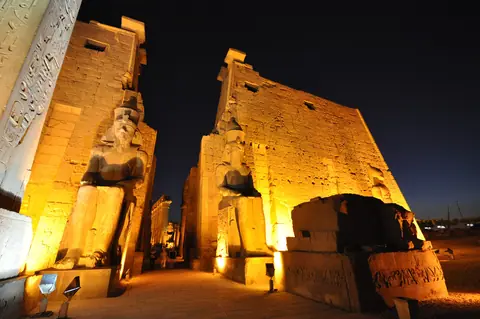
- Late Afternoon and Evening (Late-Afternoon Glow and Night Temples). In the afternoon, day-trip buses begin boarding for the return drive to coastal resorts. Late afternoon casts warm western light across the monumental stone of Karnak and the Colonnade of Luxor Temple, which remains open late into the evening.
Cultural calendar: Winter Solstice, Mawlid of Abu el-Haggag, and Ramadan
Three annual events add remarkable cultural and astronomical depth to a Luxor trip:
- Winter Solstice Solar Alignment at Karnak and Deir el-Bahari (late December). At sunrise on the winter solstice, the rising sun aligns directly down the central canyon axis of the Precinct of Amun-Ra at Karnak. The golden disc shines straight between the pylons to illuminate the central bark sanctuary. Its axis also projects across the Nile toward Hatshepsut's Temple.
- Mawlid of Sheikh Yusuf Abu el-Haggag (mid-Sha'ban, two weeks before Ramadan). Centred on the thirteenth-century mosque perched inside Luxor Temple, this popular Sufi festival culminates in the Dora procession. Residents parade decorated wooden boats mounted on wagons through the streets of Luxor in an unmistakable living echo of the ancient pharaonic Opet Festival. Traditional arts also thrive across the region, where handmade weaving in Upper Egypt was inscribed on the UNESCO Urgent Safeguarding List in 2020. Visitors may see tahteeb, the traditional stick game inscribed on the UNESCO Intangible Cultural Heritage list in 2016.
- Visiting During Ramadan and Coptic Easter. Archaeological sites stay open daily during the Islamic holy month of Ramadan. However, West Bank closing times often shift earlier so staff can return home for the sunset iftar meal. Evening street life around Luxor Temple and the market comes alive after dark with lantern-lit cafés and sweet pastry stalls. Plan your daily schedule with our 3-day Luxor itinerary, packing guide, and Upper Egyptian dining guide.
Traveller tips
If booking a sunrise hot-air balloon flight over the West Bank, schedule your flight early in your stay in Luxor. Egyptian civil aviation authorities cancel balloon launches whenever early-morning wind speeds exceed safety thresholds or when morning mist obscures visibility over the Nile. Booking early gives you backup mornings before you depart on the train or cruise boat to Aswan.
Photographers should track the changing seasonal angle of the sun across the Nile Valley. During winter, the lower southern arc of the sun illuminates the southern walls of the Great Hypostyle Hall at Karnak. That same winter angle lights the exterior battle reliefs of Medinet Habu with soft, even contrast throughout the morning. From late spring through late summer, the sun climbs high overhead and casts sharp shadows inside open peristyle courts. Structuring each day around opening times and the late golden hour ensures comfortable temperatures and calmer stone avenues in every season. Check local sunset times for your travel week so you reach the West Bank ferry jetty or your felucca dock shortly before dusk. On clear winter nights around the new moon, the dry desert air above West Bank Al-Gezira is remarkably clear. Rooftop terraces offer crisp stargazing above the Theban peaks. Early risers in autumn enjoy calm mirror-like reflections of the Theban cliffs across the Nile before morning river traffic wakes up. Even during warmer summer weeks, the shaded orchards of the riverbanks stay noticeably cooler than the surrounding desert stone.
Travellers managing their health in Upper Egypt should remain prepared for regional conditions. Health risks noted in official travel advice include dengue fever and tick-borne illnesses such as Crimean-Congo haemorrhagic fever. Altitude sickness is also a risk in high-elevation parts of Egypt. If you travel with prescription medication, carry an official letter from your doctor. It should state your medical condition, the quantity carried, and that the medication is for personal use. Some prescribed and over-the-counter medicines may be controlled substances in Egypt, potentially requiring permission from Egypt's Ministry of Health prior to arrival. Pharmacies outside hotels will often supply medication at lower prices than on-site hotel doctors. In an emergency, call 123 and ask for an ambulance. Access to specialised treatment for psychiatric illness is limited and may not be available outside major cities.
Weather by month
Luxor is warmest in June, with average highs around 41°C, and coldest in January, when nights drop to about 6°C. Rain is rare here, with almost no rainy days in any month. For mild weather with fewer rainy days, aim for February and December.
| Month | Low | Range | High | Rain | Rainy days |
|---|---|---|---|---|---|
| Jan | 6°C | 23°C | 0 mm | 0 d | |
| Feb | 8°C | 25°C | 0 mm | 0 d | |
| Mar | 12°C | 30°C | 0 mm | 0 d | |
| Apr | 17°C | 35°C | 0 mm | 0 d | |
| May | 21°C | 39°C | 0 mm | 0 d | |
| Jun | 24°C | 41°C | 0 mm | 0 d | |
| Jul | 25°C | 41°C | 0 mm | 0 d | |
| Aug | 25°C | 41°C | 0 mm | 0 d | |
| Sep | 22°C | 39°C | 0 mm | 0 d | |
| Oct | 18°C | 35°C | 0 mm | 0 d | |
| Nov | 12°C | 29°C | 0 mm | 0 d | |
| Dec | 8°C | 24°C | 0 mm | 0 d |
Averages of daily values from 2015 to 2024. Rainy days are days with at least 1 mm of rain. Source: Open-Meteo · Compare destinations by month.
Where it is
- 1Luxor
- Luxor International Airport (LXR) · about 7 km from Luxor in a straight line
- Directions in Google Maps
Stations and taxi ranks: OpenStreetMap. Airports: OurAirports. Distances are in a straight line.
Traveller tips
Real advice from people who have been to Luxor. Every tip is read by our team before it goes live.
No tips yet. Been here? Yours could be the first.
Thank you! Your tip will appear here after a quick review.
More in Luxor
Continue exploring Luxor with related neighbourhood, food, and planning guides

Where to Stay in Luxor: East Bank Corniche vs West Bank Villages
Luxor, Egypt
Luxor 3-Day Itinerary: East Bank Temples & West Bank Necropolis Route
Luxor, Egypt
Karnak Temple Guide: Hypostyle Hall, Sacred Lake & Precinct of Amun
Luxor, Egypt
Luxor Temple Guide: Avenue of Sphinxes, Pylons & Evening Walk
Luxor, Egypt
