Milan Cathedral and Rooftops Guide
Soaring Gothic marble naves, subterranean remains, and pinnacle pathways define the high terraces of Duomo di Milano.
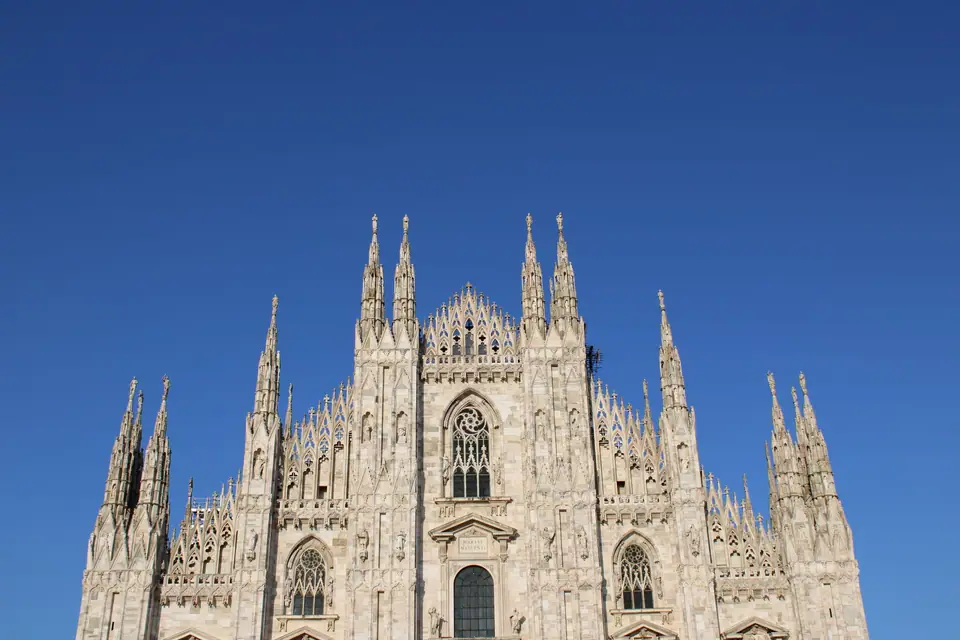
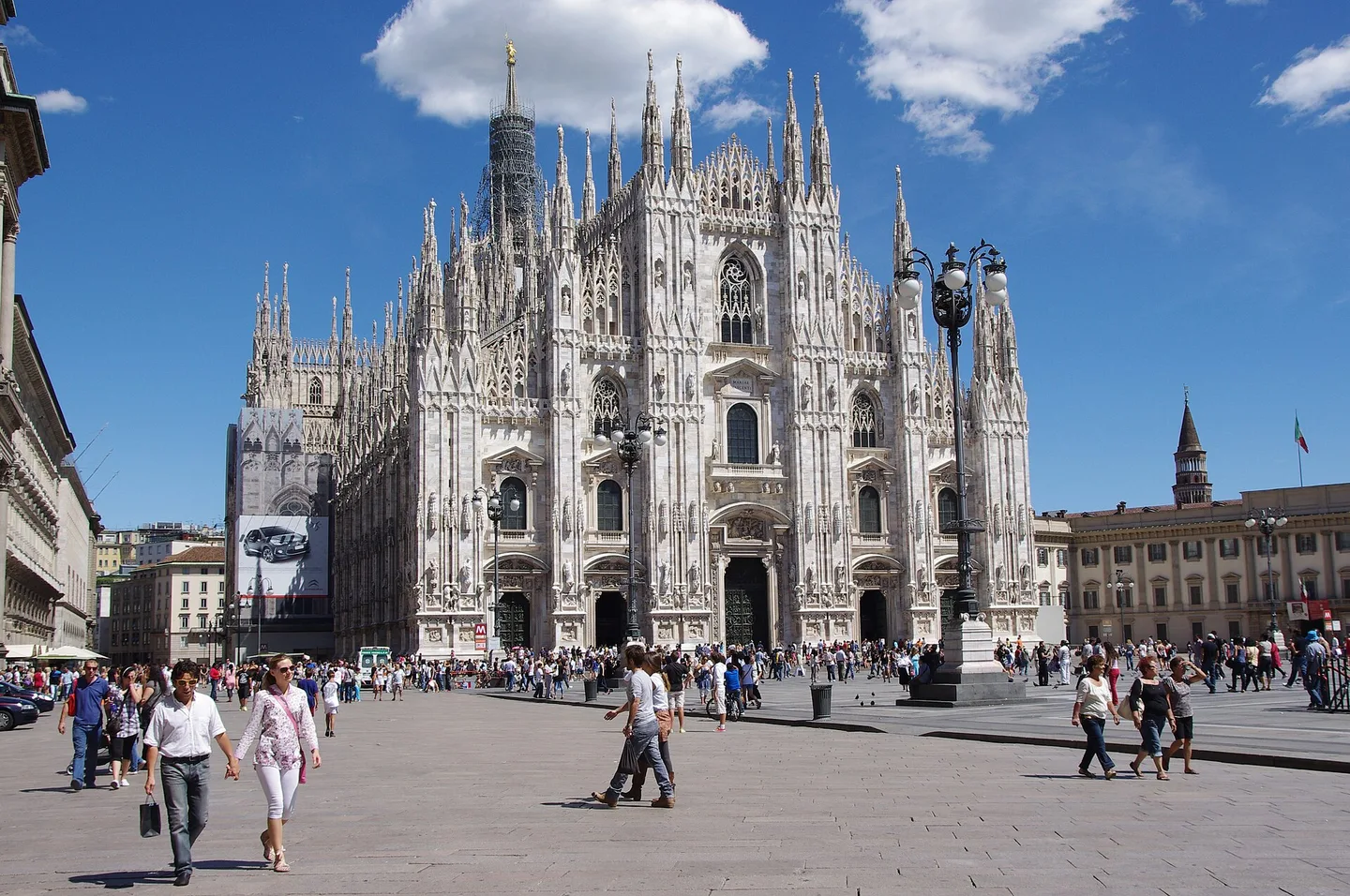
Stepping out from the underground concourse into the wide square brings the pale Candoglia marble facade immediately into full view. The cathedral commands the historic centre of the city. It presents centuries of sculptural craft across dozens of decorated buttresses and sculpted portals. We find the central square easiest to traverse early in the day when the stone paving remains cool and relatively clear. Lines form along designated exterior cordons where bag inspections take place prior to entry. Keeping your shoulders covered and carrying compact day bags allows a smooth passage through security gates into the quiet interior nave.
The outer walls display an immense gathering of stone figures, gargoyles, and ornamental friezes that reward unhurried observation from ground level. Delicate pink veining runs through the pale marble slabs, catching the shifting morning light across the main portal reliefs. From this central vantage point, wide avenues branch outward across the district. These paths connect visitors directly to central Milan plazas and surrounding transit hubs. Setting aside adequate time before passing security enables you to appreciate the exterior stonework without rushing your arrival.
Walking the High Rooftop Terraces
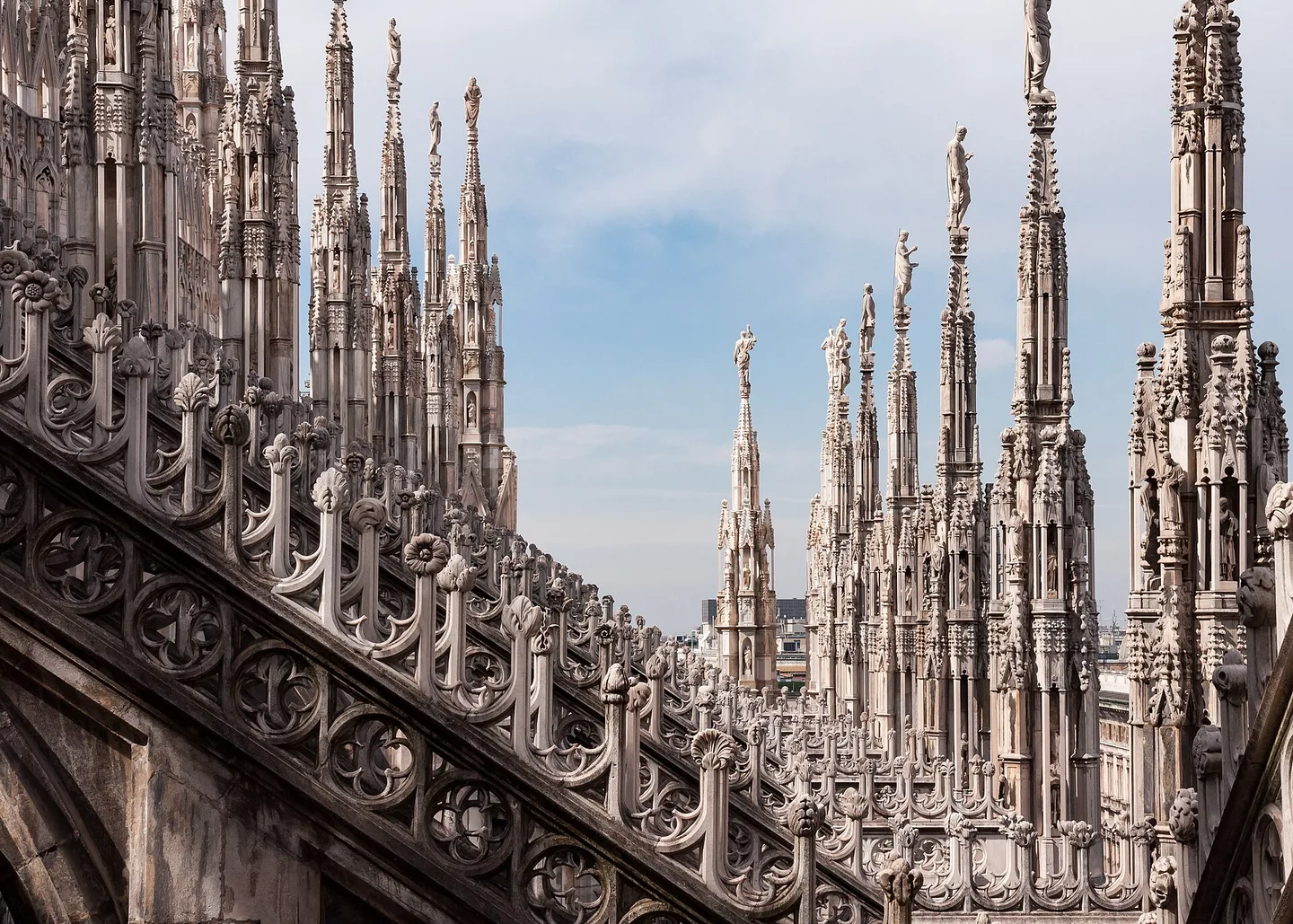
Climbing toward the upper roof levels reveals a remarkable world of marble walkways positioned directly beneath rows of carved pinnacles. Visitors reach the terraces either by taking an enclosed lift or by ascending the continuous stone stairwell. The stairs wind steadily through cool masonry corridors before stepping out onto open outdoor ramps. Narrow paths run between openwork balustrades, offering close perspectives on statues perched high above the urban streets. We advise wearing sturdy walking shoes with good grip, as the marble ramps can become slick under light rain.
The elevated path leads gradually toward the central rooftop, culminating in the central ridge overlooking the grand square below. Here, the golden Madonnina statue stands atop the main spire, catching sunlight above the surrounding pinnacles. On crisp days with clear skies, the horizon stretches past the city fringe toward the snowcapped Alpine peaks to the north. Walking among the stone forest gives an exceptional appreciation of the stonecutters who shaped these arches over successive generations. Guard rails protect every open ledge, allowing guests to take photographs comfortably along the defined one-way route.
Nave Pillars and Subterranean Chambers
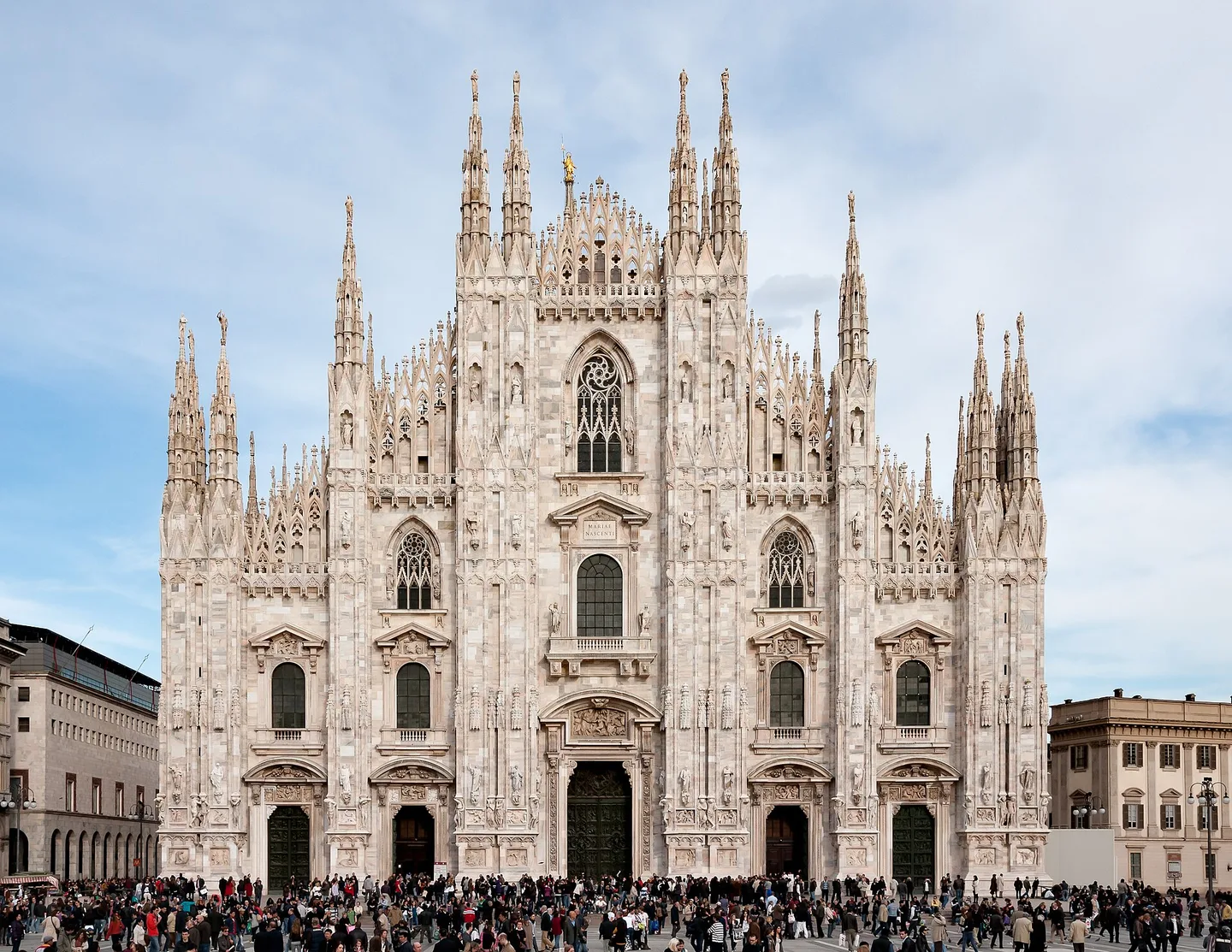
Entering the interior nave reveals an imposing five-aisle hall supported by massive clustered stone columns that stretch toward ribbed vaulting. Tall stained glass windows illuminate the dim sanctuary with rich ribbons of red, amber, and deep blue light. The intricate geometric marble floor leads toward the central high altar, flanked by carved pulpits and solemn chapels. Quiet naturally descends inside the hall, where staff manage foot traffic along quiet perimeter cordons. Visitors often combine this central cathedral visit with viewing the historic mural at Leonardo's Last Supper across the western quarters.
Below the modern floor level lie the excavated remains of earlier baptisteries and ancient foundations that predate the Gothic cathedral. Wooden catwalks allow guests to view preserved brick walls, baptismal pools, and ancient stone conduits in cool underground rooms. Informative panels explain how these foundations underpinned the monumental structure throughout centuries of ongoing rebuilding. Returning upstairs to the main transept brings you near the striking statue of Saint Bartholomew carrying his flayed skin. The sheer scale of the interior encourages a measured walking pace along the outer chapels.
Connecting Central Routes and Historic Quarters
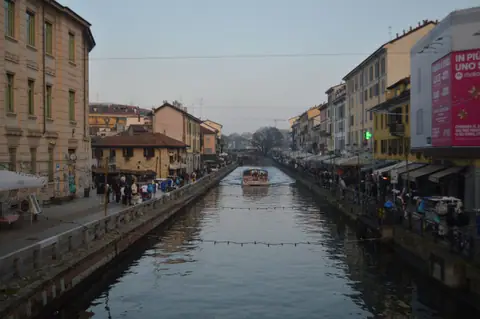
Exiting the cathedral places you moments away from several of the most rewarding cultural quarters in the regional capital. A short stroll past the northern flank leads through grand arched porticoes toward the cobblestone lanes of Brera, renowned for its art galleries and quiet courtyards. Those seeking traditional evening dishes can head south along lively canals to sample classic recipes highlighted in our guide to Milanese food. The surrounding streets offer frequent tram stops and underground connections, making onward journeys simple without requiring a private car.
To structure an efficient morning or afternoon itinerary around the cathedral precinct, consider the practical route legs detailed below:
- Arrival and square transit: Step directly off the red or yellow underground lines into the open square, allowing moments to observe the main facade before queued security checks.
- Cathedral interior walkthrough: Tour the towering nave, stained glass windows, and archaeological zone below the floor along designated footpaths.
- Terrace ascent: Choose between the lift or stone stairs to explore the open roof ramps, flying buttresses, and views toward the distant Alps.
- Quarter connections: Walk northward toward historic gallery quarters or board nearby trams heading south toward the waterside promenade of Navigli
By coordinating your visit with comfortable footwear and light baggage, exploring the cathedral complex becomes a smooth and deeply satisfying experience. Early timed terrace bookings help clear security lines swiftly before midday crowds fill the square.
Official prices and opening hours
- Duomo di Milano (Cathedral, Terraces & Museum)Official site ↗
- Cenacolo Vinciano (Leonardo’s Last Supper)Official site ↗
Where it is
- 1Milan Cathedral and Rooftops
- Milano Linate Airport (LIN) · about 7 km from here in a straight line
- Directions in Google Maps
Stations and taxi ranks: OpenStreetMap. Airports: OurAirports. Distances are in a straight line.
Traveller tips
Real advice from people who have been to Milano. Every tip is read by our team before it goes live.
No tips yet. Been here? Yours could be the first.
Thank you! Your tip will appear here after a quick review.
More in Milano
Continue exploring Milano with related neighbourhood, food, and planning guides