Savouring Authentic Risotto alla Milanese
Golden saffron risotto forms the culinary soul of Lombardy, bringing rich flavours to historic dining rooms across central Milano.
Saffron gives this golden rice specialty its yellow hue, delicate aroma, and deeply satisfying texture across dining rooms in northern Italy. Local culinary lore links the dish to medieval artisans who added saffron powder to glass pigments for cathedral windows. Home cooks and professional chefs later adopted the spice to flavour short-grain rice cooked slowly in rich broth.
Authentic preparation depends on top-grade carnaroli or vialone nano grains. These specific grains release starches steadily to create a pleasing natural creaminess. Cooks begin with finely minced onions sweated gently in butter before toasting the dry rice until translucent. Rich meat stock is added one ladle at a time, allowing the grains to absorb liquid over steady heat.
Finely ground saffron strands steep in warm broth before blending into the pan during final cooking stages. The finishing procedure, known locally as mantecatura, involves beating cold butter and grated Grana Padano cheese into the resting grains off the flame. This technique produces an alluring wave-like consistency that spreads effortlessly across flat ceramic serving plates.
Achieving this precise texture requires patient observation and controlled heat throughout the process. Cooks stir the rice steadily with rounded wooden spoons so the grains do not break apart. The resulting plate remains silky and loose rather than stiff or clumpy.
Classic Pairings and Dining Etiquette
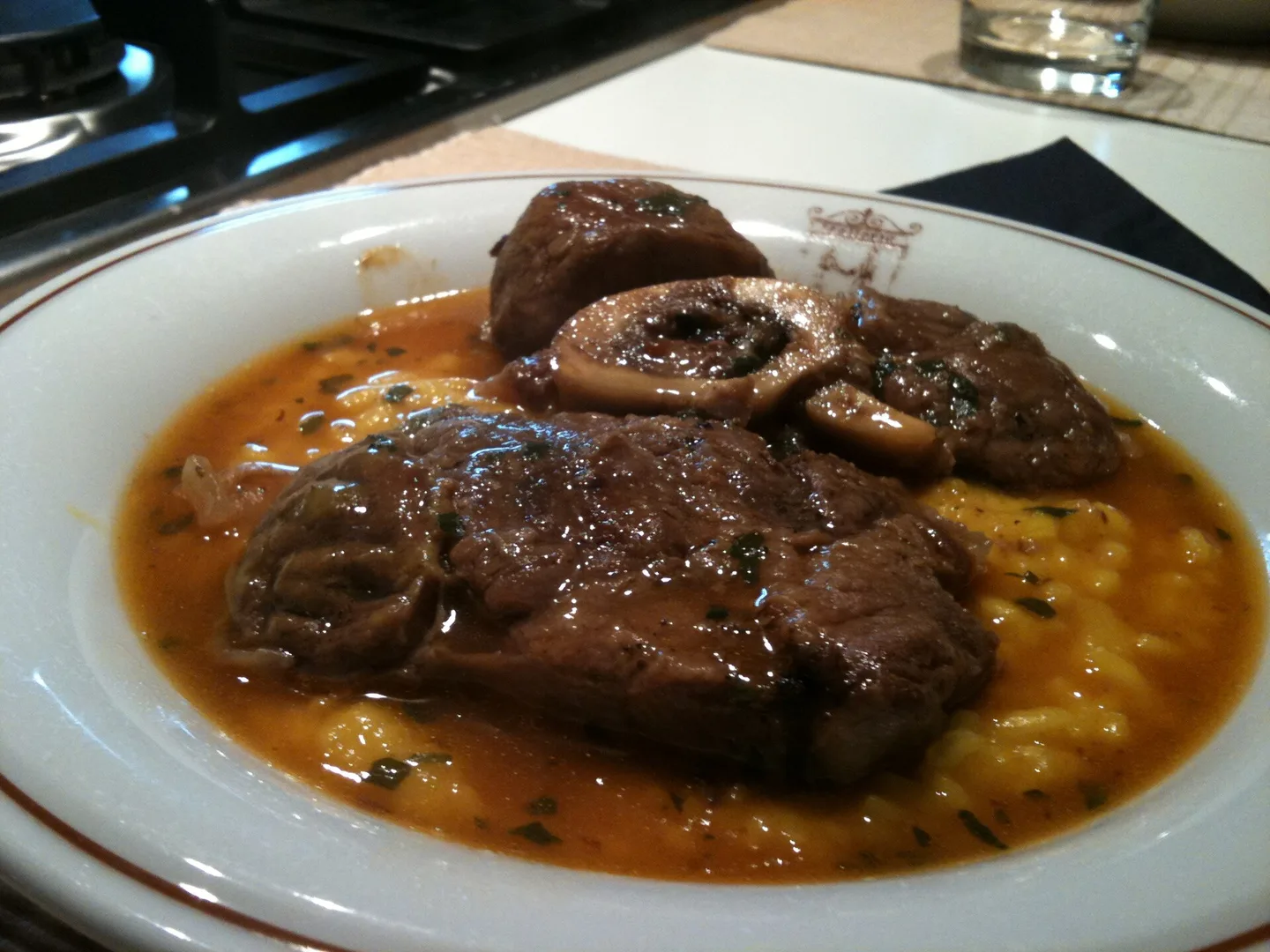
Locals frequently order the golden rice as a standalone first course or combined with slow-cooked meats for a hearty midday meal. The most celebrated partner is braised veal shank, cut crosswise to reveal tender marrow and seasoned with a citrusy parsley gremolata. When plated together, the savoury pan juices soak into the saffron grains, creating a balance of richness and bright zest.
Wine selections typically favour dry northern Italian whites or medium reds that cut through the richness of aged cheese and bone marrow. Traditional diners avoid ordering heavily spiced side dishes alongside the rice. This approach allows the subtle saffron perfume to remain clear throughout the meal.
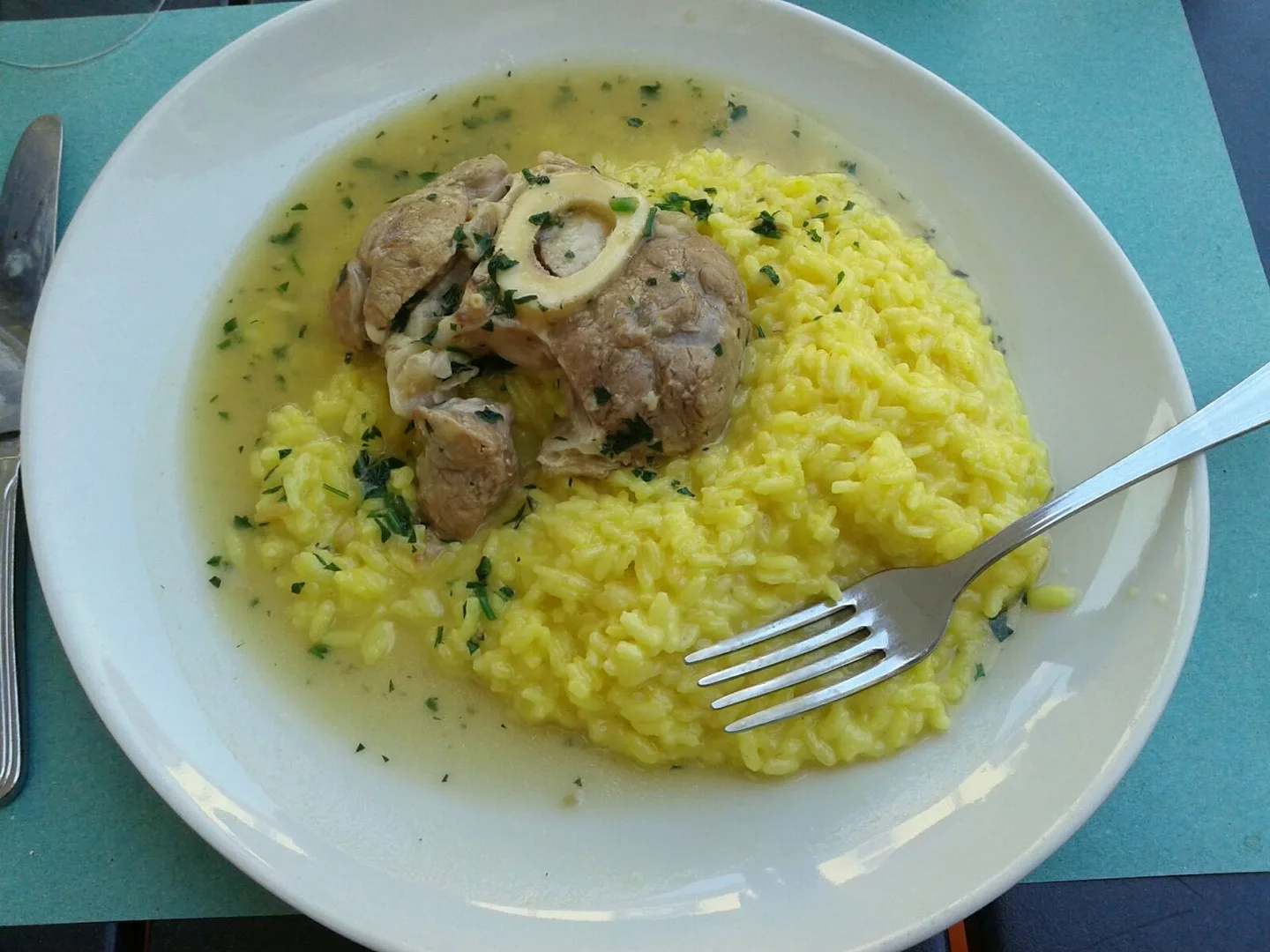
- Order the rice freshly prepared to order rather than reheated, allowing adequate cooking time during peak lunch seatings.
- Look for menus that feature bone marrow incorporated into the initial stock base for authentic antique flavour profiles.
- Pair the dish with light mineral water or crisp regional wines to balance the rich butter mantecatura.
- Allow the hot plate to rest for a minute so the velvety texture settles evenly before the first spoonful.
- Savour the marrow directly from the bone with a small spoon when enjoying the traditional veal accompaniment.
Modern kitchens occasionally experiment by topping the rice with crispy cured pork or savoury reductions, yet purists favour classic simplicity. Visiting a traditional tavern allows travellers to taste recipes passed down through several generations without culinary alterations. Classic kitchens honour slow simmer methods rather than speeding up dinner service.
Portions in classic establishments are generous and intended to sustain hungry workers through crisp alpine winters. Rice dishes form the cornerstone of regional home cooking, where families gather around bubbling copper pots on Sunday afternoons.
Navigating Historic Neighbourhood Trattorias
Finding an exceptional pot of rice requires stepping away from central pedestrian avenues into neighbourhood side streets. Walkers starting near the grand marble cathedral can head north towards Brera, where cobbled lanes host discreet family establishments behind heavy wooden doorways. Here, dining rooms fill with neighbourhood residents reading daily newspapers over steaming shallow bowls.
Alternatively, walking west towards old monastic cloisters holding Leonardo's famous mural leads to long-running osterias tucked into residential courtyards. Travellers combining afternoon sightseeing with dinner can settle into quiet dining rooms a short walk from the Last Supper mural.

Evening appetites naturally guide visitors southward towards the historic canal district of Navigli, where waterside terraces serve regional specialities late into the night. Sitting by stone bridges with a bowl of saffron rice brings out a clear link to Milan's old riverboat trade routes. Soft reflections of street lamps on the water bring calm rhythm to evening meals.
Many neighbourhood trattorias maintain chalkboard menus written daily in northern dialect. Inquiring about the daily pot of broth helps diners identify spots dedicated to authentic, slow-cooked stock foundations.
Walking Routes and Culinary Districts
Planning your culinary path around central districts yields distinctive regional meals between gallery visits and architectural walks. Walking from the historic cathedral square towards artistic districts offers ample opportunities to read handwritten daily menus posted beside doorway entrances. The table below outlines prominent culinary quarters, typical settings, and walking connections across the city centre.
| Neighbourhood | Dining Atmosphere | Walking Connection |
|---|---|---|
| Historic Centre | Classic heritage establishments and grand cafes | Steps away from central marble monuments |
| Arts Quarter | Intimate bohemian bistros and quiet stone courtyards | Short walk north from gallery lanes |
| Southern Canals | Lively canal-side tables and open night terraces | Direct pedestrian route along stone towpaths |
We recommend arriving promptly for lunch or evening services to secure comfortable tables without long waits on stone pavements. Wandering through quiet back alleys before settling at a linen-draped table brings out the warmth of Lombardy dining.
After tasting this golden dish, continue exploring districts and tram corridors across Milano on foot. Slow-cooked carnaroli rice, aged cheese, and fragrant saffron remain a high point of any Lombardy table.
Official prices and opening hours
- Duomo di Milano (Cathedral, Terraces & Museum)Official site ↗
- Cenacolo Vinciano (Leonardo’s Last Supper)Official site ↗
Where it is
- 1Savouring Authentic Risotto alla Milanese
- Milano Linate Airport (LIN) · about 7 km from here in a straight line
- Directions in Google Maps
Stations and taxi ranks: OpenStreetMap. Airports: OurAirports. Distances are in a straight line.
Traveller tips
Real advice from people who have been to Milano. Every tip is read by our team before it goes live.
No tips yet. Been here? Yours could be the first.
Thank you! Your tip will appear here after a quick review.
More in Milano
Continue exploring Milano with related neighbourhood, food, and planning guides