Milan's Monumental Cemetery: Grand Architecture and Outdoor Sculpture
Milan's Monumental Cemetery serves as an expansive open-air museum filled with intricate marble chapels, bronze statues, and quiet tree-lined avenues.
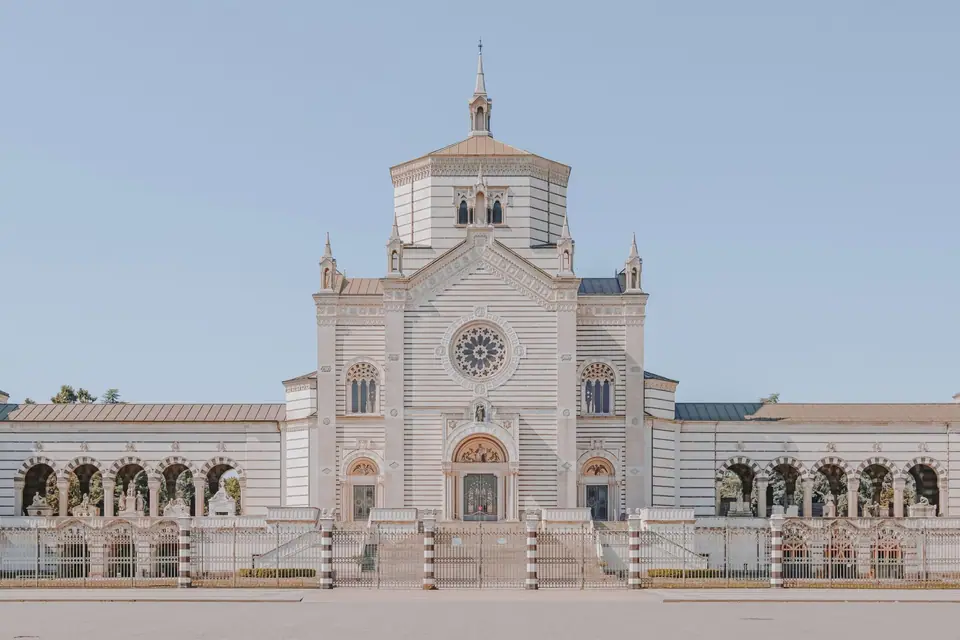
Stepping out of the metro into the vast piazza north of the city centre brings an immediate shift in pace. Milan presents plenty of restless energy, yet the Monumental Cemetery offers a serene setting defined by monumental stonework and leafy paths. The site acts as an open-air sculpture museum where celebrated artists crafted elaborate memorials for notable families across generations. From the forecourt, the immense polychrome marble facade commands complete attention with its striped stonework and lofty arched portals.
Passing through the entrance leads straight into the Famedio, the grand Hall of Fame built from grey and cream stone. This cavernous chamber honours civic leaders, writers, musicians, and benefactors who helped shape northern Italy. Looking up into the vaulted ceiling reveals deep blue surfaces dotted with gold stars, creating a solemn atmosphere that sets the tone for your stroll. Before wandering into the leafy avenues, take several minutes to absorb the marble busts and wall inscriptions lining this main hall.
Arrival, First Impressions, and the Great Famedio
The ground plan fans outward behind the Famedio along wide gravel paths framed by towering cypresses and plane trees. Moving beyond the main hall, the symmetry of the complex becomes obvious. Broad colonnades flank the entrance pavilion, leading toward quiet courtyards filled with private burial chapels. Visitors find the paths straightforward to follow, though branching gravel lanes invite relaxed exploration.
We recommend starting along the central spine before diverting into the lateral sections. Unlike congested historic spots, this site permits peaceful walking where you can study intricate carvings without rushing. Light filters through tree branches onto white Carrara marble, rough granite, and weathered bronze. The combination of quiet garden surroundings and ambitious civic art gives the cemetery its unique character.
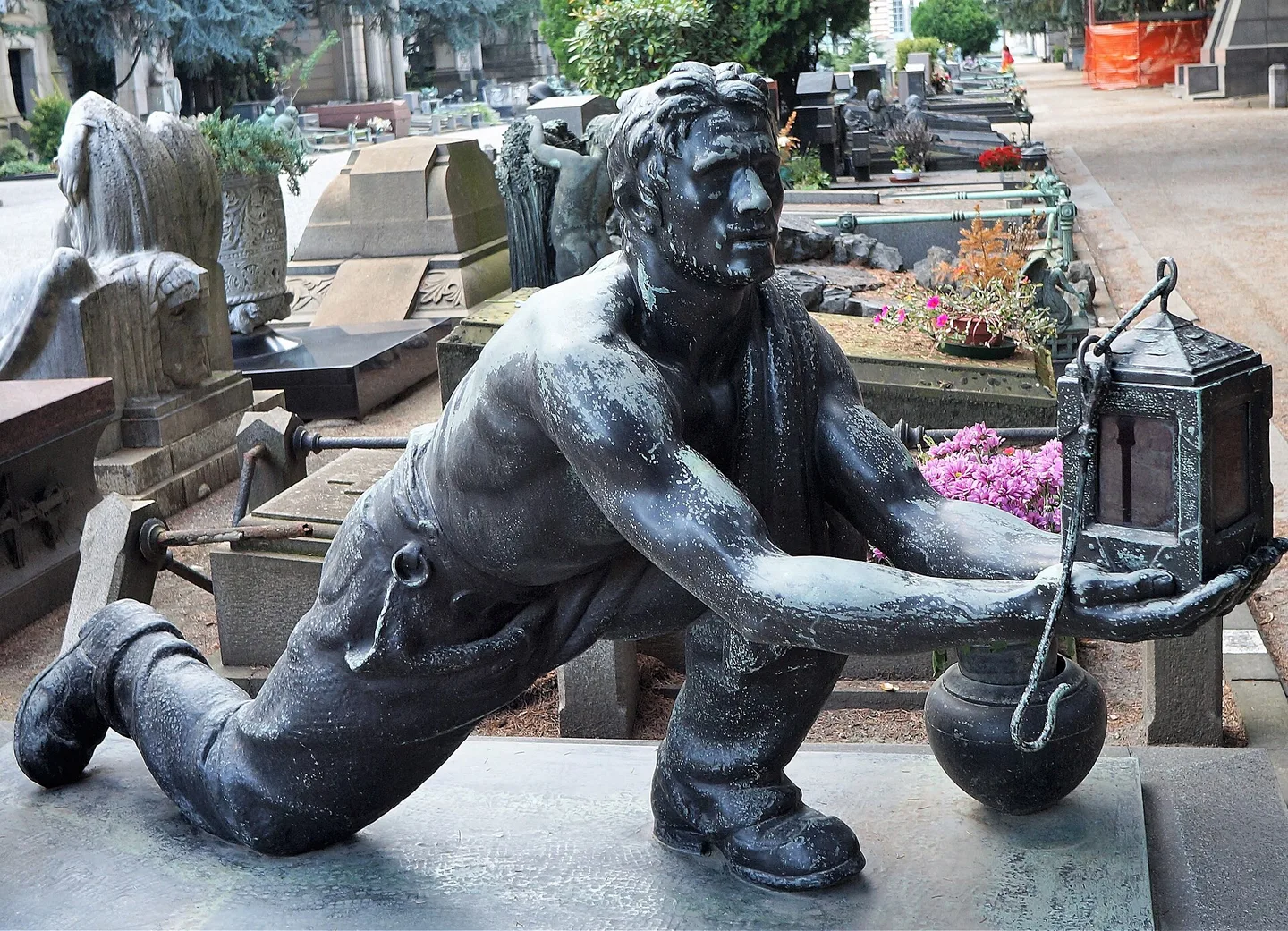
Architectural treatments vary dramatically across the grounds. Classical Greek temples stand alongside Neo-Gothic shrines, Art Nouveau figures, and early modernist blocks. Families commissioned prominent sculptors of their era to create these ediculae, resulting in a fascinating timeline of changing artistic taste.
Navigating the Sculptural Avenues and Family Ediculae
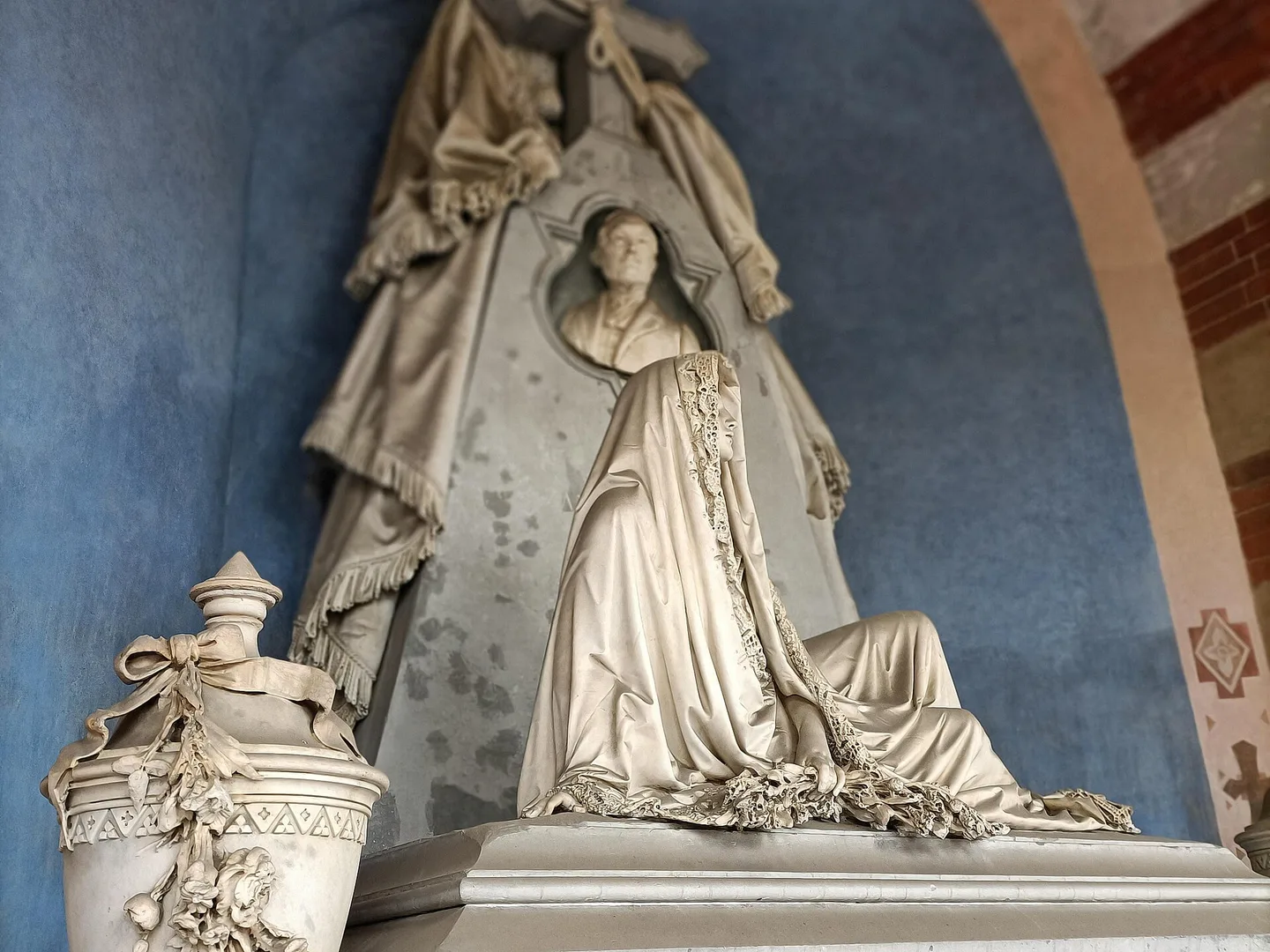
Wandering deeper into the pathways brings you face to face with extraordinary bronze and stone figures. Many memorials feature life-sized angels, mourning allegories, and detailed portraits carved with astonishing realism. You will observe flowing stone drapery, delicate marble flowers, and expressive faces showing deep emotion.
Notable works include representations of biblical narratives, ancient mythology, and industrial achievement. Certain monuments showcase bronze relief panels detailing family accomplishments or philosophical themes. The Giuseppe Pessina family monument illustrates this expressive style through dramatic postures and rich textural contrast between metal and pale stone.
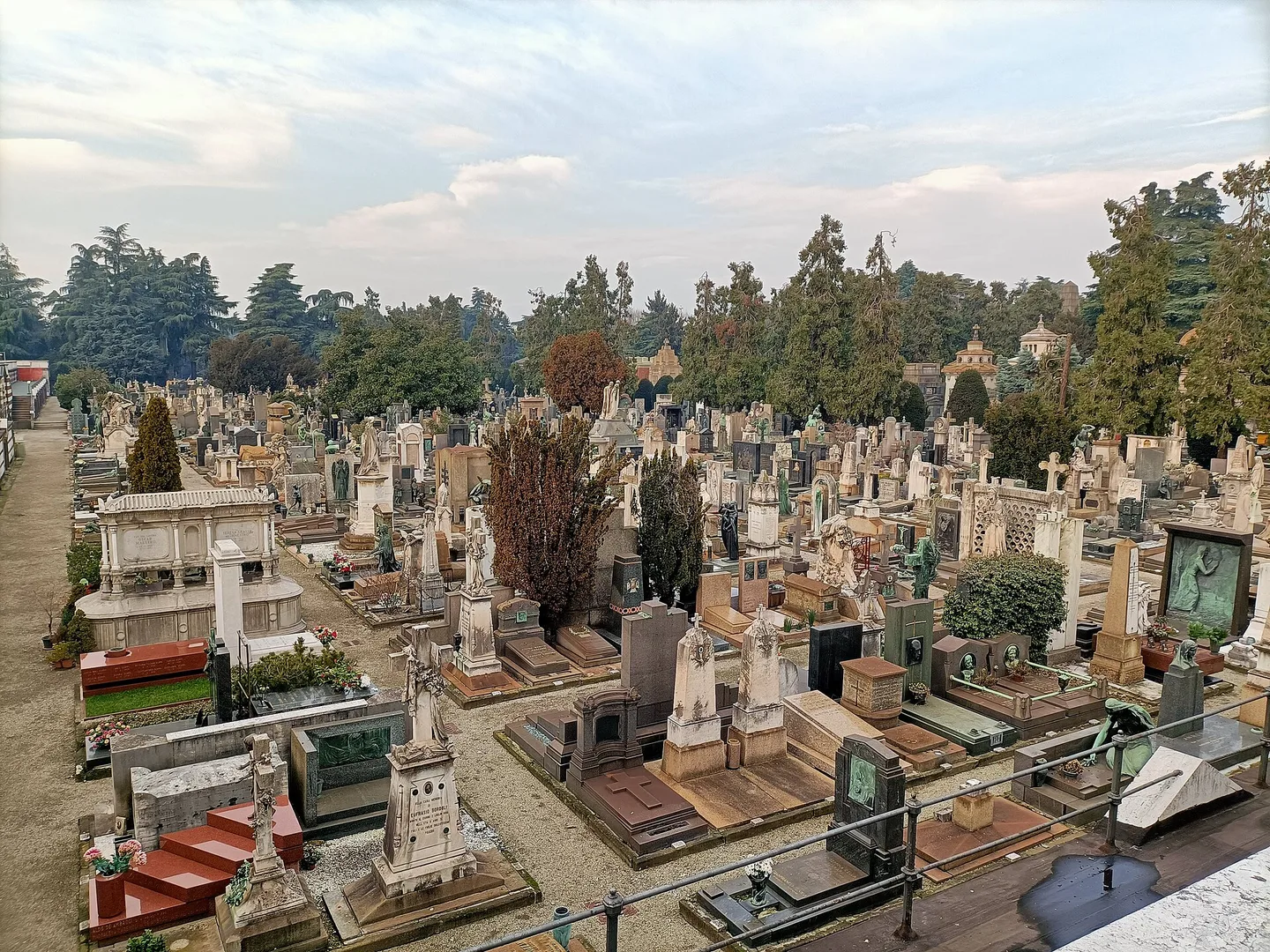
Because the cemetery evolved through different eras, visitors can trace the shift from ornate nineteenth-century romanticism to sleek twentieth-century forms. Sharp geometric lines appear on family vaults built during the interwar years, offering a stark contrast to nearby Victorian embellishments. The sheer variety rewards travellers who look beyond Milan's famous church facades.
Key Sectors and Practical Walking Orientation
To make the most of your stroll, keeping a simple sense of direction helps prevent missing the distinctive side sections. The grounds encompass distinct quarters that reflect the diverse civic fabric of Milan across history.
- Main Colonnades: The grand galleried wings right behind the entrance pavilion hold classical family vaults and sheltered bas-reliefs.
- Central Avenue of Ediculae: The spine stretching directly from the Famedio displays the most imposing multi-storey family shrines.
- Non-Catholic and Jewish Sections: Located along lateral wings, these quiet sectors present distinct stone motifs, calm perimeter walls, and leafy hedge walks.
- Ossuary and Crematorium: Set toward the rear boundaries, these structures mark pioneering nineteenth-century civic developments in public sanitation and monument design.
Visitors should observe quiet decorum throughout the grounds, keeping voices lowered and remaining on marked stone or gravel lanes. Benches sit along shaded junctions, offering comfortable resting points beneath the trees. Photography is permitted for personal use, though tripod setups and intrusive equipment are not welcome.
Surface conditions remain mostly flat, but sturdy walking shoes prove helpful along the loose gravel trails. The open courtyards catch direct sunlight, so carrying water and wearing a sun hat during warmer months keeps the outing pleasant.
Connecting Your Visit with Surrounding Milan Neighbourhoods
After finishing your route, returning through the Famedio returns you directly to urban reality. Metro line five stops right outside the front gates, allowing rapid transit links back toward urban landmarks. If you plan to admire classic paintings after outdoor sculpture, catch onward transport south into the artistic alleys of Brera.
Alternatively, the striking glass towers of the modern business quarter rise just northeast, creating an eye-catching juxtaposition of historical masonry against contemporary skylines. Walking south through the historic gateway at Porta Garibaldi takes you past traditional bakeries, cafes, and trattorias.
Travel across the city is efficient on the tram network. Boarding a vintage tram allows you to continue toward the dramatic marble spires of the Duomo di Milano without underground transfers. Quiet shaded avenues allow unhurried walking across every courtyard plot before midday warmth settles overhead.
Official prices and opening hours
- Duomo di Milano (Cathedral, Terraces & Museum)Official site ↗
- Cenacolo Vinciano (Leonardo’s Last Supper)Official site ↗
Where it is
- 1Milan's Monumental Cemetery
- Milano Linate Airport (LIN) · about 9 km from here in a straight line
- Directions in Google Maps
Stations and taxi ranks: OpenStreetMap. Airports: OurAirports. Distances are in a straight line.
Traveller tips
Real advice from people who have been to Milano. Every tip is read by our team before it goes live.
No tips yet. Been here? Yours could be the first.
Thank you! Your tip will appear here after a quick review.
More in Milano
Continue exploring Milano with related neighbourhood, food, and planning guides