Galleria Vittorio Emanuele II Walking and Architectural Guide
Galleria Vittorio Emanuele II connects the cathedral piazza to Teatro alla Scala beneath four soaring glass and cast iron vaults.
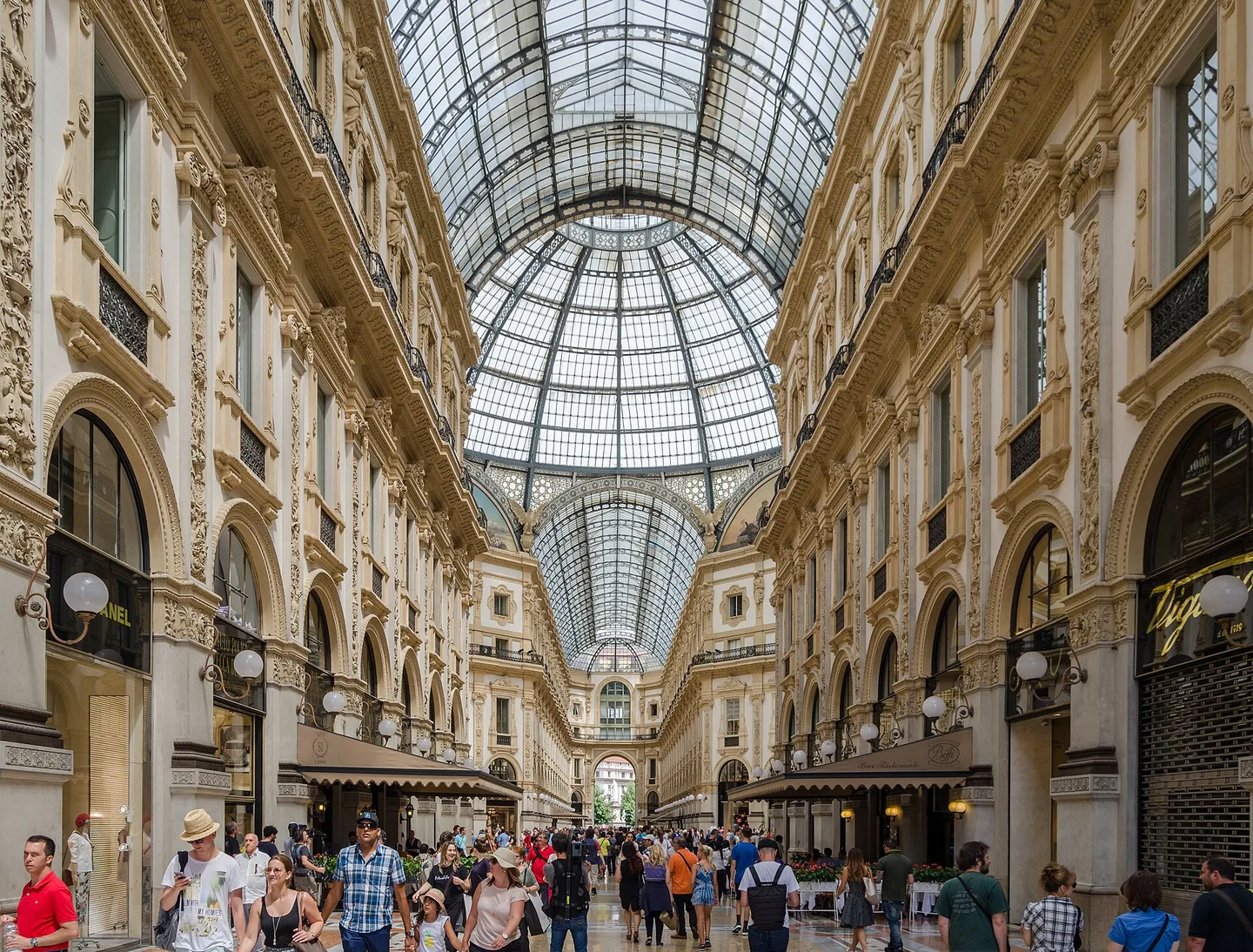
Galleria Vittorio Emanuele II stands as one of Europe's grandest covered shopping arcades, linking two of Milan's foremost urban squares. Stepping inside from the open expanse of the square immediately alters the sensory tempo of the city centre. Soaring glass vaults filter sunlight across multi-tiered classical facades, illuminating carved balconies, arched windows, and decorative cornices high above. The structure was conceived during the unification period, designed to symbolise national civic confidence through modern engineering and Italian artistic heritage. Today, visitors stroll along its wide avenues to admire the monumental proportions, historic shopfronts, and refined architectural balance.
Nineteenth-Century Ironwork and Central Geometry
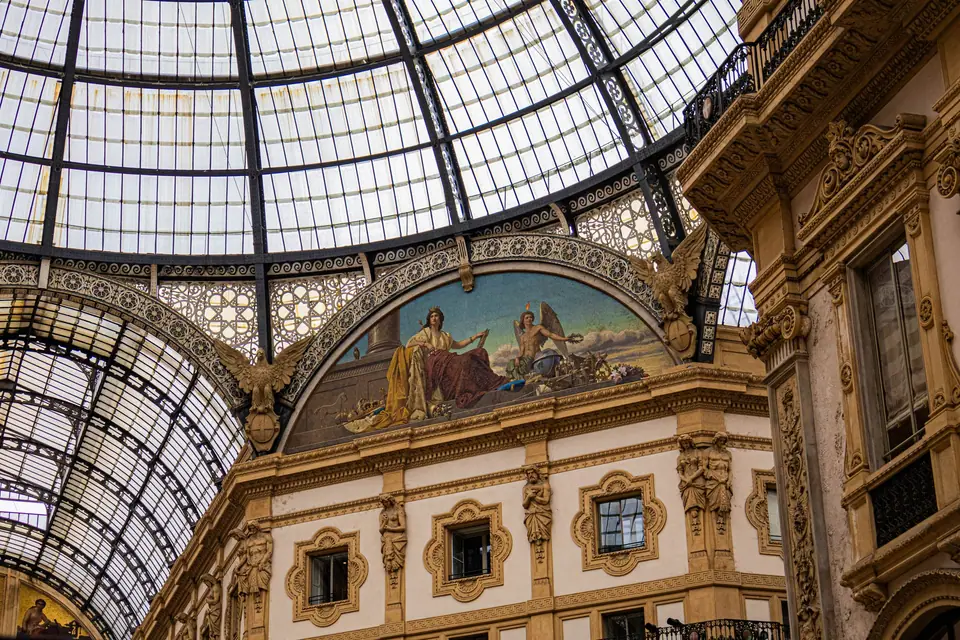
The ground plan follows a Latin cross design formed by two intersecting glass-vaulted arcades. The longer corridor spans between the cathedral square and Piazza della Scala, while the shorter arm crosses laterally between side streets. At the very heart of the building, an imposing octagonal glass cupola crowns the intersection. Ribbed iron arches support the vast translucent canopy, creating an airy indoor avenue protected from northern Italian rain and winter chill. Architectural observers can pause here to study how nineteenth-century ironwork fuses with classical Renaissance proportions along the stone facades.
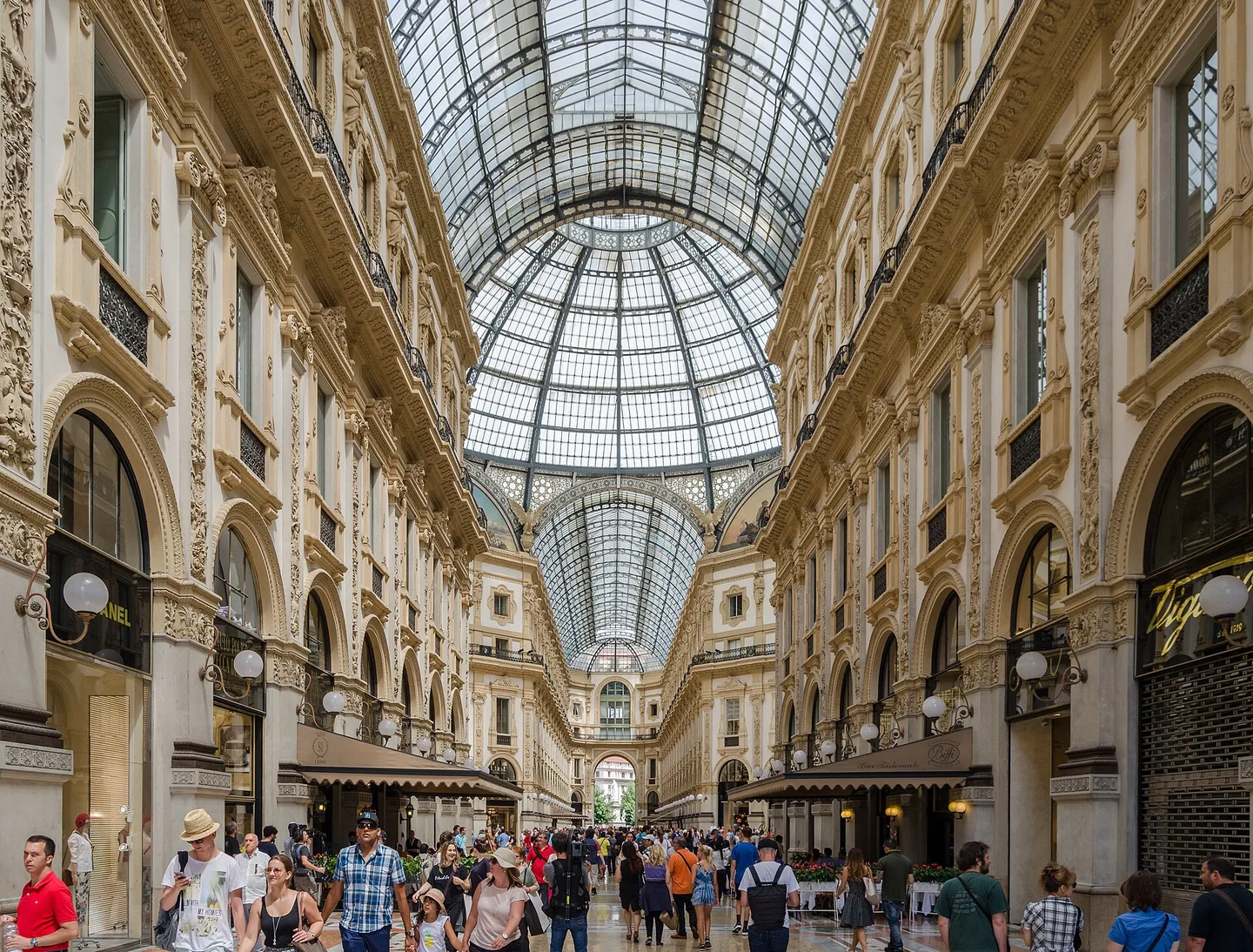
Natural daylight shifts through the glass ribs throughout the day, casting patterns across the upper pediments and stone pilasters. Above the four main arches of the central octagon, allegorical lunettes depict four continents through colourful painted compositions. These historic murals complement the ornate balconies, decorative plasterwork, and gilded accents running along the upper residential floors. Looking up offers a rare perspective on how Victorian-era civic planners combined industrial cast iron with Italian decorative crafts.
Floor Mosaics and Historic Traditions
Beneath the soaring glass ceiling lies an extensive network of marble and tessellated stone mosaics. Craftsmen assembled millions of coloured stone fragments to depict civic coats of arms and intricate border patterns across the entire floor. The central octagon showcases four distinct mosaic crests honouring the historic capital cities of unified Italy. These heraldic emblems represent Rome, Florence, Turin, and Milan through mythological beasts, lilies, red crosses, and royal shields.
A well-known local ritual centres on the mosaic depicting the charging bull from the coat of arms of Turin. A small depression on the bull's mosaic has formed from generations of residents and visitors spinning three times on one heel. Legend holds that completing the turn brings good fortune to travellers passing through the city. Morning hours offer an ideal opportunity to view the detailed stonework before crowds gather across the central floor.
- Central octagonal cupola showcasing soaring cast iron arches and allegorical wall murals.
- Heraldic floor mosaics honouring the historical cities of Milan, Rome, Florence, and Turin.
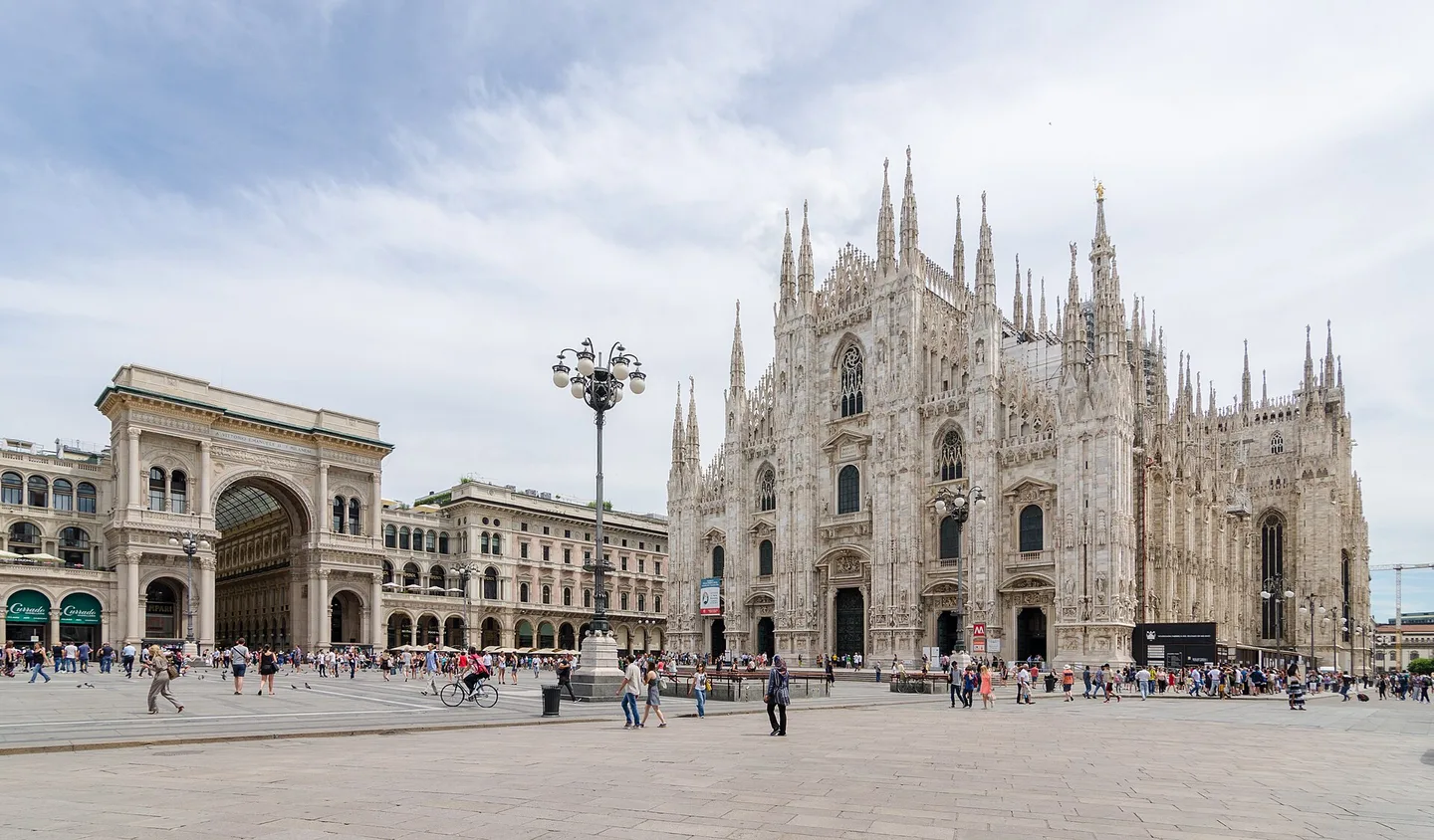
- Monumental triumphal arch entrance facing directly toward the cathedral facade.
- Historic cafe terraces offering unhurried vantage points for architectural photography.
Connecting Piazza del Duomo to La Scala
The northern exit of the arcade opens directly onto Piazza della Scala, facing Italy's most famous opera house. This covered passage forms an indispensable pedestrian link, allowing walkers to move comfortably between classical music events and civic squares. Travellers exploring the nearby Duomo can glide straight through the southern triumphal arch without navigating vehicle traffic. Historic heritage cafes line the ground floor, where intellectuals, musicians, and artists have debated literature over espresso for generations.
Evening brings a quiet transformation as warm facade illumination reflects against the polished marble paving stones. The covered walkway remains accessible throughout the night, offering late-evening strollers an atmospheric space free from commercial bustle. Classical musicians sometimes perform acoustic pieces beneath the vaulted arches, filling the arcade with rich reverberations. It remains a beloved civic salon where local residents stroll alongside visitors from every continent.
Arrival Routes and Nearby Pedestrian Flow
Accessing the gallery proves exceptionally straightforward due to its central position within the Milan transport network. The Duomo underground station serves both line one and line three, with pedestrian exits opening steps from the gallery entrance. Surface trams also stop along the eastern and southern perimeters of the cathedral precinct, offering easy arrival from outlying neighbourhoods. Those continuing their city explorations can walk north toward the artistic lanes of Brera, or head west to see Leonardo's masterpiece at the Last Supper refectory.
| Route Section | Starting Point | Walking Direction | Key Sights Passed |
|---|---|---|---|
| Southern Portal | Cathedral Square | Northward into arcade | Triumphal entrance arch and heraldic mosaics |
| Central Cross | Octagon crossing | East or West wings | Glass cupola, continent lunettes, historic cafes |
| Northern Portal | La Scala exit | Northward to theatre | Leonardo monument and Teatro alla Scala facade |
Exploring the gallery requires roughly an hour of leisurely walking to appreciate both floor mosaics and roof ironwork. Combining this visit with surrounding cultural sites allows travellers to understand Milan's transition into modern Italian history. Check transport advice before boarding cross-town trams to enjoy smooth movement across the wider city.
Official prices and opening hours
- Duomo di Milano (Cathedral, Terraces & Museum)Official site ↗
- Cenacolo Vinciano (Leonardo’s Last Supper)Official site ↗
Where it is
- 1Galleria Vittorio Emanuele II Walking and Architectural
- Milano Linate Airport (LIN) · about 7 km from here in a straight line
- Directions in Google Maps
Stations and taxi ranks: OpenStreetMap. Airports: OurAirports. Distances are in a straight line.
Traveller tips
Real advice from people who have been to Milano. Every tip is read by our team before it goes live.
No tips yet. Been here? Yours could be the first.
Thank you! Your tip will appear here after a quick review.
More in Milano
Continue exploring Milano with related neighbourhood, food, and planning guides
Basilica of Sant’Ambrogio: Milan’s Romanesque Masterpiece
Milano, Italy
San Maurizio al Monastero Maggiore: Milan Painted Renaissance Sanctuary
Milano, Italy
Milan's Monumental Cemetery: Grand Architecture and Outdoor Sculpture
Milano, Italy
Porta Venezia Neighbourhood Guide: Architecture, Gardens, and Streets
Milano, Italy
