San Siro Stadium: Milan's Football Cathedral
Massive concrete architecture defines the western suburban stadium of San Siro in Milano, honouring a legendary football legacy.
Arrival Routes and Western District Setting
Rising high above the residential blocks of western Milano, Stadio Giuseppe Meazza commands an imposing presence far removed from historic marble alleys. Travellers journeying outwards from the central core can ride the dedicated underground line straight to the broad forecourt gates. Stepping off the train brings an immediate view of massive concrete ramps towering into the northern Italian sky.
The surrounding district mixes leafy residential quarters with broad sports avenues, creating an open atmosphere unlike the dense gothic core around Duomo di Milano. Approaching on foot lets us appreciate how the immense structure anchors the surrounding sports parkland. Wide pedestrian pavements allow crowds to disperse naturally towards tram lines, bus stops, and underground concourses after major sporting fixtures.
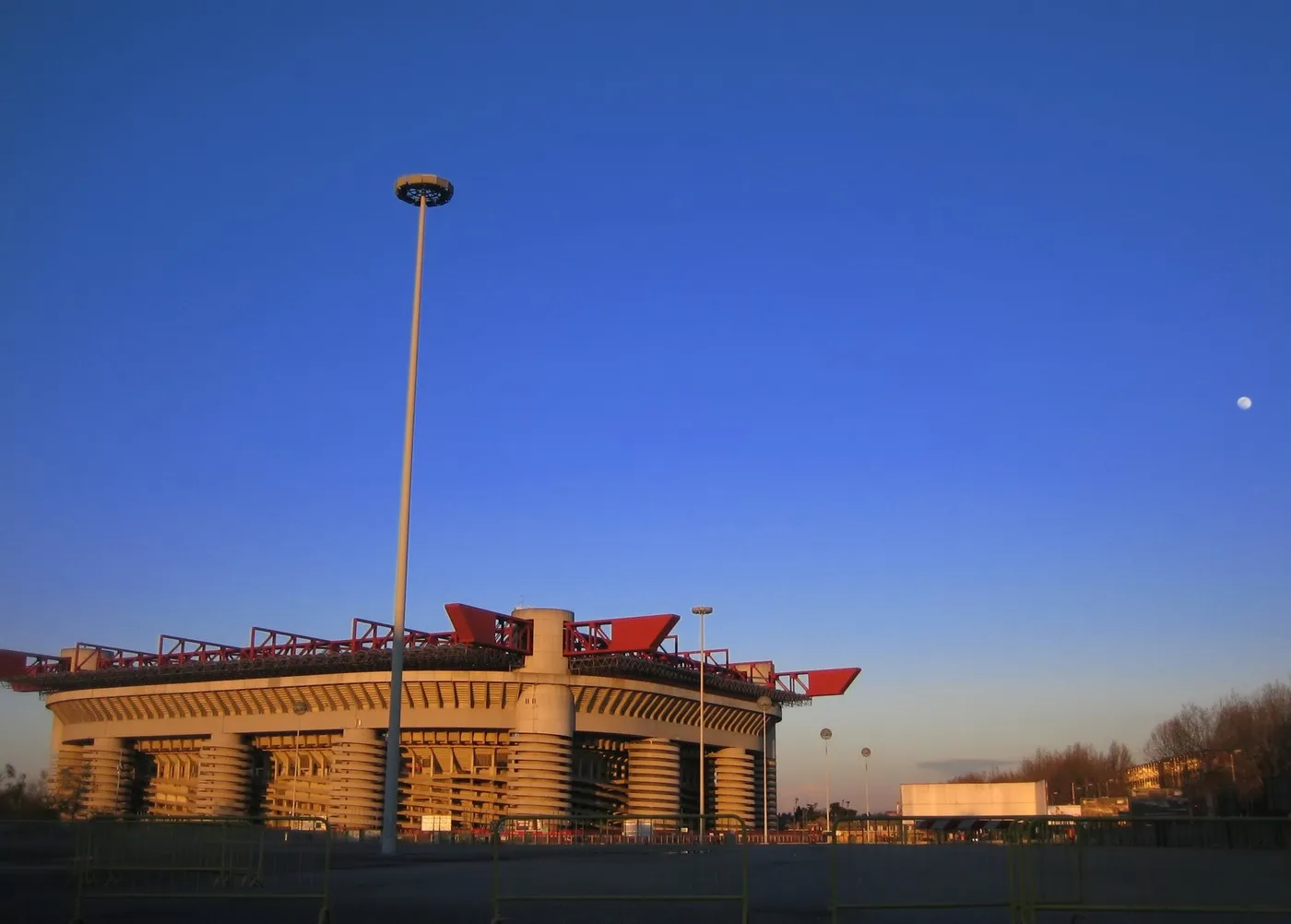
Public transport remains the easiest way to reach the outer precinct without navigating heavy matchday motor traffic. Direct underground services connect central interchanges to the stadium gates, keeping transit smooth and simple throughout the week. Planning connections carefully allows visitors to combine a morning tour of the pitch with an afternoon spent exploring western art treasures near Cenacolo Vinciano.
Architectural Scale and Matchday Circulation
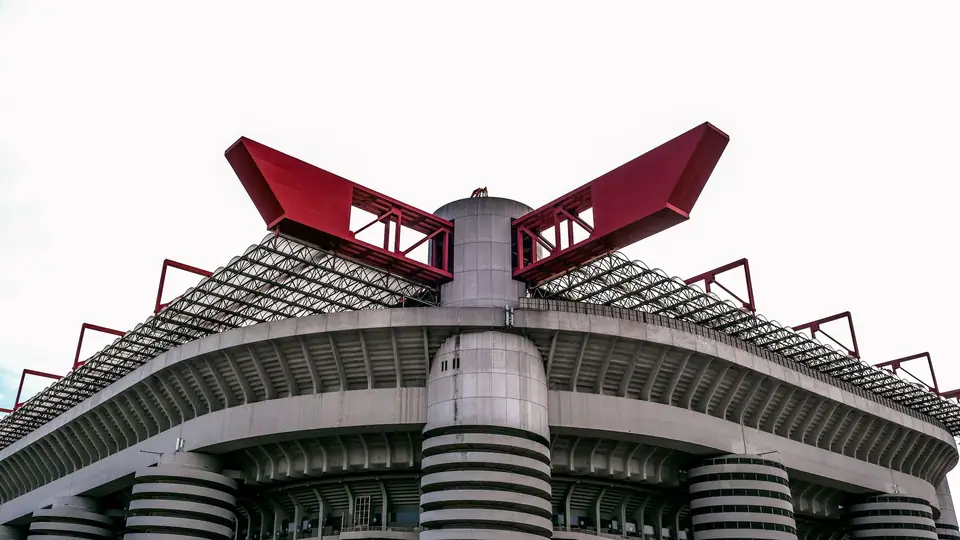
The ground features an unmistakable profile dominated by eleven cylindrical concrete towers that support massive red roof girders. These external spiral ramps were constructed to allow tens of thousands of spectators to reach upper seating decks swiftly. Walking beneath these enormous stone drums gives a genuine sense of the sheer structural ambition behind European sporting arenas.
Inside the bowl, steep tiers create an intimate atmosphere where spectators sit directly over the pitch boundary. Even on quiet non-match days, the steep grandstands retain an imposing, echoing presence across the manicured grass. The open corners frame views of the surrounding urban landscape, linking the drama of the sporting pitch with the wider skyline of Milano.
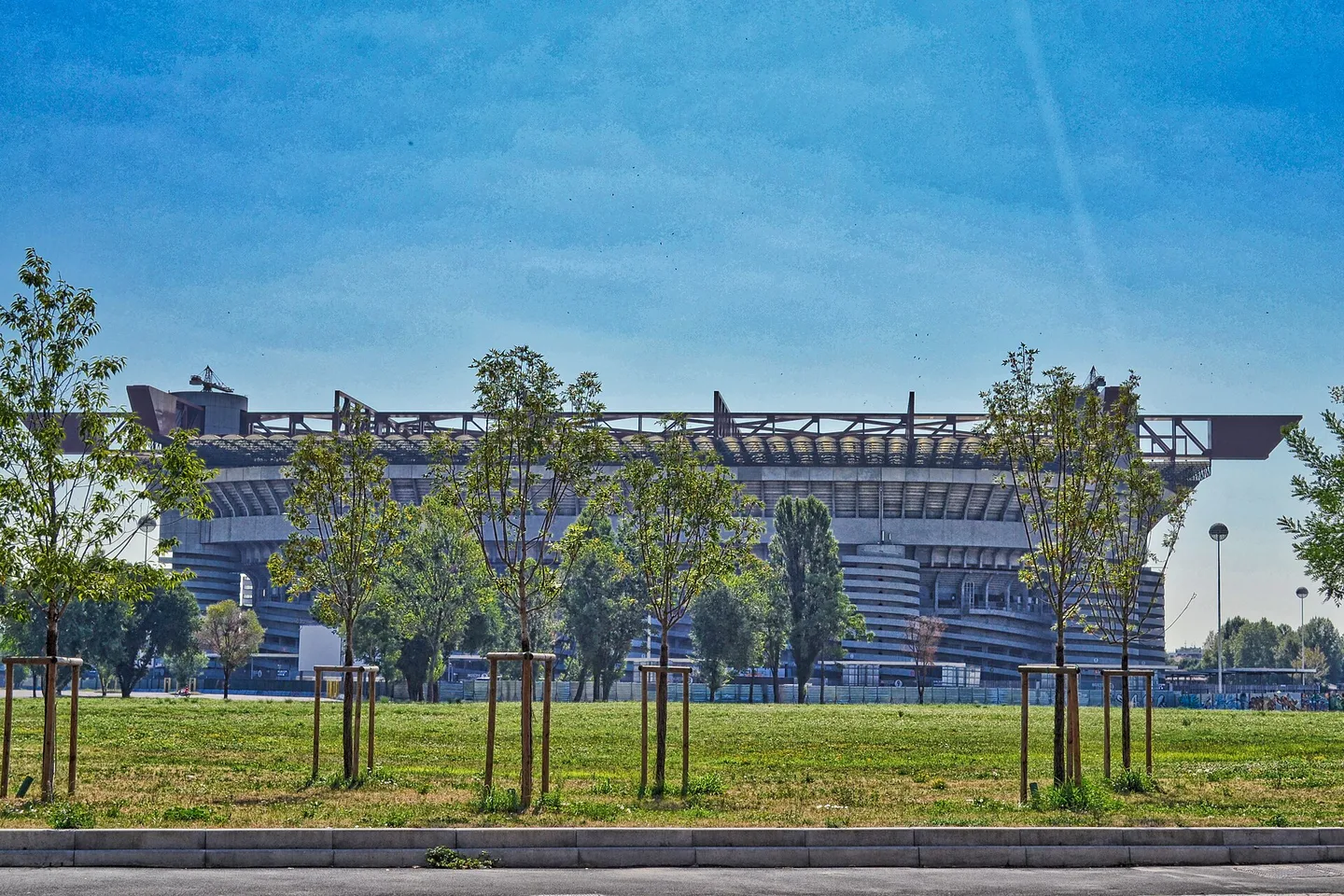
Circulation around the perimeter relies on clearly defined zones and gates that direct ticket holders efficiently:
- Outer security gates control the main flow of arrivals from the primary metro station exits and coach parks.
- Broad perimeter plazas give ample room for meeting friends and purchasing official club merchandise.
- External spiral towers give steady walking access to upper tiers while offering sweeping views of the city suburbs.
- Lower concourse tunnels channel ticket holders directly towards team dugouts and pitchside seating banks.
These circulation pathways keep large crowds moving steadily across all levels during high-profile football matches.
Museum Displays and Ground Tours
A central feature of any non-matchday visit is the joint museum, celebrating both AC Milan and FC Internazionale Milano. Sharing a single stadium between two fierce local rivals remains a rare tradition in global sports culture. The exhibition rooms house historic match jerseys, vintage trophies, and commemorative photographs charting decades of domestic and continental triumphs.
Self-guided routes lead visitors out through the players' tunnel, following the exact steps taken by renowned athletes on major European nights. Standing pitchside by the dugouts reveals the dizzying height of the upper red and orange grandstands. The covered press room and changing areas offer a behind-the-scenes perspective on professional matchday routines.
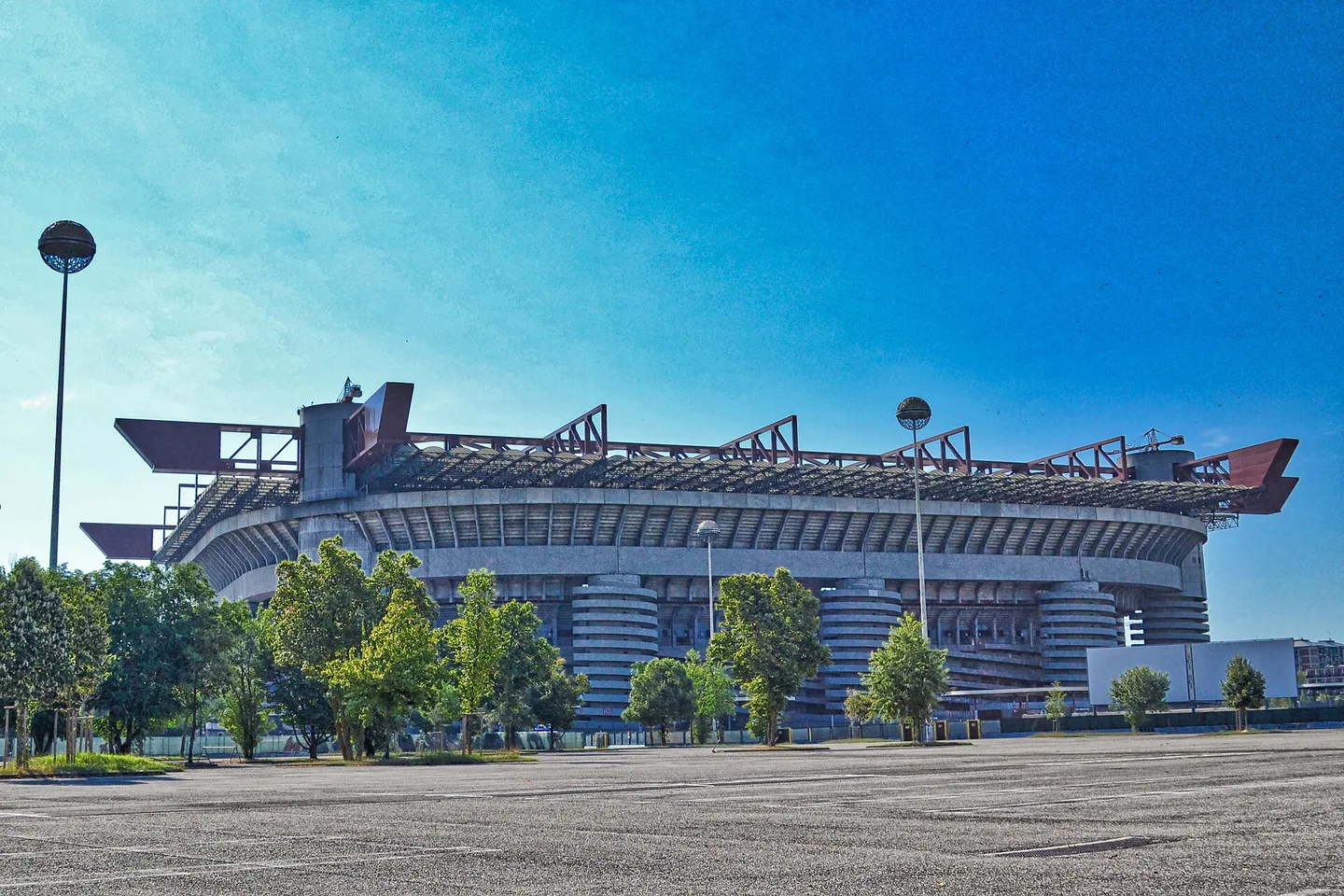
Touring the interior on non-event days lets you absorb the stadium architecture calmly without the pressing noise of sixty thousand cheering spectators.
Neighbourhood Rhythm and Daily Context
The character of the San Siro neighbourhood shifts dramatically between matchdays and regular weekdays. On quiet afternoons, the leafy avenues around the nearby hippodrome invite peaceful walking beneath mature plane trees. Local coffee bars serve espresso to neighbourhood residents, creating a calm residential tempo completely detached from the roar of packed football terraces.
When a match approaches, mobile food vans line the access avenues, filling the air with the aroma of roasted sausages and grilled onions. Fans gather around colourful scarves and flags, chanting anthems while walking towards the turnstiles under late afternoon sunlight. The contrast between calm suburban normality and electric sporting excitement makes this outer district utterly compelling to explore.
| District Aspect | Non-Matchday Experience | Matchday Atmosphere |
|---|---|---|
| Perimeter Plazas | Calm open spaces for photography | Energetic fan gatherings and team chants |
| Transport Links | Quiet metro seats and rapid transit | Dense passenger queues and lively carriages |
| Local Avenues | Peaceful suburban strolls near tree-lined streets | Active merchandise stalls and busy street vendors |
After soaking up the energy of the stadium grounds, travellers can easily return towards the historic centre by rail. Spending your evening browsing the bohemian courtyards of Brera or the canals of Navigli provides a perfect counterpoint to the raw concrete scale of the Meazza.
Official prices and opening hours
- Duomo di Milano (Cathedral, Terraces & Museum)Official site ↗
- Cenacolo Vinciano (Leonardo’s Last Supper)Official site ↗
Where it is
- 1San Siro Stadium
- Milano Linate Airport (LIN) · about 12 km from here in a straight line
- Directions in Google Maps
Stations and taxi ranks: OpenStreetMap. Airports: OurAirports. Distances are in a straight line.
Traveller tips
Real advice from people who have been to Milano. Every tip is read by our team before it goes live.
No tips yet. Been here? Yours could be the first.
Thank you! Your tip will appear here after a quick review.
More in Milano
Continue exploring Milano with related neighbourhood, food, and planning guides