Isola and Porta Nuova Neighbourhood Guide
Elevated stone squares beneath the towers of Porta Nuova open directly onto the craft streets and botanical lawns of Isola.
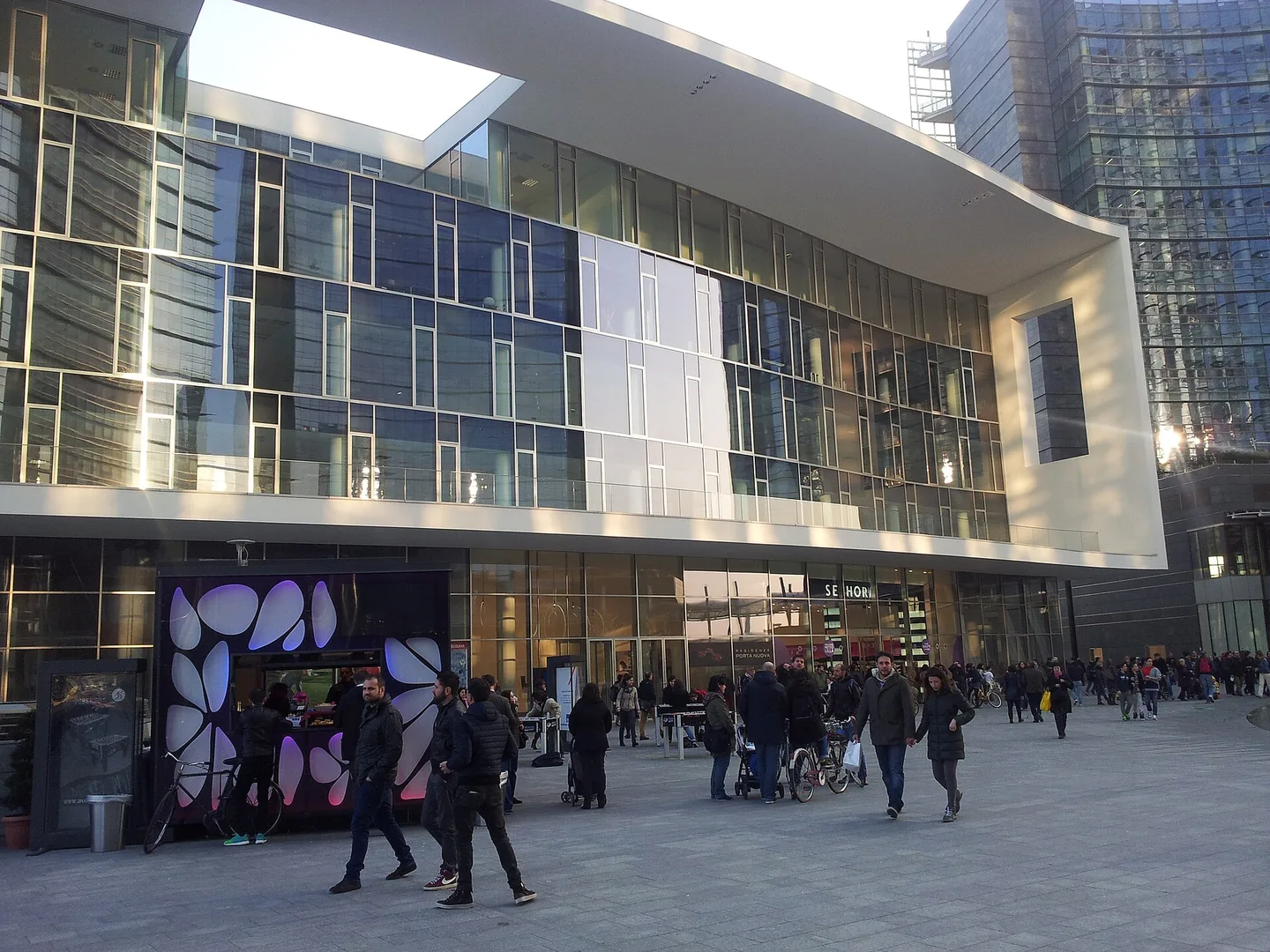
A short walk north of historic quarters around Brera cobbled galleries and stone courtyards, the cityscape opens into a wide showcase of twenty-first-century architecture. We enter Porta Nuova where broad pedestrian ramps ascend smoothly above traffic level toward Piazza Gae Aulenti. This circular stone podium functions as a sheltered public square bordered by sweeping glass facades, shallow mirror fountains, and long curved benches. Open sightlines invite steady breezes across the deck while framing long perspectives across northern central streets.
Standing at the centre of the raised podium reveals how thoroughly this former Garibaldi rail yard changed over recent decades. Smooth stone slabs now replace the rusted freight sidings and neglected loading bays that once split adjacent communities. Morning commuters, neighbourhood families, and architecture walkers cross the square side by side at an easy pace. Sunlight bounces off rooftop solar canopies and clear curtain walls onto the shallow water basins below, contrasting sharply with tram tracks running underneath.
Skyline Architecture and Urban Greenery
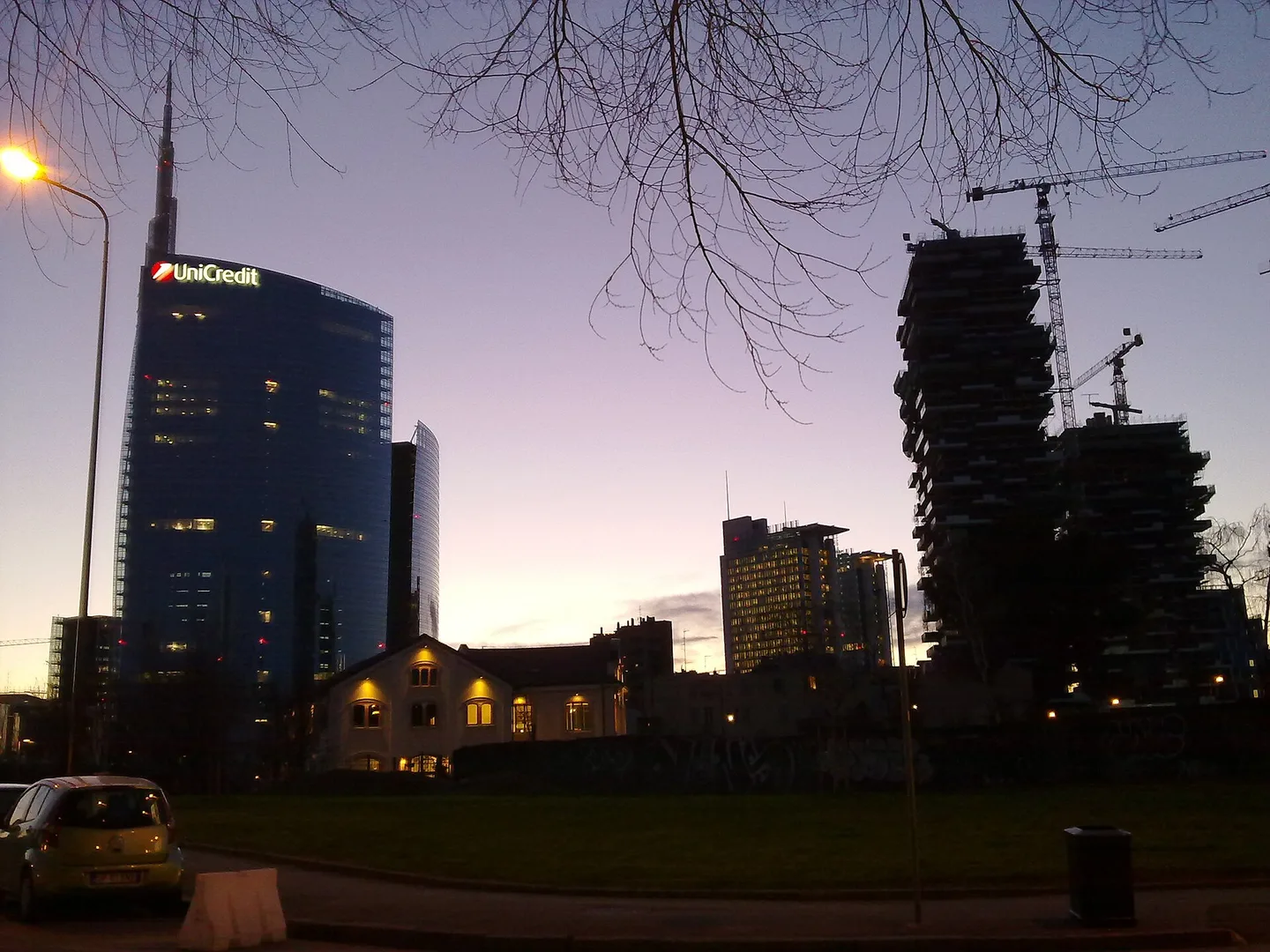
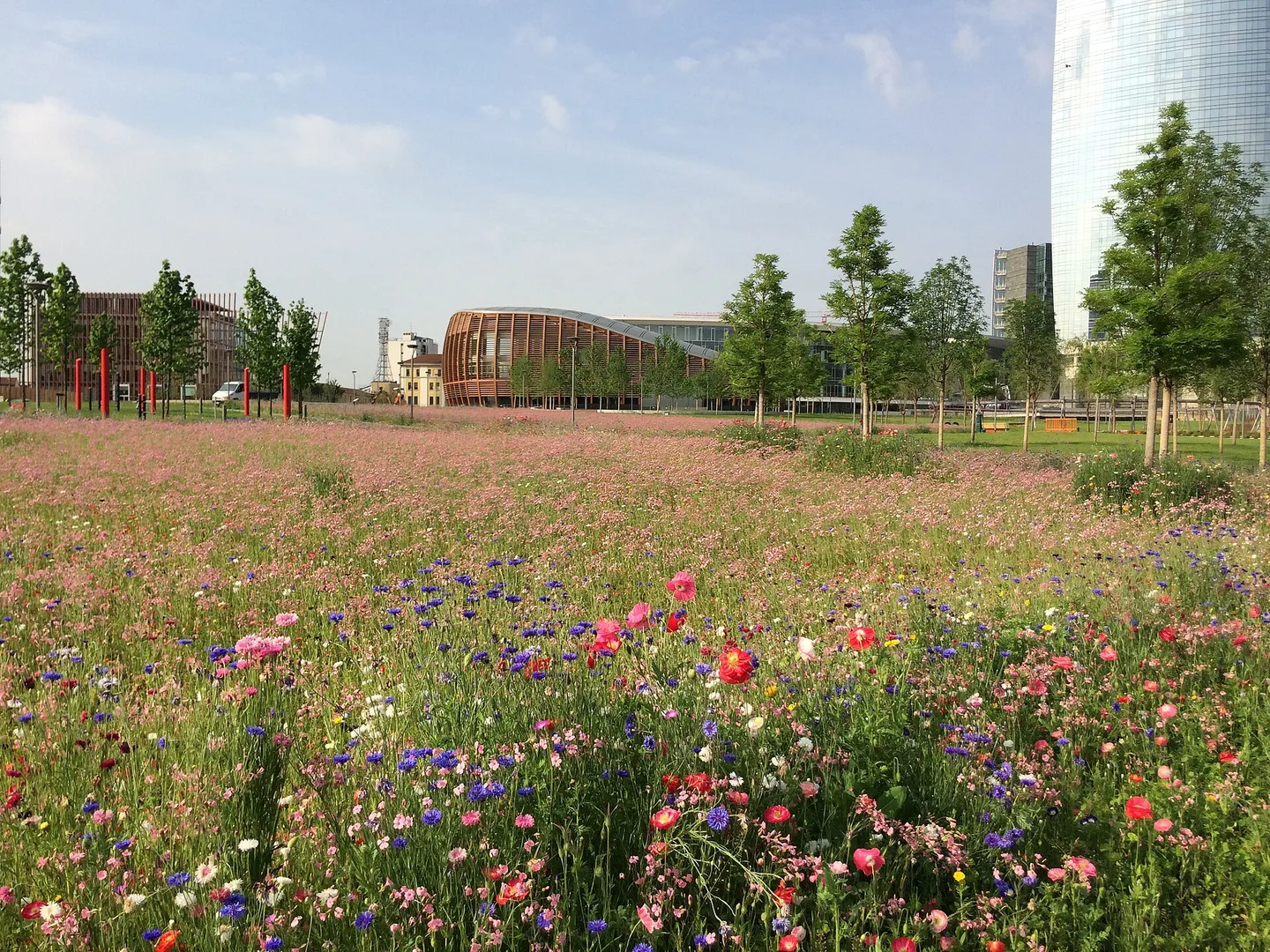
Slender steel-and-glass towers mark the outer edge of Porta Nuova, giving north-central Milano a crisp silhouette against clear Alpine skies. The curved Unicredit Tower spire rises boldly beside tiered stone steps, anchoring the commercial heart of this pedestrian complex. Immediately south spreads the Biblioteca degli Alberi, an open botanical park laced with geometric gravel walkways and meadows without fences. Circular stands of birch, hornbeam, oak, and seasonal wildflower borders soften the sheer stone and glazed facades rising around them.
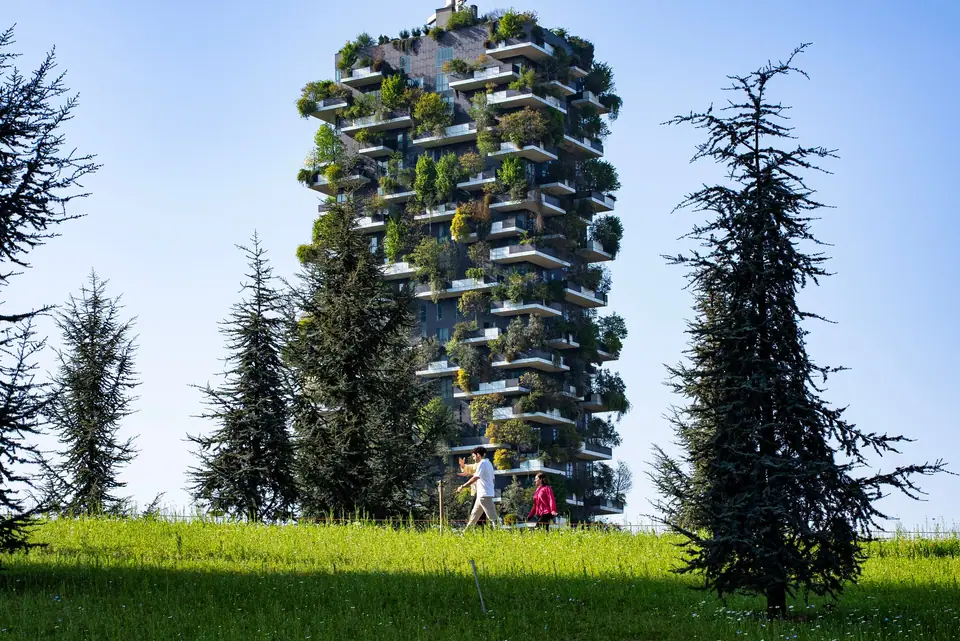
Facing the eastern edge of the lawn stand the twin residential blocks of Bosco Verticale, designed to weave living woodland straight onto high-rise exteriors. Deep cantilevered concrete balconies hold hundreds of deciduous shrubs, evergreen pines, and trailing ivy that shift colour every autumn and spring. Automated drip lines irrigate root beds high above the street while shaded timber benches below draw readers and dog walkers throughout warm afternoons.
Craft Heritage and Village Streets of Isola
Crossing the wide brick railway footbridge or walking beneath the Garibaldi underpass brings us straight into Isola, a compact district that holds fast to its working-class village layout. Cut off from the walled centre for generations by steam rail tracks, the quarter forged an independent neighbourhood rhythm built around family print shops and shared apartment courtyards. Traditional Milanese tenements lined with continuous upper-floor balconies, known locally as case di ringhiera, still overlook narrow cobbles beside trattorias and fresh pasta counters.
The sudden shift from twenty-storey glass towers back to three-storey ochre stucco streets feels immediate on foot. Independent ceramicists, custom bicycle builders, small bookbinders, and classic motorcycle workshops keep open shutters along Via Borsieri and Via Thaon di Revel. Morning crowds gather outside small corner bars for crisp brioche pastries and quick standing espressos before local markets begin packing wooden crates. Quiet side lanes reveal ivy-covered courtyard gates and iron mailboxes dating back to early twentieth-century cooperatives.
- Piazza Gae Aulenti features elevated granite terraces, shallow reflecting pools, and shaded benches.
- Biblioteca degli Alberi offers unfenced botanical meadows, geometric tree circles, and running paths.
- Via Borsieri gathers independent craft studios, small music bars, vintage clothiers, and casual bistros.
- Via Volturno preserves classic railworker apartment blocks built around leafy communal courtyards.
Navigating the Connected Quarters
Moving between both neighbourhoods takes only a few unhurried minutes along stepped granite walkways and shaded cycle lanes. Broad footbridges carry walkers directly from the northern rim of Piazza Gae Aulenti straight into the quieter tree-lined streets of Isola. Combining high glass squares, botanical lawns, and brick artisan alleys in one morning loop shows two distinct eras of northern urban craft.
Green M2 and lilac M5 metro platforms meet directly underneath Garibaldi and Isola stations, linking north-central avenues directly down toward Piazza del Duomo marble spires and central arcades. Frequent suburban tram lines also cross Via Ceresio and Piazzale Lagosta for direct evening rides southward to Navigli canal walkways and riverside trattorias. Early mornings reward photographers with quiet mirror pools along Piazza Gae Aulenti terraces. Late afternoons cast warm amber sunlight across upper glass balconies before Isola corner kitchens open their brick ovens, setting out wooden boards of antipasti for lively neighbourhood dinner tables.
Official prices and opening hours
- Duomo di Milano (Cathedral, Terraces & Museum)Official site ↗
- Cenacolo Vinciano (Leonardo’s Last Supper)Official site ↗
Where it is
- 1Isola and Porta Nuova Neighbourhood
- Milano Linate Airport (LIN) · about 8 km from here in a straight line
- Directions in Google Maps
Stations and taxi ranks: OpenStreetMap. Airports: OurAirports. Distances are in a straight line.
Traveller tips
Real advice from people who have been to Milano. Every tip is read by our team before it goes live.
No tips yet. Been here? Yours could be the first.
Thank you! Your tip will appear here after a quick review.
More in Milano
Continue exploring Milano with related neighbourhood, food, and planning guides