San Maurizio al Monastero Maggiore: Milan Painted Renaissance Sanctuary
Step inside San Maurizio al Monastero Maggiore to admire walls lined with Renaissance frescoes right in central Milano.
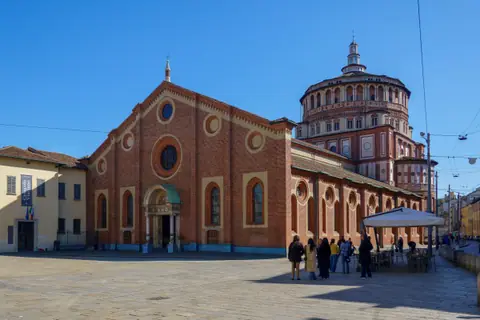
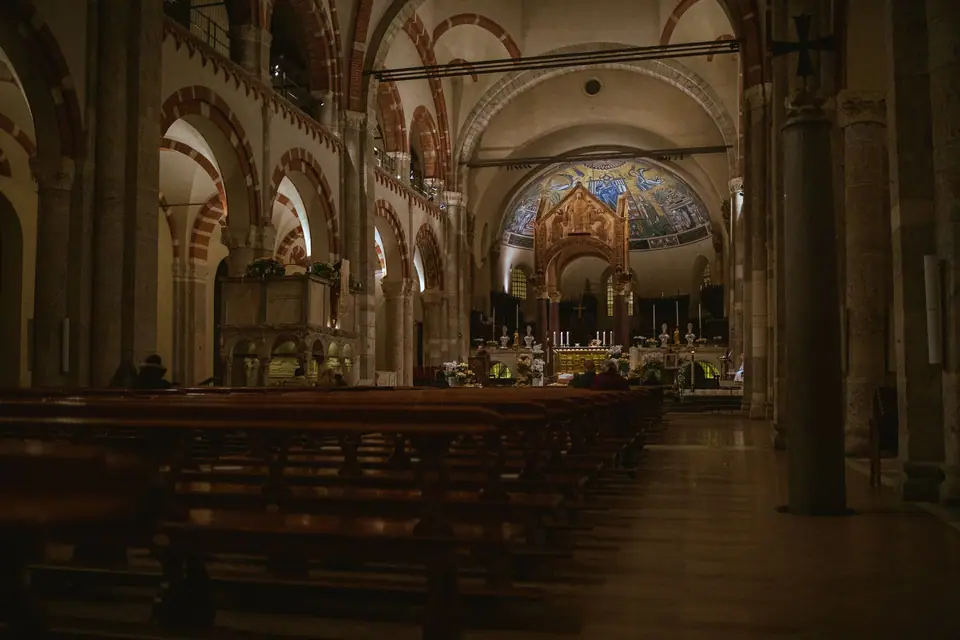
San Maurizio al Monastero Maggiore stands along Corso Magenta behind an unassuming stone facade. The building conceals one of the most richly decorated interiors in northern Italy. The site served historically as the principal church of an important Benedictine convent. Its architectural design served the strict cloistered life of enclosed nuns. The interior divides cleanly into two distinct sections separated by a tall dividing wall that rises directly to the timber roof.
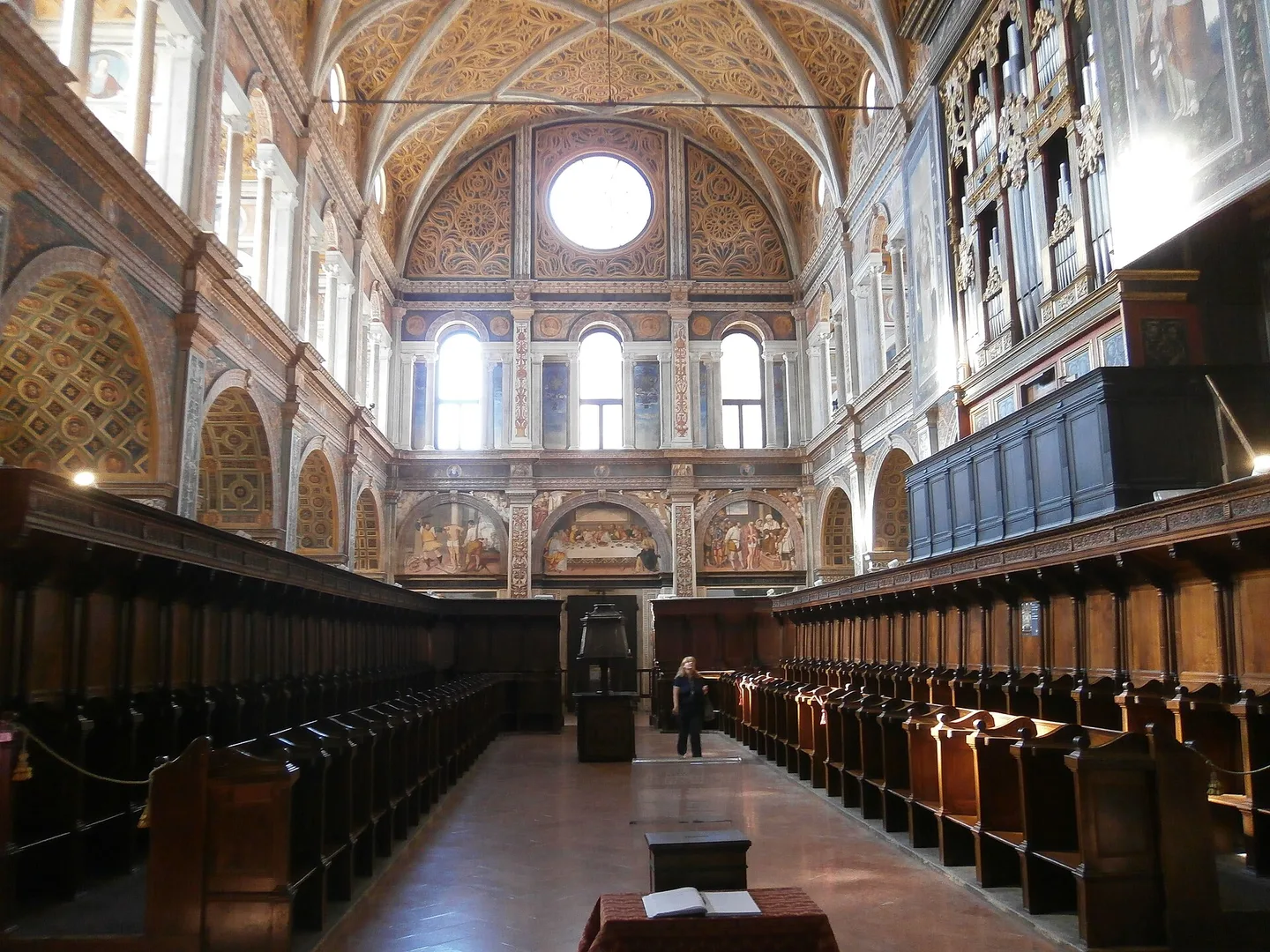
The public nave faces the street entrance, welcoming congregation members into a vaulted hall illuminated by clerestory windows. Behind the partition lies the larger Hall of the Nuns. This enclosed choir allowed Benedictine sisters to attend religious services away from secular gazes. Both halls share identical floor levels. This arrangement creates an acoustic resonance that carries organ music and choral chants softly through the dividing grille into the front sanctuary.
A Divided Sanctuary on Corso Magenta
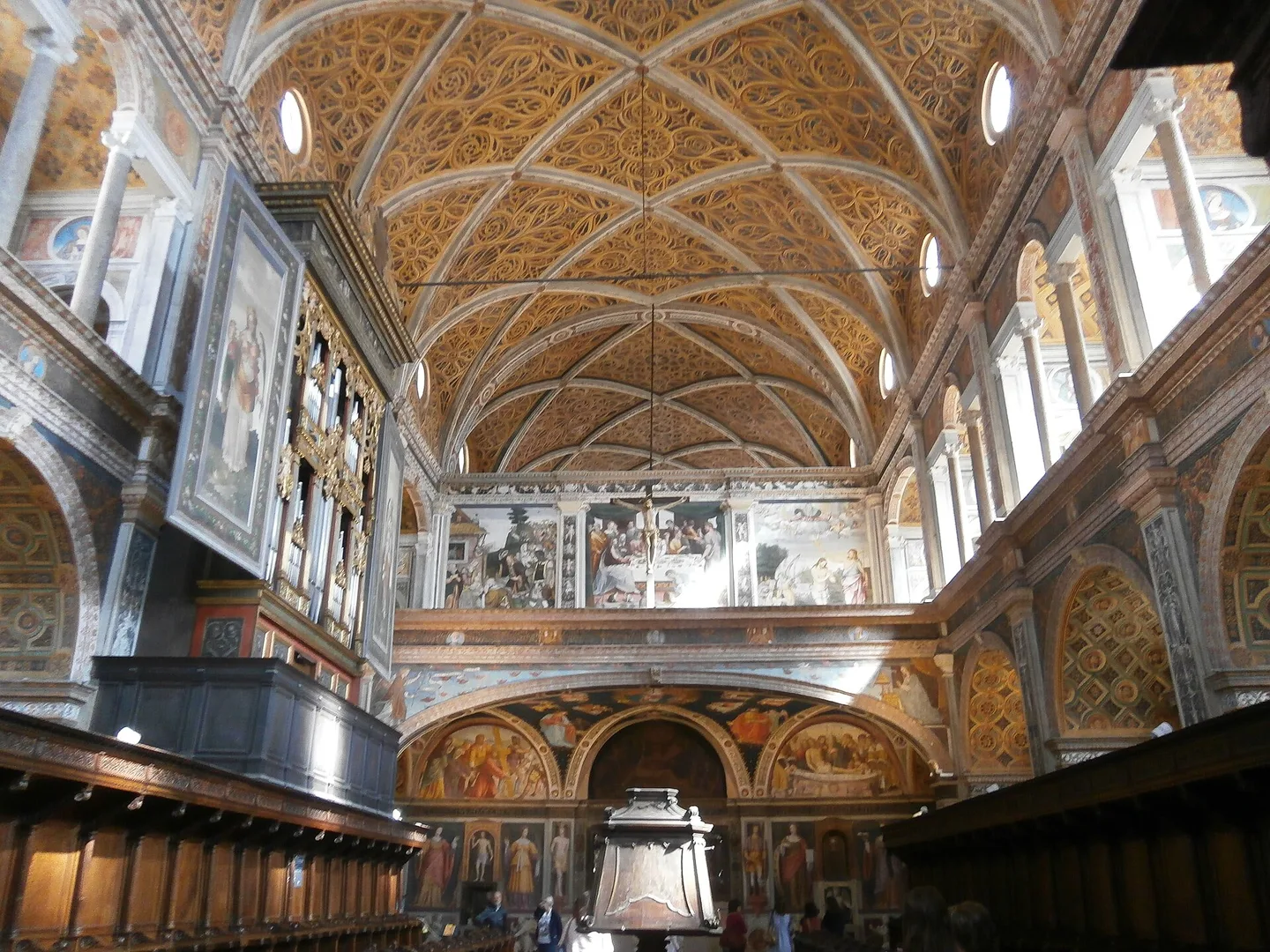
Entering from Corso Magenta reveals an unbroken decorative scheme where every surface displays colourful pigments. The partition wall features narrative panels showing scenes from the Passion. Painted Corinthian pilasters and gilded mouldings frame these scenes, mimicking classical stone structures. Modest wooden benches line the public nave. They offer quiet vantage points where visitors can take in the dense iconographic programmes overhead without jostling large tour groups.
Passing through the lateral corridor leads into the choir reserved for the nuns. This room reveals an expansive spatial perspective. The vaulted ceiling spans overhead with dark blue skies and golden stars. Rows of carved walnut stalls line the lower masonry perimeters. This contrast between the public foyer and the private devotional choir illustrates how monastic communities organised their daily routines around contemplation, liturgical prayer, and communal seclusion.
Monastic architects designed the circulation routes to maintain total enclosure for the sisterhood while allowing lay worshippers to attend Holy Mass. Perforated grilles permitted sound to travel between chambers while preventing direct visual contact. Decorative schemes reinforce this balance between public witness and private devotion. Each archway and pier bears biblical illustrations intended to inspire prayer in both sanctuaries.
- Public hall: Street-facing entrance nave designed for regular secular worship and parish attendance.
- Partition screen: High painted wall that separates the two ceremonial halls while maintaining shared acoustics.
- Nuns choir: Enclosed rear sanctuary reserved for cloistered prayer, choral practice, and quiet study.
- Cloister access: Covered paths leading toward the adjacent archaeological courtyards and Roman tower ruins.
Sixteenth-Century Frescoes and Artistic Lineage
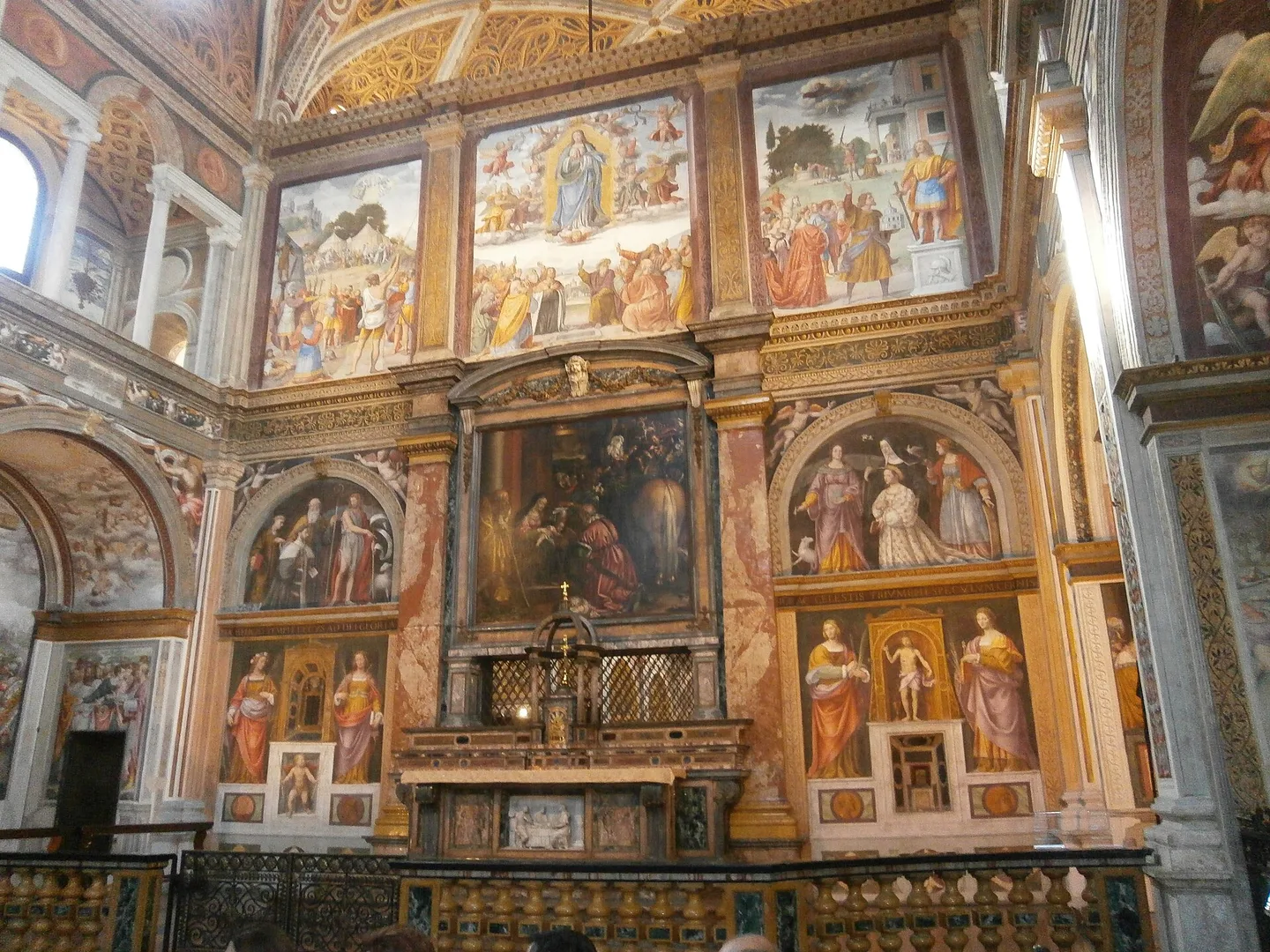
The fresco cycles spanning the walls and side chapels date to the sixteenth century. Leading painters influenced by Leonardo da Vinci executed the complex schemes across several decades. Bernardino Luini and his workshop produced numerous figurative scenes. They filled the plaster with delicate facial expressions, soft sfumato shading, and expressive gestures. Their work illustrates episodes from the life of Saint Maurice alongside portraits of Christian martyrs, saints, and wealthy Milanese benefactors.
Unlike many urban churches that suffered heavy modern alterations or wartime bomb damage, San Maurizio preserved its plaster coatings and decorative panels in remarkable condition. Natural mineral pigments retain deep lapis blues, terracotta reds, and malachite greens across both halls. Careful conservation campaigns stabilized the masonry walls. Specialist conservators cleaned centuries of candle soot without altering the original tempera finishes applied during the high Renaissance.
Studying the side chapels reveals fine decorative details, including botanical borders, musical instruments, and classical architectural motifs painted on plaster. Scholars often describe the complex as a premier showcase of northern Italian Renaissance painting. It demonstrates how Lombard masters adapted Tuscan draughtsmanship to regional spiritual tastes. Taking time to study individual register panels reveals subtle background landscapes depicting alpine peaks, lakeside fortresses, and classical Roman ruins.
The preservation of these wall cycles allows modern visitors to appreciate the original luminosity of sixteenth-century pigments. Pigment recipes relied on ground minerals bound with slaked lime, creating durable chemical bonds with the curing plaster. Light entering from the southern clerestory washes across these surfaces, showing subtle gradations of tone that mimic the natural fall of daylight across physical drapery.
Walking Sequences and Surrounding Streets
San Maurizio sits along an engaging pedestrian corridor that connects ancient heritage sites across the historic centre of Milano. Walking east along Corso Magenta leads toward the Roman circus remains and the quiet alleys of the old financial district. Heading west along the same pavement brings you straight toward Santa Maria delle Grazie, where visitors view the famous refectory mural of the Last Supper on pre-booked itineraries.
Travellers can easily link a morning visit here with an afternoon stroll toward the medieval piazza surrounding the great marble Duomo. The walk takes you past quiet courtyards, independent bookshops, and traditional espresso bars where locals stand along polished wooden counters. Combining these sights on foot provides a clear understanding of how urban boundaries shifted from imperial Roman settlements to grand ducal capitals.
From Corso Magenta, pedestrians can also stroll northeast into the cobbled lanes of Brera or south toward the picturesque canals of Navigli. These walking routes follow historic rights-of-way established over centuries of urban growth. Paved footpaths make navigation straightforward for independent walkers exploring Milan on foot.
| Route Direction | Key Sights Along Way | Surface Profile |
|---|---|---|
| East along Magenta | Roman walls and archaeological gardens | Cobblestone pavements with pedestrian kerbs |
| West toward Cenacolo | Historic palazzi and parish courtyards | Flat flagstone footpaths and asphalt lanes |
| North toward Brera | Narrow lanes and gallery storefronts | Smooth stone paving and gentle pedestrian alleys |
Practical Access and Visit Planning
Reaching the church is straightforward via public transport networks operating across the urban core. The nearest metro stations at Cadorna and Cordusio sit within easy walking distance. Surface tram lines run directly down Corso Magenta. Boarding a tram offers a relaxed journey past neoclassical palazzi before setting you down steps away from the main church portal.
Morning hours tend to offer softer daylight filtering through high clerestory windows, which illuminates the wall paintings without harsh glare. Entering quietly is important, as San Maurizio remains an active consecrated place of worship where silence and respectful attire are expected. Modest clothing covering shoulders and knees allows entry through the main timber doorway without delays.
Early morning arrivals provide soft daylight across the nave without harsh midday glare across painted vaults. Allow unhurried time to wander slowly between the front public sanctuary and the rear choir, absorbing the fine brushwork that makes this quiet interior so distinctive.
Official prices and opening hours
- Duomo di Milano (Cathedral, Terraces & Museum)Official site ↗
- Cenacolo Vinciano (Leonardo’s Last Supper)Official site ↗
Where it is
- 1San Maurizio al Monastero Maggiore
- Milano Linate Airport (LIN) · about 8 km from here in a straight line
- Directions in Google Maps
Stations and taxi ranks: OpenStreetMap. Airports: OurAirports. Distances are in a straight line.
Traveller tips
Real advice from people who have been to Milano. Every tip is read by our team before it goes live.
No tips yet. Been here? Yours could be the first.
Thank you! Your tip will appear here after a quick review.
More in Milano
Continue exploring Milano with related neighbourhood, food, and planning guides